Hauling a Machine to a Provincial Park
There’s nothing quite like the open air and the thrill of hitting the trails with your ATV or UTV, especially when you’re looking to explore the natural beauty of Saskatchewan. But before you hitch up your trailer and point your rig towards one of our stunning provincial parks, it’s absolutely crucial to understand the specific rules and preparations required. Many riders feel frustrated by the seemingly complex layers of regulations, wondering if their beloved machine is even allowed. This guide aims to cut through that confusion, walking you through everything you need to know about successfully hauling your machine to a provincial park and enjoying a responsible, rule-abiding adventure.
Navigating Saskatchewan Provincial Park Rules for Off-Road Vehicles
Bringing your ATV or UTV into a provincial park isn't as simple as just showing up; there are very specific guidelines designed to protect both the environment and other park users. Understanding these rules upfront will save you a lot of hassle and potential fines.
Designated Trails and Prohibited Areas
First and foremost, not all provincial parks in Saskatchewan permit ATVs or UTVs, and even in those that do, riding is strictly limited to designated trails. You can't just roam freely wherever you please. This is often a point of confusion for riders, especially those used to more open Crown land access. Parks are sensitive ecosystems, and unrestricted riding can damage fragile habitats, disturb wildlife, and conflict with other recreational activities like hiking or cycling.
For instance, parks like Moose Mountain Provincial Park, Narrow Hills Provincial Park, and Great Blue Heron Provincial Park have designated ATV/UTV trail systems. These trails are specifically designed and maintained for off-road vehicle use, often separate from other multi-use trails. You'll find clear signage indicating where you can and cannot ride. However, it's absolutely vital to know that other popular parks, like [Cypress Hills Bans ATVs in Saskatchewan] entirely. They simply do not allow off-road vehicles on their trails or within park boundaries for recreational riding, though official administrative or land use operations may be an exception. Always check the specific park's regulations before you even consider loading up your machine.
It’s also important to remember that even within parks that permit ATVs, certain areas are universally off-limits. This includes hiking trails, campgrounds, beaches, boat launches, and environmentally sensitive zones. These restrictions are in place to ensure safety, minimize disturbance, and preserve the natural integrity of the park for everyone. Understanding [Saskatchewan Provincial Park Machine Rules] will help you avoid accidental trespass or damage. For a quick reference, here’s a look at common park access:
| Provincial Park Name | ATV/UTV Access | Permit Required | Key Trail Information |
|---|---|---|---|
| Moose Mountain Provincial Park | Designated Trails Only | Yes (Free Info Session/Form) | 47 km loop, shelters, various scenic points. |
| Narrow Hills Provincial Park | Designated Trails Only | Yes (Free Info Session/Form) | 50 km of trails, connects to other areas. |
| Great Blue Heron Provincial Park | Designated Trails Only | Yes (Free Info Session/Form) | ~10 km of trails. |
| Cypress Hills Interprovincial Park | Not Permitted | N/A | No ATV/UTV access on park trails. |
| Other Provincial Parks | Generally Restricted/No Access | Varies, often not applicable | Check specific park regulations; often restricted to designated roads or not permitted for recreational riding. |
This table shows that while some parks welcome off-road enthusiasts, it's always under strict conditions, and some parks are simply off-limits. You'll want to review [Saskatchewan Parks With Designated Trails Only] to confirm your destination is appropriate.
Understanding Park Permit Requirements
One of the biggest questions riders have is about permits. Many are surprised to learn that while you do need permission, a monetary "permit fee" for ATV/UTV use in most Saskatchewan provincial parks with designated trails is usually not required. Instead, these parks often require you to complete an acknowledgement form or attend a brief informational session. These sessions or forms are designed to educate riders about the specific rules of the park, trail conditions, safety guidelines, and environmental responsibilities. They are a critical step in ensuring all users are aware of their obligations.
For example, both Moose Mountain and Great Blue Heron provincial parks offer [Saskatchewan Free Permits at Moose Mountain] and [Saskatchewan Free Permits at Great Blue Heron] respectively, but they require you to go through this orientation process. It’s not just a formality; it’s about making sure you understand the nuances of riding in a protected area. You'll need to sign a [Saskatchewan Park Use Acknowledgement Forms] before you hit the trail, confirming you've received and understood this information. Keep in mind that these are different from the general park entry permits required for your vehicle (truck/trailer) to access the park itself, which are generally purchased separately. Don't confuse the two!
Age, Supervision, and Safety Gear
Safety is paramount, and provincial parks adhere to the provincial All Terrain Vehicles Act, often with additional park-specific considerations. This means there are rules regarding who can operate an ATV/UTV and what safety gear they must wear. It’s a common misconception that if you're on a trail, the rules might be relaxed, but that's simply not true.
In Saskatchewan, the Act generally requires operators to be at least 16 years old to ride unsupervised. However, there are exceptions for younger riders. For instance, [Riders 12 to 16 Need Supervision in a Park] if they have completed an approved safety course. The supervisor must be 18 years or older and hold a valid driver's license for at least 365 days. Always ensure you understand these age and supervision rules before bringing a youth rider to a park.
Beyond age, proper safety gear is non-negotiable. You’ll need an approved helmet, eye protection, and appropriate clothing. This isn't just about avoiding a ticket; it's about protecting yourself from injury. The Act specifies what kind of helmet is acceptable and that eye protection must be shatterproof. Furthermore, many parks recommend or even require that riders wear [Long Pants, Sleeves and Boots Required] to protect against scrapes, branches, and other hazards you might encounter on the trail. Checking [Saskatchewan Helmet and Eye Protection Rules] before you head out is a smart move.
Preparing Your Machine and Paperwork for the Trip
Before you even think about loading your machine, a bit of preparation can prevent major headaches later on. This includes ensuring your ATV or UTV is trail-ready and that you have all the necessary documentation.
Machine Inspection and Cleaning
You’re heading into an environment that requires respect and care, and that starts with your machine. First, and perhaps most importantly, give your ATV or UTV a thorough wash. This isn't just for aesthetics; it's a critical step in preventing the spread of invasive species. Mud, seeds, and plant fragments can hitch a ride on your machine from one area to another, potentially introducing non-native species that can wreak havoc on local ecosystems. Many parks, like Moose Mountain, are very strict about this. You'll often see signs about [Saskatchewan Machines Washed Before a Park Ride] as you enter, and a park officer might even check.
Beyond cleanliness, perform a pre-trip inspection. Check your tires for proper inflation and damage, ensure all fluids are topped up, and test your brakes and lights. A spark arrestor on your exhaust is not just a good idea; it's often a legal requirement, especially during dry seasons, to prevent wildfires. Make sure yours is in good working order, as per [Saskatchewan Spark Arrestor Guidance]. A breakdown on a remote park trail is no fun, and an unmaintained machine poses a wildfire risk that carries hefty penalties.
Essential Documents to Carry
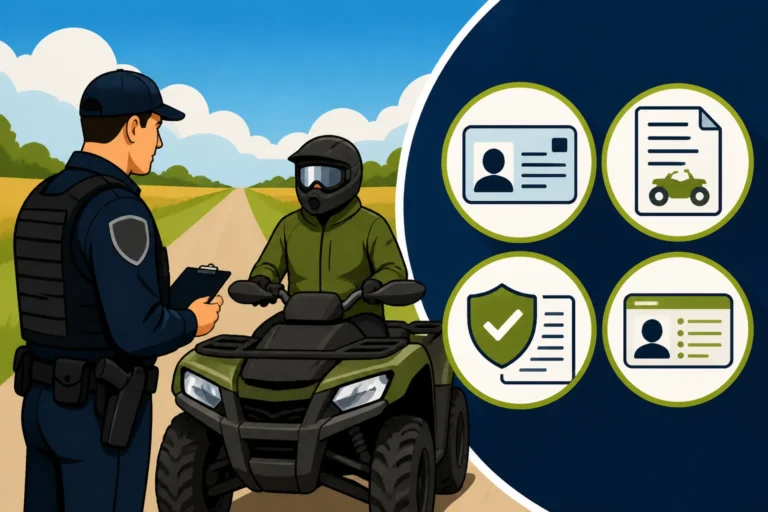
While Saskatchewan doesn't have provincial ATV registration, you still need to carry important documents. When a park official or peace officer approaches you, they'll want to see proof that you're operating your machine legally and safely.
The absolute must-haves include:
- Proof of Ownership: Your bill of sale is your primary document for this. Keep a copy, not necessarily the original, with you. This confirms the machine is yours and not stolen.
- Proof of Insurance: Saskatchewan requires all ATVs/UTVs to have at least $200,000 in liability insurance. This is non-negotiable. You should have physical proof of this insurance with you at all times when riding. Park officials, like any peace officer, can demand to see it. This is why [Proof of Insurance Is What Saskatchewan Officers Ask For] is such a crucial piece of advice. For details on what kind of coverage you need, check out [Saskatchewan Insurance Requirements for Riders].
- Driver's License: If you are the operator, you need a valid driver's license.
- Park-Specific Permits/Acknowledgement Forms: As discussed earlier, if the park requires you to complete an info session or sign a form, ensure you have the proof of completion or the signed document with you. These permits usually need to be displayed in a visible location on your machine.
- Permission to Operate (if borrowing): If you're borrowing a friend's machine, it's a good idea to have a written letter of permission from the owner. This simple document can clear up a lot of potential misunderstandings if you're questioned. Resources like LawDepot can provide templates for such agreements, ensuring you have clear documentation in hand. A well-drafted bill of sale is also critical for your own machine, and services like LawDepot can help you create robust legal documents should you ever need one for buying or selling.
Remember, an officer can pull you over and ask for these documents, even on a grid road leading to the park. Understanding [What an Officer Can Ask to See on a Grid Road] is important for any rider. For park-specific forms, remember that [Signing the Use Form at a District Office] might be required before you hit the trails.
Safe Hauling Practices
Getting your ATV or UTV to the park safely is just as important as riding it safely. A properly secured machine prevents accidents on the highway and ensures your gear arrives intact.
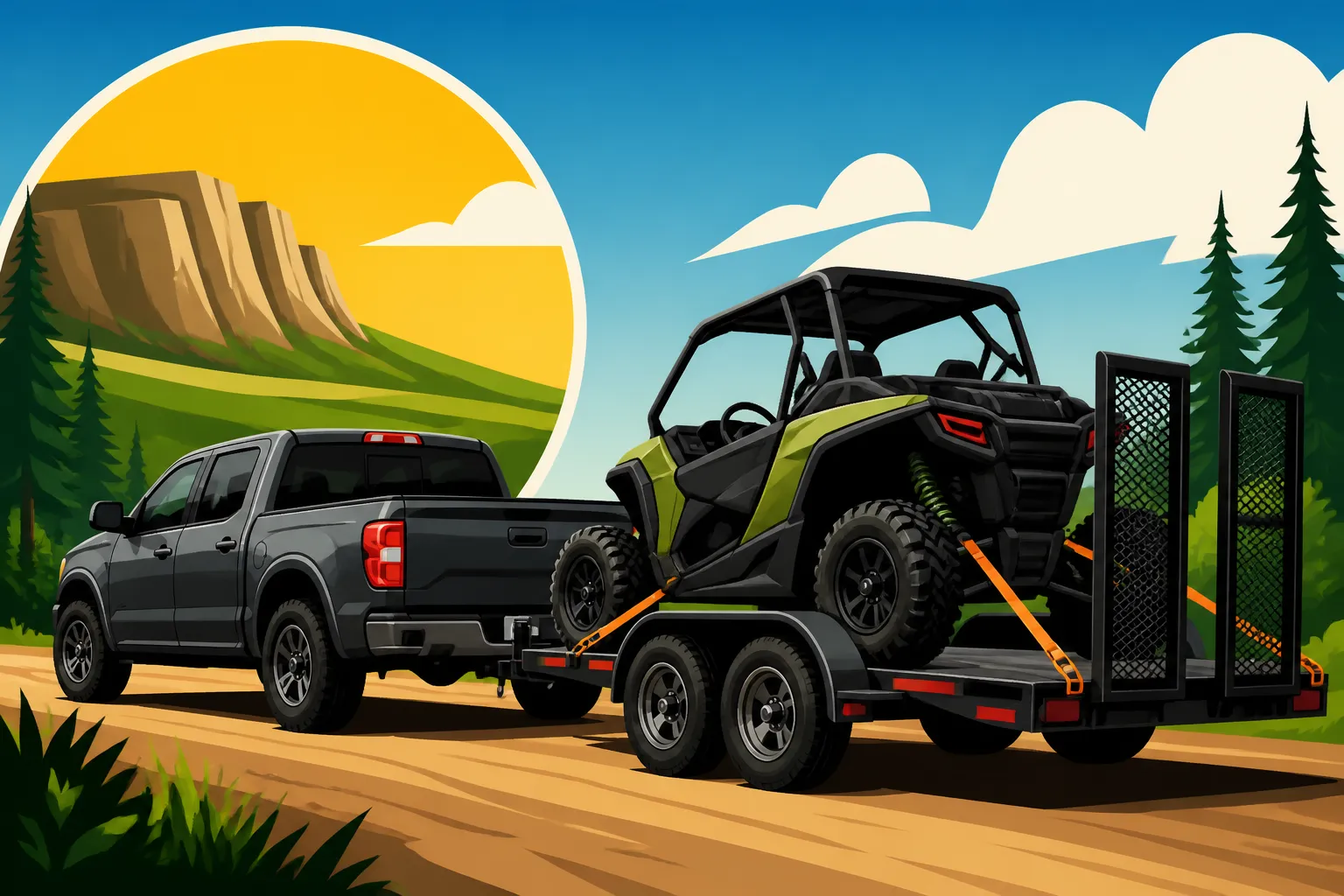
Always use a suitable trailer that can handle the weight and dimensions of your machine. Ensure your trailer's lights are working correctly – brake lights, turn signals, and running lights are all essential for visibility and legal compliance. Check your trailer tires for proper inflation and condition, and give the wheel bearings a quick check, especially if you haven't used the trailer in a while.
When securing your machine, use at least four high-quality tie-down straps, one at each corner. Ensure they are taut and that there’s no room for your machine to shift during transit. Many riders make the mistake of using old, frayed straps, or simply not tightening them enough. A loose machine can be incredibly dangerous on the road. Also, consider the weight distribution on your trailer. Too much weight at the rear can cause sway, while too much at the front can overload your tow vehicle. You might also want to review [Do Utility Trailers Need Their Own Plates?] for specific rules regarding your trailer.
On-Trail Etiquette and Environmental Responsibility
Once you're in the park and ready to ride, your responsibility shifts from preparation to proper conduct on the trails. This is where your actions directly impact the experience of others and the health of the park.
Respecting Wildlife and the Environment
Riding in a provincial park means sharing the space with nature and other visitors. Staying on marked trails is not just a rule; it's a fundamental principle of responsible off-road vehicle use in protected areas. Going off-trail can damage vegetation, erode soil, and disturb [Saskatchewan Wildlife on the Trail], especially during sensitive nesting or breeding seasons. The goal is to minimize your footprint, leaving the park as pristine as you found it.
Always yield to hikers, cyclists, and horseback riders. They often move more quietly and might not hear you coming. Slow down, give them ample space, and be courteous. Keep your noise levels to a minimum, especially in areas where you might encounter wildlife or other park users seeking tranquility. Remember the "pack it in, pack it out" rule: everything you bring into the park, including trash, should leave with you. This includes any broken machine parts or used oil rags. Adhering to [Saskatchewan Trail Etiquette Locals Expect] helps ensure continued access for all.
Being Prepared for Emergencies
Even the most experienced riders can encounter unexpected situations. Always carry a basic first-aid kit, a small tool kit for minor repairs, extra fuel, and plenty of water. A fully charged phone is a good idea, but be aware that cell service can be spotty or nonexistent in many remote park areas. Consider carrying a paper map of the trails or a GPS device with pre-loaded maps.
Before you head out, let someone know your planned route and estimated return time. Check the weather forecast for the day, as conditions can change rapidly, especially in northern Saskatchewan. Be aware of [Saskatchewan Trail Closures After a Storm] or due to other natural events. Fire bans are particularly critical; during dry spells, [Saskatchewan Wildfire Season Rules for Riders] are strictly enforced, and you must check for [Saskatchewan Fire Ban Lookups] before you ride. Carrying a small shovel and a fire extinguisher on your machine is a wise precaution during wildfire season.
Understanding Local Bylaws and Administrator Orders
While you're in a provincial park, the provincial regulations and park-specific rules take precedence. However, it's also worth noting that the journey to and from the park might involve travelling through or near rural municipalities that have their own bylaws regarding ATV/UTV use. These local rules can dictate where you can ride on municipal roads or ditches.
Furthermore, outside of provincial parks, there are specific regulations governing Crown land access. While this article focuses on parks, it’s beneficial to be generally aware of [Saskatchewan Crown Land Access Rules] and [Saskatchewan Crown Land Prohibition Regulations], as they can impact your riding options in other areas of the province. Understanding the full scope of regulations ensures you're always riding legally, whether inside a designated park or on the approach roads.
Disclaimer
This article is for general informational purposes only and does not constitute professional advice. Laws, prices and regulations vary by location and change over time. Consult a qualified professional for guidance on your specific situation.