Saskatchewan Snowmobile Trails Closed in Winter
Saskatchewan’s snowmobile trails can look like tempting winter routes for an ATV or side-by-side, especially when the ground is frozen and the trail is easy to follow. But snowmobile access does not automatically mean ATV access. This guide explains why winter closures matter, when some trails may reopen to quads, and how to check the rules before unloading.
What “closed in winter” means for ATV and UTV riders
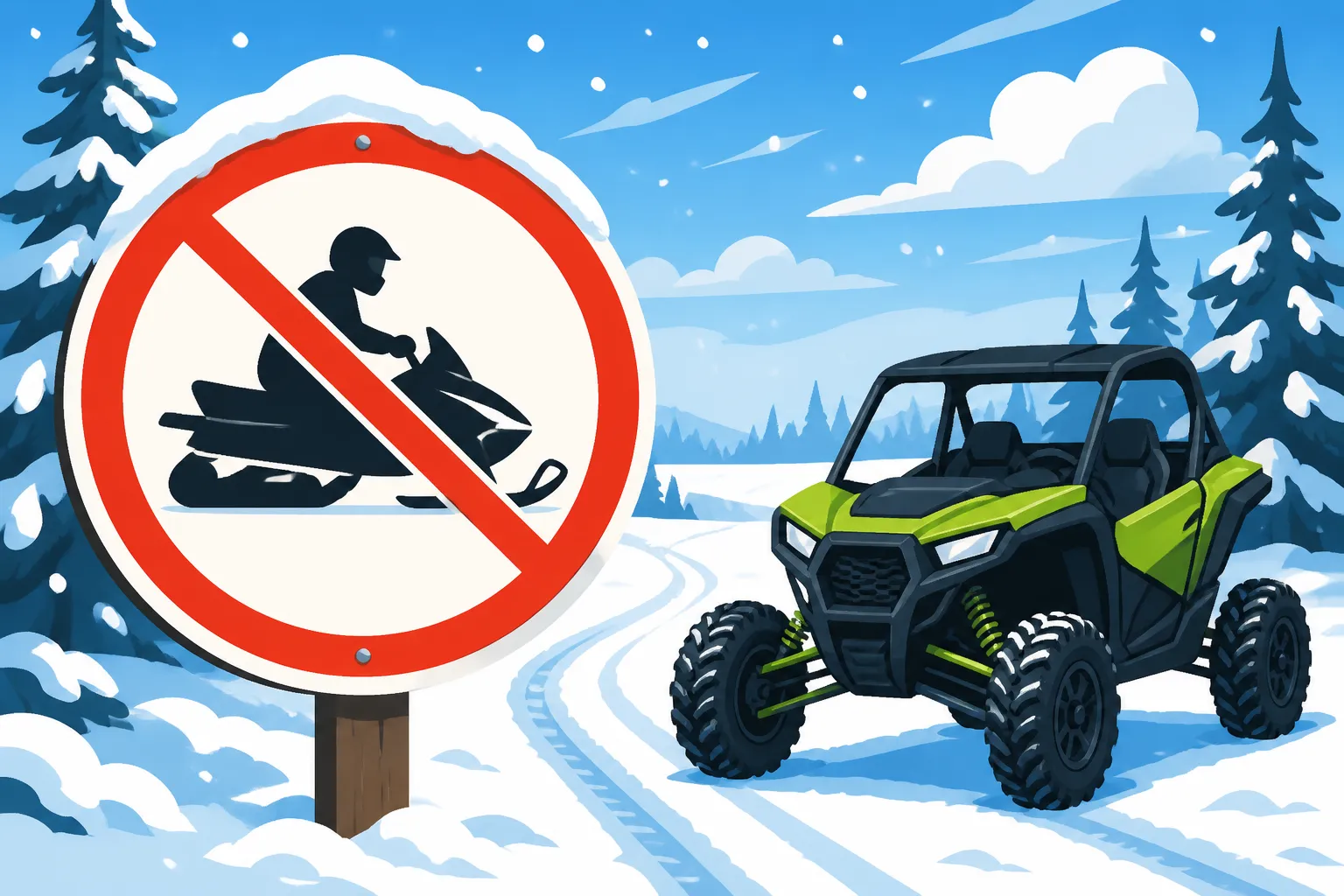
Snowmobile access is not ATV access
A trail maintained or signed for snowmobiles is not automatically open to ATVs and UTVs. The route may cross Crown land, private property, a provincial park, or land managed under a club or trail agreement. Each area can have its own access conditions, and permission for one type of machine or season does not necessarily extend to another.
For riders, that distinction can be frustrating. A trail may be groomed, visible, and physically passable, yet still be closed to quads. Snow cover does not turn a snowmobile route into a general-purpose trail, and a lack of a gate or sign does not prove that riding is allowed. Check the rules for the specific area and machine before setting out.
It also helps to separate trail closures from broader land-access rules. Saskatchewan’s general approach to ATV use depends on where you are, who manages the land, and whether there are posted restrictions or other permissions to consider. For background, see [Saskatchewan Snowmobile Trails Open to Quads in Summer] and [Saskatchewan Crown Land Access Rules].
Why seasonal restrictions are used
Snowmobile routes are developed and maintained for winter travel. Their condition, grooming, signage, and intended use may be tied to snowmobile season. When the snowmobile season is over, the land manager or trail group may restrict other machines to reduce damage, avoid conflicts, or protect access arrangements.
Even a frozen route can be vulnerable. Repeated ATV or UTV traffic may affect the trail surface, drainage, vegetation, or adjoining land. A machine can also leave ruts or damage a groomed corridor when conditions are soft beneath the snow. What looks firm from the seat may conceal thawing ground, water, or fragile trail edges.
That does not mean every trail follows one identical closure schedule. A club route, park trail, and Crown land route may be managed differently. Treat any general date range as a starting point, not permission to ride everywhere. Before traveling, confirm the current status with the group or office responsible for the route.
When some snowmobile trails may be open to quads
The usual ATV season window on snowmobile routes
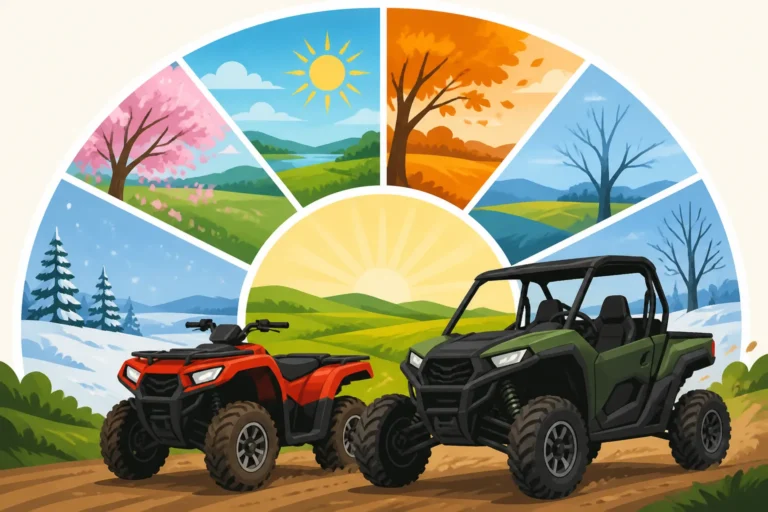
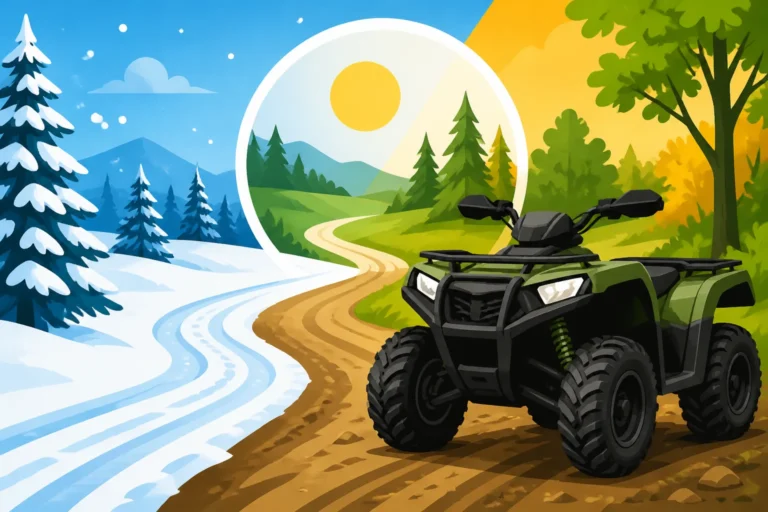
Some Saskatchewan snowmobile trails are open to quads during a defined part of the year. The season commonly described for ATV use on these trails runs from April 16 through November 30, with December through April treated as the closed period for quads. These dates do not mean every snowmobile trail is available throughout that window.
A trail can still be closed because of local rules, landowner conditions, fire restrictions, maintenance, or temporary conditions. A designated park trail may have its own operating rules, and an agreement for one club trail may not apply to a nearby route. A date on the calendar is not a substitute for checking the specific trail.
The April 16 opening can also catch riders off guard. Spring conditions vary across Saskatchewan, and a trail that is open by date may still be wet, soft, or unsuitable for machines. Waiting until the route is firm can help protect the trail and reduce the risk of getting stuck. Likewise, November access should not be assumed simply because the usual window has not ended; local notices can change access.
What the dates do and do not tell you
The seasonal dates answer one narrow question: when ATV use may be allowed on certain snowmobile trails under the applicable arrangement. They do not establish that all snowmobile trails are public ATV trails, that the route is currently passable, or that the same rules apply to every municipality, park, and land type.
Use the following table as a planning prompt, not as a province-wide permission slip:
| Period or situation | What an ATV or UTV rider should assume | What to check |
|---|---|---|
| December through April | Snowmobile trails are generally closed to quads under the seasonal schedule | Trail-specific notices, land manager rules, and any posted closure |
| April 16 through November 30 | Some snowmobile trails may be open to quads | Whether the particular route allows ATV use and whether seasonal restrictions apply |
| Wet spring or fall conditions | Open dates do not guarantee good trail conditions | Club updates, park notices, and local conditions |
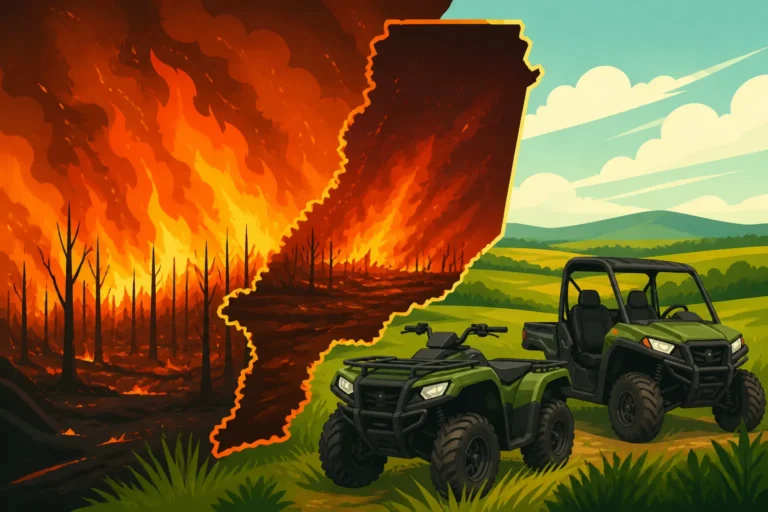
| Temporary closure or fire restriction | The trail may be unavailable even during the usual ATV window | Current closure information from the responsible authority |
| Trail with unclear signs or ownership | Do not assume access based on appearance | Identify the land manager and ask for permission or clarification |
For map planning, a tool such as onX Offroad may help you review routes and organize a trip, but a mapped line cannot establish legal access or override a closure. Confirm access with the trail group, municipality, park office, or land manager responsible for the route.
How to check a trail before you haul
Start with the group or land manager responsible
First identify who manages the trail. It may be a local ATV or snowmobile club, a park office, a rural municipality, or a government land manager. If the route crosses several types of land, you may need to check more than one set of rules. A trailhead sign can help, but it may not include every current restriction.
Look for a current trail notice rather than relying on an old social media post, a saved map, or what a friend remembers from last season. Ask specifically whether ATVs and UTVs are permitted on the route, whether the permission applies during your planned dates, and whether any section is closed. For trips involving Crown land, review [Saskatchewan Crown Land Riding Explained] and check whether separate access permission is needed.
If you cannot identify who manages a route, pause before riding it. A line appearing on a map, including onX Offroad, is useful for orientation but is not the same thing as authorization. When in doubt, contact the local club or office and describe the trailhead, access road, and intended machine.
Check the route in pieces, not just as one line
Long routes often cross multiple areas. A trail may begin on a club-maintained corridor, pass near private land, and connect with a road or park trail that has different rules. Confirm each segment instead of assuming that permission at the trailhead covers the entire ride.
Pay attention to signs at intersections, gates, trailheads, and access roads. A closure may apply only to one branch or one land parcel. Keep a note of restrictions and alternate routes before you leave, especially if the ride is in a remote area with limited cell service. [Saskatchewan Trail Conditions Before You Haul] is a useful related planning topic.
A practical pre-trip check can be as simple as calling the responsible club or office and asking: “Are ATVs or side-by-sides allowed on this route on my planned date, and are there any closures or conditions I should know about?” That direct question is more useful than asking only whether the trail is “open,” because “open” may mean open to snowmobiles, hikers, or another user group.
Riding responsibly during the open season
Protect the trail surface and other users
When a trail is open to ATVs, ride in a way that helps keep it open. Avoid making new tracks around muddy sections, cutting corners, or widening the trail to get around a wet patch. Those choices can damage vegetation and drainage, and they may create maintenance problems for the club or land manager.
If a section is too soft, turn around or use an authorized alternative. Spinning tires can deepen ruts quickly, especially when several machines follow the same line. A group ride can magnify the impact: one rider’s detour becomes a new track for everyone behind them. Keep the group on the established route and give trail volunteers room to do their work.
Respect other users as well. A corridor may serve snowmobilers in winter and different users in warmer months. Slow down near people, homes, trailheads, and crossings. Follow posted speed and access rules, and do not treat the trail as a shortcut onto a road, private property, or a closed area. For more on planning routes and respecting trail expectations, see [Saskatchewan Trail Etiquette Locals Expect].
Prepare for conditions that can change during the day
A route that feels firm in the morning can soften after temperatures rise, especially in shaded bush, low areas, and places where water collects. Conditions also vary across the province. A trail near Prince Albert may not behave like a route in southern Saskatchewan, and a sunny stretch can be much drier than a nearby wooded section.
Carry basic recovery and safety equipment suited to the trip, and make sure the machine is ready for the terrain. Let someone know your route and expected return time, particularly if you are riding somewhere with weak cell coverage. A navigation app such as onX Offroad can assist with route awareness, but bring a backup plan and do not depend on a phone signal to find your way home.
The safest choice is to end or reroute a ride when conditions or access become uncertain. That may feel like a disappointing call after towing a machine a long distance, but it is better than damaging a trail, getting stranded, or discovering a restriction after entering the route. [Saskatchewan Trail Closures After a Storm] and [Saskatchewan Wildfire Season Rules for Riders] cover other reasons a route can become unavailable.
Common mistakes and how to avoid them
Assuming a snowmobile trail is open because it is visible
A packed track can look like an invitation, but appearance does not tell you who may use it or when. Snowmobile tracks are particularly easy to follow in winter, and that visibility can make a closed route seem more accessible than it is. The same applies to a wide trail that appears unused: lack of traffic is not proof that riding is permitted.
Avoid relying on assumptions such as “it is Crown land, so I can ride anywhere,” “the trail is on a map,” or “we rode here last year.” Access can depend on land status, posted restrictions, agreements, season, and local rules. If you are unsure about permissions on Crown land, see [Saskatchewan Crown Land Riding Permission]. For park routes, check the specific park requirements rather than applying a club trail’s rules.
A good habit is to confirm both the machine type and the date. Ask whether the route is open to an ATV or UTV—not just whether the trail is open—and whether that permission applies during the winter period or only during the warmer-season window.
Treating old information as current permission
Trail information can become stale. A screenshot, downloaded route, old club post, or previous season’s advice may not reflect a closure, maintenance work, fire restriction, or change in access. Even a familiar route can have a new condition that affects one section.
Before leaving, compare the route against recent information from the responsible club, municipality, park, or land manager. Keep a backup route that is also confirmed as open. If you are using onX Offroad or another mapping tool, use it to plan and understand the route, then confirm access through the authority that controls it.
It is also worth checking again close to departure if the trip depends on a specific trail. Conditions can shift after heavy rain, thaw, fire activity, or local maintenance. A quick call or notice check may save hours of hauling and prevent an avoidable ride into a closed area.
Planning a winter trip without riding a closed trail
Choose a route intended for your machine and season
If your goal is to ride in winter, look for an area that expressly permits the type of machine you plan to use during that season. Do not substitute a snowmobile trail simply because it is nearby or easy to follow. Confirm whether there are designated ATV routes, local permissions, or other lawful options where you intend to ride.
Check all relevant rules for the land and route, including municipal bylaws and park restrictions. If your trip involves a road, ditch, or crossing, separate road-use rules may apply. The fact that a route connects to a trail does not mean you may ride every connecting section. [Saskatchewan ATV Road Rules Explained] can help you understand why those segments need their own check.
For a group outing, make one person responsible for confirming access and sharing the details with everyone. Send the route, closure information, and turnaround plan to the group before departure. That avoids the awkward trailhead conversation where one rider has heard the route is open and another has heard it is closed.
If the answer is unclear, do not ride the route
Sometimes a map, sign, and online notice do not give a clear answer. In that case, contact the land manager or local trail group and wait for clarification. Do not rely on another rider’s confidence or interpret silence as permission. If you cannot confirm access, choose a different route whose rules are clear.
This is especially important when the trail crosses private land, a grazing lease, or an area with seasonal restrictions. Permission may be limited to a specific trail, time, or user group. Keep any written permission or confirmation with your trip notes, and respect conditions such as staying on the marked route or avoiding particular dates.
A little checking can save a long drive and help preserve relationships with the clubs and landowners who make trail access possible. The key point is straightforward: Saskatchewan snowmobile trails may have a warmer-season window for quads, but winter snowmobile access does not automatically authorize ATV or UTV riding.
Disclaimer
This article is for general informational purposes only and does not constitute professional advice. Laws, prices and regulations vary by location and change over time. Consult a qualified professional for guidance on your specific situation.