Saskatchewan Has No Registration Fee
It's incredibly frustrating when you're trying to do the right thing as an ATV owner, diligently searching for information on how to register your machine and what fees to expect, only to find conflicting or confusing answers. Many riders from other provinces, or even long-time Saskatchewan residents, scratch their heads wondering why they can't seem to find the provincial ATV registration fee. The simple truth is, you're not finding it because it doesn't exist – there is no provincial ATV registration fee in Saskatchewan because the province simply does not register ATVs. This guide will walk you through why this is the case, what that means for you, and what paperwork actually matters here on the prairies.
The Common Misconception: Why Riders Expect a Fee
When you buy a new quad or side-by-side, or even a used one from a private seller, it's natural to assume there's some sort of provincial registration process, complete with a fee and a plate. After all, most other vehicles you own—cars, trucks, even some trailers—have to be registered with the province. This expectation often leads riders down a rabbit hole of online searches and calls to government offices, all yielding the same puzzling answer: "There's no such thing."
Comparing Saskatchewan to Other Provinces
Many people move to Saskatchewan from other parts of Canada, or they have friends and family who ride in different provinces. In places like Ontario, Alberta, or British Columbia, registering an ATV with the provincial authority is a standard, often mandatory, procedure. You get a plate, you pay an annual fee, and you might even have a physical registration card to carry with you. So, when someone accustomed to this system arrives in Saskatchewan, they naturally look for the same framework. They might call Saskatchewan Government Insurance (SGI), the provincial insurer, assuming it handles ATV registration like it does for other vehicles. The disconnect comes from the fact that SGI, while handling mandatory insurance for ATVs, does not manage a provincial ATV registration system. This difference often catches new residents, or even those just doing their due diligence, completely off guard.
It creates a peculiar situation where you feel like you're missing a crucial step, but in reality, that step was never there to begin with. You might hear stories from out-of-province riders about their annual registration sticker or the metal plate they bolt to their machine, and then wonder why your Saskatchewan-bought ATV lacks these items. This isn't an oversight on your part; it's simply how things are done (or, more accurately, not done) here.
Snowmobiles vs. ATVs: The Internal Saskatchewan Confusion
Adding another layer of confusion to the mix is the fact that Saskatchewan does require snowmobiles to be registered. This is perhaps one of the biggest reasons why riders often assume ATVs need the same treatment. You buy a snowmobile, you go to a provincial issuer, you pay a fee, and you get a registration. This process is very much in line with what people expect for an off-road recreational vehicle. When you then learn that your ATV, a similar recreational machine often used on similar terrain, has no such requirement, it's easy to feel perplexed. [Saskatchewan Registers Snowmobiles, Not ATVs] is a point of frequent misunderstanding.
Think about it from a practical standpoint: you might own both a snowmobile for winter adventures and an ATV for summer exploration. You're familiar with the annual registration ritual for your sled. So, when spring rolls around and you're getting your quad ready for the trails, your mind naturally drifts to "time to renew the registration." It's a logical jump, but a mistaken one in this province. The [Saskatchewan Snowmobile Registration Compared] to ATVs highlights this stark difference, showing how two seemingly similar categories of recreational vehicles are treated quite differently under provincial law. This internal inconsistency, while rooted in different legislative histories and operational considerations, certainly doesn't make it any easier for the average rider to understand.
Understanding Saskatchewan's Unique Approach to ATVs
Saskatchewan stands out from many other provinces because it doesn't have a provincial registration system for ATVs. This isn't a loophole or an oversight; it's a deliberate legislative choice. Instead of focusing on registration for identification purposes, the province's regulatory framework for ATVs places its emphasis on safe operation, insurance, and the rules of the road (or, more accurately, the ditches and trails).
The All Terrain Vehicles Act: What It Actually Regulates
The primary piece of legislation governing ATVs in Saskatchewan is [Saskatchewan's All Terrain Vehicles Act]. This Act, first introduced in 1988, is comprehensive in what it does cover, which includes critical aspects like operator age requirements, mandatory helmet use, eye protection, speed limits in certain areas, and where you can and cannot ride. It also dictates things like carrying liability insurance and specific rules for crossing highways or riding in ditches.
However, if you pore over the 36 sections of this Act, you won't find a single mention of provincial registration or a registration fee. The Act focuses on the operation of the machine and the responsibilities of the operator and owner, rather than tracking individual machines through a provincial database. For example, it outlines the duty to report accidents, the penalties for unsafe operation, and the rules around supervising younger riders. It’s all about how you ride and what you need to do to be safe and responsible, not about what piece of paper proves the province knows you own the machine.
Why a Provincial Registry Never Materialized
The absence of a provincial ATV registry in Saskatchewan isn't due to a lack of thought or discussion. Over the years, there have been various conversations about the benefits and drawbacks of implementing such a system. The initial legislative framework for ATVs, unlike snowmobiles, did not include a registration component, and this approach has largely persisted. One of the main reasons often cited for [Why Saskatchewan Never Built a Quad Registry] revolves around the perceived administrative burden versus the practical benefits.
Establishing and maintaining a province-wide registry for potentially hundreds of thousands of ATVs, many of which are used seasonally, on private land, or for agricultural purposes, would be a massive undertaking. It would require significant infrastructure, staff, and enforcement mechanisms. Furthermore, for many years, a substantial portion of ATV use in Saskatchewan has been for utilitarian purposes on farms and ranches, or recreationally on private property, making a universal registry seem less urgent compared to, say, vehicles operating exclusively on public roads. The province has historically opted for a less bureaucratic approach, prioritizing education and enforcement of operational rules over the administrative task of registering every single machine. This unique stance means that, unlike other provinces, [Saskatchewan Does Not Register ATVs].
What Replaces a Provincial Registration in Saskatchewan
Since there's no provincial registration or corresponding fee for ATVs in Saskatchewan, it begs the question: what serves as the official record for your machine, and how do you prove ownership? The answer lies in good old-fashioned paperwork, specifically the bill of sale. This document becomes the cornerstone of your ownership record, a practice that might seem quaint in an increasingly digitized world but remains essential here.
Bills of Sale as Primary Documentation
In Saskatchewan, your [Saskatchewan Bills of Sale Do the Work] of proving ownership. When you purchase an ATV from a dealer, you'll receive a detailed bill of sale that includes information about the machine (make, model, year, VIN/serial number), the purchase price, and the details of both the buyer and the seller. This document is crucial. If you buy from a private seller, it's equally important to get a written bill of sale. You can find templates online, like those offered by LawDepot, that guide you through creating a comprehensive bill of sale, ensuring all necessary details are included. This helps protect both the buyer and the seller by clearly documenting the transaction.
Without a provincial registration, this bill of sale acts as your primary legal proof that the machine belongs to you. It's what you would use to secure financing, make an insurance claim, or, in the unfortunate event of theft, demonstrate to law enforcement that the machine is rightfully yours. It's not just a receipt; it's your title, your registration, and your primary proof of ownership all rolled into one. For this reason, always keep your bill of sale in a safe place, and consider having a copy on hand (not on the machine itself, for security) when you're out riding. [How to Prove You Own an ATV in Saskatchewan] fundamentally comes down to having this critical document.
No Provincial Plate, Sticker, or Decal
Another common expectation that riders need to adjust to in Saskatchewan is the absence of any provincial identification markers. Unlike registered vehicles or snowmobiles, you will not receive a metal plate, a paper sticker, or any kind of decal from the province for your ATV. [Saskatchewan Has No ATV Plate or Decal], so don't go looking for one. This can feel a bit odd, especially if you're used to seeing these identifiers on other vehicles.
The lack of a provincial plate means that while your ATV is insured (which is mandatory), it doesn't have a visible, government-issued number that identifies it in the same way a car or a snowmobile does. This can sometimes make it challenging for law enforcement to quickly identify a machine or its owner from a distance, which is often a point of frustration for police and a reason some advocate for a registration system. However, for the rider, it simply means one less piece of official paraphernalia to worry about losing or renewing annually. Instead, the focus shifts entirely to carrying your personal identification and proof of insurance when operating your ATV, as these are the documents an officer would expect to see.
The Role of Municipalities and Local Permits
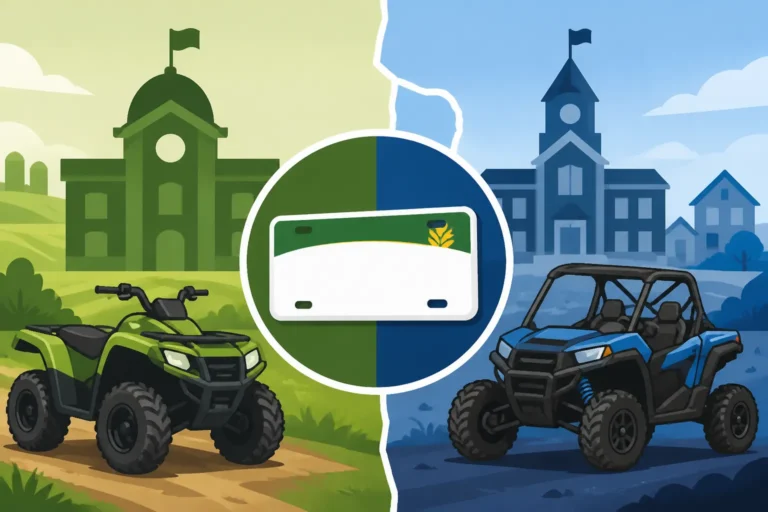
While the province doesn't get involved in ATV registration, some local governments have stepped into the void to create their own systems, often to manage local riding within their communities. This creates a patchwork of rules and requirements across Saskatchewan, where a permit might be needed in one village but not in an adjacent rural municipality.
Rural Municipalities and Villages Stepping Up
It's common for rural municipalities (RMs) and villages, particularly those with a significant recreational ATV presence, to implement their own bylaws regarding ATV use. These bylaws often include provisions for local permits or plates, which are then issued by the municipal office. These local schemes are designed to address specific community needs, such as regulating speed on local roads, managing access to certain trails, or ensuring that machines operating within their boundaries contribute to local infrastructure maintenance. For example, some lake communities or popular recreational areas find that issuing permits helps them manage the impact of ATV traffic and even fund local trail development.
If you ride frequently in a particular village or RM, it's always a good idea to check their specific bylaws. What's allowed in one area might be restricted in another, and a local permit might be a requirement to legally operate your ATV on municipal property or designated trails. These municipal plates are distinct from any provincial registration and are only valid within the issuing municipality's jurisdiction. They represent a local effort to manage ATV use where the province has not. You can see examples of this in [Saskatchewan Municipal Plate Schemes].
Understanding Municipal Plate Costs
When a municipality does decide to implement a local permit or plate system, there will almost certainly be a fee associated with it. These fees are set by the individual municipality, not the province, and they can vary significantly from one community to another. For example, [Saskatchewan Municipal Plate Costs] might be a modest administrative fee in a small village, while a larger, more recreation-focused community might charge a higher annual fee to help cover costs related to trail maintenance, signage, or enforcement.
It's important to remember that these municipal fees are not provincial registration fees. They are local charges for a local permit that allows you to operate your ATV within that specific municipal jurisdiction, usually under certain conditions. They are also typically renewed annually, and like any local permit, you'll need to understand the rules and regulations attached to it. For instance, if you obtain a permit from the District of Lakeland, it usually has an expiry date, and you'll need to renew it before that date to continue riding legally within their limits. If you plan to ride in multiple municipalities with local plate schemes, you might even find yourself needing multiple permits, each with its own cost and requirements.
Proof of Ownership: What You Actually Need
Given the lack of provincial registration, it's natural to wonder what documents you do need to keep track of as an ATV owner in Saskatchewan. The focus shifts from official government certificates to personal records that demonstrate your legal right to the machine and your compliance with operating laws.
Essential Documents for Buying and Selling
When buying or selling an ATV in Saskatchewan, the bill of sale is your absolute cornerstone. This document should clearly state the date of sale, the purchase price, the full names and contact information of both the buyer and the seller, and a detailed description of the ATV, including its make, model, year, and crucially, its Vehicle Identification Number (VIN) or serial number. For private sales, using a robust template, perhaps from a service like LawDepot, can help ensure all necessary legal details are covered. [Saskatchewan Bills of Sale for a Quad] are paramount. Without a provincial registry, a well-executed bill of sale is your best defence against disputes or questions of ownership.
When you're the buyer, ensure the serial number on the bill of sale matches the one stamped on the ATV. It’s also wise to check the serial number against any stolen vehicle databases you can access, though the lack of a central ATV registry makes this more challenging than with cars. Keep the original bill of sale in a secure place, like with your other important financial documents. If you ever decide to sell the machine, having this clear chain of ownership will be invaluable. For those selling, providing a clear, itemized bill of sale protects you as well, documenting the terms of the sale and preventing future claims from the buyer.
What to Carry When Riding
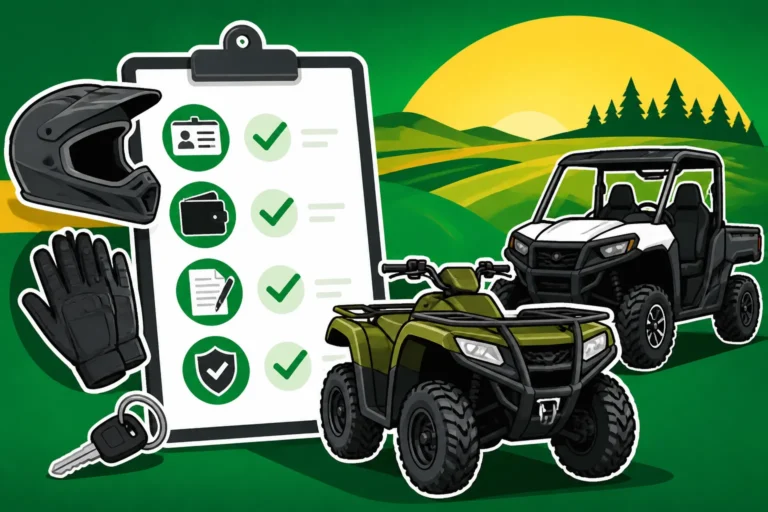
While you won't be carrying a provincial ATV registration card, there are other documents you absolutely must have on you or on your machine when riding. First and foremost, you need proof of insurance. [Saskatchewan Insurance Requirements for Riders] are mandatory, meaning you need to have a minimum amount of liability coverage. This proof can be in the form of an insurance card or a copy of your policy. An officer can ask to see this at any time, and not having it could lead to fines.
Secondly, you should always carry personal identification, such as your driver's licence. The [Saskatchewan Requires a Driver's Licence] to operate an ATV, with specific exceptions for youth under supervision or with a safety course certificate. Your licence proves you are legally permitted to operate the machine. It's a good practice to keep these documents in a waterproof pouch on your person, not just tucked into a compartment on the ATV, in case you get separated from your machine or it becomes submerged. While you might not have a piece of paper proving your ATV is "registered," carrying your insurance and ID is non-negotiable for legal operation.
Costs Associated with ATV Ownership (Beyond a Non-Existent Fee)
Since there’s no provincial ATV registration fee in Saskatchewan, does that mean ATV ownership is exceptionally cheap? Not necessarily. While you save on that specific administrative cost, there are plenty of other financial considerations that come with owning and operating an ATV in the province. Budgeting for these real expenses is far more important than searching for a non-existent fee.
Mandatory Insurance
One of the most significant and non-negotiable costs for ATV owners in Saskatchewan is insurance. The All Terrain Vehicles Act clearly states that every ATV operating off private property must have a minimum amount of public liability insurance. While [Saskatchewan Snowmobile Fees and Insurance] includes insurance as part of the provincial registration package, for ATVs, you need to purchase this coverage separately. [Saskatchewan Insurance Requirements for Riders] means you need a standalone policy, typically through a private insurance broker or your existing home/auto insurer.
The cost of this insurance can vary widely depending on several factors: the type of ATV, its value, your driving record, where you live, and the coverage limits you choose. While the Act specifies a minimum liability, many riders opt for higher limits and additional coverage, such as collision, comprehensive, or theft protection, which naturally increases the premium. It's crucial to shop around and get quotes from different providers to ensure you're getting the best rate for the coverage you need. Don't skimp on this, as it protects you financially in case of an accident, property damage, or injury to others.
Provincial Sales Tax (PST) and GST
When you purchase an ATV in Saskatchewan, whether new or used from a dealer, you will be subject to both provincial sales tax (PST) and the federal Goods and Services Tax (GST). This is where a significant chunk of your initial purchase cost will go, far outweighing any non-existent registration fee. Currently, [Saskatchewan PST at Purchase] is applied at 6% of the purchase price, and the federal [Saskatchewan GST at Purchase] is 5%, for a combined 11% tax on your new machine.
Even for private sales, Saskatchewan has specific rules regarding PST. While many used goods sold privately are exempt from PST, recreational vehicles like ATVs often fall under different rules, requiring the buyer to self-assess and remit the PST if the purchase price exceeds a certain threshold. This means that even if you buy a used quad from your neighbour, you might still owe the PST to the provincial government. It's essential to understand these tax obligations because failure to pay can result in penalties. Always factor in these taxes when budgeting for your ATV, as they can add a substantial amount to the sticker price.
Other Potential Expenses
Beyond insurance and taxes, ATV ownership comes with a host of other expenses that riders need to be aware of. These can include:
- Dealer Fees: When buying new from a dealership, you might encounter fees for freight, pre-delivery inspection (PDI), and documentation. These can add a few hundred to over a thousand dollars to the price. Always ask for an "out-the-door" price to get the full picture.
- Maintenance and Repairs: Like any vehicle, ATVs require regular maintenance—oil changes, filter replacements, tire wear, and occasional repairs. These costs can add up, especially if you ride frequently or in challenging conditions.
- Fuel: ATVs run on gasoline, and a day of riding can consume a fair amount of fuel. Factor in fuel costs for both the ATV itself and your truck for hauling it to riding areas.
- Gear and Accessories: Helmets, eye protection, riding boots, and appropriate clothing are essential for safety. Beyond that, many riders invest in winches, cargo racks, handguards, and other accessories to enhance their riding experience.
- Municipal Permits: As discussed, if you plan to ride in areas with [Saskatchewan Municipal Plate Costs], you'll need to budget for these annual fees.
- Storage: If you don't have suitable storage space, you might need to pay for off-site storage, especially over the long Saskatchewan winters.
- Trailer Costs: Unless you live right at a riding area, you'll need a trailer to haul your ATV, which represents another purchase cost, along with its own insurance and licensing (for the trailer, not the quad).
Understanding that these are the true costs of ATV ownership in Saskatchewan helps you budget realistically and avoids the frustration of searching for a fee that simply isn't part of our provincial system. Focus your financial planning on these real-world expenses, and you'll be well-prepared for years of enjoyment on the trails and fields of Saskatchewan.
Disclaimer
This article is for general informational purposes only and does not constitute professional advice. Laws, prices and regulations vary by location and change over time. Consult a qualified professional for guidance on your specific situation.