Riding in a Municipality With No Plate Scheme
It can be incredibly confusing to figure out where you can legally ride your ATV or UTV in Saskatchewan, especially when you start looking into local bylaws. Many riders feel a real headache trying to pin down the rules because there's no single provincial registry for quads, and then each town or rural municipality seems to have its own way of doing things—or no way at all! This guide is here to untangle that knot, specifically focusing on what you need to know when you want to ride in a municipality that doesn't have its own ATV plate or permit scheme.
Understanding Saskatchewan's Unique ATV Landscape
Saskatchewan has a reputation among off-road enthusiasts for having a somewhat unconventional approach to ATVs and UTVs, particularly concerning registration. It's not like most other provinces, and it can definitely lead to a lot of head-scratching.
The Absence of Provincial Registration for ATVs
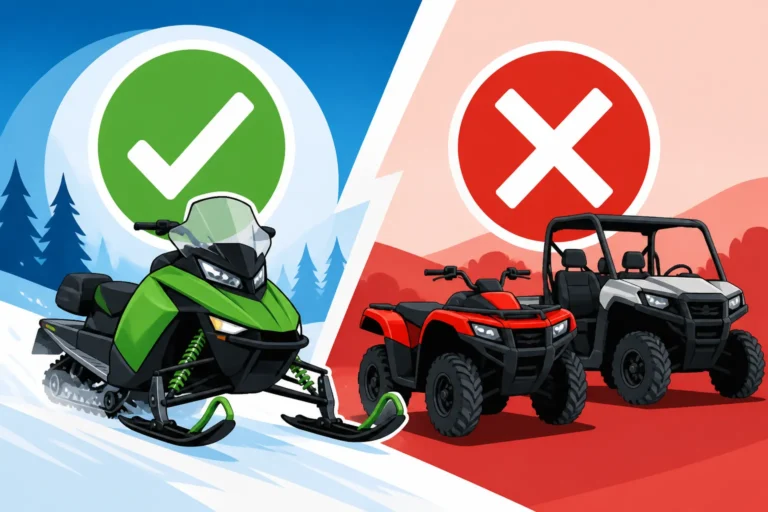
Let's get this out of the way upfront: if you're searching for a provincial ATV registry in Saskatchewan, you'll be looking forever. The province simply doesn't have one for all-terrain vehicles. This isn't an oversight or a recent change; it's how it's been for a long time. Unlike snowmobiles, which do require provincial registration and come with a specific annual fee and liability insurance through Saskatchewan Government Insurance (SGI), quads are left to a different set of rules. This means there's no provincial plate, no sticker to display, and no central database where your ATV's VIN is recorded by the province. For many, this sounds like freedom, but it can also make proving ownership or tracing a stolen machine much more complicated. It’s part of the reason [Why Saskatchewan Never Built a Quad Registry].
This lack of a provincial system often leads to a common misconception that ATVs are completely unregulated, which couldn't be further from the truth. While the province might not register your machine, it absolutely has a comprehensive set of rules governing how and where you can operate it. These rules are laid out in legislation like [Saskatchewan's All Terrain Vehicles Act], and they apply whether you're ripping through a remote bush trail or carefully navigating a grid road.
How Municipalities Step In (or Don't)
Because the province doesn't handle ATV registration, some forward-thinking towns and rural municipalities have stepped up to create their own local plate or permit schemes. These local initiatives are typically designed to generate revenue for trail maintenance, address local safety concerns, and provide a degree of local control over ATV use on municipal lands or within town limits. Places like Candle Lake or the District of Lakeland are well-known for having such programs, often requiring a small fee and issuing a visible sticker or plate that needs to be renewed annually. These municipal plates can be a bit of a local lifeline, filling a gap that the province chose to leave open. For more on this, check out [Municipal Plates Fill the Gap the Province Left].
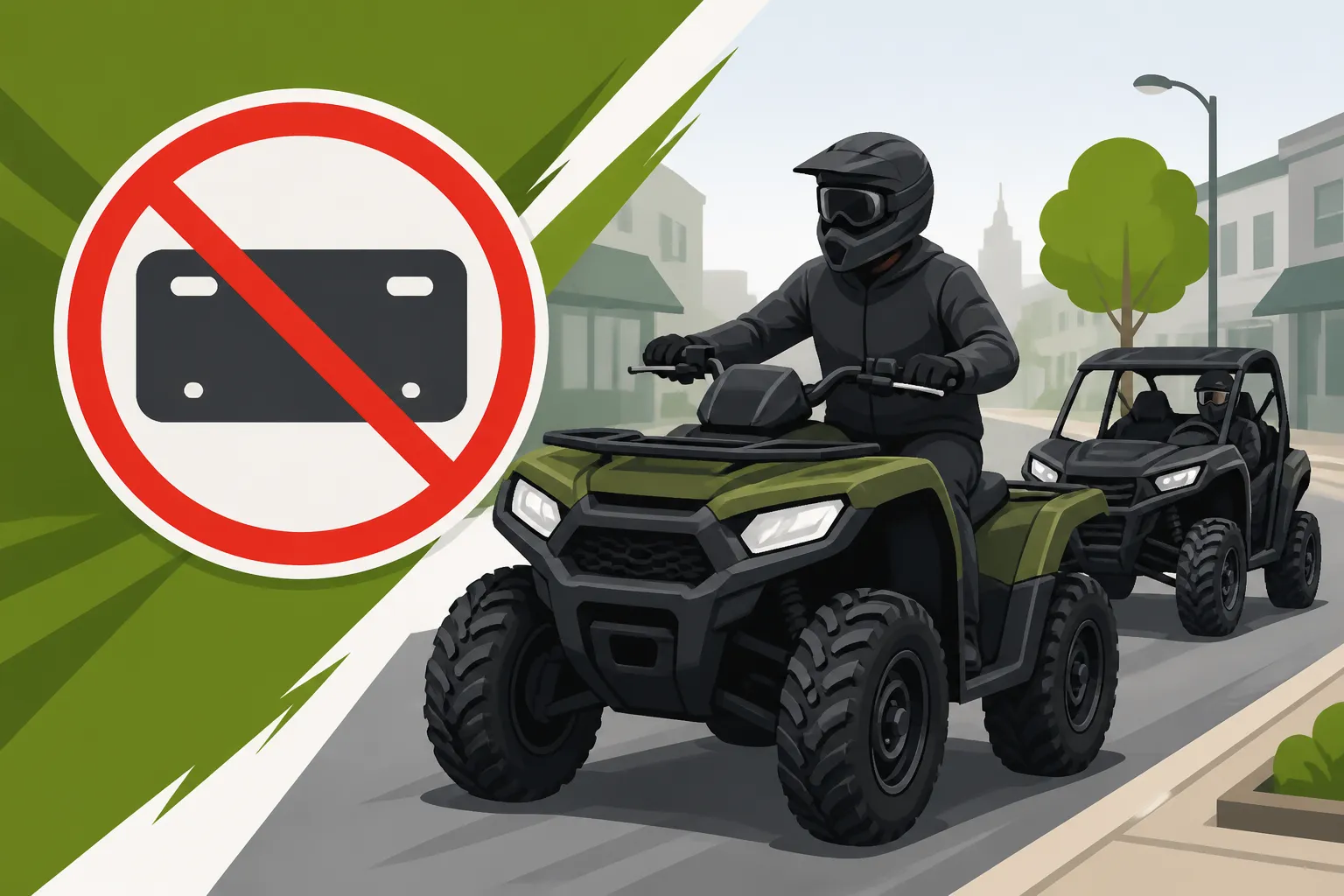
However, and this is crucial for our discussion, many, many other municipalities across Saskatchewan do not have any such scheme. They haven't enacted a bylaw requiring local registration, nor do they issue any kind of permit or plate for ATVs. This situation can be confusing. Does it mean you can ride anywhere? Absolutely not. It simply means that your local riding privileges aren't contingent on buying a special local permit. Instead, you fall back entirely on the provincial rules.
The Impact of No Local Bylaw
When a municipality—whether it's a small village, a sprawling rural municipality, or even a larger town—hasn't enacted specific ATV bylaws or a plate scheme, it creates a particular regulatory environment. It doesn't mean a free-for-all. It actually simplifies things in one sense: you don't have an extra layer of local rules to navigate on top of provincial ones. You can ride your quad in such areas as long as you adhere strictly to the provincial All Terrain Vehicles Act and any other relevant provincial laws, such as those governing Crown land access or private property trespass.
The primary impact is that you won't be able to buy a local permit or display a local plate, because one simply doesn't exist for that area. This also means local authorities won't be enforcing a specific municipal registration requirement. However, they will still be enforcing the provincial rules, which cover everything from rider age to helmet use, insurance, and where you can operate your machine. So, while you might not need a "Candle Lake permit," you still need to ensure your machine is insured and you're riding safely and legally under provincial guidelines.
Navigating the Rules When No Local Plate Exists
So, you're in a municipality without a local ATV plate scheme. What now? Your focus shifts entirely to the provincial rules, which are extensive and cover most aspects of ATV operation.
Relying on Provincial Legislation
In the absence of local bylaws regarding ATV registration or permits, the provincial [Saskatchewan's All Terrain Vehicles Act] becomes your absolute governing document. This Act specifies where ATVs can and cannot be operated, who can operate them, what safety gear is required, and what documentation you need to carry. It's the legislative backbone for all ATV operation in the province, even in the most remote areas.
For instance, the Act details rules about riding on highways, grid roads, and ditches. It sets age limits for operators and requires supervision for younger riders. It mandates helmets and eye protection. These are non-negotiable provincial requirements that apply universally, regardless of whether a local plate scheme exists or not. Knowing this Act inside and out is your best defense against getting a ticket or, more importantly, ensuring your safety and the safety of others.
Proof of Ownership and Insurance
Even without a provincial or municipal registration plate, you still need to prove that your ATV belongs to you and that you have adequate insurance coverage. These aren't just good ideas; they're often legal requirements or crucial for financial protection.
For proof of ownership, your most important document is your bill of sale. When you buy an ATV, whether new from a dealer or used from a private seller, always get a detailed bill of sale. This document should include the seller's and buyer's information, the ATV's make, model, year, and crucially, its Vehicle Identification Number (VIN). A clear, well-documented bill of sale is your primary proof that you own the machine. If you're selling, a good template (which you can often find on sites like LawDepot) helps protect both parties. If you need more details, check out [How to Prove You Own an ATV in Saskatchewan].
As for insurance, the provincial Act explicitly requires a minimum amount of liability insurance for any ATV operated off private land. You need at least [Saskatchewan's Minimum Insurance Requirement] to cover potential damages or injuries if you're involved in an accident. This insurance is typically purchased through a private broker. Don't assume your home insurance or vehicle insurance automatically covers your quad. Always get a separate policy or an endorsement that specifically covers your ATV. You'll need to be able to show proof of this insurance if requested by a peace officer.
Essential Provincial Riding Rules
Since you're relying solely on provincial law in these no-scheme municipalities, it's vital to be familiar with the core operating rules. These aren't obscure regulations; they're the foundation of safe and legal riding in Saskatchewan.
- Driver's Licence: You need a valid driver's licence to operate an ATV, with some exceptions for supervised youth. This is a big one that many people overlook. Don't think that because there's no registration, there's no licence requirement. [Saskatchewan Requires a Driver's Licence] for a reason—it demonstrates you have a basic understanding of road rules and responsibilities.
- Age Requirements: There are strict age limits. Generally, riders must be 16 years of age or older. However, there are exceptions for supervised youth between 12 and 15, provided they meet certain conditions, often involving supervision by an adult who has held a driver's licence for at least 365 days. [Saskatchewan ATV Age Requirements] are clearly laid out in the Act.
- Helmet and Eye Protection: This isn't optional. Every rider and passenger must wear an approved helmet, securely fastened, and appropriate eye protection (goggles or a face shield). No matter where you are in Saskatchewan, safety gear is paramount. For more on this, see [Saskatchewan ATV Helmet Law].
- Speed Limits and Ditch Riding: The Act specifies speed limits for ATVs on roadways and dictates how you can ride in ditches. Generally, when riding in a ditch, you must stay as close as practicable to the outermost edge and be at least [Saskatchewan Ditch Riding and the 2-Metre Rule] from the travelled portion of the highway. Speed limits apply here too, often capping out at 80 km/h on certain parts of highways where ATV operation is permitted.
- Road Crossings: Crossing highways requires specific procedures, including stopping, dismounting passengers, and crossing by the shortest route. These rules are critical for preventing accidents with faster-moving traffic. You can find detailed explanations in [Saskatchewan ATV Road Rules Explained].
Practical Considerations for Riders in "No-Scheme" Areas
When you're riding in a municipality without a local plate scheme, your approach to planning and execution needs to be particularly mindful of provincial generalities and common-sense trail etiquette.
Ditch Riding and Crown Land Access
Ditches are a common, sometimes controversial, area for ATV riding in Saskatchewan. When no municipal bylaw prohibits it, the provincial rules for ditch riding apply. This means you must generally stay two metres from the travelled portion of the highway and adhere to speed limits. Always be aware that provincial rules for ditches can also be superseded by specific municipal bylaws that prohibit ditch riding, even if those municipalities don't have a plate scheme. It's a nuanced situation, which means you always need to double-check.
Crown land offers vast riding opportunities, but it's not a free-for-all. [Saskatchewan Crown Land Access Rules] dictate where and when you can ride. Some Crown lands may be closed to ATVs, especially during wildfire season or in ecologically sensitive areas. Always check for Administrator Orders or fire bans before heading out. Just because there's no local plate doesn't mean there are no restrictions on Crown land.
Private Land and Permission
This is perhaps the most critical aspect when riding anywhere without clearly designated trails or municipal oversight. Trespassing is illegal, regardless of whether a local plate scheme exists. You must obtain permission from the landowner before riding on private property. This isn't just common courtesy; it's the law and essential for maintaining good relationships with rural residents.
Sometimes, verbal permission is enough, but for anything more extensive or if you want to be extra cautious, a written agreement is best. You can find templates for land use agreements or permission forms through legal document services like LawDepot that can formalize this permission. Having something in writing can save a lot of headaches if there's ever a misunderstanding. This is particularly relevant for things like [Saskatchewan Grazing Lease Permission] where livestock might be present.
Verifying Local Regulations
The challenge is often knowing for sure whether a municipality has a plate scheme or specific bylaws that affect ATV use. The best approach is proactive research.
- Municipal Websites: Most rural municipalities, villages, towns, and cities have official websites. Look for sections on bylaws, public notices, or recreation. Search specifically for "ATV bylaws," "off-highway vehicles," or "OHV permits."
- Contact Local Offices: If you can't find clear information online, don't hesitate to call the municipal office (RM, village, town, or city hall). Ask directly about ATV bylaws, permits, or registration requirements in their jurisdiction. They are the best source of up-to-date local information.
- Local Riding Groups: Connect with local ATV clubs or online forums. Members often have first-hand knowledge of local regulations and can point you in the right direction.
Remember, even in a municipality without a plate scheme, there could still be bylaws prohibiting ATV use on certain streets, in parks, or during specific hours. Always check for [Saskatchewan Bylaw Lookups Before You Ride] to avoid surprises.
What to Carry and Expect on the Trail
Being prepared is key, especially when you're relying solely on provincial regulations in areas without specific local ATV frameworks.
Documents to Have on Hand
When a peace officer stops you, whether they're RCMP, a conservation officer, or a municipal bylaw officer, they're going to ask for certain documents. Even without a plate, you're not exempt from carrying proof of your compliance with provincial law.
You should always carry:
- Proof of Ownership: Your bill of sale is critical. Make sure it's legible and contains all necessary details. Some riders keep a laminated copy or a clear photo on their phone, in addition to the original in a safe place at home.
- Proof of Insurance: Your insurance card or a certificate from your broker showing you have the minimum liability coverage required by the province. This is one of the first things an officer will ask for.
- Driver's Licence: Your valid driver's licence.
- Youth Certificates/Supervision Information: If a youth is riding, documentation proving they've completed an approved safety course (if applicable) or information about their supervisor, including the supervisor's licence details.
It's a good habit to keep these documents in a waterproof bag on your machine, separate from your wallet, so they're always accessible. For more on this, consider [Carrying Papers on a Grid Road].
Officer Interactions
If a peace officer stops you while you're riding in a municipality without a plate scheme, the interaction will focus on provincial compliance. They will primarily check if:
- You are of legal age or properly supervised.
- You are wearing an approved helmet and eye protection.
- You possess a valid driver's licence.
- You have current, adequate liability insurance.
- You are operating the ATV in a location and manner consistent with the provincial Act (e.g., not on prohibited roadways, adhering to ditch riding rules, not trespassing).
- Your machine meets basic equipment requirements (e.g., proper lighting if riding at night).
The absence of a local plate won't be an issue, as none is required. However, the officer will expect you to be fully compliant with all provincial regulations. Be polite, cooperative, and provide the requested documents promptly.
Safety Gear Essentials
The provincial rules around safety gear are clear and apply universally. Beyond the mandatory helmet and eye protection, common sense dictates a few more essentials, especially when exploring less-regulated areas:
- Appropriate Footwear: Sturdy, over-the-ankle boots protect your feet and ankles.
- Long Pants and Sleeves: To guard against scrapes, branches, and sun exposure.
- Gloves: For grip, warmth, and protection.
- First Aid Kit: Essential for any trail ride.
- Communication Device: A fully charged cell phone (though service can be spotty in remote areas).
- Navigation: A GPS device or a paper map if you're exploring unfamiliar terrain.
Always prioritize safety, even when local bylaws aren't adding an extra layer of regulation.
Summary of Rules in "No-Scheme" Municipalities
To help clarify, here's a quick overview of what generally applies versus what doesn't when riding your ATV in a Saskatchewan municipality that doesn't have its own plate or permit system:
| Aspect | Applies (Provincial Rules) | Does NOT Apply (No Local Scheme) |
|---|---|---|
| Provincial Registration | No provincial registration required for ATVs. | No provincial plate or sticker to display. |
| Municipal Registration | No local plate, sticker, or permit fee specific to that municipality. | No requirement to register with the local RM, village, or town. |
| Proof of Ownership | Absolutely required (Bill of Sale). | Not tied to any registration database, relies on private documentation. |
| Liability Insurance | Mandatory minimum liability insurance for off-private-land operation. | No specific municipal insurance requirement beyond provincial minimum. |
| Driver's Licence | Required (with youth exceptions). | Not tied to a local permit; standard provincial licence rules apply. |
| Age Limits | Strict provincial age limits (16+, 12-15 with supervision). | No additional local age restrictions. |
| Helmet & Eye Protection | Mandatory. | No local variations on safety gear. |
| Ditch Riding Rules | Provincial "2-metre rule" and speed limits apply, unless a specific local bylaw prohibits ditch riding (which is separate from a plate scheme). | No local permits needed for ditch riding. |
| Crown Land Access | Governed by provincial regulations and Administrator Orders. | No local permits needed for Crown land access. |
| Private Land Access | Requires landowner permission (verbal or written, potentially using templates from LawDepot). | No local permits for riding on private land. |
| Trespassing Laws | Fully enforced. | Unaffected by the absence of a plate scheme. |
| Fines & Penalties | Provincial fines and penalties for non-compliance with the All Terrain Vehicles Act. | No local fines specifically for operating without a municipal plate. |
When you find yourself riding in one of Saskatchewan's many municipalities that haven't set up their own ATV plate scheme, remember that the province's All Terrain Vehicles Act is your guiding star. It might feel like a lack of specific local rules means total freedom, but it actually means a greater reliance on understanding and adhering to the comprehensive provincial framework. By knowing your provincial responsibilities for ownership, insurance, safety, and operation, you can still enjoy the vast riding opportunities Saskatchewan has to offer, safely and legally.
Disclaimer
This article is for general informational purposes only and does not constitute professional advice. Laws, prices and regulations vary by location and change over time. Consult a qualified professional for guidance on your specific situation.