Registering With a Town Rather Than the Province
One of the most common frustrations for ATV and UTV riders in Saskatchewan is the sheer confusion around registration. Many new owners, and even seasoned veterans, mistakenly believe there's a provincial system for quads, only to find themselves scratching their heads when they can't locate a government office for it. This guide will thoroughly explain why the province doesn't handle ATV registration and, more importantly, how certain towns and rural municipalities have stepped up to offer their own local plating systems.
The Provincial Reality: Why Saskatchewan Doesn't Register ATVs
It's a question that pops up in every online forum, every campfire conversation, and every dealer showroom across the province: "How do I register my quad in Saskatchewan?" The answer, often to the surprise of many, is that you don't – at least not with the province. This fundamental difference sets Saskatchewan apart from many other jurisdictions and is a key source of misunderstanding for ATV and UTV owners.
No Province-Wide System for Quads
Let's get this out of the way right upfront: Saskatchewan does not have a provincial registry for All-Terrain Vehicles or Utility Terrain Vehicles. You won't find a provincial office, a specific form, or a government website dedicated to ATV registration. This often leads people down a rabbit hole of fruitless searching, trying to find a system that simply doesn't exist. Riders moving from other provinces, or even just across the border from Alberta, often find this especially perplexing, as many other places have robust provincial registration processes. The absence of a centralized registry means there's no provincial plate or decal to attach to your machine, no province-wide database of ownership, and no central government body tracking individual quads for identification purposes. It can feel like a regulatory void, and it's a big part of [Why Saskatchewan Never Built a Quad Registry]. This also means that proof of ownership, which we'll get into later, becomes even more critical in the absence of a registration certificate.
The Snowmobile Exception: A Point of Confusion
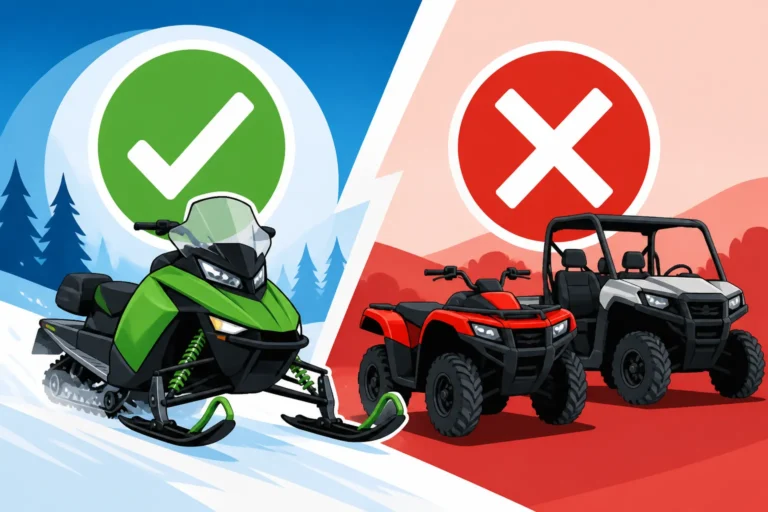
Adding to the confusion is the fact that snowmobiles are provincially registered in Saskatchewan. Riders often see a snowmobile with its official provincial plate and naturally assume that ATVs must follow suit. However, this is where the paths diverge. Snowmobiles fall under different legislation and have a long-established history of provincial registration, largely managed through Saskatchewan Government Insurance (SGI). This system provides them with a provincial plate, mandatory insurance, and a clear framework for operation. ATVs, on the other hand, are governed by The All Terrain Vehicles Act, which, while outlining rules for safe operation, does not include any provisions for provincial registration. It's a significant distinction that many riders fail to grasp, often leading them to believe they're missing something when they can't register their quad like they would a sled. Understanding [Saskatchewan Snowmobile Registration Compared] really highlights how unique the ATV situation is here.
Understanding Municipal ATV Plate Schemes
Given the absence of a provincial ATV registry, a crucial question arises: what options do riders have if they want some form of official identification for their machine, especially if they plan to ride within certain communities? This is where municipal plate schemes come into play, offering a localized solution that has become invaluable for many riders.
The Local Solution to a Provincial Gap
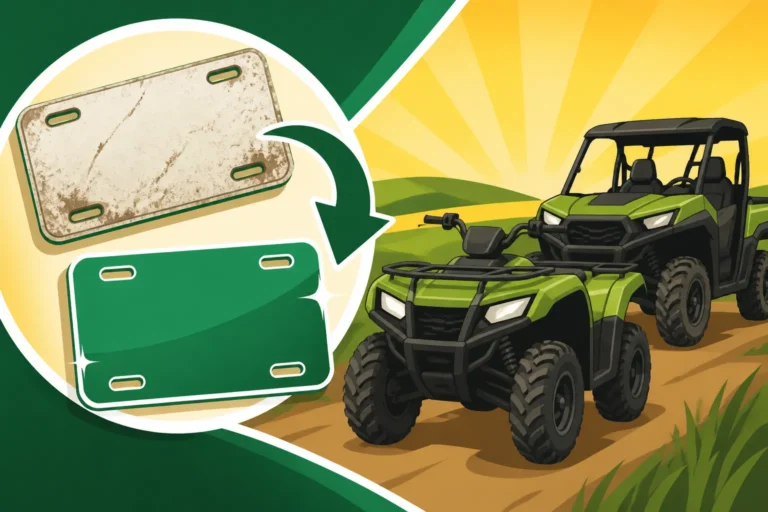
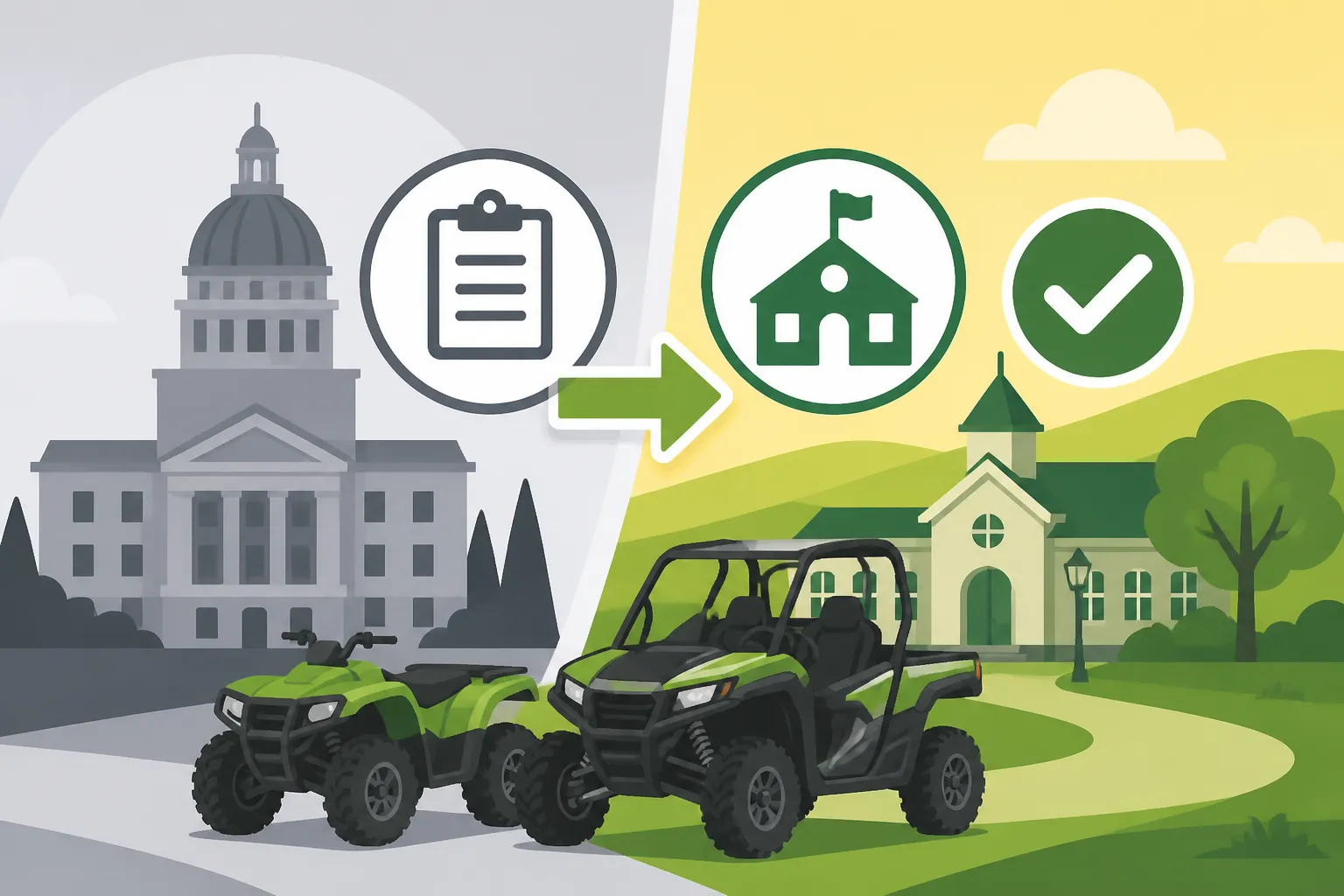
When the province didn't step in to create an ATV registry, many local governments – specifically towns, villages, and some rural municipalities – recognized a need within their communities. These local authorities often deal directly with ATV use on local roads, trails, and ditches, and they saw the benefit of having a system for identifying machines and their owners. This led to the creation of various municipal bylaws that allow for the local registration and plating of ATVs and UTVs. These plates aren't provincial in scope, but they serve a vital purpose within the boundaries of the issuing municipality. For riders who want to legally operate their machines in these specific areas, or simply want the peace of mind of having some form of official identification, these municipal plates are a practical and much-appreciated solution. They truly [Municipal Plates Fill the Gap the Province Left] in the provincial regulatory framework. These local initiatives demonstrate a practical, grassroots approach to managing recreational vehicle use where provincial oversight is absent. Many local governments have found these schemes to be a reasonable compromise, allowing for better management of traffic and usage patterns within their own jurisdictions. [Saskatchewan Rural Municipalities and Plates] are at the forefront of this movement, adapting to their residents' needs.
How Municipal Bylaws Enable Registration
The power for towns and rural municipalities to implement these plate schemes comes from their ability to create bylaws that govern activities within their jurisdiction. These [Saskatchewan Municipal Bylaws on Roads] can define where and how ATVs and UTVs can be operated, and often include provisions for a local permit or plate. The bylaw will outline the application process, any fees involved, and the specific requirements for displaying the plate. For example, a bylaw might state that any ATV operated on municipal roads or trails must display a valid municipal plate issued by that community. Without such a bylaw, a municipality wouldn't have the authority to issue plates or enforce local registration requirements. It’s important for riders to understand that each municipality's bylaw can be unique, meaning the rules and requirements for getting a plate can vary significantly from one town to the next. What's permissible in Candle Lake might be different from what's allowed in the District of Lakeland. This patchwork of regulations requires riders to be diligent in checking local rules before they venture out.
The Benefits of a Local Plate
So, why would a rider bother with a municipal plate if it's not a province-wide requirement? The benefits are often localized but significant. Firstly, a municipal plate provides a legitimate way to identify your machine within that specific community. This can be helpful in cases of theft or if there's an incident where identification is needed. Secondly, the fees collected from these plates often go directly towards local initiatives that benefit ATV riders, such as the maintenance or development of local trails. This means your registration fee directly supports the infrastructure you use. It's a clear instance of [Why Plate Revenue Funds Local Trails], fostering a direct connection between riders and the preservation of their riding areas. Thirdly, having a plate can simplify interactions with local enforcement, as it demonstrates compliance with local bylaws and shows you're a responsible rider. For communities that specifically welcome ATV tourism, having a local plate system can also help manage the influx of riders, ensuring everyone understands and adheres to local regulations. It creates a sense of order and accountability where none exists at the provincial level.
The Process of Getting a Municipal Plate
Deciding to get a municipal plate for your ATV or UTV in Saskatchewan is a proactive step that many riders appreciate, especially those who frequently ride in areas with local bylaws. However, the process isn't uniform across the province, as it depends entirely on the specific municipality. Navigating this can feel a bit like a treasure hunt, but with a bit of research, it's quite manageable.
Finding a Participating Municipality
The first hurdle is identifying [Which Municipalities Run Their Own Plate Scheme]. Not every town or rural municipality offers ATV registration. Generally, communities with a significant recreational ATV presence, especially those with designated trails or high volumes of recreational use, are more likely to have a system in place. Popular recreational areas or resort communities might be good places to start your search. The best way to find out is to contact the administrative office of the town or rural municipality where you plan to ride or reside. A quick phone call or a visit to their website can usually confirm whether they have a municipal ATV bylaw and offer plates. It's not uncommon for these offices to have dedicated pages or forms online outlining their specific requirements and application processes. Don't assume that because one community offers plates, a neighbouring one will too. Each local government acts independently in this regard.
Required Documentation for Application
Once you've found a participating municipality, you'll need to gather the necessary paperwork. While requirements can vary, common documents you'll likely need include:
- Proof of Ownership: This is paramount, especially since there's no provincial title. A clear and comprehensive bill of sale is typically required. This document should detail the buyer, seller, machine make, model, year, and serial number (VIN). If you're buying a used machine, ensure the bill of sale clearly transfers ownership from the previous owner to you. Resources like LawDepot can be incredibly helpful for creating a professional and legally sound bill of sale template, ensuring all necessary details are covered. This is critical for [Saskatchewan Bills of Sale Do the Work] of proving who owns the machine.
- Proof of Insurance: You'll need to show that your ATV or UTV has valid liability insurance. While a provincial plate doesn't exist, provincial law still mandates insurance for operation.
- Valid Driver's Licence: The person registering the machine will usually need to present a valid driver's licence.
- Payment for Fees: Be prepared to pay the municipal registration fee.
Always confirm the exact requirements with the specific municipality before you visit their office to avoid multiple trips or delays. They might have additional forms or specific identification requirements.
Fees, Renewals, and Expiry Dates
The cost of a municipal ATV plate in Saskatchewan can vary, but generally, it's an annual fee designed to cover administrative costs and, in some cases, contribute to local trail maintenance or enforcement. For example, a community like Candle Lake might charge a specific fee, which could be different from what you'd pay in the District of Lakeland. These fees are typically much lower than provincial registration fees in other provinces.
Most municipal plates are valid for a specific period, usually a year, and have a common expiry date, often April 30th, to align with the start of the typical riding season. [Saskatchewan Municipal Plate Renewals] are an annual responsibility, and it's essential to stay on top of these deadlines to ensure continuous legal operation within the municipality. Renewing your plate is often a simpler process than the initial application, as the municipality already has your information on file. However, you'll still typically need to pay the renewal fee and confirm your insurance is up-to-date. Understanding these costs and timelines is crucial for budgeting your riding season and staying compliant.
| Feature | Provincial ATV Registration (Saskatchewan) | Municipal ATV Plate (Saskatchewan) |
|---|---|---|
| Availability | Not Available | Available in Participating Towns/RMs |
| Issuing Authority | N/A (No provincial body) | Local Town/Village/Rural Municipality Office |
| Legal Basis | N/A | Local Bylaw |
| Coverage Area | N/A | Limited to the Issuing Municipality's Jurisdiction |
| Purpose | N/A | Local identification, compliance, trail funding |
| Proof of Ownership | N/A (Bill of sale is primary) | Bill of sale usually required |
| Mandatory Insurance | Yes (Provincial law for operation) | Yes (Provincial law for operation, required for plate) |
| Fees | N/A | Varies by municipality (e.g., [Saskatchewan Municipal Plate Costs]) |
| Renewal | N/A | Annual, specific expiry date (e.g., April 30) |
Key Considerations for Municipal Plates
While municipal plates offer a valuable solution for many Saskatchewan ATV and UTV riders, it's crucial to understand their specific scope and limitations. They are not a universal fix, and misinterpreting their function can lead to misunderstandings or, worse, unintended legal issues.
Jurisdiction and Limitations
The most critical thing to remember about a municipal plate is its jurisdictional boundary. A plate issued by, say, the District of Lakeland, is primarily valid within the geographical limits of the District of Lakeland. It doesn't magically become a provincial registration that grants you universal riding privileges across Saskatchewan. If you ride your Lakeland-plated ATV into Candle Lake, for example, you would then be subject to Candle Lake's specific bylaws. If Candle Lake requires its own local permit or plate for operation on its municipal roads or trails, your Lakeland plate might not satisfy that requirement. This is why the question, "[Does a Lakeland Plate Work at Candle Lake?]" is so commonly asked. The answer is usually no; if you plan to ride frequently in different municipalities with their own plate schemes, you might need a plate from each of them or face potential penalties for non-compliance with local bylaws. Always check the specific bylaws of any municipality you plan to ride in, regardless of whether you have a plate from another community.
Proof of Ownership Without a Provincial Registry
In the absence of a provincial registration system, the bill of sale becomes the single most important document for establishing and proving ownership of your ATV or UTV in Saskatchewan. When you apply for a municipal plate, the municipality will almost certainly ask for this document to verify that you are indeed the rightful owner of the machine. This is your primary record for [How to Prove You Own an ATV in Saskatchewan]. It’s not just for municipal registration; if your machine is ever stolen, involved in an accident, or if you decide to sell it, a properly executed bill of sale is absolutely essential. A good bill of sale, like those available through LawDepot, will include the full names and contact information of both buyer and seller, the date of sale, the purchase price, and a detailed description of the ATV, including its make, model, year, and crucially, its Vehicle Identification Number (VIN) or serial number. Without this, proving ownership can be incredibly difficult, making transactions and recovery efforts much more complicated. Even if you're not getting a municipal plate, having a robust [Saskatchewan Bills of Sale for a Quad] is non-negotiable.
Insurance Requirements and Municipal Plates
Regardless of whether you have a municipal plate, or indeed any plate at all, carrying adequate insurance for your ATV or UTV is a legal requirement in Saskatchewan. The All Terrain Vehicles Act mandates that every ATV operator must have a minimum amount of liability insurance. This protects you and others in the event of an accident. When applying for a municipal plate, the municipality will almost certainly ask for proof of this insurance. They want to ensure that any machine operating within their jurisdiction is properly covered. While the specific figure can fluctuate, the minimum required third-party liability coverage is generally substantial, designed to cover damages or injuries you might cause. Your insurance policy should be easily accessible, especially if you're operating on public land or areas where local bylaws apply. Peace officers, including RCMP and local bylaw officers, can ask to see proof of insurance, so having it readily available is key to avoiding fines. For comprehensive details on what's required, you can refer to [Saskatchewan Minimum Insurance Requirement] and [Saskatchewan Insurance Requirements for Riders]. Even without a provincial registration, this is one area where provincial law is very clear and consistently enforced.
Common Questions and Misconceptions
The lack of a provincial ATV registry combined with the presence of municipal schemes can understandably lead to a host of questions and misconceptions among riders. It's easy to get confused when the rules aren't uniform across the province. Let's tackle some of the most common queries.
What About Out-of-Province Riders?
This is a big one, especially for our neighbours from Alberta, Manitoba, or even visiting states like Montana and North Dakota, where provincial or state-level registration is the norm. When you bring your ATV or UTV into Saskatchewan from another jurisdiction, the general rule is that you are expected to comply with Saskatchewan's operating laws, but your home province's registration (if applicable) is usually recognized. Saskatchewan does not require you to get a local municipal plate if your machine is registered and insured in your home province or state. However, this doesn't exempt you from local bylaws. If you're riding in a municipality that has a specific bylaw requiring a municipal plate or permit for all ATVs operating within its boundaries, including visitors, then your out-of-province registration might not be enough. It's crucial for visitors to research the local bylaws of the specific area they plan to ride in. While your home province's papers might satisfy general provincial requirements, local rules can still apply. For more details on what visitors need, check out [Saskatchewan Rules for an Out-of-Province Machine]. Always err on the side of caution and make a quick call to the local municipal office before you trailer your machine long distances.
What Does a Municipal Plate Not Do?
It’s just as important to understand what a municipal plate doesn't do as what it does. Firstly, it does not equate to a provincial registration. It will not grant you unrestricted access to all trails or roads across Saskatchewan. Its validity is confined to the issuing municipality's jurisdiction. Secondly, it does not replace the need for liability insurance; that's a separate provincial requirement. You still need proof of insurance on you when you ride. Thirdly, a municipal plate is generally not transferable between machines. If you sell your ATV and buy a new one, you'll typically need to apply for a new plate for the new machine. Furthermore, it's often the case that [Why a Municipal Plate Cannot Be Transferred] is due to the plate being tied to the specific machine's serial number and the owner, as recorded by that particular municipality. This ensures that the local government maintains accurate records for enforcement and planning purposes. Don't expect a municipal plate to serve as a universal pass; it's a specific tool for specific local purposes.
The Role of a Bill of Sale in All Scenarios
We've touched on it before, but it bears repeating: the bill of sale is the cornerstone of ATV ownership in Saskatchewan. In the absence of a provincial registration or title, this document is your primary proof that you legally own your machine. Whether you're applying for a municipal plate, trying to recover a stolen ATV, or selling your machine to another private party, a clear, detailed bill of sale is indispensable. It proves that [Your Bill of Sale Stands In for a Registration]. Even if you're buying a used machine from a private seller who doesn't offer a fancy printed document, you should still insist on a handwritten bill of sale. Make sure it includes the date, the full names and contact information of both buyer and seller, the purchase price, and, critically, the ATV's make, model, year, and serial number. A simple template from a service like LawDepot can ensure you capture all the necessary details, protecting both parties in the transaction. This document is not just a formality; it's your legal tether to your valuable off-road machine in a province without a centralized registry.
Disclaimer
This article is for general informational purposes only and does not constitute professional advice. Laws, prices and regulations vary by location and change over time. Consult a qualified professional for guidance on your specific situation.