Saskatchewan Municipal Plate Replacements
Losing your ATV’s municipal plate in Saskatchewan can feel like a real headache, especially when you already know there's no provincial registration system to fall back on for quads. It's a unique situation that can leave riders wondering how to replace such an important piece of identification. This guide will walk you through the practical steps to replacing a lost or stolen municipal ATV plate, helping you navigate the local regulations and get back to riding legally.
Why Municipal Plates Are Even a Thing in Saskatchewan
Before diving into replacements, it's worth understanding why you even have a municipal plate in the first place. Saskatchewan has a somewhat unconventional approach to ATVs, and knowing the backstory can help make sense of the local systems that have sprung up to fill the void.
The Provincial Gap: No ATV Registration
One of the biggest surprises for new ATV owners or those moving to Saskatchewan is discovering that the province, unlike many other jurisdictions, doesn't actually register all-terrain vehicles. This isn't a temporary oversight; it's how the system has been for a long time. You won't find a provincial registry where you can go to get a unique number or title for your quad. This means there's [no provincial quad sticker to buy] and no central database to track ownership or help recover stolen machines in the same way a car or snowmobile might be handled. The province's focus, as outlined in [Saskatchewan's All Terrain Vehicles Act], is more on rules of operation, age limits, and safety rather than a formal registration system. This can be frustrating because it leaves a gap where riders often feel a piece of identification for their machine is missing, making it harder to prove ownership or track a stolen machine.
Local Solutions for Local Needs
Because the province decided [Saskatchewan Does Not Register ATVs], many rural municipalities (RMs), villages, and towns that experience high ATV traffic took matters into their own hands. They recognized the need for local identification, revenue for trail maintenance, and a way to enforce local bylaws. This is why you'll find that [Municipal Plates Fill the Gap the Province Left]. These local plates or permits are not uniform across the province; they are specific to the municipality that issues them. For example, some lake communities or popular riding areas have implemented their own systems. These municipal schemes provide a layer of local accountability and identification, allowing local authorities to manage ATV use within their boundaries more effectively. They often come with specific rules regarding where and how you can ride within that municipality, and the revenue generated from these permits often goes directly back into local trail development or infrastructure that supports ATV use. You can read more about how this works in [Saskatchewan Rural Municipalities and Plates].
The Steps to Replacing Your Lost or Stolen Municipal Plate
Losing something as specific as an ATV municipal plate can feel like a big deal, especially since it's your local proof of permission to ride in certain areas. But don't panic; there's a process for getting a replacement.
Reporting the Loss or Theft
The very first thing you should do when you realize your municipal ATV plate is missing is to contact the issuing municipality directly. Whether it's a village office, RM office, or town hall, they are the ones who issued the plate and will have a record of it. Explain whether the plate was lost (e.g., fell off on a rough trail) or stolen.
If your plate was stolen, it's also a good idea to report the theft to the local RCMP detachment. While there isn't a provincial ATV registry to flag a stolen quad, reporting the theft provides an official record. This police report can be crucial for insurance claims if your ATV was also stolen, or if the plate is later found attached to another machine or used improperly. Be prepared to provide as many details as possible: the date you last saw the plate, the location, any identifying numbers on the plate itself (if you remember them), and details about your ATV. Having a clear record of your ATV's serial number and a robust bill of sale will be incredibly helpful in this situation. Services like LawDepot can assist you in creating legally sound documents like a bill of sale, which could be useful if you ever need to re-establish proof of ownership for your ATV, especially if the original documents were also lost or stolen alongside the plate.
Applying for a Replacement
Once you've reported the loss or theft, the municipality will guide you through their specific process for applying for a replacement plate. While the exact requirements can vary slightly between different municipalities, there are common elements you can expect.
You will almost certainly need to provide proof of ownership for your ATV. This is typically your original bill of sale. Since [Saskatchewan Bills of Sale Do the Work] in the absence of a provincial title, this document is paramount. Make sure your bill of sale clearly outlines the make, model, year, and most importantly, the Vehicle Identification Number (VIN) or serial number of your ATV. If your original bill of sale is unclear or has been lost, you might consider using an online service, like LawDepot, to help draft a comprehensive new bill of sale to strengthen your proof of ownership, perhaps with a witness signature if applicable. This step might not be explicitly required for a plate replacement if the municipality already has your records, but having pristine ownership documentation is always a good practice in Saskatchewan. You'll also need personal identification, such as a valid driver's licence. Some municipalities might require you to fill out a short application form, detailing how the plate was lost or stolen. They may also ask for the police report number if it was stolen. The aim is to ensure the replacement is issued to the correct, legal owner of the ATV.
What to Expect at the Village Office
After you've gathered all your documentation and completed any necessary forms, you'll typically visit the municipal office in person. This could be the village office, town hall, or RM office, depending on who issued your original plate. For example, if you were dealing with a community like Candle Lake, the process would involve [Picking Up a Plate at the Candle Lake Office].
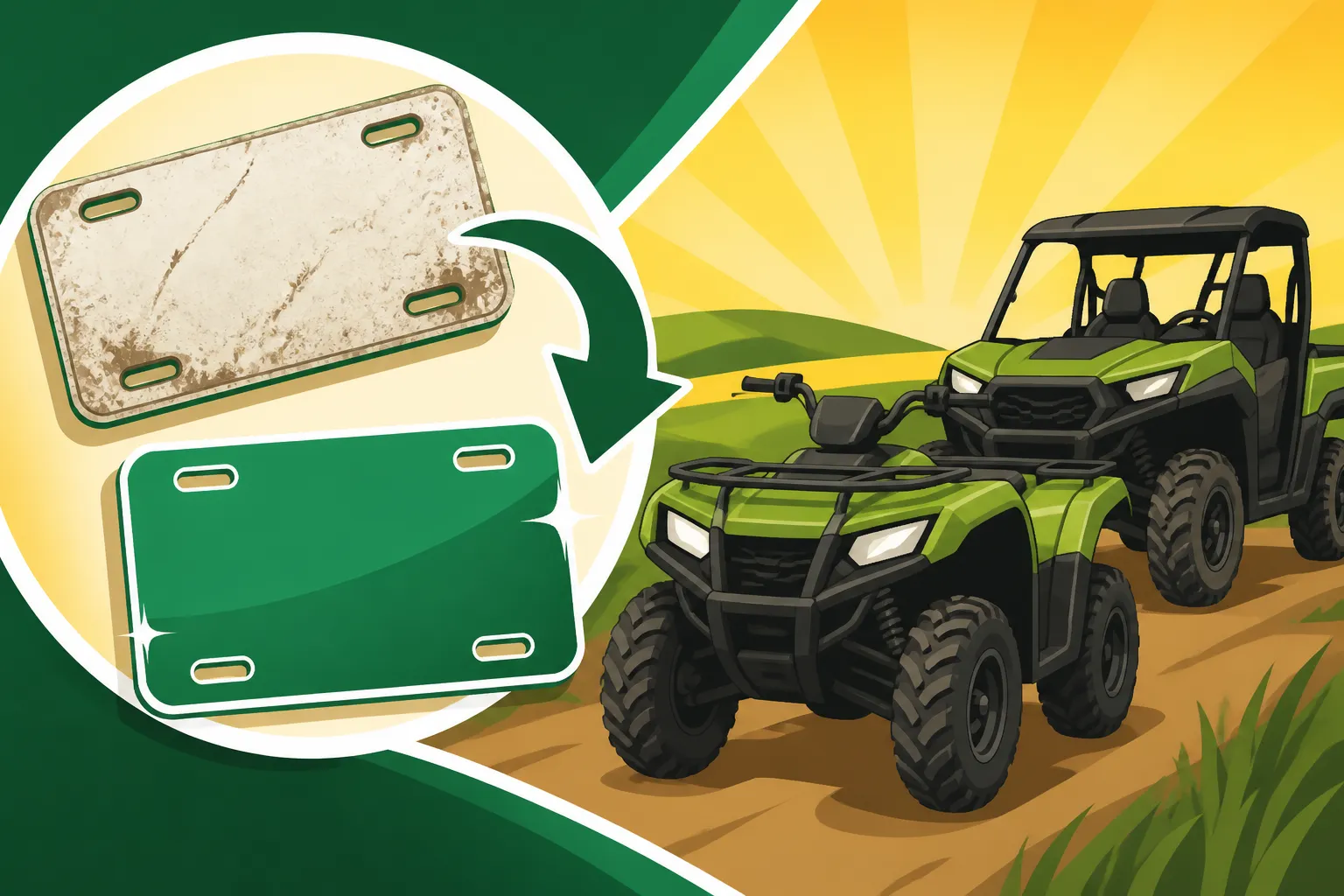
When you arrive, a clerk will verify your identification and review your proof of ownership. They will likely check their records to confirm that you are the registered owner of the original plate. Once everything is in order, they will process your replacement request. Depending on the municipality, you might receive a new plate on the spot, or they might need to order one, which could involve a short waiting period. If there's a waiting period, ask about any temporary documentation you can carry to show you've applied for a replacement, though not all municipalities offer this. It's important to understand that the new plate will almost certainly have a different number or identifier than your lost one, to prevent any confusion or misuse of the original.
Understanding the Costs and Logistics of a Replacement
Replacing a municipal ATV plate isn't just about the paperwork; there are practical considerations like fees and understanding how the expiry dates work.
Replacement Fees
Yes, there will almost certainly be a fee for replacing your lost or stolen municipal plate. While the specific cost can vary from one municipality to another, it's typically a set administrative charge designed to cover the cost of producing a new plate and the staff time involved in processing the request. This replacement fee might be slightly less than the initial cost of a brand-new plate, but it's important to budget for it. When you contact the municipal office to report the loss, make sure to ask about the current replacement fee so you know what to expect. They can often tell you the exact amount over the phone or provide information on their website. For general reference, you can look into [Saskatchewan Municipal Plate Costs] for an idea of typical pricing.
Renewals and Expiry Dates
A common question that arises with replacement plates is about their expiry date. Generally, a replacement plate will carry the same expiry date as the original plate it's replacing. This means that if your original plate was due to expire on April 30th of the current year, your replacement plate will also expire on April 30th of the current year. Municipal plates in Saskatchewan often follow a fixed annual cycle, with many expiring on April 30th, as explained in [Why Municipal Plates All Expire on April 30].
Therefore, getting a replacement plate doesn't typically extend the validity period of your permit. You'll still need to renew it annually by the specified date, just as you would have with your original plate. This is important to remember to avoid being caught riding with an expired plate, which could lead to fines under local bylaws.
Temporary Solutions
Waiting for a replacement plate can be frustrating if you want to ride. Unfortunately, there isn't a universally recognized "temporary permit" system in Saskatchewan that allows you to ride legally while waiting for a municipal plate. The best course of action is to communicate clearly with the municipal office. Ask if they can provide any written confirmation that you have applied for and are awaiting a replacement plate.
However, even with such documentation, it doesn't automatically grant you permission to ride if a plate is explicitly required by local bylaws. Riding without the proper plate, even if you've applied for a replacement, could still put you at risk of a ticket. Your safest bet is to wait until you have the physical replacement plate in hand before riding in areas where a municipal plate is mandatory. Always consult the specific bylaws of the municipality you plan to ride in, and if in doubt, err on the side of caution.
Special Situations: Selling or Moving
Life happens, and sometimes you need to sell your ATV or move, which can add layers of complexity when dealing with municipal plates, especially if yours is lost or missing.
Selling an ATV with a Lost Plate
If you're planning to sell your ATV and your municipal plate is missing, it's important to understand that the municipal plate itself is typically not transferable to a new owner. As stated in [Why a Municipal Plate Cannot Be Transferred], these plates are generally tied to the original owner and their specific machine for use within that municipality. The buyer will need to obtain their own new municipal plate if they plan to ride in that area.
However, the absence of your plate doesn't negate the need for clear proof of ownership during a sale. In Saskatchewan, a well-drafted bill of sale is the cornerstone of proving who owns an ATV, especially since there's no provincial registration or title. When selling, you'll need to provide the buyer with a comprehensive bill of sale that includes the ATV's make, model, year, VIN/serial number, the sale price, and the full names and contact information of both the buyer and seller. If your original bill of sale for your purchase is missing, you can create a new bill of sale for the sale to the new buyer. Services like LawDepot can be invaluable for ensuring you have a legally robust document. A clear bill of sale protects both parties and is essential for the new owner to potentially obtain their own municipal plate. For more details on what to include, check out [What Your Bill of Sale Needs to Cover].
Visitors and Out-of-Province Plates
If you're a visitor to Saskatchewan and happen to lose a registration plate or decal from your home province (e.g., an Alberta or Manitoba ATV plate), the process for replacement will fall under the jurisdiction of that province, not Saskatchewan. Saskatchewan municipalities only issue plates for use within their own boundaries by resident or regular users.
For out-of-province riders visiting Saskatchewan, the key is to ensure your ATV complies with Saskatchewan's operational rules, including carrying appropriate insurance. [Proof of Insurance Is What Saskatchewan Officers Ask For], regardless of where your machine is registered. You won't be able to get a "replacement" Saskatchewan municipal plate for an out-of-province machine, as these local plates are designed for specific municipal use by those operating within or frequently visiting those particular areas. If you're riding an out-of-province machine, you generally rely on your home province's documentation and adherence to Saskatchewan's general ATV laws.
What an Officer Asks For
Whether you've lost your municipal plate, are waiting for a replacement, or are simply riding an ATV in Saskatchewan, a peace officer may still stop you. In these situations, the plate is only one piece of the puzzle. What an officer will primarily ask to see is your driver's licence, proof of liability insurance, and potentially proof of ownership for the ATV.
Since [Saskatchewan Has No ATV Plate or Decal] at the provincial level, officers are accustomed to ATVs not having a provincial plate. However, if you are riding within a municipality that requires a local plate and you don't have one (or a replacement is pending), you could still be subject to a fine under that municipality's specific bylaws. Always carry your documentation with you, even if it's just your licence and insurance. If you have any documentation from the municipality about a pending plate replacement, carry that too, just in case, to demonstrate you are actively addressing the situation. Knowing what paperwork to carry, even if it feels minimal, can save you a lot of hassle.
| Situation | Action to Take | What to Prepare | Potential Cost |
|---|---|---|---|
| Lost Plate | Contact municipality, apply for replacement. | Proof of Ownership (Bill of Sale), Personal ID. | Replacement Fee |
| Stolen Plate | Report to RCMP, then contact municipality. | Police Report Number, Proof of Ownership, Personal ID. | Replacement Fee |
| Selling ATV | Ensure clear Bill of Sale for new owner. | Robust Bill of Sale (LawDepot can help), ATV details. | N/A (buyer pays for new plate) |
| Out-of-Province | Replace with your home province's authority. | Home province's requirements. | Home province's fees |
Disclaimer
This article is for general informational purposes only and does not constitute professional advice. Laws, prices and regulations vary by location and change over time. Consult a qualified professional for guidance on your specific situation.