Saskatchewan Machines Used on a Trapline
Navigating the world of ATVs and UTVs in Saskatchewan can feel like trekking through thick bush – especially when you're using your machine for something as specialized as a trapline. The provincial rules aren't always what you expect, and the frustrations of proving ownership or understanding access rights in remote areas can be a real headache. This comprehensive guide will cut through the confusion, helping you understand the specific regulations, paperwork, and practical considerations for using your all-terrain vehicle on a Saskatchewan trapline, ensuring you’re well-equipped and compliant.
Understanding the Legal Landscape for Trapline ATVs
When you're out on a trapline, your ATV isn't just a recreational toy; it's an essential tool, often the very lifeline that connects you to your livelihood. This unique usage brings its own set of considerations under Saskatchewan law, especially since the province handles ATVs a bit differently than other vehicles.
The All Terrain Vehicles Act and Traplines
Saskatchewan's primary legislation governing ATVs is [Saskatchewan's All Terrain Vehicles Act]. This Act, while comprehensive, doesn't always directly address the specific needs and contexts of trapline operations. One of the biggest surprises for many is that the province itself doesn't require ATVs to be registered or plated. This is a significant departure from how snowmobiles or road vehicles are handled, leading to a lot of confusion, especially if you're coming from another province where ATV registration is standard. The core of the Act focuses more on safe operation, age restrictions, and insurance requirements rather than a centralized registry for ownership. For a trapper, this means your focus shifts away from governmental registration forms and towards solid proof of ownership.
The absence of a provincial registration for ATVs means there's [Saskatchewan Has No ATV Plate or Decal] to apply for or display. While this might seem convenient on the surface, it places a greater burden on the owner to maintain meticulous personal records of their machine's ownership. Imagine being deep in the bush, miles from anywhere, and needing to prove that the ATV you're operating is yours – without a provincial plate or registration card, you rely entirely on your personal documentation.
Exemptions and Specific Use Cases
The Act does, however, contain various exemptions and nuances that are particularly relevant to trappers. For instance, machines used solely on private land or for specific agricultural purposes might operate under different conditions than those used recreationally on public trails. A trapline often involves a mix of private land (your home base, perhaps a cabin) and extensive Crown land, necessitating a clear understanding of access rights.
While the Act itself doesn't specifically carve out "trapline" exemptions for registration, it's important to understand how your specific use case interacts with general operational rules. For example, if your trapline takes you across municipal roads or designated ditches, you still need to adhere to the provincial rules regarding speed, helmet use, and driver licensing, regardless of your purpose. The core principle remains: how and where you operate your machine dictates the rules you must follow, even if the "why" is for your livelihood.
Crown Land Access and Traditional Territories
Operating on a trapline inherently involves extensive travel over Crown land, which brings its own set of regulations beyond just the ATV Act. Accessing these lands requires adherence to various provincial land-use policies. While trappers typically have established rights and permits for their specific trapline areas, it's crucial to understand that these rights don't necessarily override general ATV operation rules on Crown land. For instance, [Saskatchewan Crown Land Prohibition Regulations] might exist that restrict ATV use in certain ecological reserves or during specific times of the year, such as wildfire season, even within a designated trapline.
This means a trapper must stay informed about land-use restrictions issued by the Ministry of Environment or other provincial bodies. It’s not enough to simply have a trapline permit; you also need to ensure your ATV use aligns with broader land management objectives. In some cases, traditional territories and Indigenous land use agreements may also influence access and operational practices, adding another layer of consideration for trappers working in those areas. Always verify [Saskatchewan Crown Land Access Rules] and any specific conditions attached to your trapline lease or permit before heading out.
Essential Paperwork and Proof of Ownership for Trapline Machines
The lack of a provincial ATV registry in Saskatchewan means that the burden of proving ownership falls squarely on you, the owner. For a trapper, whose machine is a vital asset, having irrefutable proof of ownership is not just a formality; it's a necessity for insurance, theft recovery, and future sales.
Why Registration Isn't the Answer
Many riders, especially those new to Saskatchewan or those from provinces with different rules, often wonder where to go to register their ATV. The answer, quite simply, is nowhere, at least not provincially. [Saskatchewan Does Not Register ATVs]. This can be a point of confusion and even frustration, as a registration certificate is often seen as the ultimate proof of ownership. However, in Saskatchewan, that piece of paper doesn't exist for ATVs.
Instead, the system relies on common law principles of ownership and detailed private records. This means every bill of sale, every receipt, every service record you collect for your ATV becomes incredibly important. You are the custodian of your machine's ownership history, and a strong paper trail is your best defense against potential disputes or issues. Without a central registry to fall back on, your personal documentation becomes the official record.
The Power of a Bill of Sale
Given the lack of a provincial registry, your bill of sale is the single most important document you possess for your ATV. It serves as your primary proof of ownership, detailing the transaction between you and the previous owner. A properly executed bill of sale should contain specific information to be legally sound. This includes the full names and addresses of both the buyer and seller, the date of sale, the purchase price, and a detailed description of the ATV, including its make, model, year, and crucially, its Vehicle Identification Number (VIN) or serial number.
When you're buying a machine, whether from a dealer or a private seller, insist on a thorough bill of sale. For private sales, especially in remote areas where legal templates might not be readily available, using a reputable online service like LawDepot can be incredibly helpful to ensure you have a comprehensive and legally sound document. A good bill of sale protects both parties and clearly establishes the transfer of ownership. It also needs to explicitly state that the machine is sold "as-is" or specify any warranties if applicable. Remember, [What Your Bill of Sale Needs to Cover] goes beyond just the price; it’s about establishing a clear chain of custody. Many trappers even create a basic bill of sale if they're passing down a machine within the family, simply to keep the paper trail intact.
Dealing with Older Machines and No Paperwork
What happens when you acquire an older ATV, perhaps one that's been in the family for years or was purchased privately a long time ago, and the original bill of sale is lost or was never properly created? This is a common scenario, especially for trappers who might acquire machines through less formal means or inherit equipment. In such cases, establishing [How to Prove You Own an ATV in Saskatchewan] becomes more challenging but not impossible.
You'll need to gather any available supporting evidence:
- Previous owner contact: If you can reach the person you bought it from, even years later, ask them to sign a retroactive bill of sale or an affidavit.
- Affidavits: A sworn statement from someone who can attest to your ownership (e.g., a family member, a former owner, a mechanic who has serviced it for you).
- Maintenance records: Receipts for parts, repairs, or service where your name and the ATV's serial number are listed can help.
- Insurance policies: Your insurance policy listing you as the owner of the specific VIN is strong evidence.
- Photos: Photos of you with the machine over the years, especially if they are timestamped.
While not ideal, a combination of these documents can help establish a plausible claim of ownership. For an old machine passed down, a simple, handwritten [Saskatchewan Bills of Sale Do the Work] document detailing the transfer within the family, signed and dated, is far better than nothing. If you're concerned about creating a robust document to formalize ownership of an older machine, consider using a template from a service like LawDepot, adapting it to reflect the historical transfer of ownership as accurately as possible. This approach is particularly useful if you ever need to sell the machine or make an insurance claim.
Practical Considerations for Trapline ATV Operation
Beyond the paperwork, using an ATV on a trapline involves unique operational challenges and responsibilities. The remote nature of traplines means that breakdowns, accidents, or theft can have more severe consequences, making proactive planning and safety paramount.
Operating Safely on a Trapline
Safety is paramount when operating an ATV on a trapline. You're often far from help, and conditions can be unpredictable. This isn't just about personal well-being; it's about ensuring your equipment, which is crucial for your livelihood, remains operational. Always wear appropriate safety gear, including a helmet and eye protection, even if you’re just making a short run. These aren't suggestions; they are legal requirements under the Act.
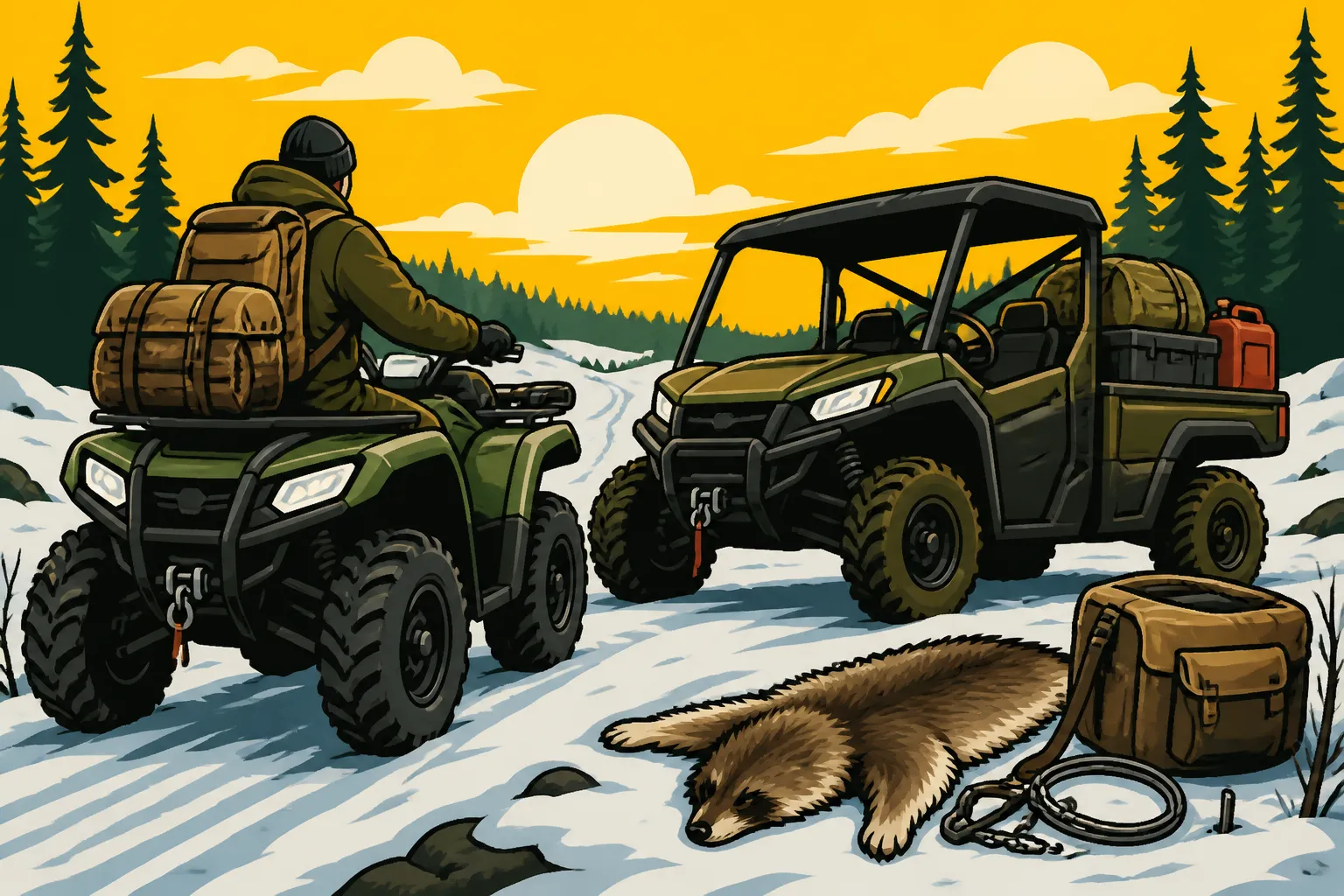
Beyond personal gear, consider equipping your trapline machine for the specific environment. This might mean investing in a winch for self-recovery from sticky situations, a robust first-aid kit, emergency communication devices (satellite messenger or satellite phone), and extra fuel. The terrain on a trapline can vary wildly, from frozen lakes and rivers to dense bush and muskeg. Understanding your machine's capabilities and limitations, especially when heavily loaded with traps or supplies, is crucial. Regularly inspect your ATV before heading out, checking tires, brakes, lights, and fluid levels. A small issue overlooked at the cabin can become a major problem miles from anywhere.
Insurance and Liability Concerns
Even without a provincial registration, [Saskatchewan Insurance Requirements for Riders] are very much in force. All ATVs operated off private land in Saskatchewan must carry a minimum amount of liability insurance. For most riders, this means a standalone ATV policy or an extension of their home or farm insurance. For trappers, this is non-negotiable. Imagine an accident on a public access trail leading to your trapline, or an unforeseen incident on Crown land that causes property damage or injury to another person. Without adequate liability coverage, you could face significant financial repercussions.
Because your ATV is likely a vital tool for your business, ensuring comprehensive coverage is critical. This might include collision, comprehensive (for theft or damage not related to a collision), and higher liability limits than the provincial minimum. Talk to your insurance broker about your specific usage – explain that it's a commercial tool for your trapline. This ensures your policy accurately reflects the risks involved and provides the coverage you truly need. Don't assume your existing farm policy automatically covers all aspects of commercial trapline use; clarify everything.
Winter Operations and Storage
Saskatchewan winters are no joke, and operating an ATV on a trapline during these months requires extra care. Cold weather affects both the machine and the rider. Ensure your ATV is winterized, with appropriate fluids and battery maintenance. Tires designed for snow and ice can make a significant difference in traction and control. Riding on frozen lakes and rivers is common for trappers, but it comes with extreme risk. Always check ice thickness and be aware of currents and open water. The Act does have a [Saskatchewan Winter Water Body Exception] that permits crossing frozen lakes and rivers, but caution and local knowledge are paramount.
When the season ends or during periods of non-use, proper storage is essential to protect your investment. This is especially true for machines kept at remote cabins or outbuildings. Fuel stabilizers, battery tenders, and proper covering can prevent degradation. Furthermore, consider security measures even in remote locations. A machine stored far from immediate supervision is a prime target for theft.
Protecting Your Investment and Navigating Common Issues
For a trapper, an ATV is more than just transportation; it's a business asset. Protecting that asset from theft, ensuring it can be financed, and understanding how to sell it are all crucial considerations that are made unique by the lack of provincial registration.
Theft Prevention and Recovery
The absence of a provincial ATV registry unfortunately means that [Saskatchewan Theft Recovery Without a Registry] can be more challenging than for registered vehicles. There's no central database for police to immediately check ownership or flag a stolen machine by its plate number. This puts a greater emphasis on proactive theft prevention. Always secure your ATV, even on remote traplines. Use heavy-duty chains, disc locks, or even GPS trackers if feasible. In remote cabins, consider secure storage sheds or disabling the machine when not in use.
If your ATV is stolen, immediately report it to the RCMP or local police, providing them with the VIN or serial number, detailed descriptions, and any unique identifying marks. Distribute this information through local trapper networks and online forums. Your detailed bill of sale and insurance policy will be critical in proving ownership to police and for making an insurance claim. Without a solid paper trail, recovery and insurance claims become significantly more difficult.
Financing a Trapline Machine
Financing a new or used ATV for trapline use can sometimes raise questions, primarily because lenders often prefer to see a registered asset. Since there's no provincial registration or title for ATVs in Saskatchewan, lenders rely heavily on the bill of sale and the machine's VIN. When seeking a loan from a bank or credit union, be prepared to provide all purchase documentation and the VIN. Lenders will typically secure their interest in the machine by recording a lien against the serial number in the Personal Property Registry (PPR). This makes it clear that they have a claim on the machine until the loan is paid off.
Understanding [Saskatchewan Liens on an Unregistered Machine] is important for both buyers and sellers. As a buyer, ensure you check the PPR for any existing liens before finalizing a purchase, especially from a private seller. As a seller, you must ensure any outstanding loans are paid off and the lien is discharged before transferring ownership. Always be transparent with your lender about the ATV's intended use on a trapline; some financial institutions might have specific policies for machines used for commercial purposes.
Selling a Used Trapline Quad
Eventually, you might need to sell your trapline ATV, perhaps to upgrade or because you’re retiring from trapping. Selling a quad without provincial registration in Saskatchewan is straightforward, provided you have all your ducks in a row. The key again is a clear, comprehensive bill of sale. You'll need to create a new one for the buyer, transferring ownership from you to them. Make sure it includes all the details: your information, the buyer’s information, the ATV’s make, model, year, and VIN, the selling price, and the date.
If you had financed the machine, ensure any liens are fully discharged from the PPR before you sell. Provide the buyer with all the documentation you have, including the original bill of sale when you purchased it, any service records, and the new bill of sale transferring ownership to them. This provides the buyer with the complete chain of ownership, which is essential for their own proof of ownership and insurance purposes. When selling a specialized [Saskatchewan Paperwork for a Bush Machine], potential buyers will value a well-documented history even more, as it signals a responsible owner and a traceable asset. Using a template from a service like LawDepot can streamline the creation of a professional bill of sale, adding confidence to both buyer and seller.
| Aspect | Considerations for Trapline ATVs in Saskatchewan |
|---|---|
| Provincial Registration | None required. No plates or decals issued by the province. Focus on private documentation. |
| Proof of Ownership | Bill of Sale is paramount. Keep original purchase documents, service records, and insurance certificates. |
| Crown Land Access | Trapline permit is distinct from ATV operation rules. Adhere to [Saskatchewan Crown Land Access Rules] and bans. |
| Insurance | Mandatory liability insurance. Ensure coverage reflects commercial trapline use; higher limits recommended. |
| Theft Recovery | More challenging without registration. Rely on VIN, detailed descriptions, and proactive security measures. |
| Financing | Lenders rely on Bill of Sale and VIN. Liens recorded in Personal Property Registry (PPR). Check for existing liens. |
| Sale Documentation | Create a new, detailed bill of sale. Provide buyer with full ownership history and ensure any liens are discharged. |
| Safety Gear | Helmet and eye protection are legally required. Equip for remote conditions (winch, comms, first-aid). |
Disclaimer
This article is for general informational purposes only and does not constitute professional advice. Laws, prices and regulations vary by location and change over time. Consult a qualified professional for guidance on your specific situation.