Saskatchewan Machines Used on a Farm
If you're operating an ATV or UTV on a farm in Saskatchewan, you might feel like you're in a bit of a grey area. There's often a lingering question: do the same rules apply to your workhorse quad as they do to someone hitting the recreational trails? This guide is here to untangle the specific considerations, exemptions, and crucial paperwork you need to understand when your off-road machine is primarily used for agricultural purposes in our prairie province.
The Unique Status of Farm ATVs in Saskatchewan
It’s easy to assume that because an ATV is used for work on a farm, it falls under a completely different set of rules than a recreational machine. While there are certainly some important distinctions, the core legal framework for ATVs in Saskatchewan applies to all machines, regardless of their primary purpose. The key often lies in where and how the machine is being operated.
Why Farm Use Differs from Recreational Riding
Think about the daily grind on a Saskatchewan farm. You're zipping across fields to check fences, hauling feed to livestock, perhaps pulling a small trailer with tools for repairs, or even moving cattle from one pasture to another. This isn't the same as trail riding in a provincial park or heading out for a weekend adventure. The All Terrain Vehicles Act in Saskatchewan recognizes these practical realities, offering certain exemptions and considerations that make life a little simpler for farmers and ranchers. The frustrations often come from trying to figure out which rules apply in which scenario, especially when a quick trip down the road is necessary.
No Provincial Registration for Any ATV, Farm or Otherwise
One of the biggest sources of confusion, and perhaps relief for many farmers, is that Saskatchewan simply does not have a provincial registration system for ATVs. This holds true whether your quad is brand new, used primarily for farm work, or strictly for recreational fun. You won't find a provincial office to get a plate or a sticker for your ATV, because one doesn't exist. This means your farm quad won't have a registration document in the same way your truck or tractor does. If you’re used to other provinces where registration is standard, this can feel a bit odd, but it's a fundamental aspect of operating an ATV here. For a deeper dive, check out [Saskatchewan Does Not Register ATVs].
What "Farm Use" Truly Means Under the Act
When we talk about "farm use" in the context of the All Terrain Vehicles Act, it's generally understood to mean operation directly related to the agricultural enterprise. This includes tasks like checking crops, maintaining land, managing livestock, or transporting equipment and supplies on farm property. The intent of the operation is key here. If you're using the ATV to get from one pasture to another for cattle rotation, that's farm use. If you're doing donuts in the pasture for fun, that's recreational, even if it's on your own land. Understanding this distinction is important because while the Act has broad exemptions for operators on their own land, venturing onto public roads or Crown land for non-farm purposes could bring different rules into play.
Operational Rules for ATVs on Farm Land
The specific rules governing ATV operation in Saskatchewan can feel like a patchwork quilt, especially when you're moving between private farm property and public access points. It’s not always black and white, and understanding these nuances is crucial for staying compliant and safe.
Riding on Your Own Land
This is where farmers often have the most freedom. The All Terrain Vehicles Act includes significant exemptions for individuals operating an ATV on land they own or occupy. This means that if you're riding your quad on your own fields, pastures, or yard for farm-related tasks, many of the Act's operational rules—such as minimum age for operators, helmet requirements, or carrying insurance—do not apply. This exemption is a lifesaver for daily farm operations, allowing you to use your ATV without the constant worry of intricate regulations. However, it's a common misconception that no rules apply at all. While the provincial Act provides broad exemptions, common sense and personal liability remain paramount. Always prioritize safety, even when not legally mandated. For a closer look at these specific exemptions, refer to [Saskatchewan Owner-Occupied Land Exemptions].
Crossing Public Roads and Ditches
While working on a farm, it's often unavoidable to cross a public road or travel briefly in a ditch to access another parcel of land. This is where the rules can change rapidly. When you leave your private property and enter public thoroughfares, even for a short distance, the provincial All Terrain Vehicles Act does apply. This means you generally need to meet age requirements, wear an approved helmet, carry proof of liability insurance, and adhere to specific rules for crossing highways. For instance, you must cross at a right angle by the shortest route and everyone on the machine must dismount. Riding in the ditch can also have specific requirements, such as staying at least two metres from the travelled portion of the highway, and local bylaws might further restrict or permit this. Always assume that when you're on public land or roads, the full force of the law is in effect. You can find more details on this topic in [Saskatchewan Rules for Crossing a Highway] and [Saskatchewan Ditch Riding and the 2-Metre Rule].
Supervising Youth Riders on the Farm
Many farm families involve children and youth in daily operations, and operating ATVs is often part of that. On private land that you own or occupy, the provincial age restrictions for ATV operators (typically 16 years old, with exceptions for supervised riders 12 and over) generally do not apply. This means a younger person can operate an ATV for farm work on your property under your supervision without breaking provincial law. However, if that young rider ventures onto a public road, even briefly, or leaves the farm property, those provincial age and supervision rules kick in immediately. It’s a huge responsibility, and ensuring proper training and safety equipment for young riders, even when not legally required on private land, is vital. You can learn more about provincial age requirements and exceptions in [Saskatchewan Rules for a 12-Year-Old Rider].
Insurance, Ownership, and Sales for Farm ATVs
Even without a provincial registration system, there are still critical aspects of owning and operating a farm ATV that demand attention, particularly concerning insurance, proving ownership, and navigating private sales. These are the details that can save you a lot of headache and heartache down the road.
Essential Insurance Coverage for Farm Use
While the All Terrain Vehicles Act typically exempts riders on their own land from carrying provincially mandated liability insurance, this does not mean you should forgo coverage. Far from it! Accidents happen, and even on your own farm, liability risks are very real. What if a farm visitor is injured by your ATV? What if your quad is stolen, damaged in a barn fire, or involved in an incident when crossing a public road? Comprehensive liability, collision, and theft insurance are highly recommended for any farm ATV. Many farm insurance policies can include coverage for ATVs used in agricultural operations, but it's crucial to confirm this with your insurer. A standalone ATV policy is also an option, providing dedicated coverage for your machine. Don't let the lack of a provincial registration requirement lull you into a false sense of security; adequate insurance is your best protection. For broader insurance insights, check out [Saskatchewan Insurance Requirements for Riders].
Proving Ownership Without a Registry
Given that Saskatchewan doesn't register ATVs, you might wonder how you prove you actually own your farm quad. The answer is simple and critically important: a robust bill of sale. This document is your primary proof of ownership, whether you bought the machine new from a dealer or used from a neighbour. A good bill of sale should include:
- The full names and contact information of both the buyer and seller.
- A clear description of the ATV (make, model, year, colour).
- The Vehicle Identification Number (VIN) or serial number.
- The purchase price.
- The date of sale.
- Signatures of both parties.
Without a provincial registry, this document is paramount for everything from insurance claims to deterring theft or recovering a stolen machine. If you're ever in a situation where you need to prove ownership, that bill of sale is your golden ticket. Services like LawDepot can provide excellent templates for creating a comprehensive bill of sale, ensuring all the necessary details are covered. This is particularly useful for private sales where official dealership paperwork isn't generated. Learn more about the importance of this document in [Saskatchewan Bills of Sale Do the Work] and [Saskatchewan Proof of Ownership Without a Registry].
Selling a Farm Quad
Selling a farm ATV privately in Saskatchewan follows much the same process as buying one. Because there's no provincial registration or title transfer, the transaction hinges entirely on the bill of sale. As the seller, it's your responsibility to provide a clear, accurate, and complete bill of sale to the buyer. This protects both parties, documenting the transfer of ownership and liability.
Key Steps for Selling a Farm Quad:
- Prepare the Machine: Clean it up, perform basic maintenance, and gather any service records you have.
- Determine Price: Research comparable machines to set a fair asking price.
- Create a Bill of Sale: Use a reliable template (like those available from LawDepot) to draft the bill of sale. Ensure it clearly states "as-is, where-is" if that's the agreement, and includes all machine details and VIN.
- Exchange & Document: Once the sale is agreed upon, ensure the buyer has inspected the machine, payment is made, and both parties sign two copies of the bill of sale—one for you and one for the buyer.
Without this crucial document, the buyer has no formal proof of ownership, and you, as the seller, could face complications if questions about the machine's prior ownership or condition arise later. For a comprehensive guide to this process, check out [Selling a Quad Privately in Saskatchewan].
Common Misconceptions and Best Practices for Farm ATVs
Operating a quad on the farm is a way of life for many, but some persistent myths and overlooked best practices can lead to unnecessary complications. Let’s clear up some misunderstandings and highlight what you can do to ensure smooth and safe operations.
The Myth of the "Farm Plate"
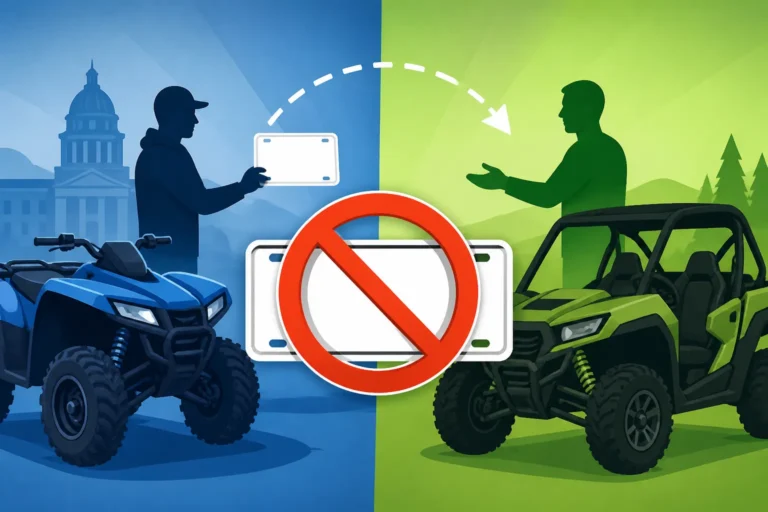
One common question that pops up is whether there's a special "farm plate" or specific designation for ATVs used in agriculture. The short answer is no, not at the provincial level. Saskatchewan does not issue any type of provincial plate or sticker for ATVs, regardless of whether they're used for farm work, recreational riding, or anything in between. So, if you're looking for a provincial "farm plate" for your quad, you won't find one. [Why No Province-Wide Quad Plate Is Issued] explains this in more detail.
However, this doesn't mean all municipalities are the same. Some rural municipalities and resort villages have their own local bylaws that might require a municipal permit or plate to operate ATVs on designated streets or roads within their boundaries, even if you’re passing through for farm-related travel. These are local initiatives and are not provincially recognized. Always check with your local rural municipality or village office if you plan to operate your ATV on municipal roads or within resort areas, even if just for farm work.
Maintaining Records and Safety
Even though many provincial regulations are relaxed for ATVs used on your own farm land, maintaining good records and prioritizing safety is just plain smart.
Records to Keep:
- Bill of Sale: As discussed, this is your proof of ownership. Keep it in a safe place.
- Maintenance Logs: Track oil changes, repairs, and inspections. This helps with troubleshooting, scheduling preventative maintenance, and can significantly increase resale value.
- Insurance Documents: Keep your policy handy, especially if you ever need to make a claim.
Safety Best Practices:
- Regular Inspections: Before each use, do a quick walk-around. Check tires, brakes, lights, and fluid levels.
- Proper Gear: Even if not legally mandated on your land, wearing a helmet, eye protection, sturdy boots, and appropriate clothing can prevent serious injury.
- Training: Ensure anyone operating the ATV, especially younger or inexperienced riders, receives proper training on safe operation and understanding the machine's capabilities.
- No Impairment: Never operate an ATV under the influence of alcohol or drugs, regardless of where you are.
These practices aren't just about compliance; they're about protecting your investment, your family, and your workers.
When a Farm Quad Becomes a Recreational One
The distinction between "farm use" and "recreational use" is crucial. If you're using your ATV for legitimate agricultural purposes on your own land, the exemptions largely apply. But what happens if you decide to take that same "farm quad" for a joyride off your property, or even just for some casual trail riding on a remote part of your farm not actively used for agriculture?
In essence, when your primary activity shifts from farm work to recreational riding, even on the same machine, the provincial rules regarding helmets, age, supervision, and insurance can immediately apply, especially if you're on public land, Crown land, or designated trails. It's a subtle but important line. Don't assume that because the ATV is "a farm quad" it's exempt from all rules all the time. The context of your ride dictates which rules are in play. Always be mindful of the difference between moving cattle and simply enjoying a ride through the back forty.
By understanding these nuances, farm ATV operators in Saskatchewan can confidently use their machines for work while remaining safe and compliant with the spirit of the law.
Disclaimer
This article is for general informational purposes only and does not constitute professional advice. Laws, prices and regulations vary by location and change over time. Consult a qualified professional for guidance on your specific situation.