Why Municipal Plates All Expire on April 30
It's incredibly frustrating when you're trying to do the right thing and navigate what seems like a simple process, only to find that the rules are different from what you expect. For many ATV and UTV owners in Saskatchewan, the idea of a "municipal plate" can be a bit confusing, especially when you learn that these plates almost universally expire on April 30. This guide will walk you through exactly why this date is so significant, what it means for you, and how to stay on the right side of local bylaws, ensuring your riding season starts without a hitch.
The Unregistered Reality: Why Saskatchewan Stands Apart
When you buy an ATV or UTV in Saskatchewan, you quickly discover that our province has a unique approach to regulating these machines. Unlike cars, trucks, or even snowmobiles, there's no central provincial registry for quads. This lack of a unified system can lead to a lot of questions and, let's be honest, some head-scratching moments for riders, especially if you're new to the province or coming from elsewhere.
A Provincial Absence, A Local Need
For folks used to the provincial registration of other vehicles, the absence of a provincial ATV registry in Saskatchewan can be a real curveball. You won't find a province-wide database where your quad's Vehicle Identification Number (VIN) is recorded, nor will you receive an official plate or decal from the provincial government. This means there's no central record of who owns which ATV, which can make things like theft recovery a real challenge. We've talked about this before in [Saskatchewan Does Not Register ATVs] and [Saskatchewan Has No ATV Plate or Decal]. This gap leaves a void that often needs to be filled at a more local level.
Because the province doesn't manage ATV registration, individual municipalities, particularly those with popular riding areas or heavy ATV traffic, have stepped up to create their own local permitting systems. They've recognized the need for some form of regulation, not just for safety and enforcement, but also to generate revenue that can often go back into maintaining local trails and infrastructure. It's a patchwork system, but it's the one we have, and it often works well within its specific boundaries.
Municipal Plates: More Than Just a Sticker
So, what exactly is a municipal plate? It's not a provincial registration in the way you might think of a car's license plate. Instead, a municipal plate is essentially a permit issued by a specific city, town, village, or rural municipality that allows you to operate your ATV or UTV within their designated jurisdiction, usually on specific roads, ditches, or trails as outlined in their local bylaws. It's a local agreement, a permission slip, if you will, to ride legally in that particular area.
These plates are a direct response to the provincial government's hands-off approach to ATV registration. Municipalities, seeing a need for local control and wanting to ensure responsible riding within their borders, developed these programs. Think of them as a localized solution to a broader regulatory gap, as explored in [Municipal Plates Fill the Gap the Province Left]. They allow local authorities to manage ATV use, address safety concerns, and sometimes even fund the very trails riders enjoy.
The rules around these plates are entirely specific to the issuing municipality. One town might require it for ditch riding, while another might have designated roads you can use with a plate. It's crucial not to confuse a municipal plate with a universal "license to ride anywhere" in Saskatchewan. It only grants permission within the boundaries of the issuing municipality, so always check the specific bylaws of the area you intend to ride in.
Unpacking the April 30 Expiry Date
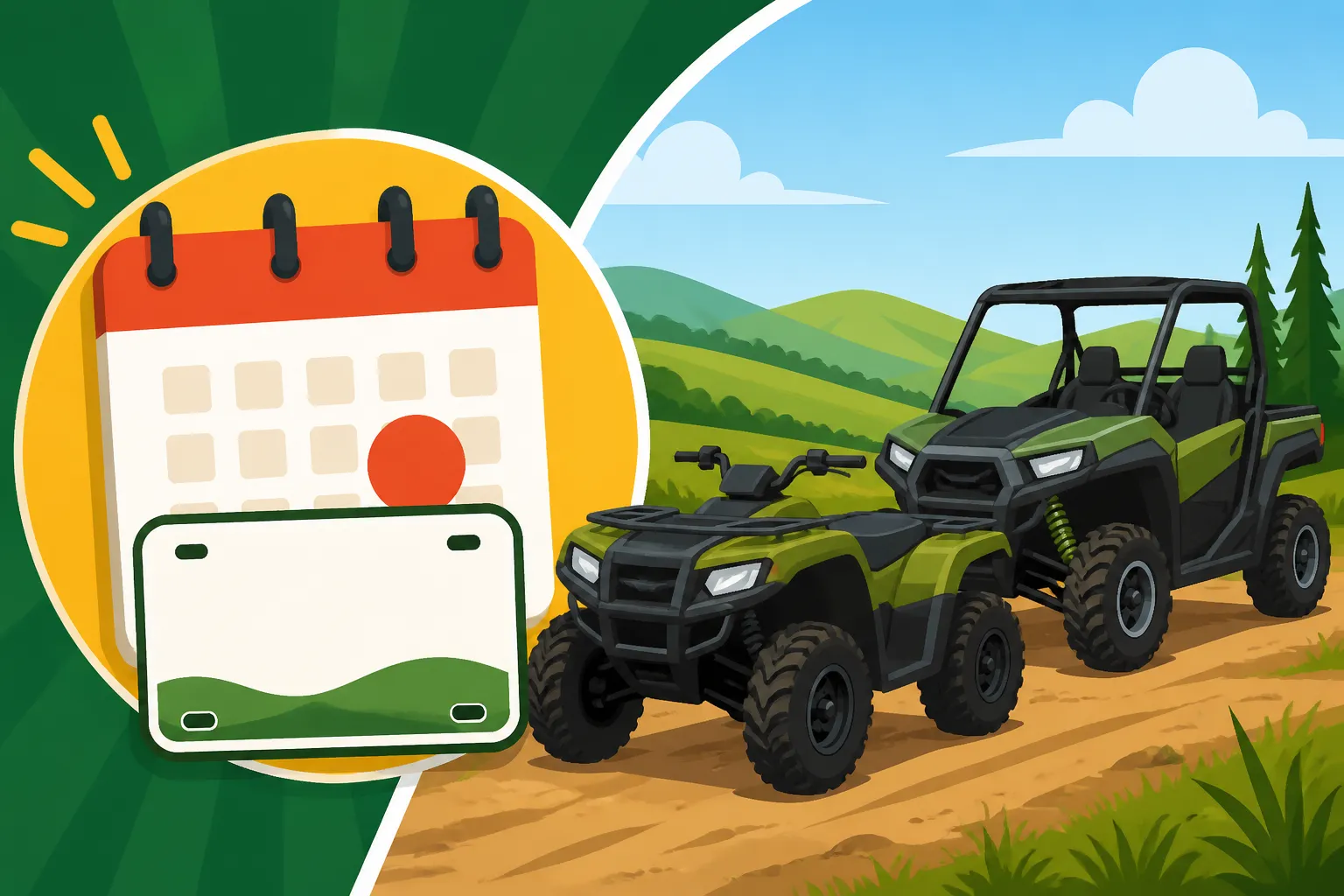
The fact that virtually all municipal ATV plates in Saskatchewan expire on April 30 isn't some arbitrary choice. There's a logical, practical reason behind this seemingly specific date, deeply tied to both the rhythm of the seasons and the administrative cycles of local governments. Understanding why this date is chosen can help you keep track of your renewals and avoid any unwelcome surprises.
The Rationale Behind the Date
The April 30 expiry date aligns perfectly with the seasonal nature of ATV riding in Saskatchewan. As the snow melts and the ground thaws, spring officially ushers in the prime riding season for quads and side-by-sides. By setting the expiry at the end of April, municipalities ensure that all riders start the new season with a fresh, current permit. This simplifies enforcement and administration, as everyone is on the same renewal schedule right when riding activity picks up.
Beyond the seasonal convenience, the April 30 date also often syncs up with municipal fiscal and administrative calendars. While a municipality's financial year might run from January 1 to December 31, the permit year for ATVs is often set to start and end with the outdoor recreation season. This allows for a clean break and consistent revenue collection for local trail maintenance or enforcement efforts. It also provides a clear window for renewals without overlapping too much with other administrative tasks, unlike, for instance, the year-round, rolling registration of some vehicles or the specific winter-focused registration for snowmobiles, which we discuss in [Saskatchewan Snowmobile Registration Compared].
What Happens When Your Plate Expires
Riding with an expired municipal plate is essentially the same as riding without one within that municipality. You lose the permission that the plate granted you. This means you could be subject to fines and penalties if caught by a peace officer or bylaw enforcement officer. It’s not a situation you want to find yourself in, especially if you’re out enjoying a day on the trails or using your quad for essential tasks.
The consequences can range from a monetary fine, which can be quite substantial, to having your machine impounded. Imagine having your quad seized, especially if you're far from home or relying on it for work. We've heard stories about riders facing significant costs to recover their machines, not to mention the inconvenience. As a reminder, riding unplated on municipal land can lead to tickets like those highlighted in [Riding Unplated on Municipal Land Costs $300]. It’s a preventable headache that a simple renewal can avoid, allowing you to enjoy your adventures without a cloud hanging over your head.
The Practicalities of Getting and Renewing Your Municipal Plate
Navigating the local permit system might seem a bit daunting at first, especially if you're used to a more centralized provincial process. However, once you understand the steps involved, getting and renewing your municipal plate for your ATV or UTV is quite straightforward. It primarily involves a visit to your local municipal office and ensuring you have the correct documentation on hand.
Your First Plate: What to Bring to the Village Office
Getting your very first municipal plate is usually a simple process, but it does require a few key pieces of documentation. When you head to the municipal office – whether it's a village, town, or rural municipality – you'll typically need to bring:
- Proof of Ownership: This is paramount. Since there's no provincial registration, your bill of sale is your primary document to prove you own the machine. For private sales, a detailed bill of sale is crucial, and resources like LawDepot can provide excellent templates to ensure all necessary information, like the VIN, make, model, and purchase price, is captured accurately.
- Valid Identification: Your driver's license or another government-issued ID will be required.
- Proof of Insurance: Even though ATVs aren't provincially registered, liability insurance is a provincial requirement for operation on public land, ditches, or roads where permitted. Ensure you have your current insurance policy or a card as proof.
The staff at the municipal office will guide you through filling out any necessary forms, collect the applicable fee, and issue your plate. It's often a friendly, efficient process designed to get you out riding legally. For a more detailed look at what's typically required, check out [What to Bring to Get Your First Quad Plate].
Streamlining Annual Renewals
Once you have your initial plate, renewing it each year before April 30 is generally even easier. Most municipalities understand that riders want a hassle-free process. You might receive a renewal reminder, but it's always best practice to mark your calendar yourself.
The renewal process often requires less documentation than the initial purchase. You'll typically need your ID and the plate number, and then you'll pay the renewal fee. Some municipalities, particularly in more remote areas, might even offer options for renewal via mail or e-transfer, allowing you to avoid a trip to the office. The cost for renewal is often lower than the initial plate purchase, acknowledging that the administrative burden is less.
Make sure you don't let this date slip by. Renewing early means you're good to go for the new riding season, avoiding any last-minute rushes or potential fines. We explored the specifics of this for one area in [Renewing a Lakeland Quad Plate Before April 30], but the principles apply across the province.
Here’s a quick comparison of what to expect for initial plates versus renewals:
| Item | Initial Municipal Plate Purchase | Annual Renewal |
|---|---|---|
| Typical Cost | Generally higher | Generally lower |
| Required Documentation | Proof of ownership (Bill of Sale), ID, insurance | ID, proof of prior plate |
| Expiry Date | April 30, regardless of purchase date | April 30 (annual) |
| Application Method | In-person at municipal office | In-person, mail, or e-transfer (check local rules) |
| Purpose | Permits legal riding within specific municipal boundaries | Extends permit for the next season |
Beyond the Plate: Essential ATV Ownership Documentation
While a municipal plate is crucial for legal riding in specific areas, it's just one piece of the puzzle for responsible ATV and UTV ownership in Saskatchewan. Because our province doesn't have a centralized registration system, other documents take on even greater importance. These papers are your primary proof of ownership, your legal protection, and your peace of mind.
The Bill of Sale: Your Proof of Ownership
Given that there's no provincial registration or title for ATVs in Saskatchewan, your bill of sale is the ultimate proof that you own your machine. It's not just a handshake agreement; it's a legally binding document. Whether you're buying from a private seller or even if you just need to formalize an exchange, drafting a comprehensive bill of sale is paramount. Online platforms like LawDepot can be incredibly helpful here, offering customizable templates that walk you through all the essential details to include, from the VIN to the purchase price and seller's information. This document will protect both the buyer and the seller.
Without a clear, professionally prepared bill of sale, proving ownership can become a nightmare in scenarios like theft recovery, insurance claims, or resale. It's worth taking the time to get it right, and tools from companies like LawDepot can offer that peace of mind, ensuring your ownership is unequivocally documented. Always keep multiple copies—one in a safe physical location, and ideally, a digital copy as well. This document is so vital that we delve into its importance frequently, including in [Saskatchewan Bills of Sale Do the Work]. If you ever need to sell your quad, especially to an out-of-province buyer who might be used to provincial registration, having a meticulously crafted bill of sale (which you can easily create using services like LawDepot) will make the transaction smoother and more credible.
Insurance: Always Required, Plate or No Plate
Regardless of whether you have a municipal plate, provincial regulations require you to carry at least $200,000 in liability insurance if you're operating your ATV on any public land, including trails, ditches, or roads where permitted. This isn't just a suggestion; it's a legal obligation designed to protect you and others in case of an accident. You can learn more about this in [Saskatchewan Minimum Insurance Requirement] and [Saskatchewan Insurance Requirements for Riders].
A municipal plate doesn't negate this requirement. In fact, many municipal offices will ask to see proof of insurance before issuing a plate. It's essential to always carry proof of your current insurance policy with you when you ride. A physical card or a digital copy on your phone can save you a lot of trouble if you're ever stopped by an officer. Don't leave home without it; the financial risk of operating an uninsured machine is far too great.
Understanding Local Bylaws and Restrictions
Even with a valid municipal plate and all your ownership documents in order, it's critical to remember that your permission to ride is tied to the specific bylaws of the issuing municipality. A plate from Candle Lake, for example, won't automatically grant you permission to ride on the roads or ditches of the District of Lakeland, or vice-versa. Each municipality has its own set of rules regarding where ATVs can and cannot be operated, speed limits, and even hours of operation.
Before you haul your machine to a new riding area, make it a habit to check the local bylaws. A quick call to the municipal office or a visit to their website can save you from inadvertently breaking rules and facing fines. These local nuances are a key part of ATVing in Saskatchewan, and they highlight why continuous awareness and responsible riding are so important. Understanding these varying rules is just as important as having your plate, as highlighted in [Saskatchewan Municipal Bylaws on Roads].
Disclaimer
This article is for general informational purposes only and does not constitute professional advice. Laws, prices and regulations vary by location and change over time. Consult a qualified professional for guidance on your specific situation.