Buying From a Seller in Manitoba
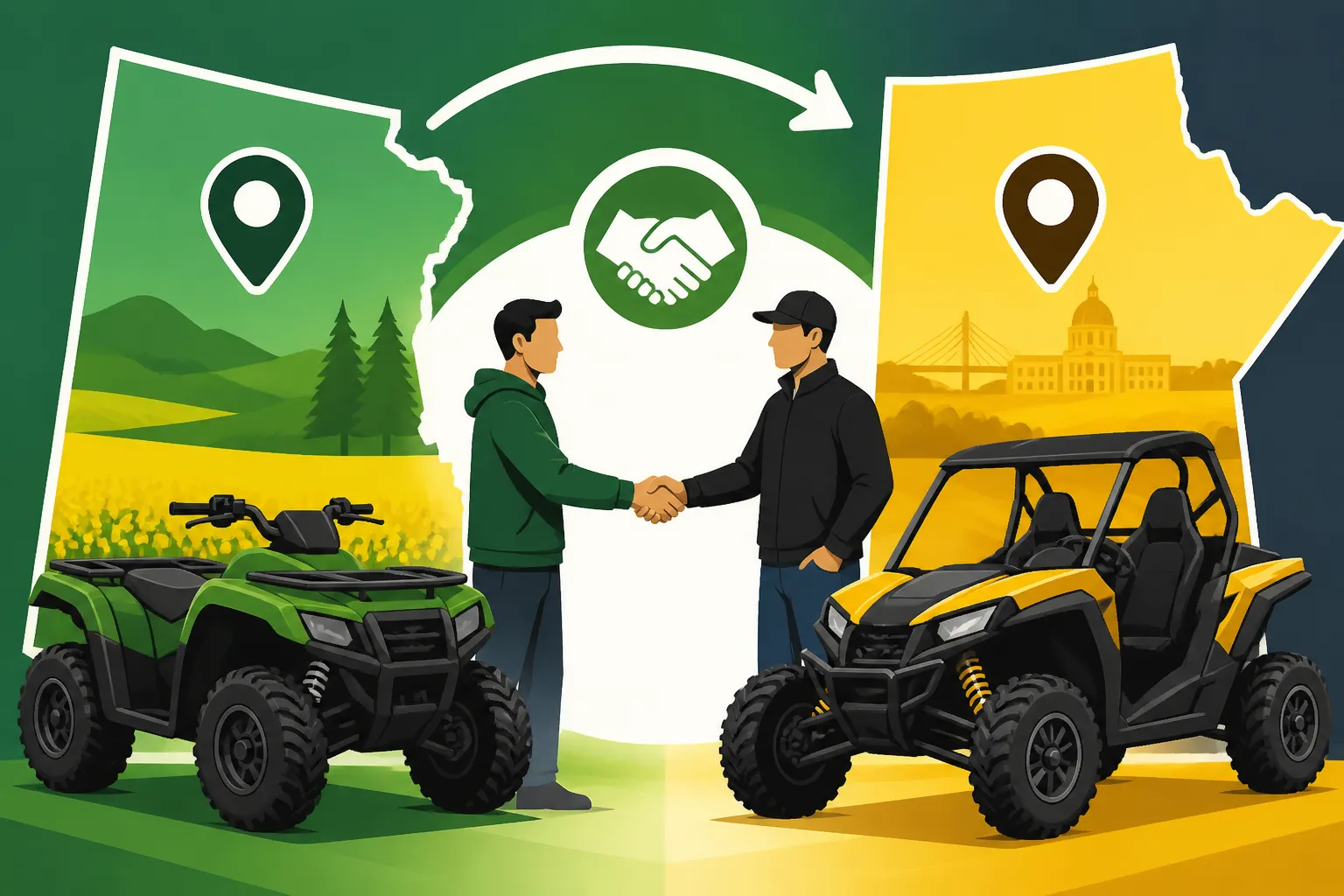
Buying an all-terrain vehicle (ATV) or utility terrain vehicle (UTV) is an exciting prospect, especially when you find the perfect machine. But what happens when that dream quad is sitting across the provincial border in Manitoba? Many riders in Saskatchewan find themselves scratching their heads, wondering about the paperwork, the taxes, and how on earth they're supposed to bring a machine from a registered province into one that doesn't register ATVs. This guide is here to untangle that confusion, providing clear steps and realistic advice for Saskatchewan buyers looking to purchase from a seller in Manitoba.
The Initial Hurdles of Out-of-Province Purchases
It's natural to feel a bit overwhelmed when considering an ATV purchase from another province. There's a lot of talk about registries and titles in other places, and Saskatchewan does things quite differently. Understanding these fundamental differences is your first step to a smooth transaction.
Why Manitoba is Different from Saskatchewan for Quads
The biggest distinction you'll encounter right off the bat is how each province handles ATV documentation. In Manitoba, ATVs and UTVs are typically registered with Manitoba Public Insurance (MPI), which is their provincial insurer and vehicle registrar. This means a Manitoba seller will have a formal registration document for their quad, similar to what you'd see for a car or truck, and likely a physical plate or decal. This system provides a clear paper trail of ownership and ensures the machine is insured.
Here in Saskatchewan, things are far less formal. [Saskatchewan Does Not Register ATVs] provincially. There's no provincial registry, no province-wide plate or decal, and no official title document issued by the province. This difference often leads to confusion. A Saskatchewan buyer might wonder if they need to "deregister" the machine from Manitoba or if they'll somehow get a Saskatchewan registration when none exists. The key takeaway is that while the Manitoba seller has formal registration papers, these are primarily for their provincial system and don't directly translate into a Saskatchewan registration because, simply put, there isn't one to translate to.
What the Manitoba Seller Needs to Provide
When you're buying from a Manitoba seller, their obligations are primarily to provide you with proof of their ownership and a document transferring that ownership to you. The most crucial document they will give you is a properly executed bill of sale. This document is the cornerstone of your proof of ownership in Saskatchewan, so it needs to be accurate and complete.
Beyond the bill of sale, the seller should also provide you with their existing Manitoba registration document. While this document won't be "transferred" to you in a Saskatchewan context, it serves as excellent historical proof that the seller was the legal owner in Manitoba. It allows you to cross-reference the Vehicle Identification Number (VIN) and other details to ensure they match the machine and the bill of sale. This helps confirm the legitimacy of the sale and gives you peace of mind that you're not buying a stolen machine or one with a murky ownership history. Always double-check the VIN on the machine against all documents provided.
Navigating Paperwork and Proof of Ownership for Saskatchewan Buyers
Once you've found your perfect quad in Manitoba, the real work begins with ensuring you have all the right paperwork to legally own it and operate it back home in Saskatchewan. Without a provincial registration system, your emphasis shifts entirely to a robust bill of sale and clear documentation.
The All-Important Bill of Sale
In Saskatchewan, where there's no provincial ATV registry, your bill of sale isn't just a receipt; it's your primary legal proof of ownership. It effectively stands in for a title or registration document. This means you need to be meticulous about its contents. A proper bill of sale should include the full legal names and contact information (addresses, phone numbers) of both the buyer and the seller. It must also clearly identify the ATV or UTV being purchased, including its make, model, year, and, most importantly, the complete Vehicle Identification Number (VIN). The purchase price, date of sale, and the signatures of both parties are also absolutely essential.
Don't settle for a hastily scrawled note on a napkin. A detailed and comprehensive bill of sale protects both parties and is vital if you ever need to prove ownership for insurance claims, resale, or in the unlikely event of theft. Many people find it helpful to use a template to ensure all critical information is captured. Resources like LawDepot offer customizable bill of sale templates that can guide you in creating a professional and legally sound document, ensuring you don't miss any vital details. Having a solid bill of sale means [Saskatchewan Bills of Sale Do the Work] of proving ownership. It's truly what [Your Bill of Sale Stands In for a Registration].
Handling the Manitoba Registration Document
When the Manitoba seller hands over their provincial registration document, it’s important to understand its role from a Saskatchewan perspective. This document proves that the machine was legally registered to them in Manitoba. However, it does not become your registration document in Saskatchewan because, as we've discussed, Saskatchewan doesn't have a provincial registration system for ATVs. You don't need to "transfer" this registration to Saskatchewan, nor will you receive a new one.
Think of the Manitoba registration as part of the machine's historical record and an additional layer of proof for your purchase. It confirms the seller's legal right to sell the machine. You should keep this document along with your bill of sale. It can be useful to [How to Prove You Own an ATV in Saskatchewan] by showing a complete chain of ownership, especially if you ever sell the machine yourself. But remember, for provincial purposes, [Saskatchewan Has No Title to Transfer], so this Manitoba document simply adds to your robust collection of ownership papers, rather than being a transferable title.
Understanding Taxes and Other Costs
Beyond the purchase price, one of the biggest considerations when buying an ATV from out-of-province is understanding the tax implications. It’s easy to get caught off guard by these costs if you haven't factored them into your budget.
Saskatchewan PST and GST on Out-of-Province Purchases
When you buy an ATV from a Manitoba seller and bring it back to Saskatchewan, you will be responsible for paying both federal Goods and Services Tax (GST) and Saskatchewan Provincial Sales Tax (PST). The federal GST applies to most goods and services across Canada. The provincial PST is where many out-of-province buyers get tripped up, especially if they’re buying from a private seller.
Unlike some other provinces that exempt used goods from provincial sales tax in private sales, Saskatchewan generally applies PST to all ATV purchases, even private sales, when the machine is brought into the province. This means that if you buy a quad from a seller in Manitoba, you will typically need to self-assess and remit the PST to the Saskatchewan Ministry of Finance. It's not something the Manitoba seller collects from you. So, be prepared for [Saskatchewan PST at Purchase] and [Saskatchewan GST at Purchase]. It’s important to calculate these amounts accurately and be prepared to pay them upon bringing the machine into Saskatchewan.
Paying the Taxes and Avoiding Surprises
The process for paying PST on an out-of-province ATV purchase typically involves contacting the Saskatchewan Ministry of Finance. You'll generally declare the purchase and pay the PST based on the agreed-upon purchase price. It's crucial to do this promptly after bringing the machine into the province. Ignoring this can lead to penalties and interest down the line, which nobody wants.
The GST is usually collected by the seller if they are a GST registrant (e.g., a dealership). If you buy from a private individual in Manitoba, they generally won't charge you GST, and you, as the buyer, are then responsible for self-assessing and remitting it to the Canada Revenue Agency (CRA). However, most private ATV sales between individuals do not involve GST collection, so this is often less of a concern than PST. The key is to factor in the Saskatchewan PST, which is applied at a provincial rate, on top of the purchase price. This ensures you're not hit with an unexpected bill after the excitement of your new quad wears off. Understanding [Saskatchewan Tax on an Out-of-Province Purchase] is crucial for budgeting.
Here’s a quick overview of key documentation and tax considerations when buying an ATV:
| Feature | Buying from a Manitoba Seller | Buying from a Saskatchewan Seller (Private) |
|---|---|---|
| Provincial Registration | Seller provides Manitoba registration; it's a historical document, not for transfer. | No provincial registration exists; seller provides proof of ownership. |
| Bill of Sale | Essential for proof of ownership in Saskatchewan. Must be detailed. | Essential for proof of ownership. |
| Provincial Sales Tax (PST) | Buyer self-assesses and remits PST to Saskatchewan Ministry of Finance. | Buyer self-assesses and remits PST to Saskatchewan Ministry of Finance (typically). |
| Goods & Services Tax (GST) | Generally not applicable for private sales; collected by dealerships. | Generally not applicable for private sales; collected by dealerships. |
| Proof of Ownership | Detailed bill of sale, plus seller's Manitoba registration for historical record. | Detailed bill of sale is the primary proof. |
| Plate/Decal | Manitoba plate/decal stays with seller or is surrendered; no Saskatchewan equivalent issued. | No provincial plate/decal issued. |
Practical Considerations for Bringing Your Quad Home
After sorting out the purchase and understanding the taxes, there are still a few practical steps to take to ensure your new Manitoba-sourced quad is ready for Saskatchewan trails. These considerations ensure you're both legally compliant and prepared for safe riding.
Transporting the Machine Legally
Once the deal is done and the paperwork is in order, you'll need to get your new ATV or UTV from Manitoba to Saskatchewan. This usually involves trailering the machine. Ensure your trailer is roadworthy, properly hitched, and that the ATV is securely tied down to prevent any shifting during transit. Using proper tie-downs is crucial, and it’s always a good idea to double-check them after a few kilometres of driving. Pay attention to load limits for your trailer and towing vehicle.
While the ATV itself doesn't need a Saskatchewan plate, your trailer certainly does. Make sure your utility trailer has valid registration and a current plate, as [Do Utility Trailers Need Their Own Plates?] – yes, they do. Having a well-maintained trailer and properly secured load isn't just about avoiding a ticket; it's about safety for yourself and other drivers on the highway. A loose machine can be incredibly dangerous.
Getting Insurance for Your New-to-You Quad
This is a critical step that many new quad owners sometimes overlook, especially since there's no provincial registration. Even without a provincial registry, [Saskatchewan Insurance Requirements for Riders] mandates that you carry liability insurance for your ATV if you plan to operate it anywhere other than on your own private land where you have exclusive permission to operate. This includes riding on public land, designated trails, road allowances, or any property that isn't solely yours. The minimum liability coverage is typically set at two hundred thousand dollars, but many riders opt for higher limits for better protection.
It’s highly recommended that you arrange for insurance coverage before you even bring the machine across the border or certainly before you take it for its first ride in Saskatchewan. Contact an insurance broker who deals with recreational vehicles to get a quote and activate a policy. They will need the VIN and details from your bill of sale. Having proof of insurance on hand is essential, as [Saskatchewan Insurance Proof on the Trail] is something a peace officer can ask to see. Don't wait until you're pulled over or, worse, involved in an incident to realize you're uninsured. Think about [Saskatchewan ATV Insurance Costs] as part of your overall purchase budget.
Post-Purchase Checks and Maintenance
Once your new quad is safely home in Saskatchewan, it’s a good practice to give it a thorough once-over before hitting any trails. Even if the seller assured you it was in top condition, a journey from Manitoba can be tough on a machine, and a fresh set of eyes is always beneficial. Check all fluid levels (engine oil, coolant, brake fluid), tire pressure, and brake functionality. Inspect the lights, throttle, and steering for proper operation.
If you’re not mechanically inclined, consider taking it to a trusted ATV mechanic in Saskatchewan for a pre-ride inspection. They can spot potential issues that might have been overlooked, ensuring the machine is safe and reliable. This small investment in a check-up can save you from bigger problems and repair bills down the line. Plus, understanding the machine's current condition will help you plan for [Saskatchewan Annual Maintenance Costs] and keep your quad running smoothly for years to come.
Disclaimer
This article is for general informational purposes only and does not constitute professional advice. Laws, prices and regulations vary by location and change over time. Consult a qualified professional for guidance on your specific situation.