Saskatchewan Paperwork for a Ranch Quad
It's no secret that a quad or side-by-side isn't just a recreational toy for many folks across Saskatchewan—it's an essential piece of equipment, especially if you're working on a ranch. These machines are the workhorses that help you check fences, move cattle, and generally keep operations running smoothly. But when it comes to the "paperwork" side of things, it can feel like a tangled mess of regulations and missing pieces, especially since we don't have a provincial registration system for ATVs. This guide is here to untangle that confusion, providing clear, actionable information on what documentation you truly need for your ranch quad, ensuring you're covered for both ownership and operation.
Understanding the Legal Status of Your Ranch Quad in Saskatchewan
Navigating the world of ATV regulations in Saskatchewan can feel a bit like trying to herd cats—especially when your machine is primarily a tool for your livelihood rather than a weekend toy. The key is understanding how the province views these machines and how specific exemptions apply to agricultural operations.
What "Ranch Quad" Means Under the Act
When we talk about a "ranch quad," we're generally referring to an All Terrain Vehicle (ATV) that's used predominantly for agricultural purposes on private land. The province's All Terrain Vehicles Act defines what an ATV is in fairly broad terms, encompassing the four-wheeled, off-road machines we commonly call quads, as well as side-by-sides (UTVs) if they fit the criteria. The crucial point here is how the machine is used. If your quad is primarily pulling a small trailer of feed, checking water lines, or moving tools around your sprawling property, it's clearly a ranch implement in your daily life. However, even though its purpose is practical, it still falls under the general umbrella of ATV legislation whenever it leaves your private land. Understanding [Saskatchewan ATV Definitions Explained] is a good first step, as it clarifies the physical characteristics that define these machines in the eyes of the law.
The Act itself doesn't have a specific carve-out for a "ranch quad" as a distinct legal category. Instead, it offers exemptions based on where and how the ATV is operated. This distinction is vital because while your use might be agricultural, the fundamental classification of the machine itself doesn't change. It's still an ATV, and general rules apply unless a specific exemption for land use or equipment comes into play.
The Provincial Stance on Registration for ATVs
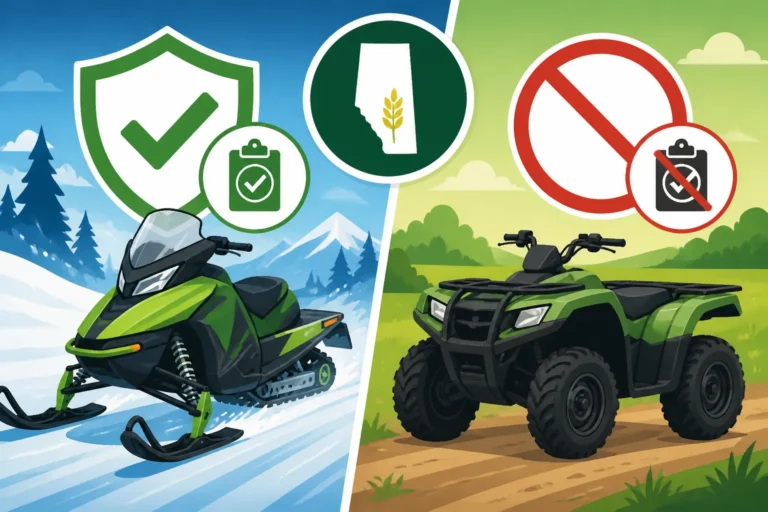
This is where Saskatchewan really stands out, and often, where the most confusion lies for new and experienced ranchers alike. The province does not register ATVs. Full stop. There is no provincial plate, no decal, and no central registry for your quad or side-by-side, regardless of whether it's a dedicated ranch machine or a recreational one. Many riders, especially those from out of province or new to the scene, expect a similar system to cars or even snowmobiles, which are registered provincially. It can be jarring to learn that [Why Saskatchewan Never Built a Quad Registry] means there's simply no government office to visit for this purpose.
What this lack of a provincial registry means for you as a rancher is that the usual methods of proving ownership and tracking machines aren't available. You won't get a "title" document from the province like you would for a car or truck. This places a much higher importance on other forms of documentation, which we’ll dive into shortly. While this might seem like less red tape, it actually shifts the responsibility of maintaining clear proof of ownership entirely onto your shoulders. When an officer pulls you over, they won't be checking for a provincial plate because [Saskatchewan Does Not Register ATVs].
Exemptions for Agricultural and Land-Based Use
Now, let's get into the specific scenarios that often apply to ranch operations. The All Terrain Vehicles Act has some key exemptions that are highly relevant to machines used on the land. Primarily, the Act generally doesn't apply to ATVs operated on private land, by the owner or someone with the owner's permission. This is a huge consideration for ranchers, as much of your work happens on your own property. If you're using your quad exclusively on your own deeded land, many of the operational rules (like age restrictions, helmet laws, and insurance mandates) often don't apply, though common sense and personal safety always should. [Saskatchewan Owner-Occupied Land Exemptions] provides more detail on this.
However, the moment your ranch quad leaves your private property—even just to cross a grid road to another parcel of your land, or to access a grazing lease—it typically falls under the full scope of the Act. This means that while much of your day-to-day use might be exempt, you still need to be prepared for those instances when you're operating beyond your fence lines. Furthermore, certain agricultural implements may be excluded from the ATV definition entirely if they meet specific criteria, but most standard quads and side-by-sides used on a ranch will still be considered ATVs. Even if you're primarily using your machine for chores, understanding the nuances of [Saskatchewan Machines Used on a Farm] is crucial to avoid any unexpected run-ins with the law.
Essential Documents for Ranch Quad Ownership and Operation
Since there's no provincial registration for ATVs in Saskatchewan, the paperwork you do have takes on monumental importance. These documents are your proof of ownership, your legal protection, and your ticket to operating safely and legally when you venture off your private land.
The Indispensable Bill of Sale
In Saskatchewan, a Bill of Sale is the cornerstone of proving ownership for your ATV. With no provincial title or registration, this document is what legally transfers ownership from a seller to a buyer. Think of it as your quad's birth certificate and deed rolled into one. It's not just a nice-to-have; it's absolutely essential. Whether you're buying a brand new side-by-side from a dealer in Swift Current or picking up a well-used quad from a neighbour near Kindersley, insist on a comprehensive Bill of Sale. [Saskatchewan Bills of Sale Do the Work] highlights its critical function.
A good Bill of Sale should include:
- The full names and addresses of both the buyer and the seller.
- A clear description of the ATV, including make, model, year, and—most importantly—the Vehicle Identification Number (VIN) or serial number. This unique identifier is paramount for identifying your specific machine.
- The purchase price and date of sale.
- Signatures of both parties.
- A statement that the seller is the rightful owner and the machine is free of liens (if applicable).
Without this document, proving you own your ranch quad can become an uphill battle, especially if it's stolen or you later decide to sell it. If you're looking for a reliable template, LawDepot offers customizable Bill of Sale forms that can help ensure you cover all the necessary legal bases, providing peace of mind for both buyer and seller. This simple piece of paper is ultimately [How to Prove You Own an ATV in Saskatchewan].
Insurance: A Non-Negotiable Necessity
While you might be able to operate your quad on your own ranch land without specific insurance requirements under the Act, the moment you take that machine onto public land, a grid road, or even across a grazing lease not fully within your private deed, insurance becomes mandatory. The All Terrain Vehicles Act requires every ATV operator to carry a minimum amount of third-party liability insurance. This is not optional if you plan to ever leave your property. [Saskatchewan Insurance Requirements for Riders] details these obligations.
Think about it: if you're crossing a municipal road to get to another field and, heaven forbid, you're involved in an accident with another vehicle, that liability insurance is what protects you from potentially devastating financial costs. The minimum coverage helps ensure that damages to other people or their property are addressed. Even if your machine never leaves your land, many ranchers still opt for comprehensive insurance coverage to protect their significant investment against theft, fire, or accidental damage. You might discuss specific farm insurance policies with your broker that can cover your machines as part of your overall operation, even when on your own property. While the provincial minimum is significant, many choose to carry higher limits for greater protection. This critical detail forms part of [Saskatchewan Minimum Insurance Requirement].
Operator Licensing and Training Considerations
Just like with insurance, the rules around operator licensing and training depend heavily on where and how your ranch quad is being used. If you are operating exclusively on your own private property, generally, you might not need a driver's license in the same way you would on public roads. However, the moment you move onto public roads, ditches, or Crown land, the rules shift.
The All Terrain Vehicles Act stipulates that operators must hold a valid driver's license. There are age restrictions, too: generally, operators must be 16 years of age or older. There is an exception for younger riders (12 years and older) if they are under the direct supervision of a licensed adult who has held their license for at least 365 days, or if they've completed an approved safety course. This "supervisor rule" is important for ranch families where younger members might be helping with chores. [Saskatchewan Requires a Driver's Licence] is a fundamental rule, but understanding its exceptions and nuances is key.
Even if not legally mandated for your specific use on private land, undergoing an ATV safety course is highly recommended. These courses teach safe operating practices, hazard recognition, and machine maintenance, which are invaluable skills for anyone, especially those using their machine for work. Ranch work often involves uneven terrain, livestock, and changing conditions, making proper training even more critical for preventing accidents and ensuring the longevity of both the operator and the machine. The [Saskatchewan's 365-Day Supervisor Rule] is there for a reason – safety, above all else, should be paramount.
Practical Paperwork Scenarios for Ranchers
Life on the ranch involves a lot of buying, selling, and lending of equipment. Because ATVs aren't provincially registered in Saskatchewan, each of these transactions requires careful attention to detail regarding your paperwork. Skipping steps here can lead to headaches down the road.
Buying a Quad for the Ranch
When you're bringing a new-to-you quad onto the ranch, whether it's fresh off the showroom floor or a pre-loved machine from a neighbouring farmer, the paperwork process is your primary protection.
If you're buying from a dealer, they will typically handle most of the essential sales documentation, including a detailed Bill of Sale that clearly identifies the machine and its VIN. They will also collect provincial sales tax (PST) and federal goods and services tax (GST), which applies to all new ATV sales and most used sales as well. The dealer will also ensure any manufacturer warranties are properly set up. It's always a good idea to confirm with the dealer exactly what paperwork you'll receive at delivery.
For private sales, the responsibility shifts entirely to you and the seller. This is where that comprehensive Bill of Sale becomes absolutely critical. Don't settle for a handwritten note on a napkin. A properly drafted Bill of Sale protects you by confirming the transfer of ownership, documenting the condition (if specified), and outlining the sale price. Consider using a template from a reputable source like LawDepot to ensure all legal necessities are met. This protects you from disputes later on and is your official record if the machine is ever stolen. Be sure to verify the VIN on the machine matches the one on the Bill of Sale and ensure the seller is the legal owner. This detailed attention is vital for [Buying From a Private Seller in Saskatchewan] and is your best bet for [Saskatchewan Paperwork for a Buyer].
Selling a Ranch Quad
Just as you need proper paperwork when buying, you have a responsibility to provide it when selling. A clean, accurate Bill of Sale protects both you and the new owner. It officially severs your ties to the machine and prevents any future disputes about ownership or condition. The Bill of Sale should again clearly detail the ATV, the sale price, and the parties involved. Once the sale is complete, provide the buyer with the original Bill of Sale and keep a copy for your records. Remember, because there's no provincial transfer of ownership via a registry, the Bill of Sale is the only official record of the transaction. For peace of mind, make sure your Bill of Sale is thorough, especially if the machine has any known issues you're disclosing. This ensures a smooth transaction when [Selling a Quad Privately in Saskatchewan].
Lending or Borrowing a Ranch Quad
It's common on a ranch to lend a hand, and sometimes that includes lending equipment. If you allow someone to borrow your ranch quad, especially if they'll be taking it off your private property, you need to be aware of the implications. As the owner, you could be held liable for their actions if they are involved in an accident and are found to be negligent. This is where your insurance is paramount. Ensure that anyone operating your machine has the necessary license and training, and ideally, understands the specific rules of operation both on and off your land.
It’s prudent to have a clear understanding, even a simple written agreement, about the terms of the loan, especially concerning who is responsible for damages or fines. While not a strict legal requirement for casual lending, a signed agreement (which you could easily draft using legal templates from LawDepot) can clarify responsibilities and potentially protect you. This might seem overkill for a neighbour helping out, but it can save a lot of heartache. This foresight can be crucial when considering scenarios like [Who Pays When a Borrower Crashes Your Saskatchewan Quad?].
Dealing with Stolen Machines or Insurance Claims
The lack of a provincial ATV registry unfortunately complicates matters significantly if your ranch quad is stolen. Without a central database or a provincial plate, law enforcement relies heavily on your private documentation to identify and recover your machine. This makes your comprehensive Bill of Sale, with its clear VIN, absolutely critical. When reporting a theft, you'll need that VIN to identify your quad to the police. While the police will investigate, the absence of a registry means there's no official "stolen" flag in a provincial system associated with a plate. This reality makes thorough record-keeping even more important for [Saskatchewan Stolen Machine Reports].
Similarly, when making an insurance claim (e.g., for theft, fire, or accident), your insurance provider will require proof of ownership. Again, your Bill of Sale is the primary document. They will also need to verify the machine's VIN and potentially ask for maintenance records or photos to establish its value and condition. Without solid paperwork, substantiating your claim can be difficult. It's a stark reminder that while [Saskatchewan Insurance Claims Without a Plate] are possible, they rely heavily on your diligent record-keeping. Keep all your important documents—Bill of Sale, insurance policy, maintenance records—in a safe, accessible place, not just stuffed in a dusty drawer.
| Document Type | Purpose | When It's Needed (Ranch Quad) | Key Information to Include |
|---|---|---|---|
| Bill of Sale | Proof of Ownership | Buying, Selling, Theft, Insurance Claims | Buyer/Seller Info, Make/Model/Year, VIN, Price, Date, Signatures |
| Insurance Policy | Liability & Asset Protection | Operating on Public Land/Roads, Accidents, Theft | Policy Number, Coverage Limits, Machine Details, VIN |
| Operator's Licence | Legal Requirement for Public Operation | Operating on Public Land/Roads, Ditches, Grazing Leases | Operator Name, Licence Number, Expiry Date |
| Written Permission | Access to Non-Owned Private Land | Riding on Crown Land, Grazing Leases, Neighbour's Property | Landowner Name, Dates, Specific Area, Permitted Activities |
| Safety Course Cert. | Youth Operator Prerequisite | Youth (12-15) operating off private land without direct adult supervision | Operator Name, Course Provider, Date Completed |
Beyond Ownership: Operational Paperwork and Best Practices
Having your ownership papers in order is one thing, but knowing what to carry with you when you're actually out working (or occasionally recreating) with your ranch quad is another. Furthermore, understanding the rules for various land types can keep you out of trouble and ensure your operations run smoothly.
Carrying Proof on the Trail (or Pasture)
It's a good practice to carry certain documents with you when operating your ranch quad, especially if there's any chance you'll be off your private, deeded land. While you don't need a provincial "registration," you absolutely need proof of insurance. An officer can ask to see this at any time if you're operating on public land or a roadway. Carrying a physical or digital copy of your insurance policy or card is crucial. [Saskatchewan Insurance Proof on the Trail] isn't just good advice; it's a legal requirement.
Beyond insurance, having a copy of your Bill of Sale (or at least proof of purchase) isn't legally mandated to be carried on the machine, but it can certainly help clarify ownership if you're ever stopped or if there's an incident where ownership is questioned. It's often easier to keep these important papers in your truck, or perhaps a laminated copy tucked safely into a waterproof compartment on the quad. Avoid carrying originals that could be lost or damaged. Being prepared with your paperwork can make a brief stop by a peace officer much quicker and smoother, especially on [Carrying Papers on a Grid Road].
Crown Land and Grazing Lease Access
Ranch operations often extend beyond deeded land onto Crown lands or grazing leases. The rules for ATV use on these lands are critical to understand. For Crown land, you typically need to be aware of specific regulations or administrator orders that might restrict or prohibit ATV access in certain areas, especially during fire season or to protect sensitive ecosystems. It's not a free-for-all, even if your machine is a work tool. [Saskatchewan Crown Land Access Rules] are in place to manage these shared resources.
For grazing leases, while you likely have permission to access and manage the land as part of your lease agreement, it's still good practice to understand the terms of that lease regarding vehicle use and to carry documentation (like a copy of your lease agreement or a letter of permission) if questioned. Accessing someone else's private property (even Crown land managed by another leaseholder) without explicit permission is considered trespassing. Always ensure you have the necessary consent. If you're using a quad to manage livestock or property on a grazing lease, make sure you understand [Saskatchewan Grazing Lease Permission] thoroughly. It's always best to err on the side of caution and carry proof that you are authorized to be there.
Understanding Local Bylaws and Municipal Plates
Even though Saskatchewan doesn't have a provincial ATV registration system, some individual municipalities (villages, towns, or even rural municipalities) have created their own bylaws that require local permits or plates for ATVs operated within their boundaries. These are not provincial plates, and they only apply to the specific municipality that issues them.
If your ranch is located near a municipality that has such a bylaw, or if your operations take you into one of these areas, you'll need to research their specific requirements. For instance, some popular recreational areas or lake communities have adopted these bylaws to manage ATV traffic on their local roads and trails. These municipal plates often come with their own fees, rules for display, and operational restrictions (like speed limits or prohibited streets). Failing to comply with these local bylaws can result in fines. [Saskatchewan Rural Municipality Rules] can vary widely, so it's always best to check with the local municipal office before you ride through. This is an important distinction to make, as these local schemes are an effort to fill the gap left by the province, as detailed in [Saskatchewan Municipal Plate Schemes].
It's a unique patchwork system in Saskatchewan, and for a rancher who might travel across various jurisdictions, understanding these local nuances is just as important as knowing the broader provincial rules.
Disclaimer
This article is for general informational purposes only and does not constitute professional advice. Laws, prices and regulations vary by location and change over time. Consult a qualified professional for guidance on your specific situation.