When the Owner Pays for a Rider’s Mistake
It's a chilling thought for any ATV or UTV owner in Saskatchewan: lending out your beloved machine, only to get a call later detailing an accident. Immediately, your mind jumps to the rider, their well-being, and then, perhaps, a cold knot forms as you wonder, "Am I on the hook for this?" The reality is, in Saskatchewan, simply owning the machine can put you in a very vulnerable position if someone else makes a mistake while riding it. This guide will help you understand the significant responsibilities that come with ATV ownership and how to protect yourself when your quad is out of your hands.
Understanding Owner Liability in Saskatchewan for ATVs
Let's be honest, we all love the freedom that comes with owning an ATV or UTV here in Saskatchewan. Whether it's for farm work, accessing a remote hunting cabin, or simply enjoying the vast landscapes with friends, these machines are integral to our lifestyle. However, that freedom comes with a significant burden of responsibility, especially when it comes to who is held accountable if something goes wrong. It's not always just the person behind the handlebars who faces the consequences.
The Legal Framework: The All Terrain Vehicles Act
The foundation of owner liability for ATVs and UTVs in Saskatchewan is laid out in [Saskatchewan's All Terrain Vehicles Act]. This piece of legislation isn't just about how you operate your machine; it also defines who is responsible when an incident occurs. Unlike a car, which has a clear registration and licensing system that often dictates liability, ATVs operate under a slightly different framework that can catch owners by surprise. The Act is quite specific about who can operate a machine, where they can operate it, and the safety measures required. Any deviation from these rules, when coupled with an incident, can quickly turn into a legal headache for the owner, regardless of whether they were present or not.
The Act places a considerable onus on the owner to ensure their machine is operated safely and legally. This isn't just a friendly suggestion; it's a legal expectation. For instance, if you lend your quad to someone who then violates the Act's rules on public land or causes damage, the law often looks straight to the person whose name is on the bill of sale. It’s a harsh reality that many owners don't fully grasp until it's too late. Understanding these fundamental provisions of the Act is the first step in recognizing your potential exposure.
The Concept of Vicarious Liability
When we talk about an owner paying for a rider's mistake, we're really delving into the concept of "vicarious liability." In simple terms, this means that one party (the owner) can be held responsible for the actions or omissions of another party (the rider), even if the owner wasn't directly involved in the incident. It's a common legal principle, and it applies quite strongly to vehicles, including ATVs and UTVs, here in Saskatchewan. The law often assumes that by allowing someone to operate your machine, you've essentially given them permission to act on your behalf, at least in the eyes of the courts.
This isn't about blaming you for something you didn't do; it's about the law recognizing that as the owner, you have a certain degree of control and responsibility over your property. If your machine causes harm or damage, and it was being operated with your consent, the legal system can extend liability to you. This is a critical distinction, as it means even if you've explicitly told a rider to be careful, or even if they've signed a waiver, these might not fully absolve you of responsibility in the event of a serious incident. It underscores the importance of being incredibly cautious about who you allow to ride your ATV and under what circumstances.
When the Owner is Not the Operator
It's easy to assume that if you're not riding the machine, you can't be held responsible. Unfortunately, in Saskatchewan, this isn't always the case for ATV owners. The [Saskatchewan Owner Liability Rules] are pretty clear: if you are the owner of an ATV and you permit someone else to operate it, you can be held liable for any loss or damage arising from that person's negligence or improper operation. This is especially true if the operator is unable to satisfy a judgment resulting from an accident. Think about it: you lend your quad to a friend, they hit a fence or injure another person, and suddenly, you're facing a lawsuit.
This isn't just theoretical. Imagine you've got a brand new side-by-side, perfect for hauling gear or taking a few friends on a ride. A buddy asks to borrow it for a weekend hunting trip. You agree, perhaps with a quick warning to "be careful." If that friend, through their own carelessness, causes a significant accident—maybe they collide with another machine, or damage private property—the injured party or property owner isn't just going to pursue your friend. They'll almost certainly come after you, the owner, because you hold the asset and likely the insurance. It's a sobering thought that highlights why careful consideration must go into every decision to lend out your machine.
Real-World Scenarios Where Owners Face Responsibility
The theoretical legal frameworks become very real, very quickly, when an incident actually occurs. It's in these real-world scenarios that the weight of owner responsibility truly manifests. Understanding these situations can help you anticipate potential pitfalls and take preventative measures.
Lending Your Quad to a Friend or Family Member
This is perhaps the most common scenario where owners inadvertently expose themselves to significant liability. It's natural to want to share the fun or help out a family member with a chore. Your neighbour needs to pull a stuck car out of the snow, or your nephew wants to try out your sport quad on a back road. You toss them the keys, a quick "have fun, be safe," and off they go. However, that casual gesture can have serious repercussions. If that friend or family member has an accident, causes injury, or damages property, you, as the owner, could be held responsible for their actions.
This applies even if the rider is generally competent and responsible. Mistakes happen. Maybe they misjudged a corner, didn't see a hidden obstacle, or simply lost control. If their actions lead to a significant claim, the plaintiff's lawyers will invariably look to the deep pockets – and that often means the owner's insurance policy, or the owner themselves. The conversation can quickly shift from "how's your friend doing?" to "your insurance company needs to be notified." It's a tough lesson many learn the hard way: good intentions don't negate legal responsibility.
Allowing an Unlicensed or Underage Rider
This scenario dramatically amplifies an owner's risk. The [Saskatchewan Requires a Driver's Licence] rule means that, generally, operators need a valid driver's license to ride an ATV on public roads or ditches. Furthermore, [Saskatchewan Bans Riders Under 16] on public land, with specific [Saskatchewan Rules for a 12-Year-Old Rider] requiring direct supervision and a safety course for those 12 and over. If you knowingly allow someone who does not meet these age or licensing requirements to operate your ATV, you are essentially asking for trouble. In the event of an accident, your liability significantly increases, and your insurance company might even deny coverage, leaving you personally responsible for all damages.
Imagine a situation where your 14-year-old cousin, eager to try out your quad, takes it for a spin down a municipal road without a supervisor, against the rules. They misjudge an approaching vehicle and swerve, causing an accident. Not only is the cousin in violation of the Act, but you, as the owner, could be seen as having negligently entrusted the machine to an unqualified operator. The repercussions could be severe, involving hefty fines, legal fees, and potentially life-altering financial judgments. This is where [The Act Treats the Supervisor as the Operator] becomes very relevant, legally putting responsibility on the adult who permitted the ride.
Incidents on Your Property vs. Public Land
The location of an incident can sometimes introduce different layers of complexity, but it rarely fully absolves the owner. While [Riding on Family Land Falls Outside the Act] in some respects regarding operational rules, the general principles of liability can still apply. If an incident occurs on your private land, such as a farm or cabin property, and it results in injury to a guest or damage to property (especially if that property belongs to someone else, like a contractor's vehicle), you could still face a claim. Your homeowner's insurance might come into play here, but it's not a guarantee that it will cover ATV-related incidents, especially if negligence on your part (e.g., poorly maintained trails, knowingly allowing an unsafe rider) can be proven.
On public land, such as a designated trail, a grid road, or a ditch, the stakes are often higher because the specific provisions of [Saskatchewan's All Terrain Vehicles Act] and traffic laws come into play more directly. An incident on public land is more likely to involve other members of the public, or public property, leading to claims against both the operator and the owner. This includes everything from minor collisions to significant personal injury or property damage. The rules regarding age, licensing, speed limits, and safety gear are strictly enforced on public land, and any violation by the operator can reflect poorly on the owner who permitted the use.
Protecting Yourself as an ATV Owner
Given the potential for significant liability, it's crucial for every ATV and UTV owner in Saskatchewan to take proactive steps to protect themselves. This isn't about being overly paranoid; it's about being responsible and ensuring that your enjoyment of these machines doesn't lead to financial ruin or legal nightmares.
The Critical Role of Insurance
If there's one piece of advice to take away, it's this: never, ever operate or let anyone else operate your ATV without adequate insurance. In Saskatchewan, it's not just a good idea; it's legally mandated for machines operating on public land or waterways. [Saskatchewan Minimum Insurance Requirement] specifies the base level of liability coverage you need. However, many riders find that this minimum might not be enough to cover the actual costs of a serious accident, especially if it involves severe injury or extensive property damage.
It's highly advisable to carry more than the minimum liability coverage. Speak with your insurance broker about extending your coverage, and explore options like comprehensive or collision insurance to protect your investment in the machine itself. Without proper insurance, any judgment against you in court would come directly from your personal assets – your home, savings, and future earnings. Your insurance policy is your first and strongest line of defense against unforeseen incidents. Always ensure your policy covers anyone you might permit to operate your machine and that you have physical proof of [Saskatchewan Insurance Requirements for Riders] on hand when riding, as an officer may ask for it.
Due Diligence Before Lending Your Machine
Before you hand over the keys to your ATV, take a moment to perform some due diligence. This isn't about being distrustful; it's about being responsible. Consider the following:
- Rider's Experience and Competence: Is the person a seasoned rider or a complete novice? If they're new, are you comfortable providing appropriate instruction and supervision? Remember, [The Act Treats the Supervisor as the Operator], so if you're supervising, you're on the hook.
- Licensing and Age: Does the rider meet the legal age requirements, especially on public land? Do they have a valid driver's license if required for the riding area? For younger riders, are they at least 12 and have they completed an approved safety course, and will you be supervising them directly as per [Saskatchewan Rules for a 12-Year-Old Rider]?
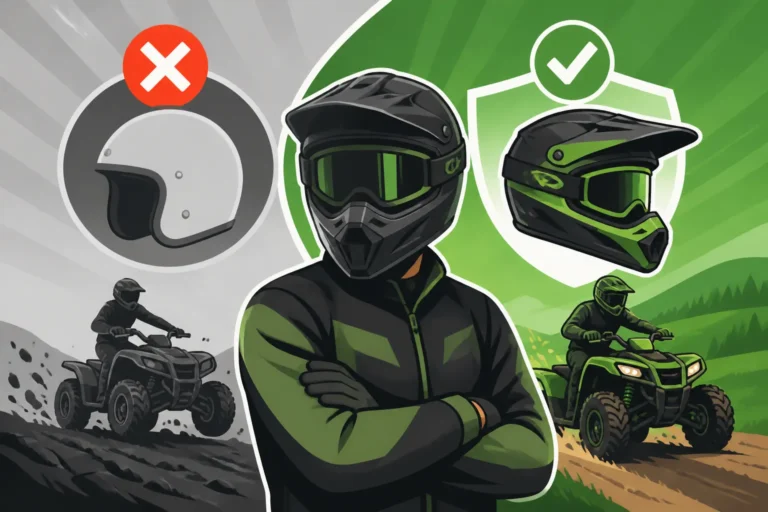
- Safety Gear: Does the rider have the necessary safety gear, including an approved helmet and eye protection, as specified by [Saskatchewan Helmet and Eye Protection Rules]? Insist on it. No helmet, no ride.
- Machine Condition: Is your ATV in good working order? Regular maintenance is key. Ensure brakes are functioning, tires are properly inflated, and all lights are operational. Using high-quality components, perhaps from a brand like SuperATV, can contribute to the machine's reliability and safety. Neglecting maintenance could be seen as contributory negligence on your part if an accident occurs due to a mechanical failure.
By taking these steps, you not only reduce the risk of an accident but also build a stronger case for yourself if you ever have to demonstrate that you acted responsibly.
Clear Communication and Written Agreements
While it might feel a bit formal for friends or family, clear communication and even a simple written agreement can go a long way in protecting you. At a minimum, have a detailed conversation with anyone borrowing your machine. Outline where they can and cannot ride, specific safety rules, and your expectations regarding responsible operation. Remind them of speed limits, ditch riding rules, and the importance of being aware of their surroundings.
For extended loans or high-value machines, consider drafting a simple agreement. This doesn't need to be a complex legal document, but it should clearly state:
- The rider understands and agrees to adhere to all Saskatchewan ATV laws and regulations.
- The rider confirms they have the necessary experience and licensing.
- The rider agrees to cover any deductibles or uninsured losses if an incident occurs.
- The rider acknowledges they will operate the machine safely and responsibly.
While such an agreement won't fully remove your owner liability, it provides strong evidence that you took reasonable steps to ensure responsible operation and that the rider understood their obligations. It also provides a clear understanding between parties, which can prevent misunderstandings and disputes down the road.
The Reverse Onus and What It Means for Owners
One of the most challenging aspects of owner liability in Saskatchewan is the "reverse onus" principle. This legal concept shifts the burden of proof in certain situations, making it harder for an owner to escape responsibility. It's a critical detail that every ATV owner must understand.
Disproving Negligence: The Owner's Burden
Under [Saskatchewan Reverse Onus in a Claim], if your ATV causes damage or injury to another person or property, the law generally presumes that the damage was caused by the negligence of the operator or the owner. This is where the "reverse onus" comes in: as the owner, you are presumed to be negligent unless you can prove otherwise. This means the burden is on you to demonstrate that the damage or injury did not arise through the negligence or improper conduct of the operator, or that you were not negligent in allowing that person to operate the machine.
Think about that for a moment: you are essentially guilty until proven innocent. This can be incredibly difficult to do, especially if you weren't present at the time of the incident. How do you prove that the operator wasn't negligent, or that you were responsible in your entrustment of the machine? This reverse onus means that simply saying "I told them to be careful" often won't be enough. You'll need concrete evidence and a solid defense. This makes the steps outlined in the previous section—insurance, due diligence, and clear communication—not just good practice, but absolutely essential for building a defense.
Documenting Your Efforts
Given the reverse onus, documentation becomes your best friend. Every step you take to ensure responsible operation, from verifying a rider's license to mandating safety gear, should ideally be documented. While this might sound excessive for lending a quad to a buddy, it can be invaluable if you ever face a legal challenge.
Here are some ways to document your efforts:
- Safety Briefing Checklist: A simple checklist you review with the borrower covering safe operation, local bylaws, and the condition of the machine.
- Photo Evidence: Take a quick photo of the borrower with their helmet on, next to the machine, perhaps with a timestamp. This proves they were equipped with safety gear.
- Communication Records: If you discuss rules or conditions via text or email, save those conversations.
- Maintenance Records: Keep detailed records of all maintenance performed on your ATV. This can prove that your machine was in good working order, refuting claims of mechanical failure due to your neglect. Whether it's a simple oil change or installing a robust new part from a company like SuperATV, keep those receipts and notes.
- Proof of Insurance: Always have your current insurance documents readily accessible.
This might seem like a lot of extra work, but in the unfortunate event of an accident and a subsequent claim, having a clear paper trail demonstrating your commitment to safety and responsible ownership can make all the difference in proving you were not negligent under the reverse onus rule. It can significantly impact the outcome, potentially saving you from severe financial and legal repercussions. Remember, [Saskatchewan Accident Reporting Duties] also apply, and having your ducks in a row from the start makes that process smoother, too.
| Action Taken by Owner | Benefit in a Liability Claim |
|---|---|
| Adequate Liability Insurance | Primary financial protection against damages and legal costs. Ensures minimum legal compliance. |
| Verified Rider's Licence/Age | Demonstrates due diligence in entrusting machine to a qualified operator, challenging claims of negligent entrustment. |
| Mandated Use of Safety Gear | Shows commitment to rider safety; helps mitigate severity of injuries, which can reduce claim amounts. |
| Machine Maintenance Records | Proves the machine was in safe operating condition, countering claims of owner negligence due to mechanical failure. |
| Clear Verbal/Written Agreement | Establishes rider's understanding of rules and responsibilities, bolstering owner's defense against direct negligence. |
| Provided Safety Briefing | Further evidence of owner's efforts to ensure safe operation by the borrower. |
| Documented Operator Experience | Helps prove the owner made a reasonable assessment of the rider's ability before lending the machine. |
Disclaimer
This article is for general informational purposes only and does not constitute professional advice. Laws, prices and regulations vary by location and change over time. Consult a qualified professional for guidance on your specific situation.