Saskatchewan Riding With a Group of Ten
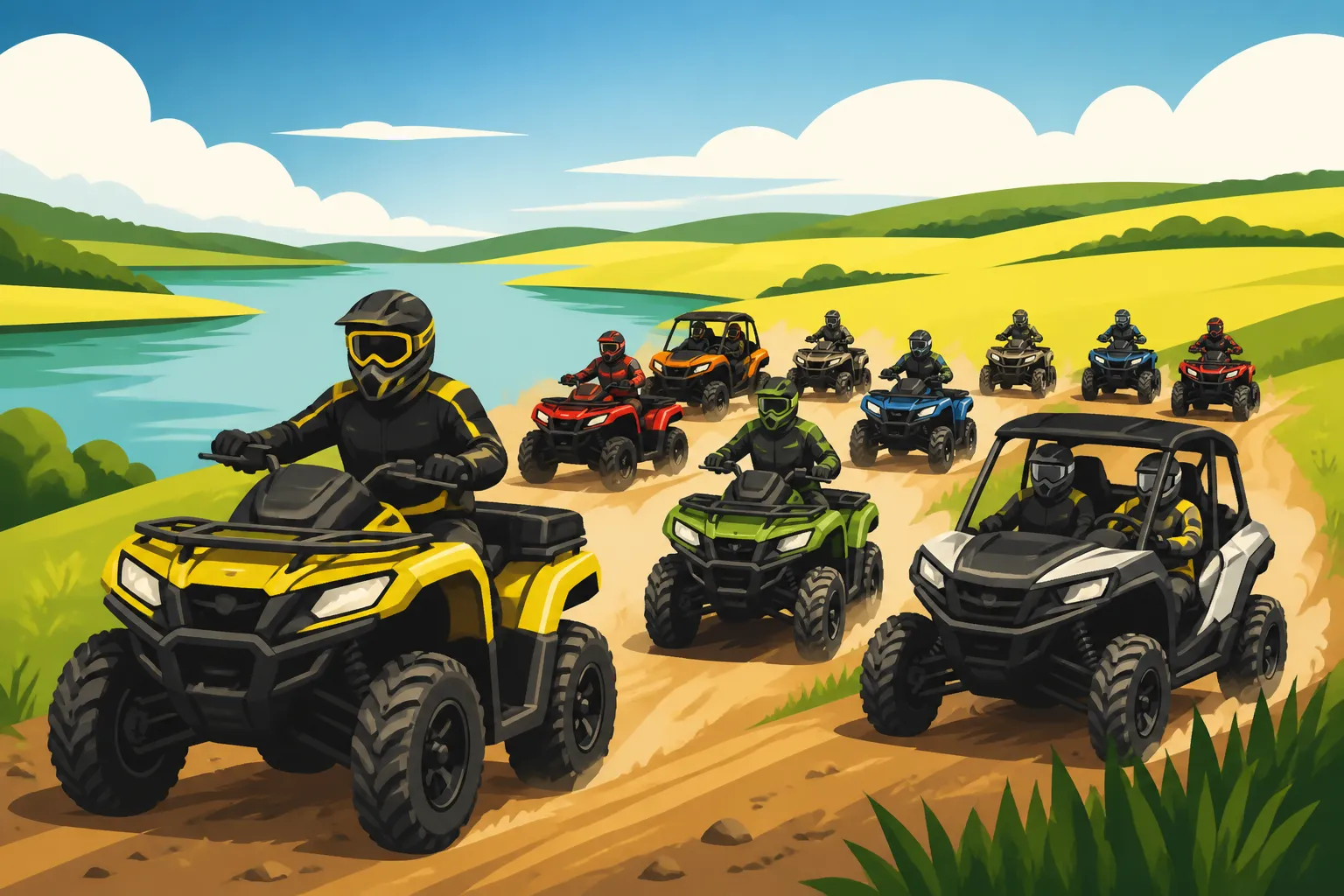
A group of ten can turn a Saskatchewan ATV ride into a great day out—or a slow-moving convoy of missed turns, dusty gaps, and last-minute route changes. The key is planning for the group’s pace, confirming that the route is open and permitted, and agreeing on simple communication and regrouping rules before anyone unloads.
Plan a Saskatchewan group ride that works for ten
Choose the route for the least experienced rider
A route that feels straightforward to one rider may be challenging for someone new to bush trails, sand, mud, or long stretches away from services. Before choosing a destination, ask everyone about their experience, machine type, comfort with rough terrain, and how long they want to ride. Then choose a route that suits the least experienced person, rather than expecting them to keep up with the most confident rider.
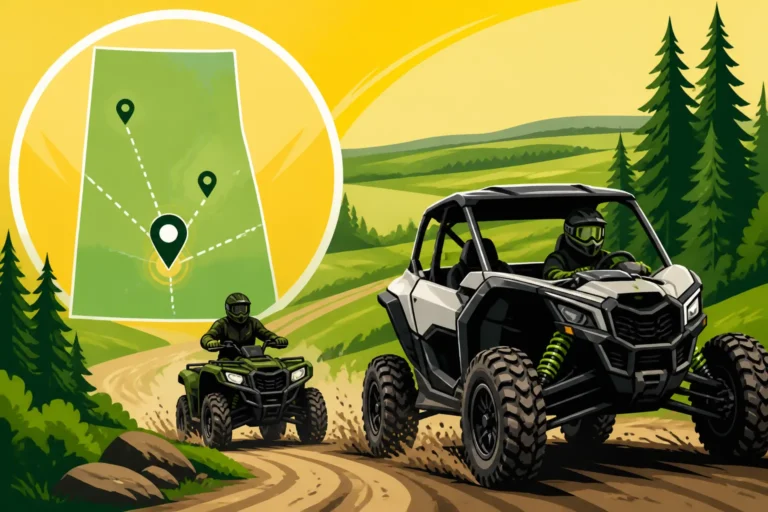
Saskatchewan has very different riding conditions from one area to another. A route near Moose Mountain, Narrow Hills, or Great Blue Heron may involve different terrain, trail layouts, and access rules. Check the specific area’s current information and use posted signs at the trailhead; an old track on a map is not proof that a trail is open or appropriate for ATVs. Reviewing [Saskatchewan Trail Difficulty Ratings] can help your group talk through what “easy” or “challenging” means before you set off.
Keep the first group ride modest. A shorter out-and-back or loop gives you room to see how the group handles stops, dust, and pace before committing to a full day. If riders have very different skill levels or machines, plan a route with clear places to turn around or regroup rather than a single long loop with no easy exit.
Confirm access, closures, and group requirements
Do not assume that a route is available just because it appears on a trail map or because someone rode it last season. Access can depend on the land type, the trail agreement, posted restrictions, local bylaws, seasonal conditions, and temporary closures. Check the specific riding area, park or club information before loading the trailer, and look again shortly before departure.
This matters especially when a route crosses Crown land, a grazing lease, private land, or a designated park trail. Permission and operating rules can differ from one section to the next. Start with [Saskatchewan Crown Land Access Rules] and [Saskatchewan Club Trails on Crown Land], then confirm any local requirements with the organization responsible for the route. If you are planning an organized ride rather than an informal outing, ask whether additional permission or event arrangements are needed.
Fire conditions can also change access plans. Check for wildfire restrictions and closures for the exact area, not just the general region. A route that was open when you planned the trip may be affected by a later restriction. [Saskatchewan Wildfire Closures and Riding] is a useful reminder to verify conditions before leaving. If a road, trail, or area is posted closed, choose another route rather than trying to work around the closure.
Organize the convoy before anyone starts riding
Assign simple roles and agree on the order
Ten machines are easier to manage when riders know who is doing what. Choose a lead rider who knows the planned route and a sweep rider who stays behind the group. The lead should ride at a pace the group can maintain, while the sweep checks that nobody is left behind after a stop or turn.
Set the riding order before starting. Newer or slower riders should not feel pressured to keep up by racing through dust or rough terrain. Keep riders who know one another nearby if that helps them communicate, and avoid changing the order constantly. A stable formation makes it easier to notice a gap or missing machine.
| Group role | Main responsibility | Helpful habit |
|---|---|---|
| Lead rider | Navigate and set a manageable pace | Stop before unclear turns so everyone can regroup |
| Sweep rider | Stay behind the last rider and monitor the group | Carry a charged phone or radio if available |
| Mid-group riders | Maintain spacing and pass signals along | Avoid leaving large gaps without warning |
| Everyone | Ride within their ability and follow the plan | Tell the lead or sweep if stopping or turning back |
Do not treat a convoy as a single vehicle. Each rider remains responsible for operating their own machine safely and following applicable rules. Keep enough distance to see through dust and react to sudden stops. On narrow trails, let the group stretch out rather than bunching machines together.
Set communication and regrouping rules
Before leaving the staging area, agree on what the group will do at forks, road crossings, trail junctions, and unexpected obstacles. A simple rule works well: the lead stops at an unclear turn and waits until the sweep confirms the last rider has arrived. Riders should not guess which way the group went or take a different trail to catch up.
Choose a few planned regrouping points, such as a signed junction, a safe open area, or a trailhead. Avoid stopping where you block a trail, driveway, bridge, or road. If someone needs to stop, they should signal the rider behind them and move to a safe spot where possible. The message should travel forward so the lead does not keep moving while a rider is dealing with a problem.
Phones and GPS tools can help, but coverage may be limited in some riding areas. A route-planning tool such as onX Offroad can be useful for reviewing a proposed route and helping riders understand where turns and access points are. Save or download the information you need before leaving service, and bring a paper map or another backup where practical. onX Offroad should support your planning, not replace posted signs, permission checks, or local closure information.
Prepare machines, riders, and essential paperwork
Check each machine before the ride
A mechanical issue that is manageable close to the staging area can become a major delay deep into a ride. Ask riders to check fuel, tires, brakes, lights, fluids, and basic controls before the group meets. For longer or remote routes, make sure each machine has any recovery or repair equipment its rider knows how to use. A winch is not helpful if nobody in the group understands safe recovery practices.
Carry basic supplies suited to the route and weather, including water, food, first aid supplies, a charged phone, and appropriate clothing. Saskatchewan conditions can change during a day, and a warm start does not guarantee a comfortable ride later. For northern or remote routes, be especially realistic about distance, cell coverage, and how long it could take to help a stranded rider.
Do a headcount at the start, at planned stops, and before leaving the area. Record who is riding and keep emergency contact details accessible to the group organizer. If a rider turns back, make sure the lead and sweep both know. These small checks prevent the uncomfortable moment when the group reaches a junction and realizes nobody knows whether a machine is missing or simply stopped farther behind.
Check permissions, insurance, and local rules
Before setting out, confirm that each rider has the paperwork and insurance relevant to their ride. Rules and requirements can depend on where you ride, the machine, the rider’s age, and whether the route is a public road, park trail, club trail, or other land. Do not assume that one person’s documents or municipal plate arrangement covers everyone in the group.
For park riding, check the specific park’s requirements and what riders may be asked to show. [Saskatchewan Insurance Proof on a Park] is a useful topic to review while preparing. For other areas, check local bylaws, access conditions, and any posted restrictions. If the route uses a municipality’s roads or trails, confirm the rules with that municipality rather than relying on a rule from a neighboring community.
A group organizer can make a shared checklist, but each rider should verify their own machine and documents. That avoids putting the burden on one person to discover, at the trailhead, that someone is missing a required item. For a broader checklist of route, timing, and group arrangements, see [Saskatchewan Group Ride Planning].
Ride considerately and have a backup plan
Keep the group predictable on the trail
A group of ten creates more dust, noise, and trail traffic than a pair of riders. Leave space between machines, slow down near other trail users, and pass only when it is safe and permitted. Keep to the established route and avoid widening a trail to ride side by side. If the surface is wet or fragile, riding around a muddy section can create a new damaged track rather than solving the problem.
At a junction, do not leave a rider behind to guess which way the group went. At a road crossing, stop and follow the applicable crossing rules; do not assume the first machine’s safe crossing means the rest of the group can follow without checking. If there are pedestrians, cyclists, horses, or other machines nearby, make room and give them time to pass.
Local courtesy matters as much as route planning. Lower speed near homes, campsites, and other users, and leave gates and land as you found them. [Saskatchewan Trail Etiquette Locals Expect] can help your group talk about considerate riding before the trip rather than after someone has had a frustrating encounter.
Decide in advance what happens if plans change
A good plan includes a way to shorten the ride. Weather, fatigue, a mechanical problem, or a trail closure may mean turning back. Decide who can make that call and how the group will stay together if one rider needs to return early. If the group splits, do not leave someone to ride alone on an unfamiliar route without a clear plan and a way to communicate.
Before hauling, check trail conditions and access information for the area you intend to visit. [Saskatchewan Trail Conditions Before You Haul] is a useful prompt to make that check part of the trip routine. A map app such as onX Offroad may help the group review route options, but local signs and the land manager’s current information should guide decisions on the ground. If coverage is uncertain, agree on the route and meeting points before the ride begins.
After the ride, check that all ten machines and riders are accounted for before leaving the staging area. Pick up litter, report any significant hazard through the appropriate local channel, and share useful condition updates with the club or land manager when appropriate. A little preparation makes the next group ride easier for everyone—and helps keep access in good standing for the people who ride after you.
Disclaimer
This article is for general informational purposes only and does not constitute professional advice. Laws, prices and regulations vary by location and change over time. Consult a qualified professional for guidance on your specific situation.