Best Saskatchewan ATV Trails for Beginners
A first Saskatchewan ATV ride can feel harder to plan than it should: a trail may appear on a map, yet access, permits, seasonal closures and machine rules can vary by location. This guide compares beginner-friendly riding areas, explains what to check before unloading, and helps you choose a manageable first outing without assuming every road or trail is open to quads.
Beginner-friendly Saskatchewan ATV areas
A good first trail is not necessarily the shortest or smoothest. Look for a clearly designated route, straightforward access, room to stop safely, and current information from the park office or local club. Saskatchewan’s riding areas differ in terrain and rules, so check the details for your destination rather than treating one park’s arrangements as the province-wide standard.
Moose Mountain Provincial Park
Moose Mountain is a strong option for a first trip if you want a recognized trail network rather than an improvised route. The park’s designated ATV trail system is described as covering 47 kilometres, giving riders options for a planned outing. A mapped network can be less stressful for beginners than trying to piece together roads and trails from scattered online posts.
Before heading out, confirm which routes are open and what you need to do before riding. Park trail access can involve an information session and a use acknowledgement form, and riders may need to display a permit where an officer can see it. Check the park’s current instructions before you leave home; paperwork requirements and office arrangements are part of trip planning, not something to sort out after unloading. See [Moose Mountain Provincial Park ATV Trails] and [How to Get a Saskatchewan Park Trail Permit].
For a first ride, plan a shorter loop or an out-and-back trip rather than aiming to cover the entire network. Let someone in your group know the intended route and return time, and build in a stop to check the map and how everyone is feeling. A beginner who is comfortable on a familiar stretch is usually better served by a relaxed ride than by trying to collect kilometres.
Narrow Hills Provincial Park
Narrow Hills offers a substantial designated trail network, described as about 50 kilometres. That scale can suit a beginner who wants room to build confidence over more than one visit. It can also make planning more important: a longer network does not mean every rider should attempt a long day, especially if they are unfamiliar with bush riding, changing ground conditions or their machine.
Ask park staff which routes make sense for a newer rider and whether any sections are closed or affected by conditions. Don’t assume a trail is easy because it appears close to a campground or lake on a map. Forested routes can include uneven ground, mud, roots or other obstacles, and conditions can change after rain. The park’s own guidance and posted signs should take priority over an old map or someone else’s trip report. For planning context, see [Narrow Hills Provincial Park ATV Trails] and [Riding All 50 Kilometres of Narrow Hills].
A calm first visit can be as simple as choosing a short route, riding at a pace that leaves time to react, and turning around if the trail becomes uncomfortable. New riders often feel pressure to keep up with more experienced friends. Agree on a group pace in advance and make it normal to stop, regroup or shorten the ride.
Great Blue Heron Provincial Park
Great Blue Heron has a shorter designated ATV trail network, described as 10 kilometres. A compact system may appeal to a beginner who would rather get familiar with a defined area than navigate a longer network on a first outing. Shorter mileage does not guarantee easy terrain, however, so ask about trail conditions and difficulty before setting off.
A useful beginner plan is to ride with someone who knows the area, stay on designated routes and agree on a turnaround point. Keep enough time in reserve to return without rushing. If anyone in the group is new to riding, avoid making the first trip a test of speed or endurance; getting comfortable with braking, turning and safe spacing matters more than covering every available kilometre.
Park-specific rules still apply, including any permit or acknowledgement requirements. Check the park office’s directions before the trip and read signs at the trailhead. The overview at [Great Blue Heron Provincial Park ATV Trails] can help you understand the area, while [Saskatchewan Parks With Designated Trails Only] is a useful reminder not to assume that all park roads or paths allow machines.
Club trails at Little Bear Lake and Big River
Club-managed trails can be a good fit for a beginner when the local club provides current route information and trail conditions. Little Bear Lake and Big River are named Saskatchewan riding areas with club trail systems. Before making either one your first destination, find out where the trail begins, whether access is open, what machines are permitted and whether the club has posted any temporary closures.
A club trail is not an invitation to ride anywhere nearby. Stay on the marked route, respect land access arrangements, and avoid making a detour just because another track looks tempting. Trail agreements and access permissions can be specific to particular routes and conditions. See [Saskatchewan Little Bear Lake Club Trails] and [Saskatchewan Big River Club Trails].
If you use a digital map such as onX Offroad, treat it as a planning aid, not permission to ride. Check that the route matches current posted information and confirm access with the relevant club or land manager. A map can help you orient yourself, but it cannot tell you by itself whether a route is currently open, suitable for your machine or legal to use.
Comparing areas before you choose
The best area for your first ride depends on what would make the day feel manageable: a clearly defined network, local guidance, a shorter route, or convenient access. Use the table as a starting point, then confirm current conditions and requirements directly with the relevant park office or club.
| Riding area | What may suit a beginner | What to verify before riding |
|---|---|---|
| Moose Mountain Provincial Park | A designated network with options for planning a shorter outing | Permit and acknowledgement steps, open routes, current conditions |
| Narrow Hills Provincial Park | A larger network for riders who want options over multiple visits | Which routes suit your experience, closures and ground conditions |
| Great Blue Heron Provincial Park | A compact designated network to explore at a measured pace | Trail conditions, access requirements and machine rules |
| Little Bear Lake club trails | Local club information may help with route planning | Trailhead, current access, permitted machines and club notices |
| Big River club trails | A club trail system that may offer local route context | Current route status, land access and any temporary restrictions |
Match the route to your actual experience
Think about what you have already practiced, not just how confident you feel before the ride. If you have only ridden around a yard or open field, a wooded trail with tight turns may feel very different. Consider whether you can brake smoothly, turn without rushing, manage a small incline and stop safely on uneven ground.
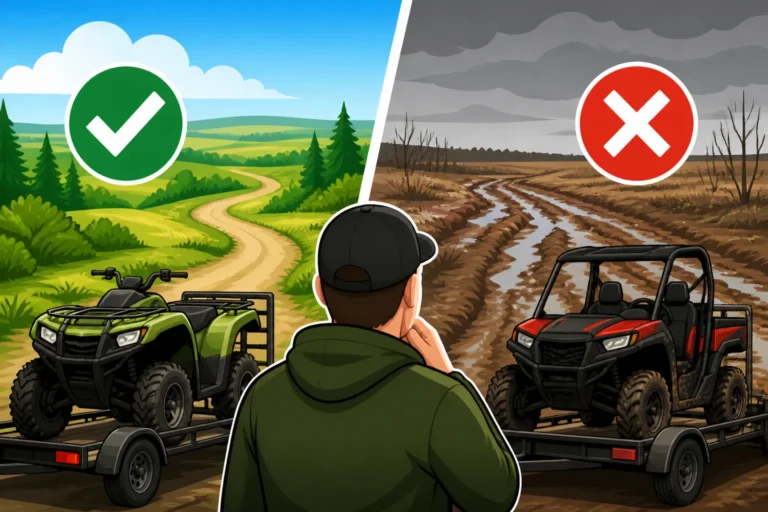
Choose a conservative route for the first outing and give yourself permission to turn around. A trail that becomes muddy or rougher than expected is a reasonable place to reassess, not a challenge you have to conquer. Beginners often enjoy the day more when there is time to learn the machine and look around, rather than push to finish a planned distance.
Treat distance and terrain as separate questions
A short trail can still be demanding if it is rough, narrow or slippery. A longer route can be manageable if it is clearly marked and the group has time, fuel and experience. Ask local staff or club contacts about the conditions you are likely to encounter, and be specific: “Is this route suitable for a new rider on this type of machine?” is more useful than asking only whether it is open.
Also consider the whole trip, not just the trail. A long drive, an unfamiliar unloading area or a late start can add pressure to a beginner’s day. Choose a destination that gives your group time to unload carefully, review the route and return before anyone is tired or hurried.
Prepare for a safer first ride
Even a planned route can bring surprises: a change in weather, a blocked section or a rider who is less comfortable than expected. Basic preparation makes it easier to handle those moments calmly. For a wider look at local riding conditions and route planning, see [Saskatchewan ATV Trail Map Downloads] and [Saskatchewan Trail Conditions Before You Haul].
Check access, permits and conditions
Before you load the trailer, confirm that the route is open and that you understand the local process for riding there. Provincial parks, clubs and municipalities may have different requirements. A provincial park permit, where required, does not automatically authorize riding on a nearby road, private parcel or separate club trail. Likewise, a municipal plate or permit does not give access to every riding area.
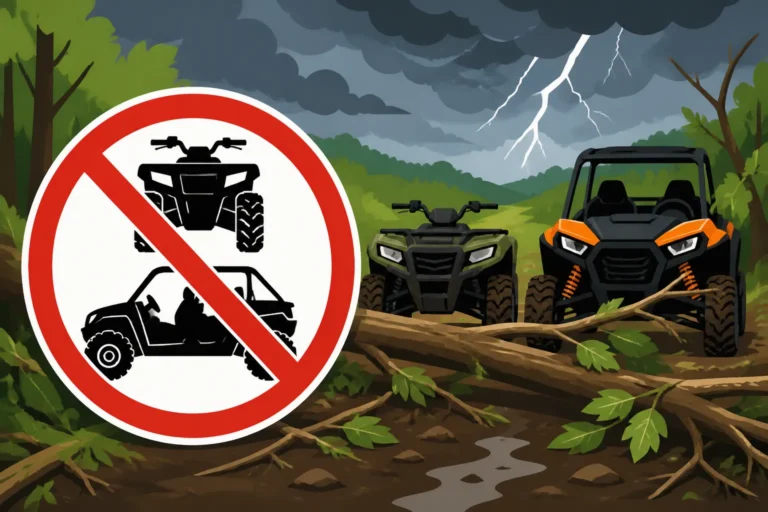
Look for recent closure notices, fire restrictions and posted trailhead information. If you are unsure, contact the park office or club rather than relying on an old social media post. Keep in mind that a trail that was open on your last visit may be affected by weather, fire risk, maintenance or land-access conditions this time.
Pack for the route and the weather
Bring the essentials for the ride you are actually planning: a charged phone, water, suitable clothing, food for a longer outing, a first-aid kit and any tools or recovery equipment appropriate to your machine and experience. A paper map can be useful where cell service is unreliable. Tell someone who is not riding with you where you plan to go and when you expect to be back.
Wear a properly fitted helmet and suitable protective clothing. Saskatchewan has rules covering rider age, licensing, insurance and protective equipment, and there may be additional requirements depending on where you ride. Review [Saskatchewan ATV Road Rules Explained] before travelling, especially if children or new riders are in your group.
Set group expectations before starting
Agree on a simple group plan: who leads, who rides last, how often you stop and what to do if someone loses sight of the group. Leave enough space between machines to avoid dust, sudden braking or flying debris. Nobody should feel pushed to ride faster than they can safely manage.
If a rider is nervous, make that part of the plan rather than a problem to hide. Take a practice break in a safe area, let the rider get used to the controls, and choose a shorter route if needed. A beginner who can stop without embarrassment is more likely to enjoy the next ride and build skills steadily.
Trail choices and mistakes to avoid
A little caution does not make a ride less fun. It helps keep the day from turning into an avoidable problem—especially when riders are new to Saskatchewan’s mix of park trails, club routes, local bylaws and land-access rules.
Don’t treat every line on a map as an open trail
A line on a digital map may show a road, track or route without confirming that ATV riding is allowed. Land can be private, access can depend on permission, and closures may not appear immediately on every map. Use a mapping tool such as onX Offroad to help orient your group, then verify the route with the park, club, land manager or posted signs.
This is particularly important when a route seems to connect two riding areas. A short-looking gap on the screen may cross land where access is restricted. If you cannot confirm that the connection is legal and open, do not use it as a shortcut.
Avoid choosing a route based on someone else’s machine
A skilled rider on a different ATV or side-by-side may describe a route as easy, but that does not tell you how it will feel on your own machine. Vehicle size, tires, ground clearance, passenger load and experience all affect how a trail feels. Ask whether the route is suitable for your specific machine type and whether side-by-sides are permitted.
Carry insurance information and proof of ownership, and keep any required park documentation accessible. A tidy set of papers can prevent an already frustrating conversation from becoming harder. For more on what riders should be ready to show, see [Saskatchewan Insurance Proof on the Trail].
Don’t make the whole day depend on completing a loop
A planned loop is a useful guide, not a promise. Weather, trail conditions or fatigue may make an out-and-back route a better choice. Keep enough fuel and daylight in reserve, and decide in advance that turning back is an acceptable outcome.
For your first visit, success can mean learning the trailhead, completing a comfortable section and getting home with everyone in good spirits. Once you know how the area feels, you can plan a longer trip with better information and a more realistic sense of your group’s pace.
Disclaimer
This article is for general informational purposes only and does not constitute professional advice. Laws, prices and regulations vary by location and change over time. Consult a qualified professional for guidance on your specific situation.