Saskatchewan Riding in Spring
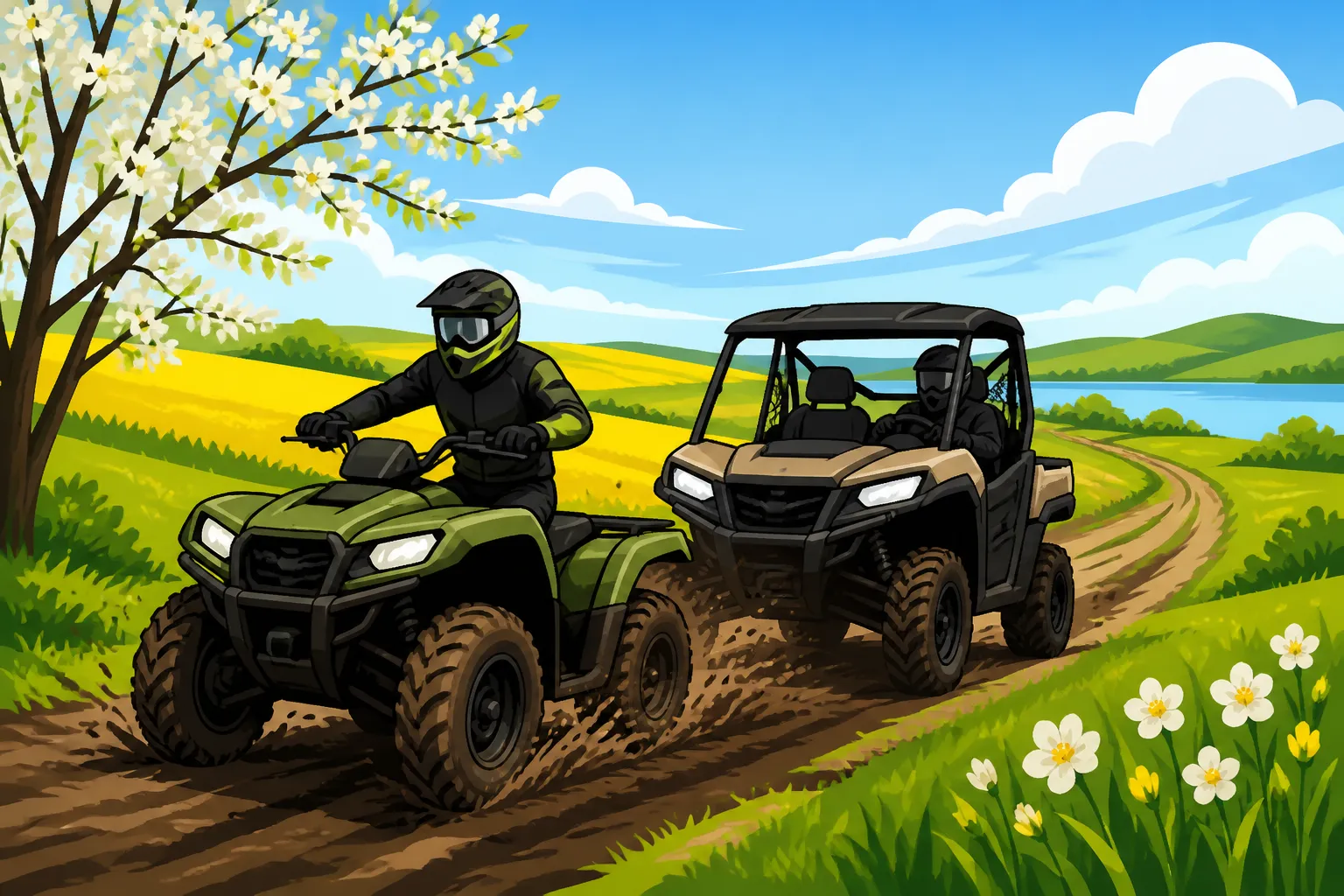
Spring riding in Saskatchewan can turn from firm, enjoyable trails to deep mud in a matter of hours, especially when snowmelt and overnight freezes overlap. This guide helps you decide when to ride, how to check access and trail conditions, what to pack, and how to protect trails and your machine when the ground is soft.
Plan Around Saskatchewan’s Spring Conditions
Check thaw, drainage and overnight temperatures
Spring conditions vary across Saskatchewan, and the calendar alone is a poor guide to whether a route is ready. A trail that feels firm after a cold night may soften quickly in afternoon sun. Low-lying sections, shaded bush trails and spots where snowmelt collects can remain wet long after nearby gravel roads have dried.
Before you haul, check the forecast for the area you plan to ride and ask someone local about recent conditions. Look beyond the daytime high: a warm afternoon after a hard freeze can create a short window of firm ground, while several mild days in a row may leave the same trail saturated. If rain or rapid snowmelt is expected, postponing is often easier on both your machine and the trail.
A map helps with planning, but it does not tell you whether a trail is muddy, closed or safe to use today. Use a tool such as onX Offroad to review your planned route and keep your bearings, then confirm local conditions with the park office, club or land manager. For broader seasonal context, see [Saskatchewan Riding Season Month by Month] and [Saskatchewan Trail Conditions Before You Haul].
Choose a ride that suits the ground
The best spring ride is often the one that lets you turn around easily. A short loop on a well-established route gives you a chance to assess traction, water and changing ground without committing to a long ride far from your trailer. If the first sections are already soft or rutted, treat that as useful information—not a challenge to push farther.
Consider the machine and the group, too. A heavy side-by-side can sink or churn soft ground differently from a lighter ATV. A newer rider may also need more room to slow down, choose a line and respond to slippery roots or uneven thaw. Keep a comfortable distance between machines so one rider’s spray, sudden stop or deep rut does not create trouble for the next person.
| What you find | Safer choice |
|---|---|
| Firm surface with no standing water | Continue cautiously and reassess as the route changes |
| Shallow water with a visible, firm bottom | Proceed only if the route is permitted and the crossing is safe |
| Deep water, uncertain depth or a hidden bottom | Turn around rather than test it |
| Soft ground that holds deep tire marks | Leave the route and choose another day |
| Fresh closure notice or unclear access | Do not ride until access is confirmed |
A route can change quickly over a few kilometres. If conditions deteriorate, turning around is part of good spring planning, not a failed outing.
Confirm Access Before You Unload
Check the rules for the land and trail
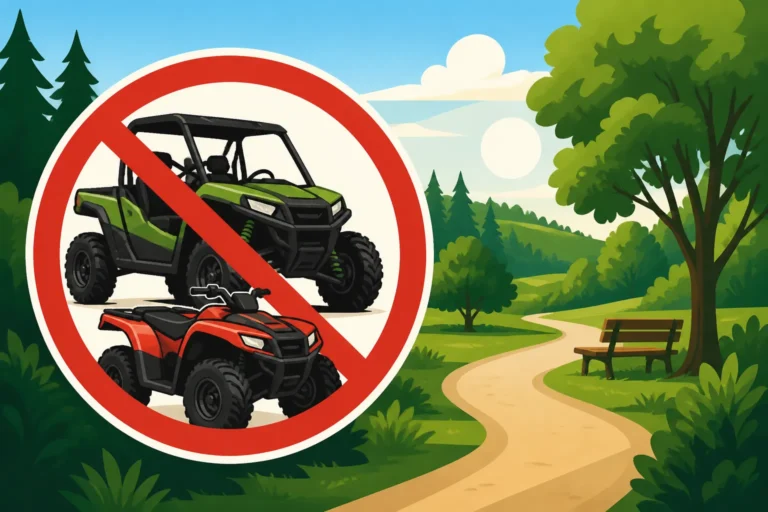
In Saskatchewan, access depends on where you intend to ride. A trail shown on a map does not automatically mean that ATVs or UTVs are allowed there, and spring conditions can bring temporary closures or restrictions. Provincial parks, municipal areas, private land, Crown land and club-maintained routes may each have different rules. Confirm the specific route, not just the general region.
For a park ride, check whether the park has designated machine trails, any permit or acknowledgement requirements, and whether spring access is open. Do not assume that a road, hiking path or snowmobile route is available to ATVs. [Saskatchewan Park Regulations for Machines] and [Saskatchewan Park Trail Permits Are Free] are useful starting points, but confirm details with the relevant park before leaving home.
Outside a park, establish who manages the land and whether you have permission to use it. Crown land access can have conditions, and occupied land or a grazing lease may require permission from the relevant occupant or lease holder. Private land requires the landowner’s consent. For a fuller overview, see [Saskatchewan ATV Trails: Crown Land and Ditches] and [Saskatchewan Grazing Lease Permission].
Recheck closures and local updates
A trail that was open last season may not be open for your spring visit. Wet ground, maintenance work, wildfire risk, land-management decisions or local bylaws can affect where you can ride. Check for updates close to departure, and check again at the trailhead if there are posted notices. If information is unclear, contact the local office or trail group rather than treating silence as permission.
This is where a map app can support—but not replace—your checks. onX Offroad can help you review a route and stay oriented, especially when several roads or trails look similar. Still, verify current access through the official park, municipality, club or land manager. Keep a paper map or a second navigation option for areas where phone service is unreliable, and do not depend on a phone battery to make a safe return.
If your preferred route is closed, have a backup that is both legal and suitable for the conditions. Avoid improvising by crossing a fence, cutting around a closure or taking an unmarked shortcut. Those detours can put you onto private or sensitive land and may cause damage that is difficult to repair. [Saskatchewan Trail Closures After a Storm] offers more context on why a route may be unavailable after rough weather.
Ride Soft Trails Carefully
Avoid making ruts worse
Spring soil is vulnerable because it can look passable while still being too soft to support repeated traffic. Deep tire marks can channel water, widen a trail and make the surface harder for the next rider to use. Mud can also hide holes, rocks, roots and soft edges, so a splash that looks harmless may conceal a sharp drop or a bogged machine.
If you encounter a soft section, do not spin the tires to power through it. Spinning usually digs deeper and can leave the machine stuck while widening the damage. Slow down before the problem area, choose a firm, established line where one is available, and keep your movements smooth. If there is no safe, permitted route through, turn back rather than creating a new one around the muddy patch.
Give other riders room to choose their line, and avoid stopping where a machine could block a narrow trail or force others into the soft shoulder. Groups should travel at a pace that lets the last rider remain in contact without pressuring anyone to take a risky shortcut. More practical guidance is covered in [Saskatchewan Trail Etiquette Locals Expect].
Make crossings and changing visibility a safety decision
Spring water can be deceptively difficult to judge. Snowmelt may cover a trail, conceal a washed-out edge or move debris into a crossing. Do not enter water if you cannot judge its depth, the bottom or the way out. A machine that stalls in cold water can turn a short outing into an emergency, and a UTV may be difficult to recover without help and proper equipment.
Use extra care around bridges, culverts and trail edges. A thawing bank may look solid from a distance but crumble under a machine’s weight. Stay on the established route and follow posted instructions. If a crossing appears damaged or unsafe, turn around and report the issue to the relevant trail group or land manager.
Spring days can also start cold, brighten quickly and end with fading light. Dress in layers, protect your hands from wind and water, and plan to return with enough daylight for the slowest rider in your group. Navigation tools such as onX Offroad can help you keep track of your route, but they do not make an unsafe crossing or closed trail safe to ride.
Prepare Your Machine and Group for a Spring Ride
Do a practical pre-ride check
Mud and water can expose small problems that are easy to overlook in the garage. Before setting out, check tires for damage and pressure, confirm that brakes respond properly, and make sure steering and controls feel normal. Inspect lights, mirrors and any safety equipment required for your machine and route. Secure cargo so it cannot shift when you cross ruts or uneven ground.
Pack for the possibility of a delay, even on a short ride. Bring water, food, a first-aid kit, basic tools, a tow strap suitable for your group and a way to contact help. A charged phone is useful, but service can be limited in rural and northern areas. Tell someone where you are going and when you expect to be back. If you are riding with others, agree on a stopping point and a plan for what to do if a machine becomes stuck or someone separates from the group.
If a machine is coated in mud after the ride, clean it before visiting another park or trail system. Mud and plant material can carry seeds or other unwanted material between areas. Check the machine again at home, especially around tires, brakes, cooling areas and underbody protection, where debris can collect.
Build a simple go-or-no-go routine
A spring ride goes more smoothly when the group agrees in advance that changing plans is normal. Before loading, check the forecast, confirm that the route is open, and make sure the group has permission and the right equipment. At the trailhead, read posted signs and look at the ground before unloading. If the route is wet, closed or different from what you expected, choose a backup or head home.
Use onX Offroad as one part of that routine: review your intended route, keep track of your location and note where you can safely turn around. Then pair the map with local updates and posted instructions. A digital route line cannot show every muddy hollow, fallen branch or temporary closure, and a familiar track may look very different after thaw.
After the ride, share useful, specific condition information with the local club or land manager. “The north section is wet” is more helpful than a vague warning; mention where the soft areas begin and whether you saw damage or a closure sign. Avoid posting sensitive access details that could encourage riders onto land without permission. For more planning help, see [Saskatchewan Trailheads With Trailer Parking] and [Saskatchewan Wildfire Season Rules for Riders].
Disclaimer
This article is for general informational purposes only and does not constitute professional advice. Laws, prices and regulations vary by location and change over time. Consult a qualified professional for guidance on your specific situation.