Who Pays When a Borrower Crashes Your Saskatchewan Quad?
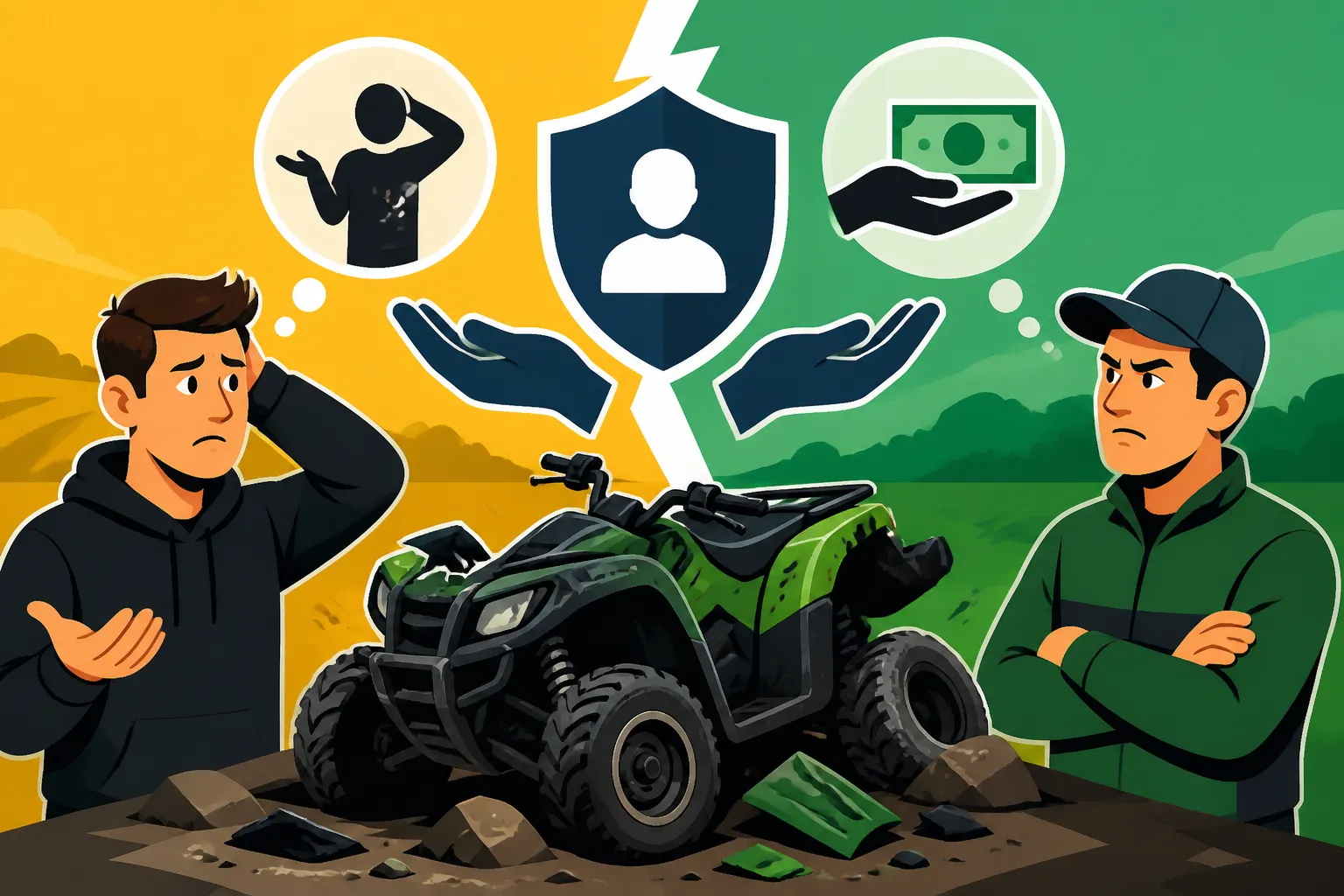
Lending your beloved quad to a friend or family member seems like a no-brainer. You're being generous, helping them out, maybe even introducing them to the sheer joy of tearing through a Saskatchewan field or tackling some bush trails. But what happens if they have an accident? Suddenly, that act of kindness can turn into a financial and legal nightmare. The question of "who pays?" is a thorny one, often leading to strained relationships and significant debt. This guide will walk you through the complex world of liability in Saskatchewan when someone else crashes your ATV or UTV, helping you understand your risks and how to protect yourself.
Understanding Owner Liability Under Saskatchewan Law
It's a common misconception that if someone else is driving, they're 100% on the hook. While the operator certainly bears a significant burden, as the owner, you're not entirely off the hook, especially when it comes to ATVs and UTVs in Saskatchewan. Our laws have some specific provisions that can pull you into the legal fray, even if you weren't anywhere near the machine when the incident happened.
The Principle of Vicarious Liability
In simple terms, vicarious liability means that one person can be held responsible for the actions of another. It's often seen in employer-employee relationships, but it can extend to situations where you lend out your property, particularly a vehicle. When you hand over the keys to your quad, you're essentially entrusting them with a powerful piece of machinery, and with that trust comes a degree of responsibility. The All Terrain Vehicles Act itself, though it doesn't explicitly name "vicarious liability," lays out a framework where an owner's responsibilities are significant. It's not just about who's physically driving; it's also about who allowed the driving to happen and under what circumstances.
Consider a scenario: you lend your side-by-side to a friend for a weekend ride, and they end up colliding with another machine or causing damage to private property. While your friend's actions are the direct cause, a claim could very well be made against you as the owner. The logic is often that by providing the machine, you created the opportunity for the incident to occur. This is particularly true if it can be argued that you should have known your friend wasn't a suitable operator, or if the machine itself had an issue. It's a heavy thought, knowing that your generosity could come back to haunt you.
The "Reverse Onus" and Proving Due Diligence
One of the most challenging aspects for an ATV owner in Saskatchewan is what's known as the "reverse onus" in certain civil claims. This means that if an accident occurs, particularly one causing injury or property damage, the burden of proof can shift to you as the owner to demonstrate that you were not negligent. It's a tough spot to be in, having to prove a negative. You essentially have to show that you took all reasonable steps to prevent the accident. This is a critical point that many owners overlook. [Saskatchewan Reverse Onus in a Claim]
What does "due diligence" look like in this context? It means you need to be able to show that you were prudent and careful. Did you ensure the person borrowing your quad had a valid driver's licence? The All Terrain Vehicles Act clearly requires this for operators 16 and over, and specific supervision rules for younger riders. [Do You Need a Licence for an ATV in Saskatchewan?] Did you confirm they understood the safe operation of your specific machine, especially if it has any unique features or modifications? Did you ensure the quad was in good working order, with all safety equipment functioning? If your friend crashed a machine because the brakes failed and you knew they were dodgy but didn't warn them, that's a problem. Proving you did all these things after the fact can be incredibly difficult if you don't have a clear record or solid witness testimony.
Specific Scenarios of Owner Culpability
Let's look at some tangible examples where an owner can easily find themselves liable:
- Lending to an Underage Rider Without Proper Supervision: Saskatchewan law is very clear on age requirements. While a 12-year-old can ride an ATV, they must be supervised by someone 16 or older who has held a licence for at least 365 days, or they must have completed an approved safety course. If you lend your quad to a 14-year-old who goes riding alone and gets into an accident, you, as the owner, are likely in serious trouble.
- Lending a Machine Known to Have Defects: Imagine you know the steering on your quad is a bit sticky, or the tires are bald, but you lend it out anyway without disclosing these issues. If the borrower crashes, and the accident can be attributed to that known defect, your negligence in providing an unsafe machine becomes a direct link to the incident. Your friend might have chosen a tricky line, but if the faulty steering contributed to the rollover, you're looking at culpability.
- Failing to Ensure Appropriate Safety Gear: Saskatchewan has clear helmet and eye protection rules. [Saskatchewan Helmet and Eye Protection Rules] If you lend your quad and your friend doesn't have a helmet, or you even provide an old, uncertified helmet, and they suffer a head injury in a crash, you could be implicated. The expectation is that you would ensure the rider is equipped to operate the machine safely and legally.
These scenarios highlight that simply owning the machine carries a deep responsibility. The legal landscape here is designed to hold owners accountable for the safe use of their powerful recreational vehicles.
The Borrower's Primary Responsibility
While the owner faces significant potential liability, let's be absolutely clear: the person operating the ATV or UTV is always, first and foremost, responsible for their own actions and decisions. When a borrower crashes your Saskatchewan quad, their direct actions are the immediate cause, and they will bear the brunt of any direct liability for negligence.
Direct Liability for Negligence
When someone is operating an ATV, they have a legal duty to do so safely and responsibly, respecting traffic laws, land use regulations, and common sense. If they deviate from this duty and cause damage or injury, that's considered negligence, and they are directly liable. This is the foundation of most accident claims. If your friend is speeding, riding recklessly, not paying attention, or under the influence, and causes an accident, their actions are the direct cause of that damage. [Saskatchewan Impaired Riding Penalties]
For instance, if your friend, borrowing your quad, attempts to jump a ditch they shouldn't, misjudges it, and damages not only your machine but also a fence on private property, they are primarily responsible for that damage. Their negligent operation—their decision to attempt a risky maneuver—is what led to the incident. This is why many claims will go after the operator first, even if the owner is brought into the discussion later.
Breach of Agreement (Implied or Explicit)
When you lend your quad, there's usually an implied agreement: "You'll use it carefully, return it in one piece, and follow the rules." However, implied agreements can be vague and hard to prove. If you want stronger protection, an explicit agreement is your best friend. This could be as simple as a clear verbal conversation outlining rules like "don't go on main roads," "stick to the trails," "don't ride after dark," or "no modifications."
If a borrower violates these terms and an accident occurs, they have not only been negligent but have also breached your agreement. For example, if you explicitly told them not to ride on Crown land that requires specific permits, or not to install any aftermarket parts (like performance upgrades from SuperATV) without your consent, and they disregard this, their breach of trust and agreement could be a factor in determining their liability. While this might not directly protect you from third-party claims, it could give you stronger grounds to seek compensation from them for damage to your machine.
Insurance Implications for the Borrower
Does the borrower's own insurance cover them? This is where it gets tricky. If the borrower has their own standalone ATV insurance policy (which is rare for someone who doesn't own a quad), it might extend to cover them when operating another person's machine, typically under a "non-owned vehicle" clause. However, this is far from guaranteed and depends entirely on the specifics of their policy.
Some homeowner's or renter's insurance policies might offer very limited liability coverage for recreational vehicles, but often with significant exclusions or very low limits, especially if the ATV is being operated off your property or on public lands. It's crucial for the borrower to understand their own coverage, or lack thereof. More often than not, if they don't own their own quad, they likely don't have specific insurance to cover their liability when borrowing yours. This leaves a significant gap that your policy, or your personal assets, might have to fill.
The Critical Role of Insurance
This brings us to the most vital aspect of protecting yourself when lending your quad: your own insurance policy. In Saskatchewan, having proper ATV liability insurance isn't just a good idea; it's a legal requirement if you're riding on public lands or certain private lands open to the public. [Saskatchewan Insurance Requirements for Riders] It's the primary line of defense for both you and anyone you allow to operate your machine.
Your ATV Insurance Policy – What it Covers
A good ATV insurance policy is designed to cover damages and injuries you (or someone operating your machine with your permission) might cause to others. Most policies include a "permissive use" clause, meaning that if you've given someone permission to ride your quad, your policy will generally extend coverage to them as if they were you. This is a huge relief, as it means the person you lent it to isn't entirely exposed. [Saskatchewan Insurance Proof on the Trail]
For example, if your friend crashes your quad into another rider's machine, causing property damage and personal injury, your liability coverage would kick in to cover those costs, up to your policy limits. Without this coverage, you and your friend would be looking at paying those damages out of pocket, which can quickly amount to hundreds of thousands of dollars in a serious accident. However, it's paramount to know your liability limits. The minimum might be [Two Hundred Thousand of Liability Bundled In], but in today's world, that can be exhausted very quickly in a serious injury claim. It's always wise to discuss higher limits with your broker.
Deductibles and Increased Premiums
While your insurance might cover the bulk of the costs in an accident involving a borrower, there are still financial repercussions for you. First, you'll almost certainly be on the hook for your policy's deductible. This is the amount you agree to pay out of pocket before your insurance coverage kicks in. If the accident damages your quad (assuming you have collision coverage), you'll pay the deductible for repairs or replacement.
Second, and often more impactful in the long run, your insurance premiums will very likely increase after a claim. Even if your friend was at fault, because it was your machine and your policy paid out, it flags you as a higher risk. This could mean significantly higher annual costs for your ATV insurance for several years to come. It’s a bitter pill to swallow when you were just trying to be helpful. Furthermore, certain modifications to your machine, especially performance-enhancing ones like heavy-duty suspension or engine kits from SuperATV, must be disclosed to your insurer. If not, and they contributed to an accident, your policy could be voided or coverage denied, leaving you fully exposed.
What Happens Without Insurance
This is the scariest scenario, and unfortunately, it's one that some riders fall into, especially given that ATVs aren't provincially registered in Saskatchewan like snowmobiles are. If neither you nor the borrower has adequate insurance, or if your policy is voided due to non-disclosure or other reasons, you are both in an extremely precarious position.
Without insurance, any damages or injuries caused by the accident become your personal financial responsibility. This means that:
- Property Damage: If another person's vehicle, fence, or property is damaged, you or the borrower will have to pay for repairs or replacement out of pocket.
- Medical Expenses: If anyone is injured, medical bills, rehabilitation costs, and lost wages can quickly escalate into hundreds of thousands, or even millions, of dollars. These costs would be your responsibility.
- Legal Fees: You'll face hefty legal fees to defend yourself in court, regardless of the outcome.
- Personal Assets at Risk: Without insurance, claimants can come after your personal assets—your savings, your home, future earnings—to satisfy judgments against you.
This is why meeting Saskatchewan's minimum insurance requirement is not just a legal obligation but a crucial financial safeguard. It literally protects your entire financial future. [Saskatchewan Owner Liability Rules]
Practical Steps to Protect Yourself When Lending Your Quad
Knowing the potential pitfalls is the first step; taking concrete action to mitigate those risks is the second. Lending your quad doesn't have to be an anxiety-inducing experience if you put some protective measures in place.
Vet Your Borrower Carefully
This might sound harsh, especially when it comes to friends and family, but it's perhaps the most important step. You wouldn't lend your truck to just anyone, and your quad is no different.
- Experience and Responsibility: Only lend your machine to individuals you know are experienced and responsible riders. Have they ridden before? Do they understand the specific demands of off-road operation? Someone who's only ever ridden a dirt bike might not be ready for a powerful side-by-side from SuperATV.
- Valid Driver's Licence: Always verify that anyone 16 or older borrowing your quad has a valid driver's licence. It's a legal requirement, and it's a basic indicator of their understanding of road rules and responsibility. For younger riders, ensure they meet the specific age and supervision requirements under the All Terrain Vehicles Act. [Saskatchewan Rules for a 12-Year-Old Rider]
- Understand Rules and Machine: Have a conversation. Make sure they understand not only the general rules of ATV operation in Saskatchewan (like ditch riding regulations or the 2-metre rule [Staying 2 Metres Off the Travelled Portion]) but also the specific quirks and power of your machine. Every quad handles differently, and what might be second nature to you could be a surprise to a new rider.
Document the Loan Agreement
Even with your closest friends or family, a simple, clear agreement can save a world of heartache. It doesn't have to be a complex legal document, but putting things in writing removes ambiguity.
Here are some key points to include:
- Duration of Loan: Be specific about when they can take it and when it needs to be returned.
- Allowed Riding Areas: "Only on my property," "stick to designated trails," "absolutely no road riding." Clearly define the boundaries.
- Prohibited Activities: No racing, no stunts, no night riding (unless legally equipped), no riding while impaired.
- Responsibility for Damages: Clearly state that the borrower is responsible for any damage to the quad itself, or to third-party property or persons, caused by their negligence. This strengthens your ability to recover costs directly from them.
- Maintenance and Fuel: Who pays for fuel? What if a tire goes flat?
- No Modifications: Explicitly state that no alterations, such as installing after-market parts from SuperATV or other brands, are allowed without your prior, written consent.
This kind of agreement isn't about distrust; it's about clarity and shared understanding, protecting both parties.
Ensure Machine is Safe and Legal
Before you hand over the keys, take a few minutes to ensure your quad is in tip-top shape and compliant with all regulations.
- Pre-Ride Inspection: Check the brakes, tires, lights, and steering. Make sure everything is in good working order. A machine that is safe for you might not be for someone less familiar with it.
- Required Safety Equipment: Ensure the machine has all legally required safety equipment, such as functioning lights, a horn, and spark arrestors. [Saskatchewan Lighting Requirements on a Machine]
- Safety Gear: Remind the borrower of the mandatory helmet and eye protection laws. Better yet, if you have spare, certified helmets, offer them. Ensure they understand the importance of proper footwear and clothing. [Long Pants, Sleeves and Boots Required]
By ensuring the machine itself isn't a contributing factor to an accident, you further reduce your own liability under that "reverse onus" principle.
Review Your Insurance Coverage
This is your safety net, so make sure it's robust.
- Speak with Your Broker: Call your insurance broker and specifically discuss lending your ATV. Ask about "permissive use" clauses, what situations might void your coverage, and what your liability limits truly mean. It's always better to ask proactive questions than to face surprises after an accident.
- Increase Liability Limits: Consider increasing your liability coverage well beyond the minimum. The cost difference for higher limits is often minimal compared to the catastrophic financial risk of a major claim. An umbrella policy, which provides additional liability coverage above your existing policies, is also an excellent option for serious peace of mind.
- Document Insurance Discussions: Keep a record of your conversations with your broker. Note the date, who you spoke with, and what was discussed regarding permissive use.
By taking these thoughtful and practical steps, you can continue to share the joy of ATV riding in Saskatchewan without constantly worrying about the daunting question of "who pays?" if something goes wrong.
| Responsibility Area | Owner's Potential Liability | Borrower's Primary Liability | How to Mitigate Owner Risk |
|---|---|---|---|
| Direct Negligence | Indirect, if owner contributed (e.g., unsafe machine, poor vetting) | Direct, for their actions while operating | Vet borrower, ensure machine is safe, clear instructions |
| Vicarious Liability | High, as the legal owner of the machine | Minimal, but still responsible for own actions | Robust insurance, formal loan agreement |
| Meeting Legal Req. | Responsible for ensuring machine is legal (insurance, equipment) | Responsible for operating legally (licence, helmet, rules) | Maintain insurance, ensure machine compliance, verify licence |
| Damage to Quad | Financially responsible for repairs (unless agreement says otherwise) | Responsible if due to their negligence, if agreed | Written agreement, specific damage clauses |
| Third-Party Damages | High, via insurance or personal assets (due to permissive use) | High, for personal negligence | High liability insurance limits, clear rules for borrower |
| Insurance Premiums | Likely increase after a claim on their policy | Minimal impact on their own premiums (if they have any) | Good driving record for all, prevent claims |
Disclaimer
This article is for general informational purposes only and does not constitute professional advice. Laws, prices and regulations vary by location and change over time. Consult a qualified professional for guidance on your specific situation.