Can You Ride the Great Sand Hills at All?
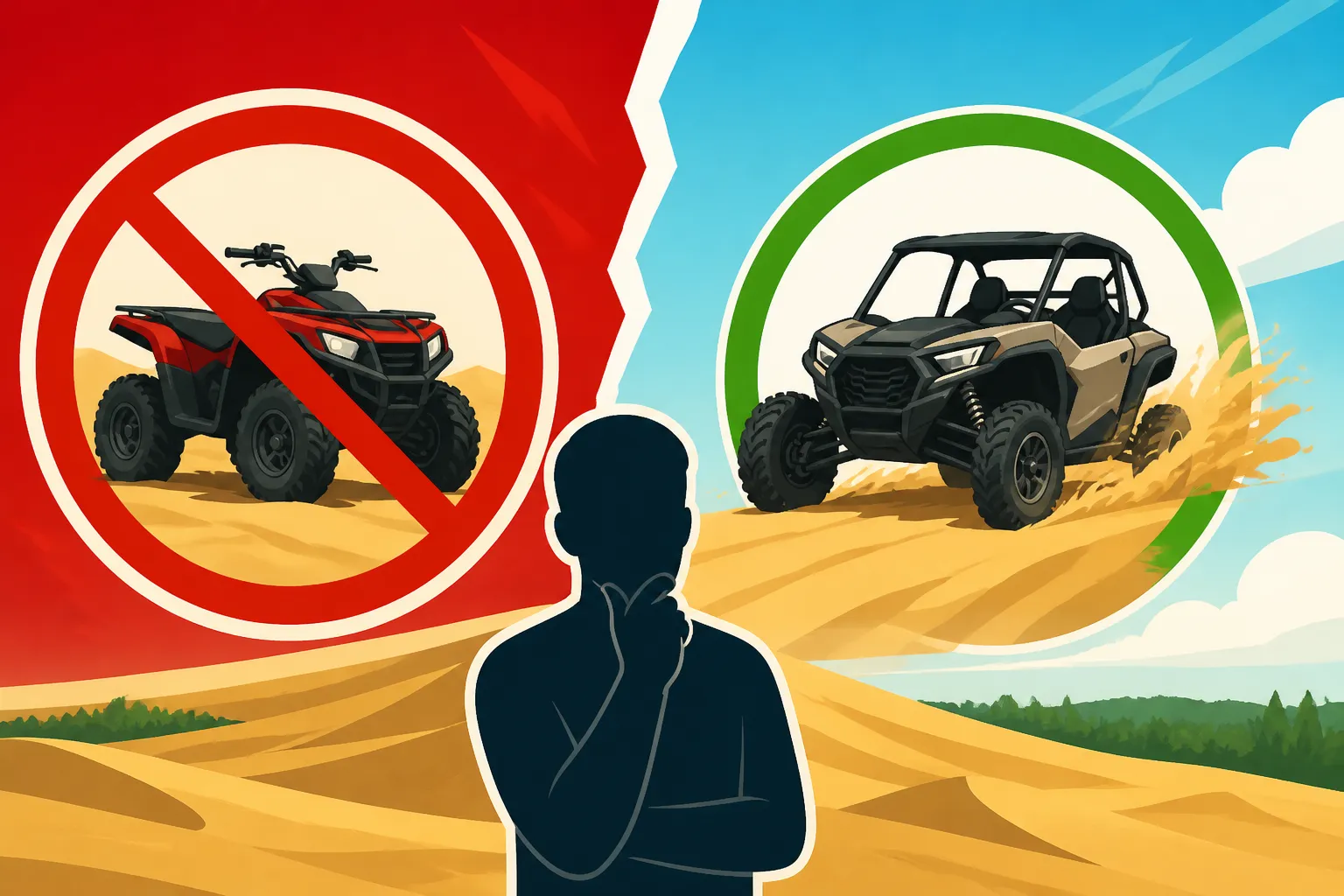
The Great Sand Hills look like an inviting place to ride, but open-looking terrain is not the same as public ATV access. The area includes different kinds of land, and a route that crosses dunes, private property or protected land can have very different rules. The practical answer is: don’t assume you can ride there. Confirm the land status and permission for every part of your route before unloading.
The short answer: not wherever you choose
There is no single, area-wide ATV permit that makes the Great Sand Hills open to off-road riding. The name describes a landscape, not one recreation area with a common trail system and one set of entry rules. A route may pass through private land, Crown land, a protected area, or a mixture of them.
That means there isn’t a reliable blanket “yes” or “no” for every place someone might call the Great Sand Hills. You may be able to ride on a particular route if the landholder or authority allows it and no other restriction applies. But you should not assume that the dunes themselves, an open track, or a map showing public land is permission to ride.
This distinction matters because a machine being legal to own and operate in Saskatchewan does not give its rider access to every landscape. Saskatchewan’s rules for operating an ATV or UTV are separate from land-access rules. A rider still needs to obey restrictions on where the machine may go, including private-property boundaries, protected-area rules, local restrictions and any applicable closures. For the broader access picture, see Saskatchewan Crown Land Access Rules.
A useful way to think about it:
- Can you operate an ATV or UTV in Saskatchewan? That depends on the machine, rider, equipment and circumstances.
- Can you ride a particular part of the Great Sand Hills? That depends on the land status, route and current access permission.
- Does a park permit or municipal plate grant access to the dunes? No. A permit or plate does not replace the landholder’s permission or override an area closure.
If you cannot establish that a specific route is open to motorized use, don’t ride it. “It looked like a trail” and “someone else was there” are not dependable ways to confirm access.
Why land status changes the answer
The Great Sand Hills are not one continuous parcel of land. Before riding, identify the specific place you want to visit and determine who controls it. A route that looks like one uninterrupted track can cross several land types, each with different requirements.
| Land or route type | What to establish before riding |
|---|---|
| Private land | Get permission from the landowner for motorized access and confirm the route and dates. |
| Crown land | Check whether riding is permitted at that location and whether an order, restriction or closure applies. |
| Ecological reserve or other protected land | Check the site-specific rules. Do not assume ordinary Crown-land access rules allow motorized riding. |
| Municipal road or trail | Check the local bylaw and signs. Provincial rules do not automatically authorize ATV use on every road. |
| Designated recreation route | Confirm that it is open to ATVs or UTVs, that your machine fits any limits, and that it is open on the day you plan to ride. |
Private land and permission
A visible track does not prove that the public may use it. It could be a ranch access road, a farm track or a route used by a landholder. Ask for permission before entering private property, and be specific about where you intend to ride. Permission to cross one field does not necessarily include permission to explore the surrounding property or drive on the dunes.
For more detail on what to confirm, see Saskatchewan Private Land Permission. If your planned route may cross a grazing lease, treat that as a separate access question and check Saskatchewan Grazing Lease Access Rules. Don’t assume that permission from someone who lives nearby, or from a person who let another rider through, applies to you.
Crown land and protected areas
Crown land is not automatically open to every type of motorized recreation. Access can be affected by site-specific restrictions, land use, closures and other rules. Start with the official land and access information for the exact route, rather than relying on a broad map label or an informal description such as “public land.”
A protected designation needs particular care. If the route may enter an ecological reserve, check the rules for that reserve before taking a machine in. The fact that a place is on public land does not settle whether motorized riding is allowed there. What an Ecological Reserve Means for Saskatchewan Riders explains why a protected-area boundary can change the access answer.
Likewise, don’t treat a trail permit for another location as permission to ride here. Saskatchewan park permits apply to the relevant park and its permitted uses; they are not a general pass for Crown land or private property. If you’re comparing the Great Sand Hills with park riding, see Saskatchewan Parks That Need No Permit for the important distinction between a permit requirement and permission to use land.
How to check a route before you haul
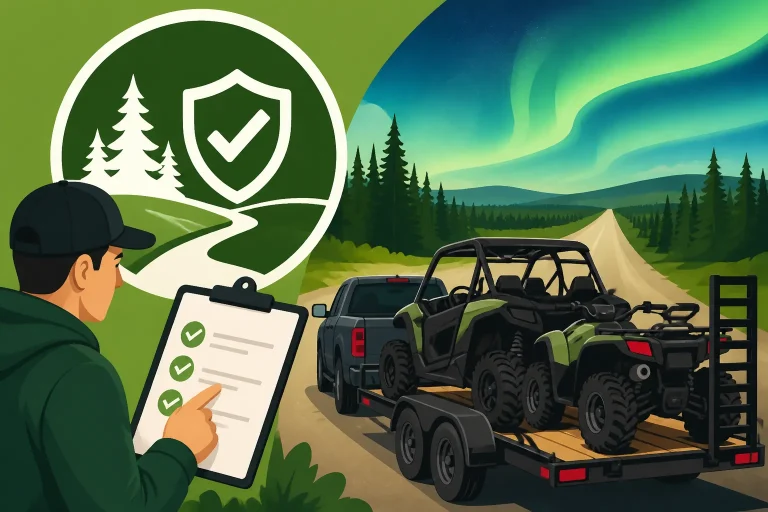
A little research before the trip can save a long drive, an awkward conversation with a landholder or a costly access mistake. Use this process for the exact route, not just the general destination.
- Pin down the location. Write down the staging point, the tracks you hope to follow, and any turnarounds or stops. “The Great Sand Hills” is too broad to answer an access question.
- Identify the land along the full route. A route may cross more than one parcel or land category. Check the route from beginning to end, including the way in and out.
- Confirm motorized access with the right authority. For private land, ask the landowner. For public land, check the responsible authority’s current rules, maps, notices and closures. If the information is unclear, ask before riding.
- Ask about your machine and planned activity. Confirm whether the rules cover both ATVs and side-by-sides, and whether they apply to the route, dunes, parking or staging area you intend to use.
- Check for temporary restrictions close to departure. Fire conditions, seasonal limits or other closures can change what is accessible. Review Saskatchewan Wildfire Season Rules for Riders before a trip, and recheck current notices rather than relying on an old screenshot.
- Keep permission and route information available. Save written permission, official map details and any applicable permit information on your phone. If the area has limited service, carry an offline map or a paper backup.
- Turn around if the route is uncertain. A gate, sign, fence or unclear boundary is a reason to stop and verify—not to try a different opening.
When asking for permission, keep the question direct: “May I ride this specific route with an ATV or UTV on these dates, and does your permission cover the dunes and access road?” Also ask whether there are restrictions on group size, parking, speed, fire prevention or where the machine may travel. A clear answer is more useful than a general “people ride around here.”
Do not rely on old social media posts, riding videos or GPS tracks as proof that a route remains open. They can show where someone rode, not whether the person had permission or whether the access rules have changed. A track can also send you across land that was not part of the rider’s authorized route.
If access is unclear, don’t ride the dunes
The safest practical answer is to treat the Great Sand Hills as not open to casual, unrestricted ATV riding unless you have confirmed a specific route is authorized. That doesn’t mean every road or parcel in the broader area has the same restriction. It means the rider needs affirmative, location-specific confirmation before riding, rather than relying on the area’s name or appearance.
This approach is especially important on soft, exposed terrain. A route that seems harmless can widen quickly when riders avoid ruts or climb around obstacles. Dunes and fragile vegetation may also be vulnerable to damage. Even where a landholder permits access, stay on the route they approved and follow any conditions they set.
If you can’t verify access, choose a known riding area with designated routes and clear rules instead. Before going, check whether it is open to your machine and whether it requires a permit, acknowledgement form or other preparation. Those requirements vary by location; having no permit requirement at one park does not mean you can ride anywhere without permission.
If your trip includes public roads or ditches, check those rules separately. A route being open to road traffic does not automatically make it legal for ATV use, and local bylaws may affect where riders can travel. See Can You Ride an ATV on the Road in Saskatchewan? before planning a connecting route.
The key takeaway is simple: you may be able to ride a particular route near the Great Sand Hills, but the landscape itself is not blanket authorization. Confirm land status, get permission where required, check restrictions and closures, and stay off any route whose access you cannot verify.
Disclaimer
This article is for general informational purposes only and does not constitute professional advice. Laws, prices and regulations vary by location and change over time. Consult a qualified professional for guidance on your specific situation.