Saskatchewan Grazing Lease Access Rules
A grazing lease can look like open Crown land on a map, but that does not mean an ATV or UTV rider can treat it as an unrestricted trail. The key is to confirm who controls access, get permission before entering, and agree on where and how you may ride. These steps help protect livestock, avoid conflict and keep your trip within the rules.
What a Saskatchewan grazing lease means for riders
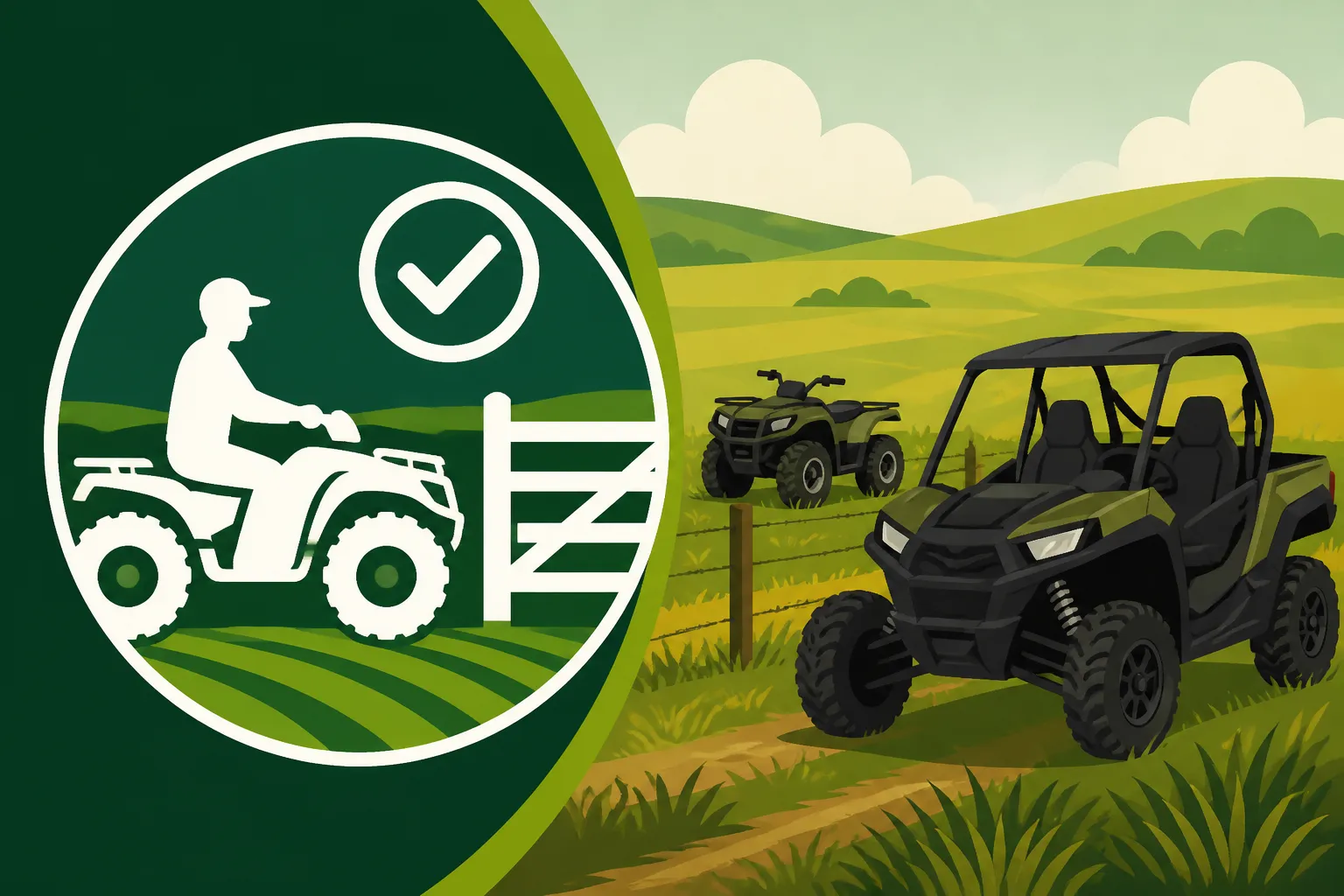
A grazing lease is Crown land leased for livestock use. The land may appear open and undeveloped, but the leaseholder is managing it for a specific purpose. Fences, gates, livestock, water sources and seasonal grazing plans all matter to that work.
For riders, the practical point is that public ownership does not automatically mean unrestricted recreational access. Do not assume you can ride across a lease just because it is Crown land, there is no fence, or an online map shows a trail or road nearby. Before leaving a public road or another area where you are clearly allowed to ride, find out whether the route enters leased land and ask the leaseholder for permission.
This is different from riding on a public road or road allowance. A road may pass through or beside a grazing lease, but access to the road does not necessarily give you permission to turn off and ride across the pasture. If the boundary or route is unclear, stop and verify it rather than guessing.
Permission can also be limited. A leaseholder might allow you to travel along one established route but not to explore the pasture, approach cattle, camp, or bring a group. Ask what is allowed for the trip you have planned, and follow any conditions. For more on the distinction between public Crown land and land under active use, see Saskatchewan Crown Land Access Rules and Occupied Crown Land and Permission.
A grazing lease may be one part of a larger trip. Confirm that each section of your planned route has its own access basis: public road, designated trail, private land permission, or leaseholder consent. A route shown on a map is useful for planning, but it is not proof that riding is authorized.
| Situation | Practical approach |
|---|---|
| You plan to leave a public road and enter pasture | Contact the leaseholder and get permission first |
| You are unsure whether a route crosses a lease | Check the boundary and ask before riding |
| You have permission for one route | Stay on that route and follow the agreed conditions |
| You encounter a gate or livestock | Do not assume access; stop and contact the leaseholder if needed |
| You are riding with a group | Explain the group size and get permission for the whole group |
| You are retrieving game or reaching a work site | Ask specifically about that purpose; do not treat it as general riding permission |
How to request permission and confirm your route
A useful permission request is specific. “Can I ride around here?” leaves room for misunderstanding. Instead, identify the area, date, number of machines and purpose of the trip. If you have a map, describe your proposed entry point and exit point, or share the route in a format the leaseholder can review.
Ask who the right contact is. The person whose name appears in an informal conversation may not be the leaseholder or the person authorized to grant access. If the land is managed through an organization or several people share responsibility, ask who can approve the visit. If you cannot confirm permission, choose another route.
Written permission is sensible, even when the arrangement is informal. A text or email can help both sides remember the route, timing and conditions. It is not a substitute for following the rules on the land, but it can prevent a later disagreement about what was agreed.
Before you set out:
- Identify the route. Use current maps and local information to find likely lease boundaries, roads, trailheads and access points. Map layers can be incomplete, so treat them as a planning aid rather than final confirmation.
- Contact the leaseholder early. Explain when you want to ride, how many machines will be involved and whether you will be passing through, stopping, or doing something else.
- Ask for clear limits. Confirm the permitted entry point, route, time window, group size and any areas to avoid.
- Check how to handle gates. Ask whether a gate may be opened and whether it must be left as found, closed, or secured in a particular way.
- Confirm last-minute conditions. Livestock may have moved, weather may have changed the ground, or work may be underway. If the arrangement was made well ahead, check in again before arriving.
- Share the agreement with the group. Everyone riding should understand the route and conditions. Permission for one rider should not be assumed to cover extra guests or machines.
If you need guidance on how to approach a leaseholder, Getting Consent From a Grazing Lease Holder covers the practical conversation. If the trip involves travel across a ranch property, Reaching a Rancher Before You Cross Their Lease is also relevant.
Do not rely only on a trail app, a friend’s old directions or another rider’s statement that the route is open. Access can change with grazing plans, repairs, fire conditions or other land-management needs. A route that was acceptable on one visit may not be acceptable the next time.
Riding around cattle, fences and gates
Permission to enter is only the start. Riding responsibly means minimizing disturbance and following the conditions set by the leaseholder. Cattle can react unpredictably to noise or a fast-moving machine, especially if they are near calves, water, a handling area or a narrow passage.
Keep your speed low around livestock and give animals room to move away. Do not chase, herd, crowd or deliberately approach them for a closer look. Avoid sudden acceleration and unnecessary revving. If cattle block the route, stop at a safe distance and allow them to move. If the route cannot be used without pushing animals, contact the leaseholder rather than forcing a passage.
Fences and gates are part of managing livestock. Never cut, lift or damage a fence to get through. Do not assume an open gate is an invitation to enter; it may have been left open for a specific reason. If permission includes opening a gate, follow the leaseholder’s instructions exactly. Leave it in the agreed position and check that it is secure before riding on. If you find a damaged fence or a gate that is not as expected, report it and do not leave it in a condition that could let livestock escape.
Keep to the route you were given. Do not make a new track across wet ground, drive through a yard or handling area, or ride near feed, water infrastructure or equipment unless the leaseholder has specifically allowed it. If your group becomes separated, regroup on the agreed route rather than spreading out across the lease.
Riding with a firearm or for hunting adds another layer of planning. Permission to cross a lease is not automatically permission to hunt, discharge a firearm, retrieve game or drive off the approved route. Ask separately about the activity and check the rules that apply to it. The same principle applies to stopping for a picnic, camping or bringing additional vehicles: clarify first.
If access involves a grazing lease and private land, you may need consent from more than one person. A leaseholder’s approval should not be treated as permission to cross a neighboring private parcel, and the reverse is also true. See [Saskatchewan Private Land Permission] for the separate issue of getting access from a private landowner.
Legal riding, insurance and changing conditions
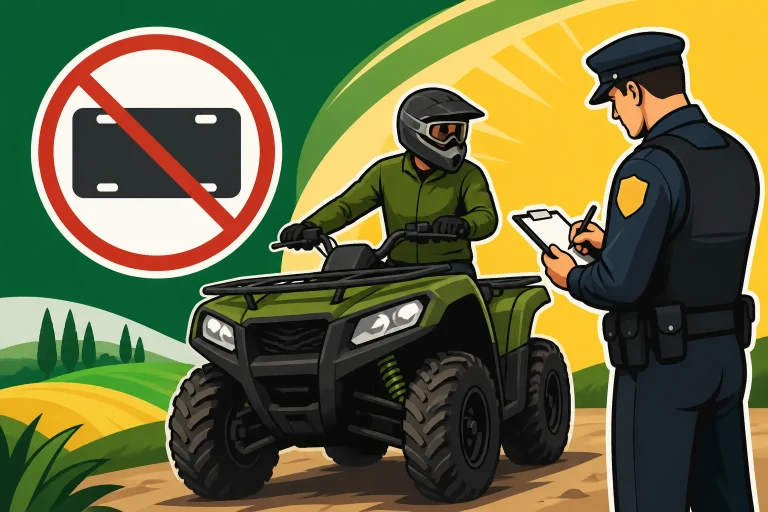
Access permission and legal permission to operate an ATV or UTV are separate questions. A leaseholder can authorize you to enter an area, but that does not waive provincial operating requirements or other restrictions. Before riding, confirm that the machine, rider and route meet the applicable rules for age, licensing, equipment and insurance. The overview at Saskatchewan ATV Road Rules Explained can help you check the operating requirements relevant to your trip.
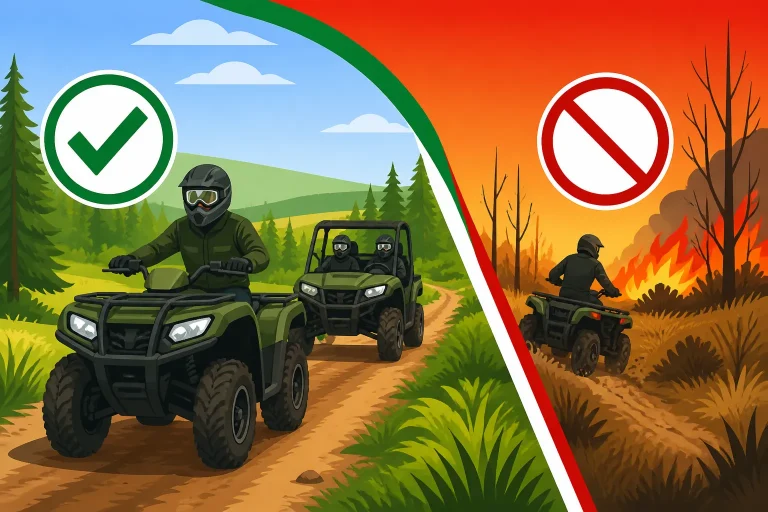
Also confirm that your route is open and that no current restriction applies. Crown land access can be affected by closures, posted prohibitions, fire conditions or land-management orders. A leaseholder’s consent does not necessarily override a government closure or a restriction applying to the area. Check current notices and local signs before unloading, and change plans if the route is closed.
Insurance is worth confirming before the trip, even when riding away from a public road. Ask your insurer whether your policy covers the machine and the planned use, and carry proof as required. Do not assume that a municipal plate, a permit for another riding area, or permission from a leaseholder serves as insurance or replaces operating rules.
A careful rider should also plan for changing conditions. Rain can make a track unsuitable, livestock can be moved, and a leaseholder may need to close an area for work. If you arrive and the route appears different from what you were told, stop and contact the leaseholder. Do not continue simply because you have already made the drive.
Use this short pre-ride check:
- Do I know whether the route crosses a grazing lease?
- Have I received permission from the right person for this specific trip?
- Do I know the approved route, timing and gate instructions?
- Has anything changed since permission was given?
- Are the route and area open under current restrictions?
- Do all riders understand the conditions and have the required insurance and equipment?
When access cannot be confirmed, turn around or choose an established route where permission is clear. That may be less convenient than following a shortcut, but it avoids putting livestock, property and future access at risk.
Disclaimer
This article is for general informational purposes only and does not constitute professional advice. Laws, prices and regulations vary by location and change over time. Consult a qualified professional for guidance on your specific situation.