The 2025 Ban That Closed Crown Land to Quads
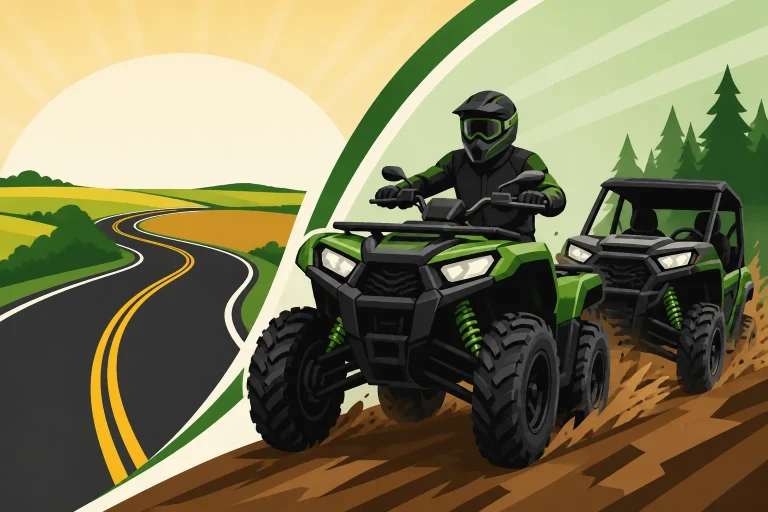
A temporary Crown land closure can derail a Saskatchewan ATV or UTV trip, especially when the trailhead is hours away. The 2025 ban closed Crown land to quads for about two weeks, then lifted. Here’s what that change meant, why a lifted ban isn’t a permanent green light, and what to check before planning another ride.
What the 2025 Crown land ban meant
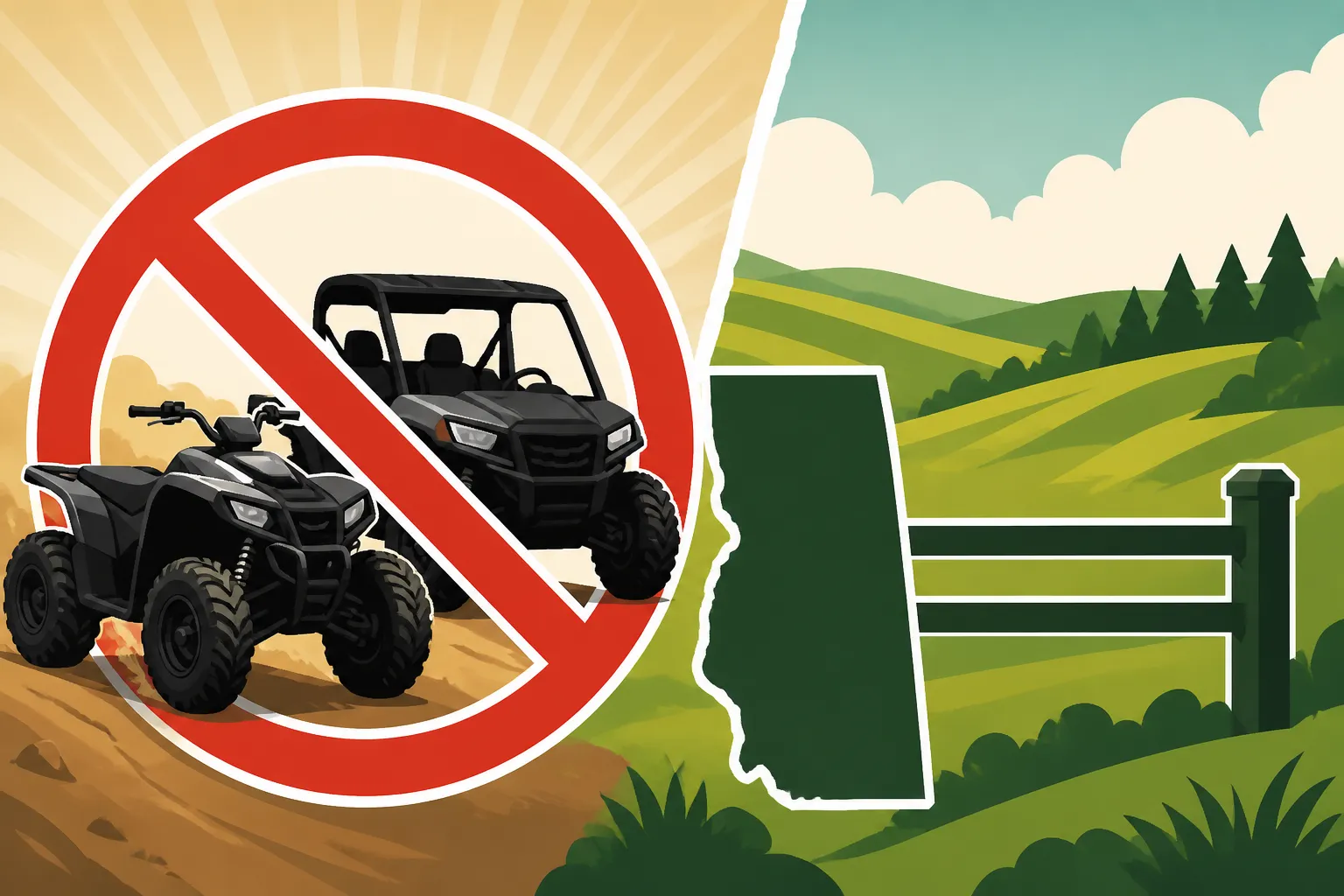
The 2025 restriction temporarily closed Crown land to quad riding during a period of elevated wildfire concern. It was an access restriction, not a permanent change to the general rules for riding public land. The ban lasted about two weeks before being lifted, but that short duration is no reason to assume future restrictions will follow the same pattern.
The key practical point is that Crown land access can change quickly. A route that was normally open could become off-limits under a temporary order, even if it had been rideable before the restriction. Riders needed to follow the active order rather than rely on a familiar trail, an old map, or another rider’s recent report. For the broader framework, see Saskatchewan Crown Land Riding Explained.
A closure tied to wildfire risk is not necessarily a statement that every part of the province is burning. Restrictions may respond to changing conditions and risk management, and the area covered depends on the applicable notice or order. Don’t assume that a closure affects every Crown land parcel, or that it affects only the trail where you first heard about it. Check the order’s boundaries and wording.
It also matters which machine the rule covers. Riders often use “quad” casually, but an order may define which off-road vehicles are restricted. ATV and UTV owners should check the actual wording rather than assume a side-by-side is treated differently—or identically—because of its size or name. If the order is unclear, confirm with the responsible authority before unloading.
| Situation | What to do |
|---|---|
| A temporary Crown land closure is in effect | Do not ride in the area covered by the order; check its exact boundaries and vehicle wording |
| A closure has been lifted | Confirm the lift applies to your destination and check for other current restrictions |
| A fire ban is active but no Crown land closure is known | Check the fire ban’s rules separately; a fire restriction and an access closure are not the same thing |
| A trail crosses different land types | Check rules for each section, including Crown land, private land, parks, and municipal areas |
| You cannot confirm whether your UTV is included | Ask the responsible authority before riding |
The ban also shouldn’t be confused with a general fire ban. A fire ban may limit activities involving open flames or other ignition sources, while a Crown land closure may restrict access or vehicle use in a defined area. One does not automatically tell you whether the other is in force. Read each notice separately and follow the stricter applicable rule.
For a broader look at seasonal restrictions and rider responsibilities, see Saskatchewan Wildfire Season Rules for Riders and Saskatchewan Crown Land Access Rules.
Why a closure can affect a planned ride
Crown land includes places riders use for recreation, but public ownership does not mean every activity is allowed at all times. Access can be restricted for safety, environmental protection, wildfire response, or other land-management reasons. A temporary closure can affect a route even when there is no gate, barricade, or person at the trail entrance.
That creates a practical challenge: a rider may have planned around a trail map or a previous visit, but those sources cannot confirm current access. Maps can help with navigation and general route planning; they do not replace a current closure notice. The same is true of trail descriptions shared online or by word of mouth.
The restriction may also matter to more than the person operating the machine. If your group has a trailer, a booked campsite, or a long drive planned, check access before setting out. A closed route can mean changing the destination, finding a legal alternative, or postponing the ride. Continuing into a restricted area because you have already travelled there can create avoidable legal and safety problems.
Land boundaries add another layer. A trip may move between Crown land, private land, a provincial park, and municipal roads or trails. Permission or access rules on one section do not automatically apply to the next. For example, a rider with permission to cross private land still needs to comply with a Crown land closure that affects the following section. See Saskatchewan Private Land Permission for the separate issue of access across privately owned land.
The 2025 event is a useful reminder that wildfire restrictions can affect a destination without changing the underlying rules for every other place in Saskatchewan. When one area is closed, don’t assume a nearby trail is automatically open. Verify the alternate route as carefully as the original plan.
How to check access before you ride
Build a current-access check into trip planning, especially during wildfire season. Saskatchewan’s wildfire season is described as running from April 1 to October 31, but restrictions can depend on conditions and current orders. Confirm the relevant information before leaving, and check again if the trip is planned well in advance. Start with Saskatchewan Wildfire Season Rules for Riders.
- Identify the land you plan to ride on. Pin down the trailhead and the full route, not just the destination. Note where the route crosses Crown land, private land, park land, or municipal land.
- Check for active restrictions. Review official wildfire and land-access notices for the exact area. A notice may cover a particular zone, road, trail, or type of vehicle, so read beyond the headline.
- Check the applicable map. Use the relevant fire-area map to see whether your destination falls within a restricted zone. Which Fire Centre Map Covers Your Riding Area can help you identify which map applies.
- Confirm that your machine is covered. Read the order’s terms for ATVs, UTVs, side-by-sides, and other off-road vehicles. Don’t rely on informal labels.
- Check for other rules at the destination. A lifted Crown land restriction does not cancel park requirements, local bylaws, landowner conditions, or other active orders. Saskatchewan Fire Ban Lookups is useful for checking a separate fire-related restriction.
- Recheck close to departure. Conditions and notices can change. If the order’s status or boundaries are unclear, contact the relevant authority instead of guessing.
- Keep a legal alternative in mind. Choose another destination only after confirming that it is open and that your group has permission to ride there.
This process is more reliable than checking only a trail map or asking whether someone rode there last weekend. A friend’s report can be helpful, but it may be outdated, refer to a different part of the area, or describe a different vehicle. Treat it as a lead to verify, not as permission.
Make sure the whole group knows the plan. A lead rider who checks the closure while other machines head down the trail can put everyone in a difficult position. Share the destination, any relevant restrictions, and the backup plan before the vehicles are unloaded.
What changed when the ban lifted
The ban’s lift after about two weeks meant that the temporary restriction had ended under the terms of the relevant notice. It did not mean wildfire risk had disappeared across the province, that every Crown land area was open, or that riders could ignore other rules. It also did not guarantee that a similar closure would end after the same length of time in another season.
A lift notice can be just as important as the original closure. Don’t infer that a restriction is over because you have not seen a recent update, or because riding has resumed somewhere nearby. Look for confirmation that the restriction covering your planned area has ended. Then check for any new or separate orders affecting the route.
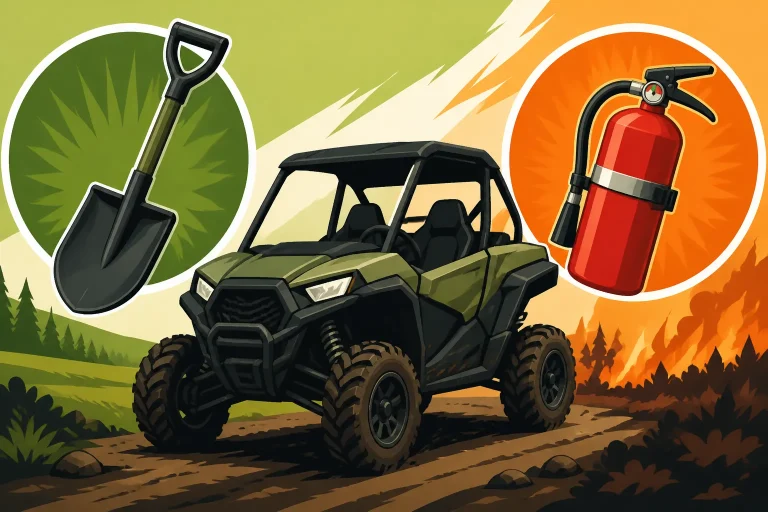
Once access is confirmed, ordinary responsibilities still apply. Riders should stay on lawful routes, respect land boundaries, and follow any fire-related requirements that remain in place. Fire prevention matters even when access is open. Follow current guidance on combustible material and fire-suppression equipment, and use established routes where required. See Staying on Established Trails in Fire Season and Fire Suppression Gear on a Machine.
If a closure has disrupted a planned ride, avoid treating a nearby road, field, or trail as a substitute without checking its status. A route that looks passable may cross land where riding is prohibited, require permission, or be subject to a separate local restriction. Reading Posted Land Signs Before You Unload can help with checking signs at the access point, but signage should not be your only way to verify a temporary order.
The practical lesson from 2025 is simple: Crown land access is conditional, and wildfire restrictions can change the plan quickly. Check the current order, confirm the area and vehicle types it covers, and verify that any lift applies to your destination before you ride. That small check can prevent a wasted trip and keep a group from entering land that is temporarily closed.
Disclaimer
This article is for general informational purposes only and does not constitute professional advice. Laws, prices and regulations vary by location and change over time. Consult a qualified professional for guidance on your specific situation.