The Info Session That Comes Before Your Permit
The permit process for riding an ATV in a Saskatchewan park can include an information session before you receive your permit. That extra step is easy to miss when you are planning a trip. Here’s what the session is for, what to confirm before you travel, and how to avoid arriving at the trailhead without the paperwork you need.
Why an information session comes before a permit
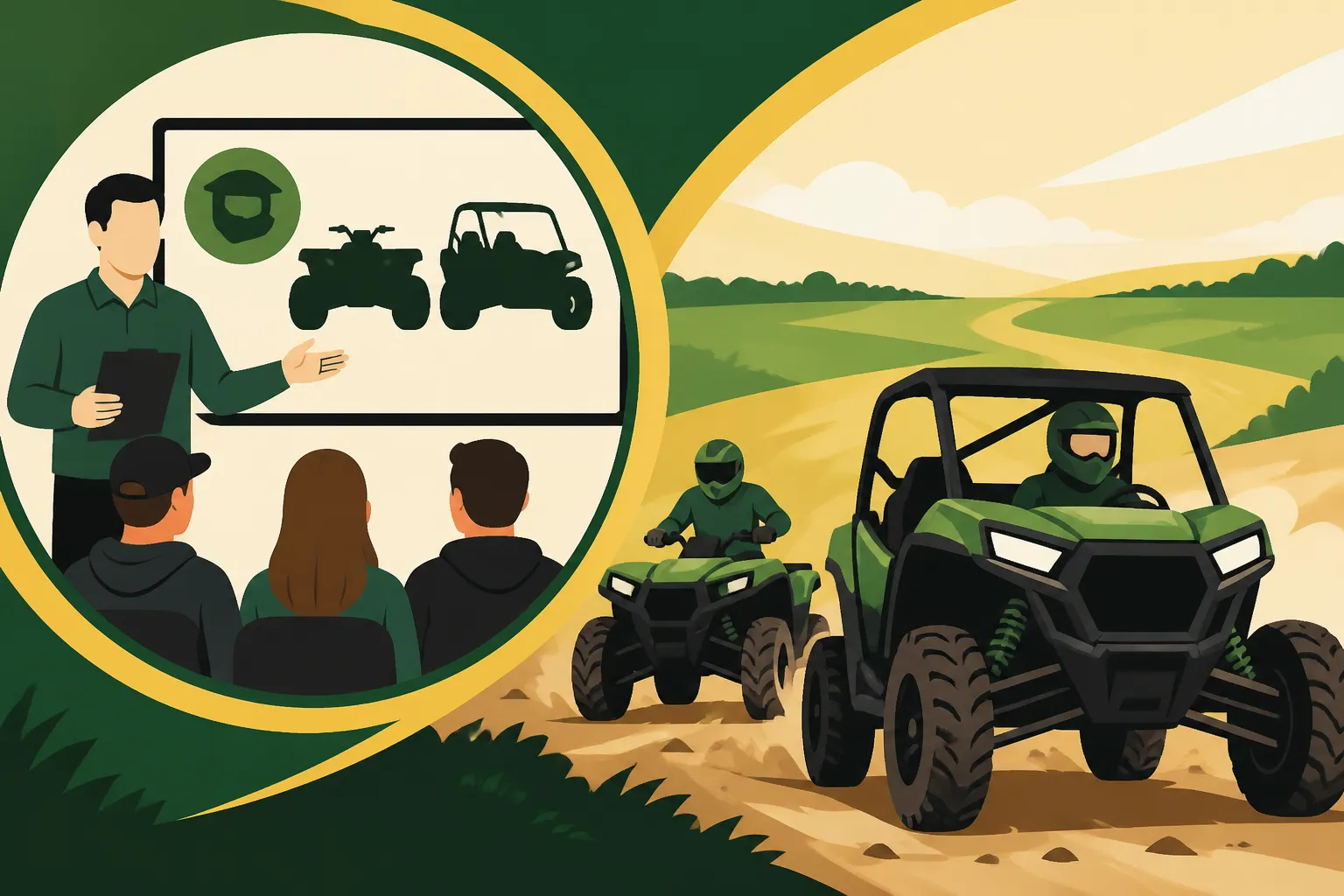
Some Saskatchewan park permit processes include an information session before a rider receives a trail permit. The purpose is to make sure you understand the rules for that park, including where machines may go and what conditions apply. It is a park-use orientation, not a province-wide ATV registration process.
The requirement is not a blanket rule for every park in Saskatchewan. Parks can have different trail access, permit procedures and land-use restrictions. A permit that applies at one riding area does not automatically apply elsewhere, and not every park requires one. Check the rules for the specific park you plan to visit, rather than assuming the process will be the same as your last trip. See Saskatchewan Parks With Designated Trails Only and Saskatchewan Parks That Need No Permit for more on those differences.
Where an information session is part of the process, expect it to explain local riding rules and how the park’s permit works. The session may also be connected to an acknowledgement form or other paperwork. Treat the session and the permit as separate steps: attending an orientation does not necessarily mean you have already received permission to ride.
A park trail permit is also different from a municipal plate or a provincial ATV registration. Saskatchewan does not issue provincial ATV plates, and a local municipal permit, where available, is not a substitute for a park permit. You can read more about the park process in Saskatchewan Park Trail Permits Are Free and Saskatchewan Municipal ATV Plates Explained.
| Question | What to keep in mind |
|---|---|
| Does every Saskatchewan park require a session? | No. Requirements depend on the park and the riding area. |
| Does attending the session automatically authorize riding? | Not necessarily. Confirm that you have completed every permit and paperwork step. |
| Is a park permit the same as an ATV plate? | No. A park permit and a municipal plate serve different purposes. |
| Should you confirm the process before driving to the park? | Yes. Ask the park office what is required and where each step takes place. |
| Can a permit for one park be used at another? | Do not assume so. Check the destination park’s rules. |
What to confirm before you leave home
The practical details matter as much as the rules themselves. A session may be offered at a particular park office, campground office or district office, and the place where you attend may not be the same place where you pick up the permit. Because these details can vary, contact the park before setting out.
Ask the office clear, specific questions:
- Is an information session required for the permit you need?
- Where and when can you attend the session?
- Do you need to arrange a time in advance?
- Is there a form to read or complete before you arrive?
- Where do you collect the permit, and how should it be displayed?
- Does each rider need to attend, or can one person complete the process for a group?
- Are there additional rules for youth riders, passengers or the particular trail area?
Do not rely only on an old trip report, a social media post or another rider’s recollection. A process that worked at a different park—or in a previous season—may not answer what you need to know for your destination. Park access, trail designations and local procedures can change. If you are planning a group ride, confirm the steps for the whole group rather than assuming one person’s permit covers everyone.
It also helps to ask whether you need to attend the session before arriving at the campground or trailhead. If the office is at another location, build that stop into your route. A permit pickup might involve office hours that do not match your arrival time, so check the timing rather than expecting to handle everything when you unload.
For park-specific details, review Saskatchewan Permit Rules at Moose Mountain or Saskatchewan Permit Rules at Great Blue Heron, depending on your destination. The rules and access arrangements may differ, even if both parks have designated ATV trails.
What happens during the session and after it
An information session is an opportunity to understand the conditions attached to riding in that park. Pay attention to which routes are open to machines, where riding is prohibited, and what to do if a trail is closed. A trail map or park sign may show the permitted routes, but do not treat every visible road, path or open area as an ATV trail.
The session may also cover responsibilities that help protect the park and other visitors. For example, ask about staying on designated routes, respecting barriers and signs, and following any requirements for equipment or machine washing. These details are worth confirming because park rules can be more specific than the general rules that apply to ATV use elsewhere in Saskatchewan.
If an acknowledgement form is part of the process, read it before signing. Make sure you understand what you are agreeing to and whether the form applies to you alone or to other riders in your group. Park permit paperwork is not a substitute for checking the rules for youth supervision, insurance or road use. Those obligations can apply separately. For the paperwork side, see Saskatchewan Park Use Acknowledgement Forms.
After the session, confirm what remains before you ride. You may need to collect a permit, display it in a particular place or keep proof available for inspection. Do not assume that a verbal explanation, a completed form or a permit from another location will be enough. Ask the staff member to confirm that your process is complete.
The permit itself may be free at parks that use this system, but “free” does not mean automatic or optional. The session, acknowledgement and display instructions can still matter. For details about the permit arrangements at two specific parks, see Saskatchewan Free Permits at Moose Mountain and Saskatchewan Free Permits at Great Blue Heron.
A simple plan for getting your permit
Use this sequence when you are organizing a park ride:
- Choose the park and trail area. Confirm that ATV riding is allowed there and identify which trails are designated for machines.
- Check whether the park requires a permit. Do not assume the process applies everywhere or that a permit from another park will work.
- Ask whether an information session is required. Confirm the location, timing and whether you need to arrange attendance.
- Ask about forms and group requirements. Find out who must attend, who must sign and whether youth riders have additional steps.
- Plan where to collect the permit. Confirm the office or pickup location, its hours and what you need to bring.
- Complete the steps before riding. Attend the session, finish any paperwork and collect the permit as directed.
- Follow display and trail instructions. Keep the permit visible or accessible as required, and ride only where the park allows machines.
This plan is especially useful if you are arriving late, bringing several machines or travelling with children. A quick call to the park office can clarify whether the session happens at the same place as permit pickup. If it does not, you can adjust the route before towing a machine all the way to the trailhead.
For pickup details, see Picking Up a Trail Permit at the Campground Office and Signing the Use Form at a District Office. These explain why it is worth checking the location of each step rather than treating “get a permit” as a single stop.
Once you have the permit, keep following the rules explained during the session. A permit does not give permission to ride closed routes, leave designated trails or ignore posted restrictions. If a sign, barrier or park employee indicates that an area is closed, follow that direction and ask the park office if you are unsure where riding is allowed.
Disclaimer
This article is for general informational purposes only and does not constitute professional advice. Laws, prices and regulations vary by location and change over time. Consult a qualified professional for guidance on your specific situation.