Fire Suppression Gear on a Machine
A small fire on an ATV or UTV can grow quickly, especially in dry grass or bush. Riders need to know what suppression gear is practical to carry, how to mount it so it is ready to use, and what to do if a fire starts. In Saskatchewan, equipment is only one part of fire safety: check current restrictions and follow your legal duties before you ride.
What fire suppression gear to carry
A useful setup balances three things: the chance of a fire, the machine’s storage space and the risk of carrying gear where it can come loose or get damaged. For most recreational rides, start with a properly rated portable extinguisher and a sturdy shovel. Add personal protective gear and a communication plan, especially when riding far from roads or other people.
| Gear | What it can help with | Practical considerations |
|---|---|---|
| Portable fire extinguisher | A small, early-stage fire that is safe to approach | Choose a model labelled for the hazards you may face; mount it securely and check its condition |
| Shovel | Scraping away burning grass, soil or other small combustible material | A compact, sturdy tool is more useful than one that is hard to reach or poorly secured |
| Protective gloves and eye protection | Reducing exposure to heat, sparks and debris | Keep them accessible; do not let gear encourage you to approach an unsafe fire |
| Phone, radio or satellite communicator | Alerting others or calling for help | Choose a communication method that works where you ride |
| Basic first-aid kit | Treating minor injuries while help is arranged | Store it where it can be reached without unloading the machine |
A portable extinguisher is not a guarantee that you can put out a machine fire. It gives you a chance to deal with a small fire while there is still a safe exit and before flames spread. Read the label to confirm what types of fires the extinguisher is intended for, and follow the manufacturer’s mounting and inspection instructions. A unit that is buried under luggage, blocked by a passenger or difficult to release may be of little use in an emergency.
A small shovel can help with a different problem: smouldering vegetation or a small patch of burning material on the ground. It is not a substitute for an extinguisher when a machine is burning, and it will not make it safe to approach flames or smoke. Think of it as one tool in a broader response, not a way to tackle a wildfire.
You might find extinguishers and compact shovels at outdoor, automotive or hardware retailers, including Amazon. Wherever you shop, check the product label, condition, mounting hardware and suitability for your machine rather than choosing by size or price alone. If you are uncertain about extinguisher selection, ask a qualified supplier or fire-safety professional.
Choose and mount equipment for the machine
A portable extinguisher should be appropriate for the hazards you could encounter and small enough to carry without interfering with safe operation. Fires involving fuel, oil, wiring or ordinary materials can present different risks, so read the extinguisher’s label instead of assuming one type works for every situation. If you ride a side-by-side, consider whether the driver and passenger can reach it quickly from their seats.
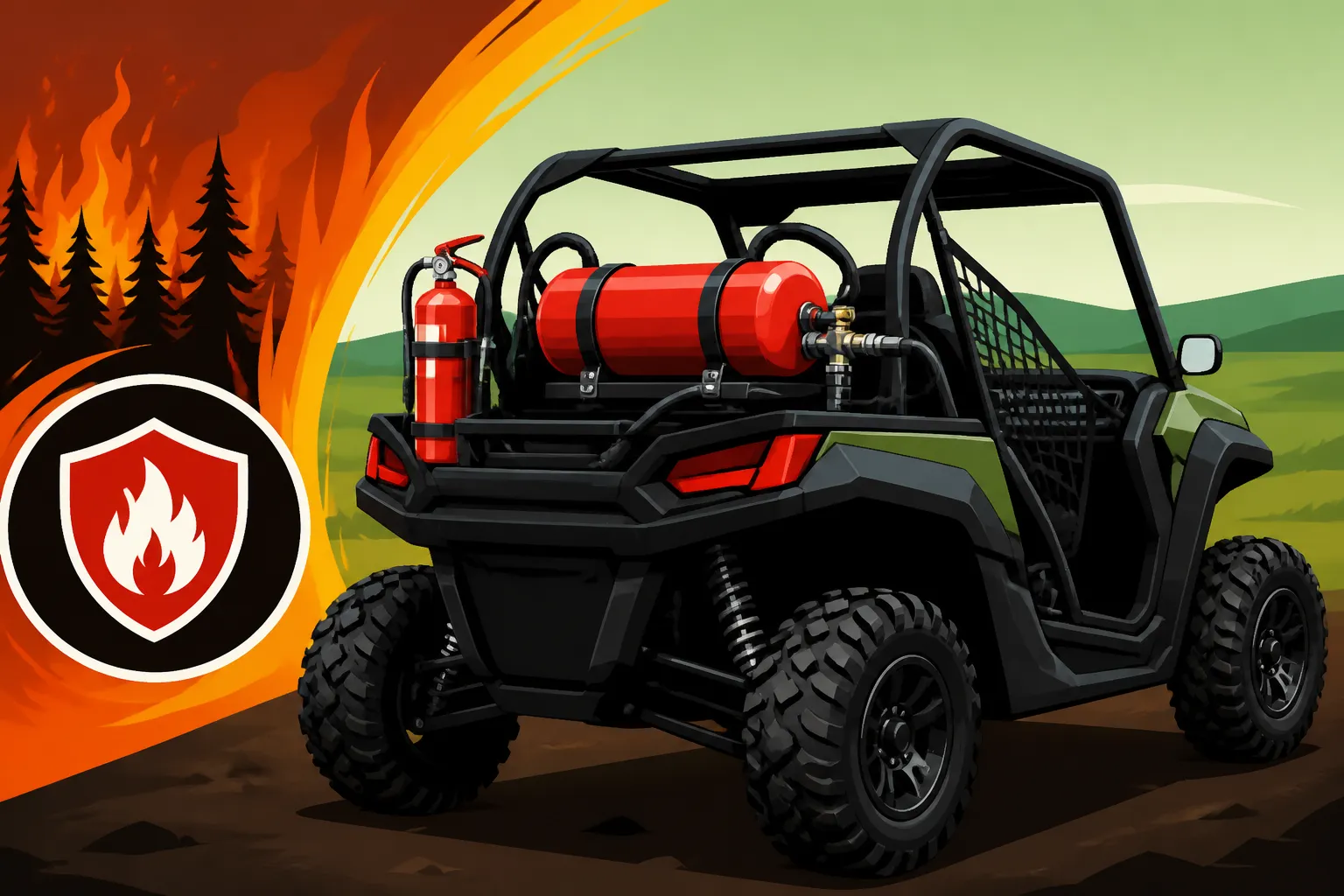
Mounting matters as much as selection. Use a bracket intended for the extinguisher and a location that is accessible while the machine is stopped. The mount should hold the unit firmly over rough ground but still allow it to be released without tools or a struggle. Avoid placing it where it can contact hot exhaust parts, interfere with steering or controls, obstruct a passenger, or become a hazard in a rollover. Check the mount after riding rough terrain.
Do not store an extinguisher loose in a cargo box with heavy tools or equipment. It could be damaged, buried or difficult to find when needed. Protect it from avoidable impacts, water and mud, while keeping it visible enough that another rider can locate it. If you use a cover, make sure it does not slow access.
Carry a shovel in a secure position where it cannot shift into a wheel, track, driveline, passenger area or control. A tool that is too small or flimsy may be frustrating in hard ground; a large tool that rattles loose can create a hazard. Test the storage arrangement before a long trip, then inspect it during your ride.
Keep other safety gear separate from the tools. Gloves, eye protection and a first-aid kit should not be trapped under a load that must be removed before you can reach them. On a UTV, check that equipment remains secured when doors or cargo restraints are opened. On an ATV, think through how a passenger or another rider would retrieve the extinguisher without leaning over a hot machine.
Check the machine and conditions before riding
Suppression gear can only help with a fire that is noticed early. A machine that is caked in dry grass, leaves or other debris may carry combustible material close to hot components. Before riding, look around the exhaust, engine and other areas where debris can collect. Clear away buildup only when the machine is safely shut off and cool enough to handle. Saskatchewan riders can review Your Legal Duty to Check for Combustible Debris and Inspecting Your Machine Throughout a Day of Riding for more on prevention.
Saskatchewan’s listed wildfire season is commonly described as running from April 1 through October 31, but dates, restrictions and closures can change. Check the official information for your route before leaving, and look again if conditions change during the day. A fire ban or closure may make a planned ride unlawful even if you carry an extinguisher and shovel. See Saskatchewan Wildfire Season Rules for Riders and Saskatchewan Fire Ban Lookups before you head out.
Your pre-ride check should cover more than the machine itself:
- Confirm that the extinguisher is present, secured and in usable condition according to its label and manufacturer’s instructions.
- Check that its mount has not loosened and that the unit can be released promptly.
- Make sure the shovel and other tools are secure.
- Remove combustible debris from the machine.
- Check current fire restrictions, closures and land-access rules for your destination.
- Tell someone where you plan to ride and when you expect to return, especially if coverage may be limited.
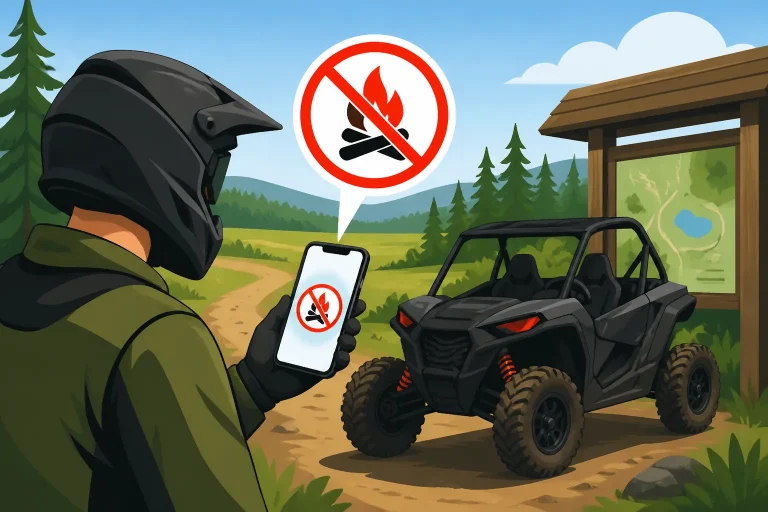
Fire conditions can change after you leave home. Wind, dry vegetation and a new restriction can alter the risk or the rules for an area. Use a current official source to check for closures or bans; a map saved earlier may not show the latest information. Checking a Fire Ban From Your Phone at the Trailhead offers a practical reminder to verify conditions close to the start of a ride.
Carrying equipment does not grant permission to enter land that is closed or restricted. Nor does it replace the duties that apply to riders during wildfire season. Review Saskatchewan Wildfire Act Duties for Riders and Staying on Established Trails in Fire Season along with the rules for the specific land you intend to use. If you are unsure whether an area is open, confirm before unloading your machine.
If a fire starts
Your first priority is people, not equipment or the machine. Stop in a safe place, warn others and move away from the fire if it is spreading, producing heavy smoke or putting anyone at risk. Do not stay to save an ATV or UTV. A portable extinguisher is for an early fire that you can approach without getting trapped or exposed to dangerous heat and smoke.
If a fire is small and you can act safely, use the extinguisher according to its instructions. Keep an escape route behind you, stay clear of smoke and stop if the fire grows or returns. If you cannot control it immediately, withdraw and call emergency services as soon as you can. Give your location as clearly as possible; in remote areas, describe the trail, access point or nearby landmark. Do not assume your phone will have service, and agree on another way to raise help if it does not.
Do not pour water on a fire unless you know it is appropriate for the material involved. Water can spread burning fuel, and some fires require a different response. Avoid opening a hot engine compartment or reaching into machinery where flames may flare. If there is any doubt about whether you can act safely, get people away and call for help.
After an incident, do not ride a machine that may have damaged fuel lines, wiring or hot components. Once people are safe and help has been contacted, follow the instructions of emergency responders and relevant authorities. Report a fire as required and provide accurate information about where it started and what you observed. A fire that appears out can still have hot spots, so do not leave the area until it is safe to do so or responders take over.
A well-mounted extinguisher and shovel are sensible additions to a machine, but prevention and current information matter just as much. Clear debris, check restrictions, ride only where access is permitted and be ready to leave if conditions become unsafe. For a related checklist, see Carrying a Shovel and an Extinguisher on Board.
Disclaimer
This article is for general informational purposes only and does not constitute professional advice. Laws, prices and regulations vary by location and change over time. Consult a qualified professional for guidance on your specific situation.