Saskatchewan Snowmobile Registration Compared
Many ATV and UTV riders in Saskatchewan find themselves scratching their heads when it comes to registration. It’s a common misconception that all recreational off-road vehicles operate under the same provincial rules, especially when it comes to plates and permits. This guide will meticulously break down the significant differences between how snowmobiles are registered in Saskatchewan and the completely different, often perplexing, situation for ATVs, helping you understand the unique landscape for each.
The Stark Reality: No Provincial ATV Registration
If you're a quad owner in Saskatchewan, one of the first things you discover, often to your surprise, is that the province simply doesn't have a registration system for All-Terrain Vehicles. Unlike cars, trucks, or even snowmobiles, there's no provincial office where you go to register your ATV, get a plate, or receive an official certificate of ownership from the province. This can be a huge point of confusion, especially for new riders or those moving from other jurisdictions where ATV registration is standard. People expect a formal process, a piece of paper with the government's stamp on it, and its absence can feel unsettling.
The Absence of a Central Registry
This means there's no central provincial database tracking who owns which ATV. When you buy a quad, whether new from a dealer or used from a private seller, you won't be issued a provincial registration document. There's no "Saskatchewan ATV Registration" to speak of, which often leads to legitimate questions about how ownership is officially recognized. For many, the idea of owning a significant vehicle without any kind of provincial record feels almost unthinkable, yet that's precisely the situation we have here. You might be accustomed to receiving a vehicle registration card that you keep in your wallet or on the machine, but for a quad in Saskatchewan, that simply doesn't exist on a provincial level. This is a fundamental difference that shapes many aspects of ATV ownership in the province. [Saskatchewan Does Not Register ATVs]
This lack of a provincial registry also means there’s no provincial plate or decal to attach to your ATV. You won’t find a section for ATVs at your local provincial insurance broker when it comes to official registration. While snowmobiles have a distinct license plate that changes annually, signifying current registration, ATVs do not have a provincial equivalent. This can lead to moments of uncertainty, particularly when interacting with law enforcement or in the event of a sale, as the usual cues of official ownership are missing. It places a greater emphasis on other forms of documentation, which we’ll delve into shortly. [Saskatchewan Has No ATV Plate or Decal]
What This Means for Proof of Ownership
Without a provincial registration, your primary proof of ownership for an ATV in Saskatchewan boils down to your bill of sale. This document becomes incredibly important. It needs to be clear, comprehensive, and accurately reflect the transaction. Think of it as your single most important piece of paperwork when it comes to demonstrating that the machine is legally yours. This is why thoroughness when creating or receiving a bill of sale is paramount, whether you're buying or selling.
A well-drafted bill of sale should include the full names and addresses of both the buyer and seller, the date of the sale, a detailed description of the ATV (make, model, year, and crucially, the Vehicle Identification Number or VIN/serial number), and the agreed-upon price. It’s not just a formality; it’s your legal anchor. Without it, proving you own the machine, especially if it's stolen or involved in an accident, becomes exponentially more difficult. Many people use a template from services like LawDepot to ensure all the necessary details are captured, making it a robust legal document. [Your Bill of Sale Stands In for a Registration]
Snowmobiles: A Different Legislative Path
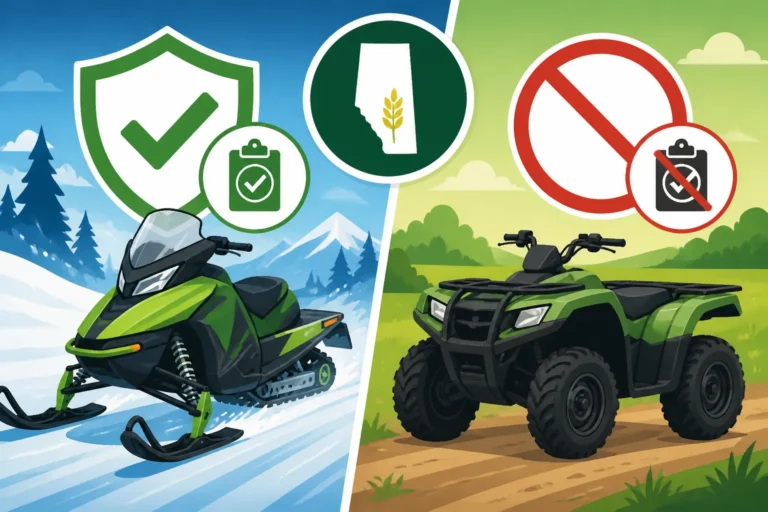
Now, let's pivot to snowmobiles, because their situation is a complete contrast. While quads roam free of provincial registration, snowmobiles in Saskatchewan are subject to mandatory provincial registration, complete with annual fees and an included insurance package. This distinction is often the source of much head-scratching for those who own both types of recreational vehicles or simply wonder why one is regulated so differently from the other. The legislative history for each machine has simply taken a different fork in the road.
The Mandate for Snowmobile Registration
Every snowmobile operated in Saskatchewan must be registered with the province. This isn't an optional step; it's a legal requirement outlined in specific legislation. When you purchase a snowmobile, whether new or used, part of the process involves ensuring it's registered in your name through an authorized issuer, often the same places where you'd register your car. This registration is tied to a specific plate and an annual fee, making it very much akin to registering a traditional motor vehicle. You'll receive a registration certificate that you are expected to carry with you when operating the machine.
This mandatory registration serves several purposes. It creates a provincial database of snowmobile owners, which can be invaluable for tracking stolen machines, enforcing regulations, and ensuring accountability. It also provides a clear, official record of ownership that simplifies transfers and provides peace of mind for buyers and sellers alike. The system is well-established and has been in place for many years, creating a familiar process for snowmobile enthusiasts across the province. [Saskatchewan Registers Snowmobiles, Not ATVs]
The Historical Context of the Legislation
The difference in how ATVs and snowmobiles are handled provincially isn't an oversight; it stems from distinct legislative histories. The provincial framework for snowmobiles predates the widespread popularity and diverse use of ATVs we see today. Snowmobile legislation was developed at a time when these machines were primarily used for recreational trail riding and winter transportation, often involving organized trail systems and a clearer understanding of their impact on specific environments. This led to the creation of a comprehensive system that included registration, dedicated trail passes, and specific insurance requirements.
In contrast, when the [Saskatchewan's All Terrain Vehicles Act] was initially drafted and implemented, the landscape of ATV use was different. There wasn't the same push for a provincial registry, perhaps due to the more diverse and often agricultural or industrial uses of ATVs, or simply different priorities at the time. Over the years, despite growing calls for ATV registration from some groups, the provincial government has maintained the status quo, meaning that while snowmobile rules have evolved within a registration framework, ATVs have largely remained outside of it. This historical divergence is why you won't find a provincial quad registry, even while snowmobilers routinely register their machines. [Why Saskatchewan Never Built a Quad Registry]
What Provincial Snowmobile Registration Entails
So, what exactly does it mean to register a snowmobile in Saskatchewan? It's more than just a piece of paper; it's a package that comes with several important components, including annual fees and a basic insurance policy. Understanding these details is crucial for any snowmobiler in the province.
The Registration Process and Associated Fees
Registering a snowmobile is a straightforward process, typically handled by any authorized motor vehicle issuer across the province. When you purchase a snowmobile, whether new or used, you'll need to visit one of these offices with your bill of sale and identification. The staff will guide you through the paperwork, ensuring the machine is properly transferred into your name. You'll be issued a unique license plate that must be affixed to your snowmobile, and a registration certificate.
There is an annual fee associated with snowmobile registration, which covers both the administrative costs of the registry and the basic insurance coverage that comes bundled with it. This fee is a recurring expense, typically due on an annual cycle, and ensures your machine remains legally compliant for operation on trails and other designated areas. It’s a mandatory cost of ownership that snowmobilers factor into their budget, much like car registration. [A Saskatchewan Snowmobile Registration Runs $150 a Year]
Included Insurance and Its Benefits
One of the most significant advantages of Saskatchewan's snowmobile registration system is the basic liability insurance that is automatically included. This isn't just a minor perk; it's a substantial benefit. This coverage protects you against claims for injuries or damages you might cause to others or their property while operating your snowmobile. It provides a baseline level of financial protection, which is incredibly important given the inherent risks involved with operating any recreational vehicle.
This included liability coverage means that snowmobilers don't have to seek out a separate basic policy from a private insurer to meet minimum legal requirements, although many choose to purchase additional coverage for comprehensive or collision protection. The peace of mind that comes with knowing you have that foundational liability insurance is immense. It's a clear illustration of how the provincial registration system for snowmobiles offers more than just an administrative record; it provides tangible protection. [Two Hundred Thousand of Liability Bundled In]
Renewal and Transfer Considerations
Snowmobile registrations are renewed annually, ensuring that the province's records are kept up-to-date and that operators maintain their required insurance coverage. You'll typically receive a renewal notice, reminding you to pay the annual fee before your registration expires. It’s a continuous cycle, designed to keep all active snowmobiles within the system. Failing to renew means your snowmobile is not legally registered and, therefore, not insured under the provincial scheme, leaving you exposed to significant risk and potential penalties.
When a snowmobile is sold, the transfer process is also handled through the provincial registration system. The seller provides the buyer with a bill of sale, and the buyer then takes this document to a provincial motor vehicle issuer to register the machine in their name. This ensures a clear chain of ownership and updates the provincial database, removing the seller's liability and attaching it to the new owner. This structured process for transfers and renewals is a key difference when comparing Saskatchewan Snowmobile Registration Compared to the informal nature of ATV sales.
The Implications for ATV Ownership and Operation
The absence of provincial ATV registration fundamentally changes how you approach ownership, insurance, and even buying and selling these machines in Saskatchewan. It places a greater burden on individual owners to manage their documentation and liability.
Proving Ownership Without a Provincial Record
Since there's no provincial registry, your bill of sale is your prime document for proving ownership of an ATV. This means you must safeguard it carefully. If your quad is ever stolen, damaged, or involved in a dispute, that bill of sale is what you’ll present to police, insurance companies, or legal professionals. It's the equivalent of a vehicle's title or registration in other contexts. This makes the accuracy and completeness of the bill of sale absolutely critical when you either acquire or dispose of an ATV.
Many riders choose to keep a copy of their bill of sale with their machine, perhaps laminated or stored in a waterproof bag, especially if they are frequently asked for proof of ownership by peace officers or park officials. Others prefer to keep the original in a secure home file and carry a clear photocopy. This need to meticulously manage your own proof of ownership is one of the direct consequences of the provincial government's decision not to register ATVs. [How to Prove You Own an ATV in Saskatchewan]
Insurance Requirements for Unregistered ATVs
Unlike snowmobiles, which get basic liability insurance bundled with their registration, ATVs in Saskatchewan do not have this benefit. This means ATV owners are solely responsible for securing their own insurance coverage. While the province mandates a minimum amount of third-party liability insurance for all ATVs operated on public land, ditches, or certain trails, you must obtain this insurance through a private broker or insurance company. You won't simply get it by "registering" your machine, because there's no such thing provincially.
This requirement means that before you even think about hitting the trails or heading out on a grid road, you need to contact an insurance provider to arrange for adequate coverage. You'll need proof of this insurance, which you should carry with you whenever you ride. An insurance certificate or card is your proof. Neglecting this step can lead to significant financial risk in the event of an accident and could result in fines if you're stopped by law enforcement without it. [Saskatchewan ATV Insurance Requirements]
Buying and Selling ATVs Privately
The private sale of an ATV in Saskatchewan is a less formal process than that for a snowmobile or car. Since no provincial registration or title transfer is required, the transaction hinges almost entirely on the bill of sale. When you’re the buyer, it's crucial to get a comprehensive bill of sale from the seller, ensuring it includes all the necessary details and that the VIN matches the machine exactly. A common pitfall is receiving a vague or incomplete document, which can create headaches down the road.
If you're selling, providing a detailed bill of sale protects you as well, by clearly documenting the transfer of ownership and liability to the new owner. There's no provincial paperwork to file or fees to pay for the transfer itself. This makes the process quicker, but also places a higher onus on both parties to ensure the paperwork is correct and complete. Many individuals turn to resources like LawDepot for reliable bill of sale templates to ensure they cover all their bases during a private transaction. [Saskatchewan Bills of Sale Do the Work]
Municipal Plates: A Local Solution for ATVs
While the province doesn't offer ATV registration, some individual municipalities in Saskatchewan have taken matters into their own hands, implementing local permit or plate schemes. These are not provincial registrations, but rather local bylaws that allow ATVs to operate on designated municipal roads or within specific boundaries, often in exchange for a fee. This is a critical distinction that can cause confusion for riders who might assume a municipal plate is equivalent to a provincial one.
How Municipalities Fill the Gap
In areas like Candle Lake or the District of Lakeland, local councils have recognized the desire of residents and visitors to use ATVs within their communities, often for accessing cabins, businesses, or specific recreational areas. To manage this and generate revenue for local trail maintenance or infrastructure, these municipalities have enacted bylaws that require ATVs to acquire a municipal plate or permit. This plate typically grants specific, limited riding privileges within that municipality's jurisdiction. [Saskatchewan Municipal Plate Schemes]
These local schemes are essentially a municipal permit to operate under their specific rules. They are not universal across Saskatchewan; rather, they are specific to the issuing municipality. For example, a plate from the District of Lakeland will only grant you riding privileges within the District of Lakeland, assuming you adhere to their bylaws. It won't allow you to legally ride on municipal roads in a different town unless that town has its own similar bylaw permitting it. This localized approach is a creative way for communities to manage ATV use where a provincial framework is absent. [Municipal Plates Fill the Gap the Province Left]
The Limitations and Scope of Local Plates
It's vital to understand that a municipal plate is not a substitute for provincial registration, nor does it provide province-wide riding privileges. Its validity is strictly limited to the boundaries and specific conditions set forth by the issuing municipality's bylaws. If you ride outside that municipality's designated areas or violate their specific rules (e.g., speed limits, prohibited streets), that municipal plate offers no legal protection or authorization.
Furthermore, these municipal plates do not come with any bundled insurance. You are still required to carry your own private liability insurance, regardless of whether you have a municipal plate. The plate is merely permission to operate within a specific local context, not a comprehensive regulatory package. Always check the specific bylaws of any municipality you plan to ride in, as rules can vary significantly from one community to another. A municipal plate might allow you to drive on a town street to get to a gas station, but it won't let you bypass provincial laws on public roads or Crown land outside that specific jurisdiction. [Which Municipalities Run Their Own Plate Scheme]
Understanding the Why Behind the Discrepancy
It's natural to wonder why Saskatchewan has such a dramatically different approach to snowmobile versus ATV registration. Is it historical inertia, different risk profiles, or just evolving policy? The reasons are multi-faceted and reflect a blend of legislative history, public perception, and the varied uses of these machines.
Different Safety and User Profiles
One perspective is that the legislative framework evolved based on the perceived safety and user profiles of each machine when their respective laws were drafted. Snowmobiles were often seen as dedicated recreational vehicles, used primarily in specific seasons and often on organized trails. The idea of a province-wide registration and trail system made sense to fund and manage these activities, including the provision of liability insurance.
ATVs, on the other hand, have always had a more diverse usage. While many use them recreationally, a significant portion of ATVs are used for work on farms, ranches, industrial sites, or traplines. These machines are often considered tools of trade. Historically, the province may have been reluctant to impose a registration and fee structure on what is often essential equipment for many Saskatchewan residents, particularly those in rural areas. This dual role of ATVs – recreation and utility – likely complicated efforts to create a simple, province-wide registration system that would satisfy all stakeholders. [Saskatchewan Machines Used on a Farm]
Evolving Recreational Landscapes
The recreational landscape for both machines has also continued to evolve, further solidifying the existing distinctions. Snowmobile organizations have long worked with the province to maintain and fund an extensive trail system, with registration fees contributing directly to these efforts. This symbiotic relationship between riders, clubs, and the province supports the current registration model.
For ATVs, while there are passionate advocates for a provincial registry and dedicated trail funding, the widespread, often unmanaged, nature of ATV use (e.g., ditch riding, informal trails, access to private land) has made a uniform provincial system harder to implement. There's also the challenge of balancing the needs of recreational riders with the exemptions and realities of those using ATVs for work. The political and logistical hurdles to creating a provincial ATV registry that would satisfy everyone and provide consistent benefits, like bundled insurance, have proven to be significant, leading to the continued reliance on a non-registered status at the provincial level. This is why [Saskatchewan Registration Compared to Alberta] or Manitoba shows such a stark difference, as those provinces opted for registration.
| Feature | Saskatchewan ATVs (Quads) | Saskatchewan Snowmobiles |
|---|---|---|
| Provincial Registry | No | Yes, mandatory |
| Provincial Plate | No | Yes, annual plate required |
| Annual Fee | No (provincially) | Yes, annual fee (e.g., [Saskatchewan Snowmobile Registration Cost]) |
| Included Insurance | No, must obtain privately | Yes, basic liability included (e.g., [Saskatchewan Snowmobile Insurance Included]) |
| Proof of Ownership | Bill of sale is primary | Provincial registration certificate |
| Transfer Process | Bill of sale only (private) | Provincial registration transfer required |
| Municipal Plates | Available in some municipalities | Not applicable; provincial plate covers all |
| Legislative Basis | [Saskatchewan's All Terrain Vehicles Act] | Specific snowmobile legislation |
Disclaimer
This article is for general informational purposes only and does not constitute professional advice. Laws, prices and regulations vary by location and change over time. Consult a qualified professional for guidance on your specific situation.