Saskatchewan Snowmobile Fees and Insurance
One of the most common confusions for off-road enthusiasts in Saskatchewan, especially those new to the province or new to the sport, revolves around registration, fees, and insurance for their machines. Many riders are familiar with the mandatory registration and fees associated with snowmobiles and naturally assume the same rules apply to their ATVs or side-by-sides. This often leads to frustration and time spent searching for a provincial ATV registry that simply doesn't exist. This guide will unravel the distinct requirements for snowmobiles in Saskatchewan regarding fees and insurance, explain why these provincial obligations do not extend to ATVs and UTVs, and clarify what specific responsibilities ATV and UTV owners do have concerning insurance and proof of ownership.
Understanding Saskatchewan's Unique Approach to Off-Road Vehicle Registration
It's a perplexing situation for many: you own an off-road vehicle, you ride it on trails, and you're told it needs to be insured, but then you find out there's no central provincial place to register it. This isn't an oversight or a hidden rule; it's a fundamental difference in how Saskatchewan manages its various off-road recreational vehicles. The province has made a clear distinction, one that impacts everything from where you ride to what paperwork you need to carry.
The Core Distinction: ATVs vs. Snowmobiles
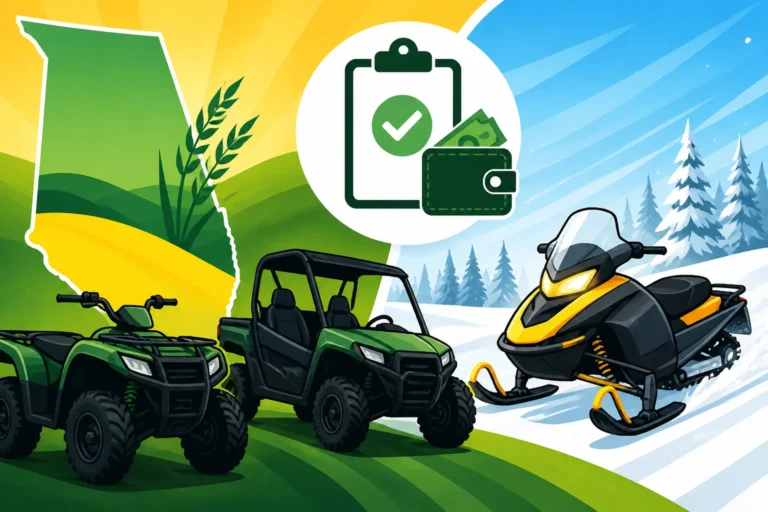
Right off the bat, let's address the elephant in the room: Saskatchewan treats ATVs and snowmobiles very differently when it comes to official government registration. For snowmobiles, there is a clear, mandatory provincial registration process. This means every snowmobile operated in Saskatchewan needs to be registered with the Saskatchewan Government Insurance (SGI), and this registration comes with an annual fee. This fee isn't just for a sticker; it's a package deal that includes significant liability insurance coverage. Saskatchewan Snowmobile Fees and Insurance will delve into this further, but for now, understand that it's a comprehensive system designed to cover a specific type of winter recreation.
In stark contrast, ATVs and UTVs (or side-by-sides, as they are often called) do not have a provincial registration requirement. There's no SGI number you need to get for your quad, no annual fee paid to the province to "license" your ATV. This is perhaps the biggest surprise for many riders, particularly those moving from provinces where ATV registration is standard practice. The rationale behind this distinction goes back decades and reflects different legislative priorities and historical development of the respective acts governing these machines. [Saskatchewan Registers Snowmobiles, Not ATVs] is a concept that is crucial to grasp for any off-road enthusiast in the province.
Why the Provincial Government Doesn't Register ATVs
The question naturally arises: why the disparity? Why would the province register one type of recreational machine but not another? The answer lies in the specific legislation governing these vehicles. The provincial government enacted "The All Terrain Vehicles Act" back in 1988, which primarily focuses on rules of operation, age restrictions, and safety requirements, but notably, it does not establish a provincial registry for ATVs. [Saskatchewan's All Terrain Vehicles Act] set the framework for quad use but left out the registration component.
Historically, ATVs were often seen more as utilitarian machines for farm work, bush access, or industrial applications, with recreational riding growing in popularity later. The Act was designed to regulate safe use rather than track ownership centrally. This is a key reason why you won't find a provincial database of ATV owners or a system to check if a quad is "registered." This absence of a registry means there's no official provincial record linking you to your specific ATV through a government-issued plate or document, which has significant implications for theft recovery and proof of ownership, topics we'll explore shortly. For a deeper dive into the legislative background, you might want to look into [Why Saskatchewan Never Built a Quad Registry].
The Myth of a Provincial ATV Plate
Given the lack of provincial registration, it logically follows that there is no provincial ATV plate or decal issued by SGI or any other provincial body. Despite what you might hear through the grapevine or assume based on other provinces' rules, there simply isn't a province-wide quad sticker or license plate to purchase and affix to your machine. Riders from Alberta or Manitoba, for example, often arrive in Saskatchewan expecting to transfer their ATV registration or get a new one, only to find this is a non-starter. [Saskatchewan Has No ATV Plate or Decal] is a plain truth that catches many off guard.
However, this doesn't mean no plates exist for ATVs in Saskatchewan. It's a critical point of clarification: while the province doesn't issue plates, some municipalities in Saskatchewan have taken it upon themselves to create local permitting or plate schemes. These are distinct from provincial registration and are typically limited to specific rural municipalities or resort villages that want to regulate ATV use on local roads, trails, or within their boundaries. We'll discuss these municipal plates later, but for now, remember that they are local initiatives, not provincial mandates. This distinction is crucial to avoid confusion when planning your rides.
Saskatchewan Snowmobile Registration: Fees and What They Cover
While the main focus here is ATVs, understanding snowmobile registration is vital because it's often the source of confusion for ATV owners. The systems are similar in purpose – regulating off-road vehicle use – but drastically different in execution. Snowmobiles have a clear, mandatory provincial framework that bundles both registration and crucial insurance coverage.
Breaking Down the Annual Registration Cost
If you own a snowmobile in Saskatchewan, you're required to register it annually with SGI. This isn't optional; it's a legal obligation under "The Snowmobile Act." The cost for this registration is a fixed annual fee. While specific figures can change, historically, [A Saskatchewan Snowmobile Registration Runs $150 a Year]. This fee is consistent across the province, regardless of where you primarily ride your sled. It's a predictable expense that snowmobile owners budget for each year, much like car registration.
Unlike some other jurisdictions where you might pay separate fees for registration, plates, and insurance, Saskatchewan's snowmobile system streamlines this into one payment. This single fee simplifies the process for snowmobile owners, ensuring they're compliant with both registration and a baseline of insurance coverage with one transaction. It's a "set it and forget it" annual payment that covers the essentials.
What the Registration Fee Actually Includes (Insurance!)
Here's where the snowmobile registration really differs from the ATV situation: that annual fee isn't just to put a sticker on your machine. A significant portion of it goes towards providing mandatory liability insurance. Every registered snowmobile in Saskatchewan automatically comes with [Two Hundred Thousand of Liability Bundled In]. This is a substantial benefit, as it protects the snowmobile operator from financial ruin in the event they are found at fault for an accident causing injury or property damage to others.
This built-in insurance is a major reason why snowmobiles are registered and ATVs are not. The provincial government decided to create a comprehensive safety and responsibility net for snowmobile users, largely due to the specific risks associated with their operation, often at higher speeds across varied terrain, sometimes near populated areas or roads. This liability coverage is a fundamental component of safe and responsible snowmobiling in the province. Without this, the risk exposure for individual riders and the public would be much higher, leading to potential complications in accident claims.
Where to Register a Snowmobile and What You Need
Registering a snowmobile in Saskatchewan is a straightforward process, handled through SGI motor licence issuers. These are the same places where you would register your car or truck. You can visit any motor licence issuer across the province to complete the registration. You'll need to provide proof of ownership, such as a bill of sale, and the machine's serial number (Vehicle Identification Number, or VIN). If you're buying a new snowmobile from a dealer, they will typically handle the initial registration process for you, often bundling it into the purchase paperwork.
For a used snowmobile, you'll bring your bill of sale and the previous registration information (if available) to the issuer. They will then transfer the registration into your name and collect the annual fee. It’s a clean and efficient system designed to ensure all active snowmobiles on public land are accounted for and insured. For those looking for more detail, [Saskatchewan Snowmobile Registration Compared] offers a great overview of how it stacks up against other provinces. Remember, this entire system is for snowmobiles only; ATVs follow a different path.
Mandatory Insurance: A Shared Requirement, Different Delivery
While ATVs don't need provincial registration, this absolutely does not mean they are exempt from insurance requirements. In fact, liability insurance is a non-negotiable for operating an ATV in Saskatchewan, just as it is for snowmobiles. The key difference lies in how that insurance is acquired and administered.
The Built-In Liability for Snowmobiles
As mentioned, snowmobile operators in Saskatchewan have an easy time with mandatory insurance because it's automatically included with their annual registration. That [Two Hundred Thousand of Liability Bundled In] offers a crucial layer of protection. This means that if you're riding your snowmobile and are involved in an accident where you are at fault – for instance, you lose control and damage someone's fence, or you collide with another snowmobile causing injury – you have that baseline coverage to help address the costs.
This integrated approach means snowmobile owners don't have to seek out separate insurance policies for liability, although many do choose to purchase additional coverage for their own machine (collision, comprehensive, etc.) from private insurers. The provincial system ensures that every snowmobile rider has at least the minimum required third-party liability coverage before they even hit the snow. This simplifies compliance and ensures a level of protection for everyone on shared trails or operating near public spaces.
ATV/UTV Insurance: Your Personal Responsibility
For ATVs and UTVs, the situation is completely different. Since there's no provincial registration system that bundles insurance, securing liability coverage for your quad is entirely your responsibility. [Saskatchewan Insurance Requirements for Riders] are clear: you must have at least $200,000 in third-party liability insurance to operate an ATV on any public land or within a municipality that permits ATV use. This isn't just a recommendation; it's a legal requirement under "The All Terrain Vehicles Act."
Many ATV owners mistakenly believe that because their quad isn't registered, they don't need insurance. This is a dangerous misconception that could lead to severe financial consequences in the event of an accident. If you cause an accident without the proper liability insurance, you could be personally on the hook for hundreds of thousands, or even millions, of dollars in damages or medical bills. Imagine hitting someone else's expensive side-by-side or causing significant injury to another rider – without insurance, your assets could be at risk. This is why securing a dedicated ATV insurance policy is paramount.
Choosing the Right Coverage for Your Quad
When it comes to insuring your ATV or UTV, you'll need to contact a private insurance broker or provider. Unlike snowmobiles, there's no SGI option for your quad's liability coverage. Here's what you should consider when shopping for a policy:
- Third-Party Liability: This is the absolute minimum requirement. Ensure your policy meets or exceeds the $200,000 provincial minimum. Many experienced riders opt for higher limits ($1 million or $2 million) for greater peace of mind, especially given the rising costs of property damage and medical care.
- Collision and Comprehensive: These cover damage to your own machine. Collision covers damage from an impact (e.g., hitting a tree, rolling over), while comprehensive covers non-collision events like theft, vandalism, or fire. Given the investment in an ATV or UTV, these coverages are highly recommended, especially if you're financing the machine.
- Accessories Coverage: If you've added winches, light bars, upgraded tires, or other expensive accessories, make sure your policy covers these additions specifically, as they might not be included in the base value of your machine.
- Deductibles: This is the amount you pay out-of-pocket before your insurance kicks in for a claim. Higher deductibles usually mean lower premiums, but ensure you can comfortably afford your chosen deductible if you need to make a claim.
- Discounts: Ask your broker about potential discounts. Some providers offer discounts for completing an approved ATV safety course, bundling with other insurance policies (home, auto), or being a member of an ATV club. [Buying ATV Insurance as a Standalone Policy] is often the best route to ensure comprehensive coverage.
Carrying proof of your ATV's insurance is also critical. While there's no provincial registration card to show, you should always have a copy of your insurance policy or a valid insurance card with you when riding, as law enforcement or park officers may ask for it.
Beyond Registration: Proving Ownership for ATVs in Saskatchewan
Since there is no provincial registry for ATVs in Saskatchewan, the question of proving ownership becomes incredibly important. Without a government-issued title or registration certificate, how do you demonstrate that a particular quad is legally yours? This becomes crucial when buying or selling, dealing with theft, or facing questions from authorities.
The Bill of Sale: Your ATV's Most Important Document
In the absence of a provincial registration or title system, the bill of sale steps up to become the single most important document for proving ownership of your ATV or UTV in Saskatchewan. Think of it as your machine's birth certificate and deed rolled into one. When you purchase an ATV, whether new from a dealer or used from a private seller, insist on a comprehensive bill of sale. [Saskatchewan Bills of Sale Do the Work] of formally transferring ownership.
A proper bill of sale should include:
- The full names and addresses of both the buyer and the seller.
- The date of the sale.
- A clear description of the ATV, including make, model, year, and crucially, the full Vehicle Identification Number (VIN) or serial number.
- The purchase price.
- A statement that the seller has the right to sell the vehicle and that it is free of all liens and encumbrances (if applicable).
- Signatures of both the buyer and the seller.
Even for a gifted or inherited machine, you should create a document akin to a bill of sale to officially transfer ownership. Services like LawDepot offer excellent templates for bills of sale, ensuring you don't miss any critical details. Having this document is not just good practice; it's essential for peace of mind and legal protection.
Why Proof of Ownership Matters Without a Registry
The importance of a robust bill of sale cannot be overstated. Without a centralized provincial registry, this document is your primary evidence of legal ownership. Here’s why it matters:
- Buying and Selling: When you buy a used ATV, the bill of sale is how the previous owner legally transfers it to you. When you sell, it's how you protect yourself from future liabilities related to the machine. [Saskatchewan ATV Paperwork for a Buyer] primarily revolves around this document.
- Theft Recovery: If your ATV is stolen, police will rely on your bill of sale, specifically the VIN, to verify your ownership and help track it down. Without clear proof of ownership, recovering a stolen machine can be significantly more challenging. [Searching for a Stolen Quad Without a Registry] is a difficult task without proper documentation.
- Insurance Claims: Your insurance company will require proof of ownership before paying out on a claim for theft, damage, or total loss. Your bill of sale is essential here.
- Financing: If you finance your ATV, the lender will require a bill of sale and likely place a lien on the machine, even without a provincial title.
- Interactions with Law Enforcement: While officers typically won't ask for "registration" for an ATV, they may ask for proof of ownership, especially if there's any suspicion of theft or illegal activity. [How to Prove You Own an ATV in Saskatchewan] is a question best answered by your bill of sale.
It's highly advisable to keep the original bill of sale in a safe place (like a home safe) and carry a laminated copy or a clear digital photo on your phone when riding.
Protecting Your Investment: Serial Numbers and Records
Beyond the bill of sale, meticulously documenting your ATV's details is crucial for protecting your investment, especially in a province without a formal registration system.
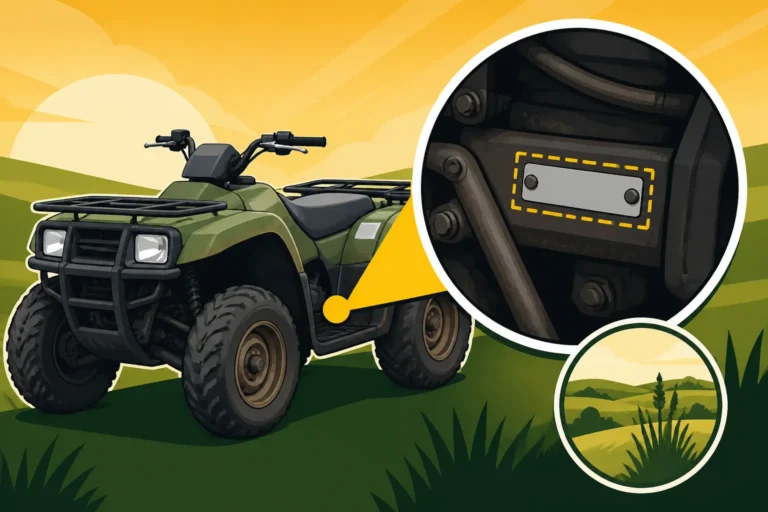
- Vehicle Identification Number (VIN): This unique 17-character alphanumeric code is the fingerprint of your ATV. Locate it on the machine (usually stamped on the frame or a permanent component) and record it accurately on your bill of sale and in your personal records. Photographing the VIN at the time of purchase is a smart move. [Checking a Serial Number Twice Before You Pay] is a step that can save you a lot of grief.
- Photographs: Take clear, well-lit photographs of your ATV from multiple angles, including any unique identifying features, modifications, or even minor damage. These photos can be invaluable if your machine is ever stolen.
- Service Records: Keep a detailed log of all maintenance, repairs, and accessory installations. These records not only help with troubleshooting but also increase the resale value of your ATV and can support its identity if needed.
- Owner's Manual: This document contains vital information specific to your machine, including recommended maintenance schedules and often a place to record the VIN.
By maintaining these diligent records, you create your own comprehensive "paper trail" for your ATV, effectively serving the purpose that a provincial registration system would in other jurisdictions.
Navigating Municipal Plates and Local Bylaws
While the province of Saskatchewan doesn't issue ATV plates, some local governments have stepped up to fill that gap. This is where things can get a little more complex, as rules can vary significantly from one town or rural municipality to another. It's crucial for riders to understand that a municipal plate is not a provincial registration and its validity is usually limited to the specific jurisdiction that issued it.
When a Local Plate Might Be Required
In certain resort villages, towns, and rural municipalities, especially those with popular recreational areas, local bylaws may require ATVs to have a municipal permit or plate to operate on designated local roads, trails, or within certain areas. This is usually done to regulate traffic, manage safety, and sometimes to generate revenue for local trail maintenance. For example, some resort communities like Candle Lake or the District of Lakeland have their own bylaws requiring ATV permits if you want to ride on specific municipal roads or trails within their boundaries. [Saskatchewan Municipal Plate Schemes] are a reality for many riders.
These local plates are typically designed for residents or frequent visitors to that specific area. They allow the municipality to have a record of who is riding within their jurisdiction and ensure some level of local compliance. If you plan to ride regularly in a specific municipality, it's always best to check their local bylaws before you unload your quad. Don't assume that because you can ride somewhere else without a plate, you can ride there too.
Costs and Coverage of Municipal Permits
The cost of municipal ATV plates or permits can vary. Some municipalities might charge a nominal annual fee, while others might have different tiers for residents versus non-residents. For example, [Candle Lake Charges $25 for an ATV Permit]. These fees are collected directly by the municipality, and the revenue often goes towards local infrastructure, signage, or supporting local trail initiatives. The renewal periods also differ, but many expire annually, often on a set date like April 30th, as is the case for [Saskatchewan Lakeland Plate Expiry in April].
It's important to understand that these municipal permits do not provide insurance coverage. They are purely a regulatory tool for local governance. Your provincial liability insurance (which you obtained through a private broker) is still absolutely required, even if you have a municipal permit. The municipal permit simply grants you permission to ride in specific local areas under their conditions; it doesn't replace your personal insurance obligations. Think of it as a local pass, not a comprehensive registration system.
Compliance and Enforcement in Local Riding Areas
When riding in an area with municipal bylaws and permit requirements, local law enforcement (such as RCMP or bylaw officers) can enforce these rules. If you're caught riding without the required municipal permit in a designated area, you could face fines. For example, [Riding Unplated on Municipal Land Costs $300] in some jurisdictions. This is why it's so important to do your homework on local regulations.
Before heading out to a new riding spot, make a quick call to the local rural municipality or resort village office. Ask about their ATV bylaws, whether permits are required, and if there are any specific roads or areas that are off-limits. They can often direct you to their website where bylaws are published. It's a small step that can save you a lot of hassle and potential fines, and it's part of being a responsible off-road enthusiast. [Planning a Village Office Visit Before You Drive] can save you a headache later.
Comparative Overview: Snowmobiles vs. ATVs in Saskatchewan
To summarize the key differences and prevent further confusion, here’s a quick overview of how Saskatchewan treats snowmobiles versus ATVs/UTVs regarding registration, fees, and insurance. This table highlights the distinct approaches taken by the provincial government and clarifies where your responsibilities lie as an owner.
| Feature | Saskatchewan Snowmobiles | Saskatchewan ATVs/UTVs |
|---|---|---|
| Provincial Registration | Mandatory with SGI | Not Required provincially |
| Provincial Plate/Decal | Yes, issued by SGI | No provincial plate or decal |
| Annual Provincial Fee | Yes, covers registration and liability insurance | No provincial fee |
| Provincial Insurance (Liability) | Bundled with registration (e.g., $200,000) | Mandatory but purchased separately from a private broker |
| Proof of Ownership | SGI registration certificate + Bill of Sale | Bill of Sale is the primary document |
| Municipal Plates/Permits | Some municipalities may require additional permits for specific local use | Some municipalities may require local permits/plates for specific local use |
| Enforcement | Provincial law (The Snowmobile Act), SGI, local bylaws | Provincial law (The All Terrain Vehicles Act), local bylaws |
This table clearly illustrates that while both types of machines are off-road vehicles, the regulatory framework governing them in Saskatchewan is quite different. The comprehensive system for snowmobiles simplifies insurance and proof of registration, while ATV owners bear more direct responsibility for securing their own insurance and meticulously documenting ownership.
Disclaimer
This article is for general informational purposes only and does not constitute professional advice. Laws, prices and regulations vary by location and change over time. Consult a qualified professional for guidance on your specific situation.