Snowmobiles Must Be Registered Even Though Quads Are Not
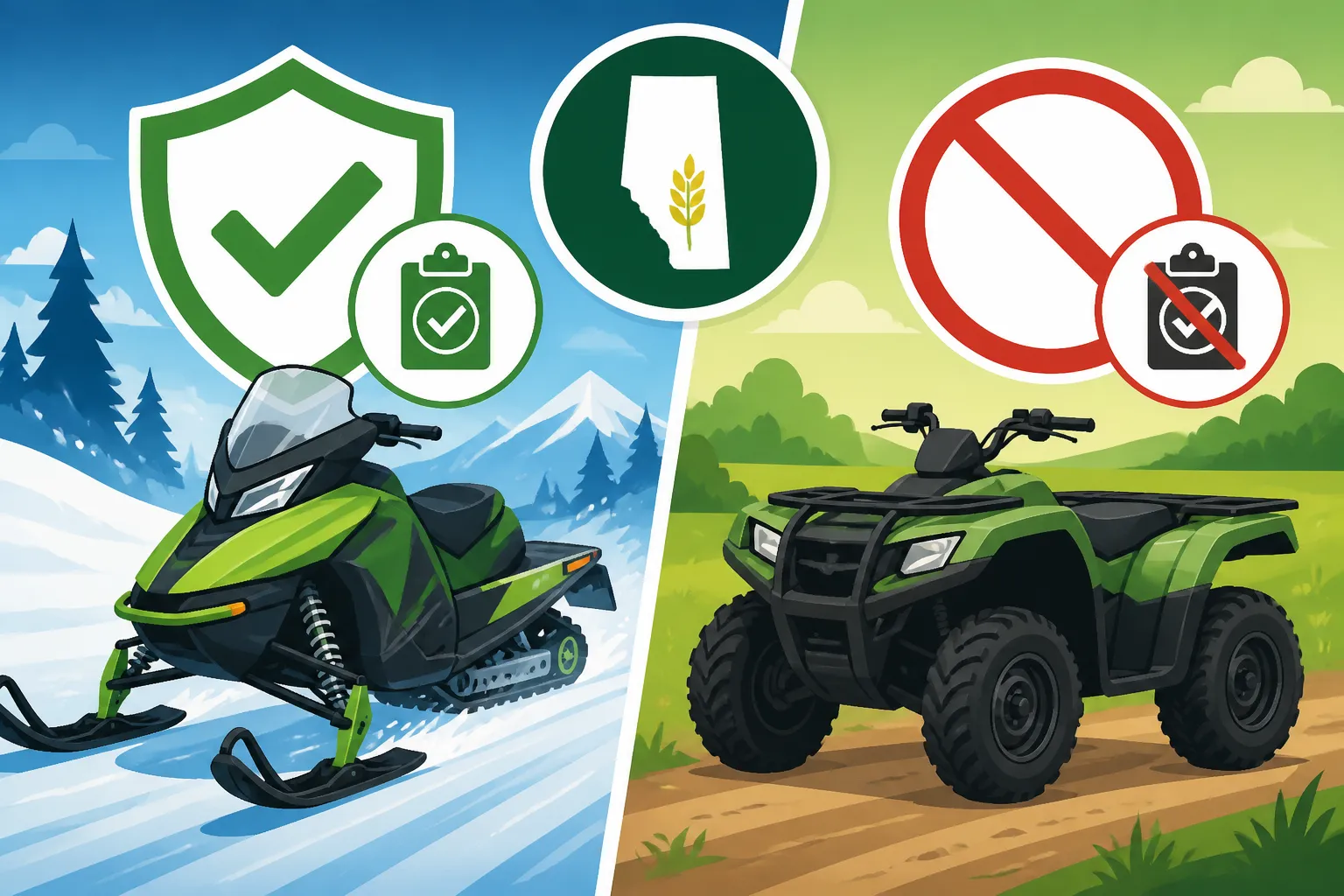
It can feel incredibly confusing when you’re trying to navigate the rules for your off-road vehicles here on the Prairies. Many folks get totally stumped when they discover that in Saskatchewan, snowmobiles absolutely must be registered, complete with fees and provincial documentation, while their ATV or UTV sits exempt from any provincial registration requirements. This guide is here to untangle that very specific knot, explaining the distinct legal frameworks that apply to snowmobiles versus quads, and what that means for you as an owner.
The Tale of Two Machines: Why Snowmobiles Get Registered, ATVs Don't
It's a question that often baffles new riders, and even seasoned veterans sometimes scratch their heads: why the discrepancy? You've got two off-road machines, both tearing across fields and trails, yet one demands provincial paperwork and the other doesn't. The answer, as is often the case with laws, comes down to how these different types of vehicles are defined and, more importantly, when their respective provincial legislation was enacted. Saskatchewan has a unique approach that sets it apart from some other provinces, leading to this very distinct treatment.
The Legislative Roots of the Divide
The simple truth is that ATVs and snowmobiles fall under entirely separate provincial acts, each with its own history and intent. The rules governing snowmobiles were put in place at a different time, reflecting different priorities and concerns from the provincial government of the day. This historical divergence means that even though both are recreational off-road vehicles, they aren't treated as equals in the eyes of the law when it comes to formal registration. It's not about one machine being inherently "more dangerous" or "more important" than the other, but rather a legislative path that simply took two different turns.
For many years, there has been discussion and even some lobbying by rider associations and rural municipalities about creating a provincial ATV registry, but for various reasons, it simply hasn't materialized. This ongoing absence of a provincial registry for ATVs is a significant point of frustration for some, particularly when it comes to tracking stolen machines or ensuring accountability.
The Missing Provincial ATV Registry
Unlike many other provinces where all-terrain vehicles (ATVs) and utility terrain vehicles (UTVs) require some form of provincial registration, Saskatchewan has notably opted out of this system. This means there is no provincial database where your quad's ownership is recorded, no provincial plate to affix, and no annual fee to pay to the province for its use. When you purchase an ATV, whether new from a dealer or used from a private seller, the transaction is primarily a private one, documented through a bill of sale. [Saskatchewan Does Not Register ATVs] is a fact that many find hard to believe, especially when they've moved from another jurisdiction.
This lack of a provincial registry doesn't mean ATVs are entirely unregulated, however. There are still strict rules regarding their operation, age restrictions for riders, helmet laws, and insurance requirements under [Saskatchewan's All Terrain Vehicles Act]. It simply means the province decided that a central registration system for these vehicles wasn't necessary or practical when the legislation was framed. This often leaves people asking, [Why Saskatchewan Never Built a Quad Registry].
Understanding Saskatchewan's All Terrain Vehicles Act
The core legislation governing ATVs in Saskatchewan is aptly named The All Terrain Vehicles Act. This Act, established to regulate the safe operation of ATVs, outlines many crucial rules that riders must follow, but it conspicuously omits any mention of a provincial registration requirement. It's a foundational piece of legislation that clarifies what an ATV is, who can ride it, and where it can be operated, but it fundamentally differs from its snowmobile counterpart by not demanding a formal registration system from the province.
What the Act Doesn't Require
Perhaps the most common misconception is that because other provinces or even snowmobiles require registration, ATVs in Saskatchewan must too. However, the Act itself makes no provision for a provincial ATV registry. You won't find sections detailing how to register your quad, what forms to fill out, or what fees are associated with provincial registration, because these things simply don't exist at that level. [Saskatchewan Has No ATV Plate or Decal] is a truth that can be hard to reconcile with experiences elsewhere.
Instead of focusing on registration, the Act prioritizes operational safety. It details requirements for helmets, age limits for operators, supervision rules for younger riders, and stipulations for where ATVs can and cannot be ridden, particularly concerning roadways and Crown land. For the owner, this means your primary responsibilities revolve around safe operation and ensuring you have adequate insurance coverage, rather than managing provincial paperwork.
Proof of Ownership Without a Registry
So, if there's no provincial registration, how do you prove you own your ATV? This is a crucial question, especially when buying or selling, or in unfortunate situations like theft. The answer lies in your paperwork: specifically, a comprehensive bill of sale. This document becomes your primary, and often sole, proof of ownership for your ATV in Saskatchewan. Without a central registry, the integrity of this private document is paramount. [Saskatchewan Proof of Ownership Without a Registry] means being diligent about your records.
When you purchase an ATV, ensure you receive a detailed bill of sale from the seller. If you're buying from a dealer, they'll provide this as part of the sales transaction. If you're buying privately, insist on a written bill of sale that includes the date of sale, the full names and addresses of both buyer and seller, the make, model, year, and crucially, the Vehicle Identification Number (VIN) or serial number of the ATV, along with the purchase price. Services like LawDepot offer templates for such documents, ensuring all necessary fields are covered. This document is essential for future sales, insurance claims, or in proving your ownership if the machine is ever questioned. [Saskatchewan Bills of Sale Do the Work] of establishing legal title.
The Snowmobile Act and Its Registration Requirements
Now, let's pivot to the other side of the coin: snowmobiles. In stark contrast to ATVs, snowmobiles in Saskatchewan are explicitly required to be registered with the Saskatchewan Government Insurance (SGI). This isn't just a suggestion; it's a legal obligation for anyone operating a snowmobile on public land, trails, or roadways where permitted. The reasoning behind this difference is often rooted in historical legislative decisions and a provincial desire for greater oversight and revenue generation related to these specific winter vehicles.
Why Snowmobiles Are Different
Snowmobiles fall under The Snowmobile Act, which is an entirely separate piece of legislation from The All Terrain Vehicles Act. This Act specifically mandates provincial registration for snowmobiles. This means that when you buy a snowmobile, whether new or used, it must be registered in your name with SGI. This registration provides a paper trail for ownership, contributes to a provincial fund for trail development and safety, and is tied directly to the mandatory insurance coverage that all registered snowmobiles must carry. [Saskatchewan Registers Snowmobiles, Not ATVs] is a distinction that creates much of the confusion.
The provincial registration for snowmobiles also comes with a visible plate that must be affixed to the machine. This allows law enforcement and trail officials to easily identify registered and insured snowmobiles. The funds collected through registration fees often go towards supporting the vast network of organized snowmobile trails across the province, maintained by volunteers and clubs. This infrastructure support is a key difference in how these two types of off-road vehicles are managed provincially.
What Snowmobile Registration Entails
Registering a snowmobile in Saskatchewan involves a few key steps. First, you'll need to visit an SGI issuer with proof of ownership, such as a bill of sale. You'll provide your personal information, and the snowmobile's details, including its VIN. There will be an annual registration fee, which, importantly, includes mandatory liability insurance coverage. This bundled insurance is a significant benefit of the snowmobile registration system, offering a baseline of protection for all registered machines. [Saskatchewan Snowmobile Fees and Insurance] covers these costs.
Once registered, you'll receive a registration certificate and a license plate that must be prominently displayed on your snowmobile. This registration must be renewed annually. If you sell your snowmobile, you are responsible for removing the registration plate and notifying SGI of the sale, and the new owner must then register it in their name. This ensures a clear chain of ownership and continuous insurance coverage, a stark difference from the self-regulated ownership transfer of an ATV. [Saskatchewan Snowmobile Registration Compared] to ATVs highlights these crucial differences.
Practical Implications for Riders: What This Means for You
Understanding the registration distinctions between ATVs and snowmobiles in Saskatchewan has very real, practical implications for how you operate and manage your off-road vehicles. It affects everything from what paperwork you need to carry, to how you transfer ownership, and even how local municipalities might view your machine. Ignoring these differences can lead to frustrations, fines, or difficulties in proving ownership or making insurance claims.
Operating Your Unregistered ATV
For ATV owners, the absence of provincial registration means you don't need a provincial plate or decal to ride. However, this doesn't mean you're off the hook for rules and regulations. Far from it. The focus shifts entirely to operational compliance with The All Terrain Vehicles Act. You must still carry proof of liability insurance, which you'll typically obtain through a private insurer. This insurance is critical, as operating without it could lead to significant financial liability in the event of an accident. [Saskatchewan Insurance Requirements for Riders] are very clear.
When riding, you should always have your driver's license (if required for your age), proof of insurance, and ideally, your bill of sale or a copy of it, especially if venturing into areas where ownership might be questioned. This personal documentation, rather than a provincial vehicle registration, is what a peace officer might ask to see. Remember that age restrictions, helmet requirements, and rules for riding on or near public roads are still fully enforced, regardless of registration status.
Operating Your Registered Snowmobile
Snowmobile operation, by contrast, involves ensuring your machine is always properly registered and plated. When you hit the trails or open country, your snowmobile must display its current provincial plate, and you must carry your registration certificate and proof of insurance (which, as mentioned, is usually bundled with registration). Failure to do so can result in fines. This system ensures that all snowmobiles on public land are identifiable and covered by at least basic liability insurance.
The registration fees for snowmobiles also play a role in maintaining the provincial trail system. Many organized trails require that your snowmobile be currently registered. Without it, you might be denied access to groomed trails or face penalties if caught riding where a permit or registration is required. This interconnected system means that snowmobile owners have a clearer, provincially managed framework for their vehicle's legality and trail access.
Navigating Ownership Without Provincial Registration for ATVs
The lack of a provincial ATV registry can feel like a double-edged sword. On one hand, it simplifies the initial purchase and avoids annual fees. On the other, it places a greater burden on individual owners to maintain clear records and understand how to manage ownership transfers and other scenarios that a central registry would typically handle. This often leads to questions about how to properly buy, sell, or even prove ownership of a machine.
The Bill of Sale as Your Title
As we've discussed, your bill of sale is the cornerstone of ATV ownership in Saskatchewan. It's not just a receipt; it functions as your de facto title document. When buying a used ATV, especially from a private seller, this document is absolutely critical. Ensure it's clear, legible, and contains all the necessary information, including the VIN/serial number. Without it, proving you lawfully own the ATV can become incredibly difficult. Consider using a template from a service like LawDepot to make sure you don't miss any vital details.
| Document Type | Required for ATV? | Required for Snowmobile? | Purpose |
|---|---|---|---|
| Provincial Registry | No | Yes | Official record of ownership, tied to insurance and trail funds. |
| Provincial Plate | No | Yes | Visible identification, proof of registration. |
| Bill of Sale | Yes | Yes | Primary proof of ownership (for ATV), secondary (for snowmobile reg). |
| Liability Insurance | Yes | Yes (bundled) | Financial protection in case of an accident. |
| Driver's Licence | Yes (conditional) | Yes (conditional) | Required for legal operation based on age/location. |
When selling your ATV, providing a detailed bill of sale to the buyer is not just good practice, it's essential for their future peace of mind and proof of ownership. Make sure you keep a copy for your own records. If there's ever a dispute, or if the new owner needs to make an insurance claim, that bill of sale will be the key document. [Your Bill of Sale Stands In for a Registration] and is not to be underestimated.
Managing Sales and Purchases Privately
The private sale market for ATVs in Saskatchewan relies heavily on mutual trust and good documentation. When buying, always verify the seller's identity and ensure the VIN on the machine matches the bill of sale. Be wary of deals that seem too good to be true, especially if the seller can't provide proper paperwork or seems evasive. Checking the VIN against stolen vehicle databases, while not foolproof without a provincial registry, is still a wise step to take. Many police services can assist with this check.
For sellers, being transparent and providing a clear, detailed bill of sale will not only protect you but also make your machine more appealing to potential buyers. It's a testament to legitimate ownership. Remember that while the province doesn't track these sales, the transfer of ownership is still a legal act that carries responsibilities for both parties. Having a standardized document, perhaps one created using a tool from LawDepot, can smooth this process considerably. [Selling a Quad Privately in Saskatchewan] relies on this diligence.
Local Solutions: Municipal Plates and Their Role
While the province doesn't require registration for ATVs, some forward-thinking municipalities in Saskatchewan have taken matters into their own hands. These communities, often popular recreational destinations, have implemented their own local bylaws requiring ATVs and UTVs to obtain a municipal permit or plate to operate within their jurisdiction, particularly on designated municipal roads or trails. This creates another layer of complexity for riders but also provides benefits for local infrastructure and safety.
The Rise of Municipal Plate Schemes
In areas like the District of Lakeland or the Village of Candle Lake, you'll find that if you want to ride your ATV on public roads or trails managed by the municipality, you need to purchase a local permit or plate. These aren't provincial registrations, but rather local licenses to operate within specific boundaries. [Saskatchewan Municipal Plate Schemes] are a direct response to the provincial absence of ATV registration, allowing local governments to manage traffic, fund local trail maintenance, and enhance safety within their communities.
These municipal plates usually come with an annual fee and specific rules of operation that apply only within that municipality. They might dictate speed limits, approved roads for riding, and even times of day when riding is permitted. It's crucial for riders, especially those visiting recreational areas, to check local bylaws before unloading their machines. What's legal in one rural municipality might be strictly prohibited in another.
What Municipal Plates Cover and Don't Cover
A municipal plate provides permission to ride in that specific municipality, under its specific rules. It does not act as a provincial registration, nor does it grant you permission to ride across all of Saskatchewan. If you're planning a trip that takes you through multiple municipalities, you might find yourself needing to purchase permits from several different local authorities, or adjusting your route to avoid areas that require them. [Saskatchewan Rural Municipality Rules] can vary widely.
These plates also typically don't include insurance. You are still responsible for carrying your own private liability insurance for your ATV, even if you have a municipal plate. The fee for the municipal plate usually goes towards local trail maintenance, signage, and administrative costs. While it adds another step for the rider, these schemes can be beneficial in creating safer, more organized riding opportunities in areas that see high volumes of ATV traffic. For many, the cost is a small price to pay for legal access to well-maintained local trails. [Saskatchewan Registration Questions Riders Ask] often revolve around these local differences.
Disclaimer
This article is for general informational purposes only and does not constitute professional advice. Laws, prices and regulations vary by location and change over time. Consult a qualified professional for guidance on your specific situation.