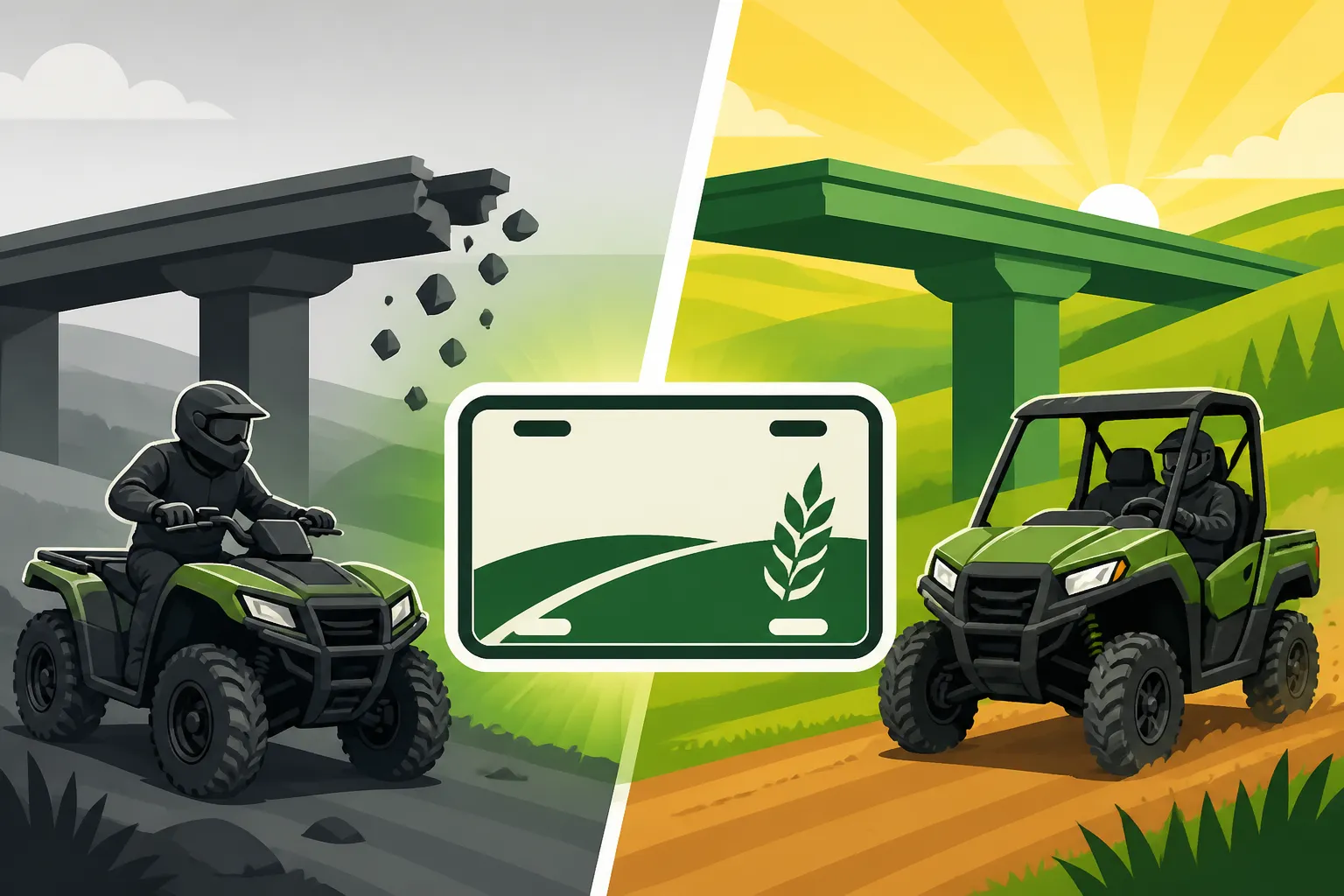
Municipal Plates Fill the Gap the Province Left
It can be incredibly confusing when you're trying to do the right thing as an ATV or UTV owner in Saskatchewan, only to find that the "rules" you expect simply don't exist at the provincial level. You want to register your machine, get a plate, and ride legally, but the province doesn't offer a universal system like it does for cars or even snowmobiles. This guide is here to untangle that frustration and explain how many local communities have stepped up with their own municipal plate schemes to fill that gaping hole, giving you a path to recognized local riding and helping you understand what these local solutions mean for you.
The Provincial Absence and Local Solutions
One of the biggest head-scratchers for new ATV owners, and even some long-time riders, in Saskatchewan is the complete lack of a provincial registration system for these machines. You'd think that with so many quads and side-by-sides crisscrossing our prairies and bush country, there would be a centralized way to track them, but that's simply not the reality. This can lead to a lot of confusion, especially if you're used to other provinces or even just registering your car at SGI.
Why Saskatchewan Doesn't Register ATVs Provincially
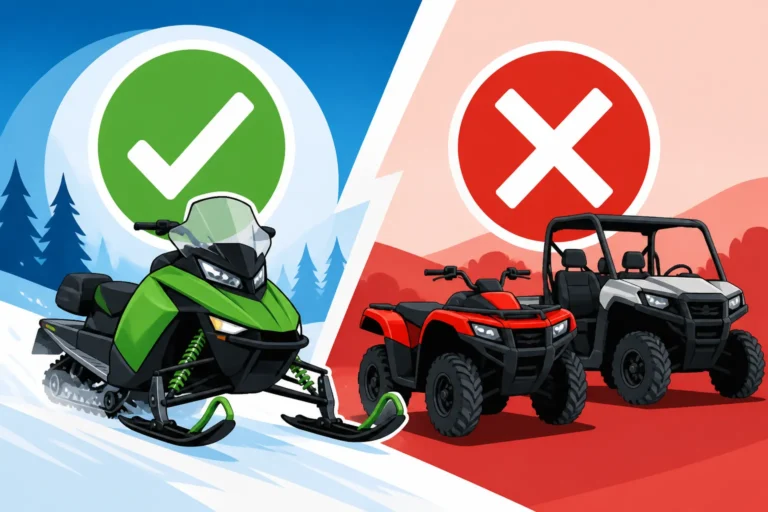
The core issue here stems from the very legislation governing ATVs in Saskatchewan: the All Terrain Vehicles Act, which came into effect way back in 1988. This Act primarily focuses on the rules of operation, rider age limits, helmet requirements, and insurance, but it notably doesn't include any provisions for provincial registration or titling of ATVs. It's a significant difference compared to how snowmobiles are handled, where [Saskatchewan Registers Snowmobiles, Not ATVs] and a distinct registration process and fee exist. For ATVs, the province opted for a different approach, leaving a void that many riders find bewildering.
So, when you go searching for a provincial ATV plate or decal, you'll come up empty-handed. There isn't one. This means there's no central database tracking ownership for law enforcement, no provincial fee to contribute to a province-wide trail system, and no official "title" document that gets transferred when you buy or sell a machine. This system, or lack thereof, means that things like proving ownership often fall back on documents like a [Saskatchewan Bills of Sale Do the Work] or other purchase records, which isn't always as straightforward as a vehicle title. It can be a real pain if you're trying to figure out what paperwork you need, and many people scratch their heads wondering why [Why Saskatchewan Never Built a Quad Registry].
The Rise of Municipal Plate Schemes
Given the provincial vacuum, many local governments across Saskatchewan decided they couldn't just sit back and do nothing. Communities, especially resort villages and rural municipalities with significant ATV traffic, saw a clear need for some form of local identification and a way to manage off-road vehicle use within their boundaries. This need wasn't just about knowing who was riding where; it was also about generating revenue to maintain local trails, improve safety, and respond to resident concerns.
These municipal plate schemes are essentially local permitting systems. They allow municipalities to implement their own bylaws regulating ATV use on local roads, ditches, and trails, and the plates serve as visual proof that a rider has complied with these local rules and paid the associated fees. It's a pragmatic solution that directly addresses specific community needs, from funding local trail development to ensuring greater accountability. While it’s not a uniform, province-wide solution, these local initiatives have become vital for many riding communities. [Municipal Plates Fill the Gap the Province Left] by giving local authorities a tool they desperately needed to manage the growing popularity of ATVs and UTVs in their areas.
How Municipal Plate Schemes Work
Understanding municipal plate schemes can feel like navigating a patchwork quilt of rules, as each participating community sets its own terms. However, they generally operate on a similar principle: local authorization for local riding, often with specific benefits and limitations.
Who Offers Municipal Plates?
You'll typically find municipal plate schemes in areas that experience a high volume of recreational ATV and UTV use, often in picturesque areas that draw visitors. Resort villages, like Candle Lake and the District of Lakeland, are prime examples. These communities understand that off-road vehicles are a big part of the local lifestyle and tourism, but they also recognize the importance of managing their impact. Rural municipalities (RMs) might also implement these schemes, especially if they have a lot of bush riding, agricultural activity, or a network of grid roads popular with riders.
Each municipality that offers a plate or permit will have its own specific bylaws. For instance, [Candle Lake Charges $25 for an ATV Permit] and has clear guidelines on how to obtain one. The District of Lakeland also runs a similar program. These are usually designed to integrate with the provincial rules for ATVs, ensuring that while you're following local mandates, you're also adhering to the broader provincial safety and operation guidelines. It’s always best to check with the specific municipality you plan to ride in, as the rules and availability of plates can vary greatly from one community to the next.
What a Municipal Plate Provides and Doesn't
A municipal plate is a powerful tool for local recognition and community contribution, but it's crucial to understand its scope. On the "provides" side, it gives you official permission to operate your ATV or UTV within the boundaries of that specific municipality, often on designated roads, ditches, or trails, according to their local bylaws. This is incredibly valuable because it means you're contributing directly to the upkeep of local infrastructure and trails, and you're recognized as a compliant rider by local enforcement. It signifies that you're supporting the community's efforts to manage ATV use responsibly. Often, the revenue generated from these plates goes directly into local services or [Why Plate Revenue Funds Local Trails].
However, on the "doesn't provide" side, a municipal plate is not a provincial registration. It does not grant you province-wide legal access to all roads or public lands, nor does it override other provincial regulations. For example, carrying a municipal plate from Candle Lake doesn't automatically mean you can ride on public roads in a different RM that doesn't have its own ATV bylaw or plate scheme. It's tied specifically to the issuing municipality. Furthermore, a municipal plate doesn't replace the need for adequate [Saskatchewan Minimum Insurance Requirement] or adherence to provincial safety rules like helmet use and age restrictions. It's an additional layer of compliance that applies locally, not a substitute for province-wide responsibilities. [Why a Municipal Plate Cannot Be Transferred] with the machine to a new owner or to another municipality, underscoring its localized nature.
Getting and Using a Municipal Plate
If you plan to do a fair bit of riding in a municipality that offers its own plate or permit, getting one is usually a straightforward process. It involves a bit of paperwork and a visit to the local office, but it's well worth the effort to ensure you're riding legally and responsibly.
The Application Process
The first step is always to contact the specific rural municipality, village, or resort village where you intend to ride. They will provide you with their local ATV bylaw and application forms. Generally, you'll need to demonstrate proof of ownership for your ATV or UTV. This often means presenting a bill of sale or other purchase documentation. If you're buying a used machine privately, it's a really good idea to have a clear, well-documented bill of sale. Services like LawDepot can help you generate a professional and legally sound [Saskatchewan Bills of Sale for a Quad] to ensure all the necessary details, like the VIN and buyer/seller information, are properly recorded. This document will be crucial for proving to the municipal office that you are indeed the rightful owner of the machine you wish to register locally.
Once you have your proof of ownership, you'll fill out their application form. This will typically ask for your personal information, details about your ATV (make, model, VIN), and confirmation that you have the required liability insurance. You'll then pay the prescribed fee, which can vary by municipality. For example, while [Candle Lake Charges $25 for an ATV Permit], other communities might have different rates. Most municipalities will then issue you a physical plate or sticker that you'll need to affix to your machine as directed by their bylaws. Renewals are usually annual, often with a specific expiry date like April 30th for many schemes. Always ask about the renewal process and associated costs when you first apply. Planning a [Planning a Village Office Visit Before You Drive] can save you a lot of hassle.
Rules and Restrictions with Municipal Plates
Having a municipal plate means you've bought into the local system, and with that comes specific rules you must follow. The most important restriction is geographical: your municipal plate is generally only valid within the boundaries of the municipality that issued it. Don't assume that because you have a plate from Resort Village A, you can ride on roads or trails in Rural Municipality B, unless RM B has specific reciprocal agreements or its own enabling bylaws that allow it. Always consult the specific municipal bylaws for the area you plan to ride in. These bylaws will detail where you can ride (e.g., specific roads, ditches, designated trails), when you can ride (e.g., hours of operation), and any speed limits that apply to ATVs within their jurisdiction, such as [Saskatchewan Municipal Speed Limits for Quads].
For example, many municipalities will have specific prohibitions on riding on certain streets, in parks, or near lakeshores, like the [Saskatchewan Lakeland Lakeshore Setbacks]. It's your responsibility as the rider to understand and adhere to these local rules. Beyond local bylaws, remember that all provincial rules of operation still apply. This includes wearing an approved helmet, having appropriate eye protection, carrying sufficient liability insurance (the provincial minimum is usually $200,000, though many riders opt for more coverage), and adhering to age restrictions. A municipal plate is a local permit, not a free pass to ignore provincial law. [Saskatchewan Equipment Checks by Officers] can happen anywhere, and having your papers in order, both provincial and municipal, is key.
Common Questions and Misconceptions
The existence of municipal plates, rather than a single provincial system, naturally leads to a lot of questions. Riders often wonder how these local rules affect them, especially if they're just passing through or coming from out of province.
Visitors and Out-of-Province Riders
This is a really common point of confusion. If you're visiting a Saskatchewan municipality that has its own plate scheme, do you need to get one? The answer depends entirely on the specific bylaws of that municipality and how long you plan to stay or how often you plan to ride there. Some communities might have a temporary permit option, while others might expect all riders using their regulated areas to acquire a plate, regardless of residency. It's always best practice to contact the municipal office ahead of your visit. For instance, if you're coming from Alberta or Manitoba, where provincial registration for ATVs might be common, you need to understand that [Saskatchewan Registration Compared to Alberta] is very different. Your home province's registration will not be recognized as a substitute for a municipal plate in Saskatchewan where one is required locally.
For general riding in Saskatchewan, where no municipal plate scheme exists, you, as an out-of-province rider, just need to comply with the provincial All Terrain Vehicles Act. This means you must have your driver's license, proof of insurance, and ensure your machine meets all equipment requirements (like spark arrestors if riding on Crown land). [Saskatchewan Visitors and Insurance] is particularly important – you must have the minimum liability coverage. However, if you're planning to ride in a resort village like Candle Lake, even as a visitor, you would likely need to acquire their specific permit if you intend to use the areas covered by their bylaws.
The Future of ATV Registration in Saskatchewan
The question of whether Saskatchewan will ever adopt a province-wide ATV registration system is one that comes up frequently in rider circles and municipal discussions. There's a strong desire from many ATV user groups, like the Saskatchewan All-Terrain Vehicle Association (SATVA), and even some municipalities, for a unified system. A provincial registry could, in theory, help with tracking stolen machines ([Saskatchewan Theft Recovery Without a Registry] is a real challenge), fund province-wide trail development, and simplify compliance for riders. [Why SARM Wants the Province to Issue Plates] is a testament to this need.
However, as of now, there are no immediate plans for the province to implement such a system. The current legislative framework does not support it, and creating one would require significant political will and legislative changes. So, for the foreseeable future, municipal plate schemes remain the most organized and localized approach to managing ATV use in specific communities. This means riders need to continue navigating the various local bylaws and permit systems, alongside the provincial Act. It underscores the importance of staying informed and understanding the rules wherever you plan to ride, whether it's on [Saskatchewan Riding Farm Ground] or a designated municipal trail.
Here’s a quick overview to clarify the differences:
| Feature | Provincial "Registration" for ATVs in Saskatchewan | Municipal Plate/Permit |
|---|---|---|
| Official Body | None | Local Municipality (e.g., Resort Village, RM) |
| Purpose | N/A (Rules of Operation only) | Local control, revenue for local services/trails, identification |
| Proof of Ownership | Bill of sale / Purchase records | Bill of sale / Purchase records (required for application) |
| Visibility | None | Physical plate or sticker affixed to machine |
| Scope of Validity | Province-wide (for operational rules) | Only within the issuing municipal boundaries |
| Cost | None | Varies by municipality (e.g., $25-$50 annually) |
| Legal Status | Not required for operation | Required for operation in designated municipal areas |
| Contribution | N/A | Directly supports local community services/trails |
| Stolen Machine Tracking | Very difficult without registry | No direct provincial tracking; local records may help |
The bottom line is that while Saskatchewan does not have a provincial ATV registration, these local municipal plate schemes are a real, practical solution for many communities. They provide a framework for organized and responsible riding, and as a rider, engaging with them allows you to be a part of the solution for local trail access and management. Just remember to always do your homework before you head out, checking both provincial regulations and any specific municipal bylaws for your chosen riding area.
Disclaimer
This article is for general informational purposes only and does not constitute professional advice. Laws, prices and regulations vary by location and change over time. Consult a qualified professional for guidance on your specific situation.