Checking a Serial Number Twice Before You Pay
There’s nothing quite like the thrill of finding that perfect used ATV or UTV in Saskatchewan – the machine that’s going to open up endless possibilities for ditch riding, bush adventures, or farm work. But that excitement can quickly turn into a massive headache, or even a legal nightmare, if you don't do your homework. One of the absolute most critical steps before handing over your hard-earned cash is to meticulously check the machine's serial number, commonly known as the Vehicle Identification Number (VIN). This guide will walk you through exactly why and how to check that number twice, or even three times, to protect yourself from buying a stolen or problematic machine.
Why a Serial Number Check is Absolutely Crucial in Saskatchewan
In many other places, buying a used vehicle involves transferring a registration or title, which provides a clear paper trail. Here in Saskatchewan, things are a little different for ATVs and UTVs, and understanding these nuances is key to protecting your investment and staying on the right side of the law.
The Problem of No Provincial Registration
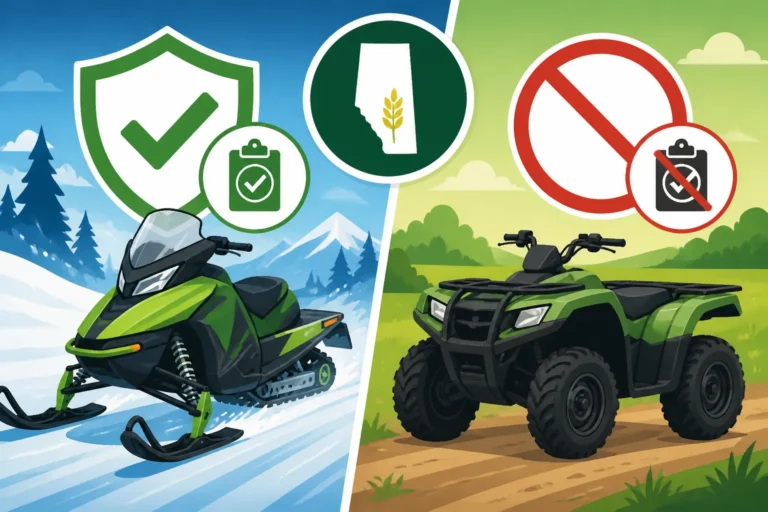
This is perhaps the biggest factor that makes a thorough serial number check paramount for Saskatchewan riders. Unlike snowmobiles, which do have a provincial registry, [Saskatchewan Does Not Register ATVs]. This means there's no central government database keeping track of who owns which ATV or UTV across the province. You won't find a provincial plate or decal either. [Saskatchewan Has No ATV Plate or Decal]. This lack of official provincial registration might seem convenient on the surface, but it places a greater burden on buyers and sellers to establish a clear chain of ownership and verify a machine's legitimate history.
Because there's no registration, the serial number, along with a robust bill of sale, becomes your primary proof of ownership. If you ever have to prove the machine is yours, whether for an insurance claim or a dispute, that VIN is going to be central to your argument. Without it, or if it's questionable, you could find yourself in a very difficult position. This is why digging into the VIN's history is so much more critical here than it might be for a registered vehicle in another province. You are essentially building your own mini-registry of ownership through your due diligence.
Protecting Yourself from Stolen Machines
No one wants to be the unwitting buyer of a stolen ATV. Imagine the scenario: you buy a machine, you’re out enjoying the trails, and then a peace officer pulls you over, runs the VIN, and discovers it was reported stolen months ago from a farm three provinces over. Not only do you lose the machine, but you’re also out the money you paid for it, and you could even face legal questioning, despite your innocence. It's a truly heartbreaking situation that diligent VIN checking can help you avoid. [Saskatchewan Stolen Machine Reports] are unfortunately a reality, and without a central provincial registry for ATVs, verifying a machine's status relies almost entirely on that stamped serial number.
A comprehensive serial number check is your best defence against this. The VIN is essentially the machine's unique fingerprint. It's how law enforcement identifies vehicles and how insurance companies track them. If a machine has been stolen, its VIN will likely be flagged in national police databases. By taking the time to verify this information before the sale, you safeguard yourself against financial loss and the legal headaches that come with possessing stolen property. Remember, ignorance is not a defence in the eyes of the law; if you're caught with a stolen machine, even if you bought it in good faith, you'll still lose it.
Verifying the Machine's Identity and History
Beyond simply checking for stolen status, the serial number helps you confirm that the machine you're looking at is indeed what the seller claims it is. Every VIN encodes specific information about the vehicle, including the manufacturer, brand, model, and year of manufacture. You can use online VIN decoders (often found on manufacturer websites or dedicated VIN check sites) to pull up this information. If the VIN decoder tells you the machine is a 2018 Yamaha Grizzly, but the seller insists it's a 2020 model, you've got a discrepancy that needs immediate clarification.
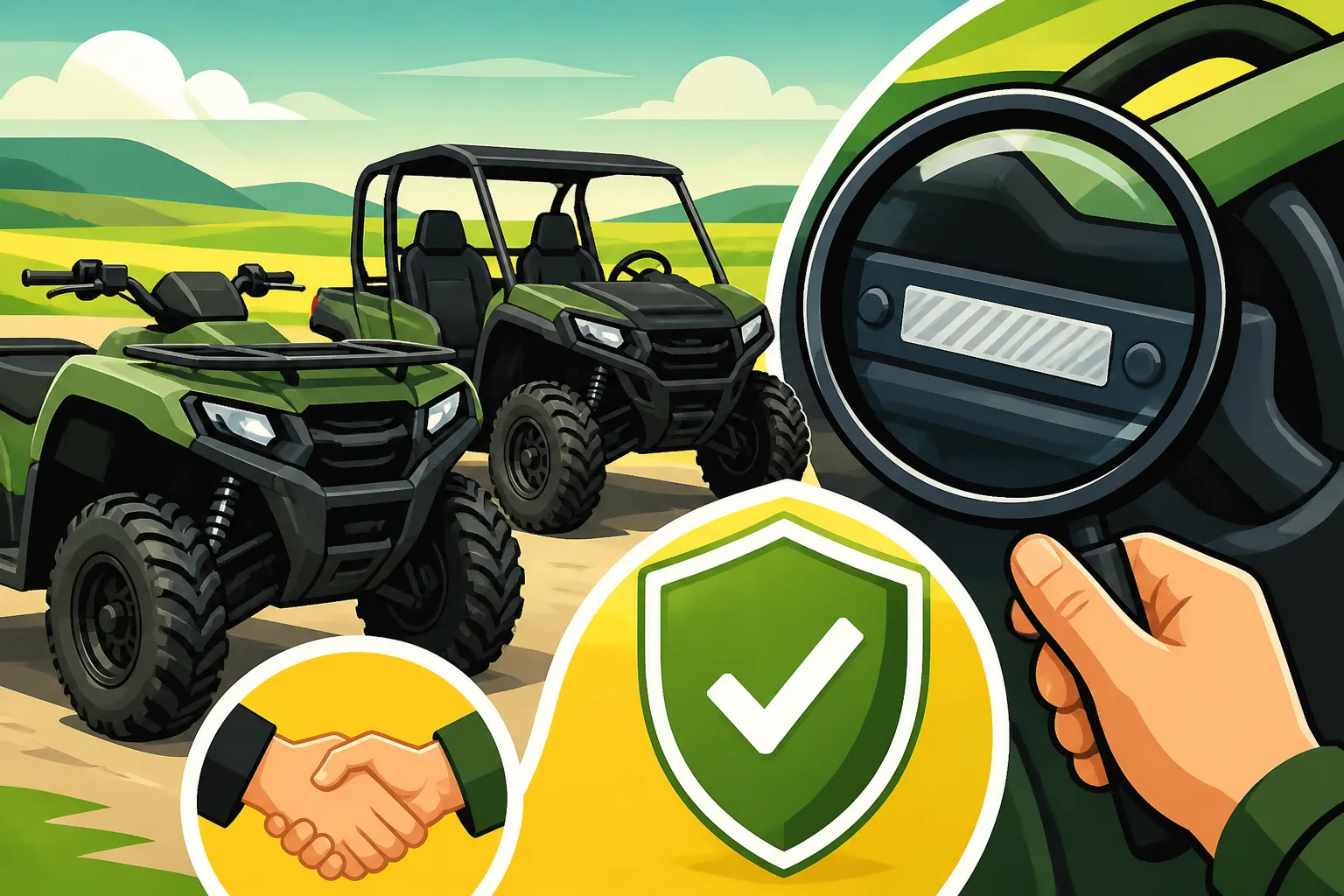
This verification process can also reveal if any components have been swapped or if the machine has been significantly altered from its original factory specifications in a way that might not be immediately obvious. While some modifications are common and perfectly legitimate, major discrepancies between the VIN data and the actual machine should prompt further questions. It could indicate a "franken-quad" built from multiple machines, or more nefariously, an attempt to disguise a stolen unit. Taking a [Photographing the VIN at a Saskatchewan Sale] can be a great way to ensure you have an accurate record for decoding later.
Where to Find the Serial Number (VIN) on an ATV or UTV
Knowing where to look for the VIN is the first step in conducting your due diligence. It’s not always in the most obvious spot, and sometimes it can be obscured by dirt, damage, or even deliberate tampering.
Common Locations on the Frame
The most important place to find the VIN is typically stamped directly onto the frame of the ATV or UTV. This number is usually a permanent fixture, unlike stickers that can be removed. Common locations include:
- Front Left Frame Rail: Many manufacturers stamp the VIN on the frame rail just behind the left front wheel, often visible by turning the handlebars to the right. This is a very common spot, so it should be one of the first places you check.
- Under the Seat: Sometimes the VIN is located on a cross-member or frame section directly under the seat. You might need to remove the seat to find it.
- Steering Column/Headstock: On some machines, especially older models, the VIN might be stamped near the steering stem, where the handlebars attach to the frame.
- Rear Frame Section: Less common, but sometimes it can be found on a frame rail towards the rear of the machine, near the footpeg or suspension mounts.
When you find it, ensure it's clearly legible and appears original. Look for any signs of grinding, welding, or re-stamping, which are massive red flags. The numbers should be uniform in size and spacing, indicating a factory stamp. If it looks rough, uneven, or partially obscured, proceed with extreme caution or walk away.
Checking Engine and Other Component Numbers
While the frame VIN is the primary identifier, many ATVs and UTVs also have engine serial numbers. These are typically located on the engine casing itself. While an engine number isn't usually used for stolen vehicle checks in the same way the frame VIN is, it can provide additional verification. If the engine serial number doesn't match the frame VIN (meaning the engine isn't original to the frame), it's not necessarily a deal-breaker. Engines get replaced for many legitimate reasons, like mechanical failure or an upgrade.
However, if the seller claims the machine is completely original, but the engine number clearly indicates a different year or model than the frame VIN, it's a point to question. This discrepancy could simply mean an engine swap occurred, but it’s still information you should be aware of and factor into your assessment of the machine's history and value. The key is transparency; a good seller should be upfront about any major component changes.
What to Do If You Can't Find It or It Looks Altered
This is a critical moment in your buying process. If you cannot locate a serial number on the frame, or if the number you find looks like it has been tampered with (e.g., ground down, re-stamped, or crudely altered), you should seriously reconsider the purchase. A missing or altered VIN is a huge red flag that often indicates a stolen machine or one with a dubious past.
It’s simply not worth the risk. Without a clear and unaltered VIN, you have virtually no way to properly verify the machine's history, check for stolen status, or prove legitimate ownership. Even if the seller offers a compelling story, the legal and financial risks are immense. In such a situation, it is almost always best to walk away from the deal. There are plenty of other ATVs and UTVs for sale in Saskatchewan with clear, untampered serial numbers. Don't let the excitement of a potential deal blind you to obvious problems.
How to Run a Thorough Serial Number Check
Once you've located the VIN and confirmed it looks legitimate on the machine, the next crucial step is to actually use that number to do some digging. This is where your investigative skills come into play.
Checking with Police Services
Since Saskatchewan doesn't have a provincial ATV registration database, your primary point of contact for checking if an ATV or UTV is reported stolen is law enforcement. You can contact your local RCMP detachment or municipal police service with the VIN. They can check national police databases, which flag vehicles reported stolen anywhere in Canada. [Searching for a Stolen Quad Without a Registry] means relying on these broader databases.
Important considerations when contacting police:
- Have the full VIN ready: Provide the complete, accurate serial number.
- Be clear about your intent: Explain that you are considering purchasing a used ATV/UTV and want to ensure it is not stolen.
- Cooperation from the seller: It’s always best if the seller is present or at least aware that you are conducting this check. A legitimate seller will have no issue with you verifying the machine's history. If they balk, that’s another red flag.
- Don't attempt to check a VIN that isn't physically in front of you: Police typically require you to be physically present with the machine or to verify the VIN yourself to conduct a search. They won't usually run a VIN over the phone without some form of verification or a legitimate reason. This is to prevent misuse of their system.
This step is absolutely non-negotiable. It's a quick phone call that could save you thousands of dollars and endless headaches.
Utilizing Third-Party Reporting Services
While there might not be a specific Saskatchewan ATV registry, there are often national third-party services that aggregate stolen vehicle data or provide vehicle history reports. These services often pull information from insurance claims, police reports, and other sources. While they may not be as comprehensive for ATVs as they are for on-road vehicles (due to the lack of registration), they can still be a valuable tool.
Some services might offer broader recreational vehicle checks. While it's important to understand their limitations, especially for unregistered vehicles, they can sometimes uncover past insurance claims, accident history, or other red flags. Always research the specific service to understand what data sources they use and how relevant their reports are for off-road vehicles in Canada. Think of these as an additional layer of diligence, not a replacement for a direct police check.
Cross-Referencing with Seller Documentation
Never, ever take a seller’s word as the final truth. Always compare the VIN stamped on the machine itself with any documentation the seller provides. This includes:
- Bill of Sale: If the seller has a previous bill of sale, ensure the VIN on that document matches the machine's VIN exactly. [Saskatchewan Bills of Sale Do the Work] to establish ownership, and the VIN is the cornerstone of that documentation.
- Insurance Papers: If the machine was previously insured, the VIN should be listed on the insurance policy or proof of insurance. Again, verify this against the machine's physical VIN.
- Owner’s Manual: Sometimes the VIN is printed inside the owner's manual or on a sticker within it. While this isn't as reliable as direct stamping, it can offer another point of comparison.
Any discrepancies between the physical VIN on the machine and the VIN on the paperwork are a cause for concern. It could be an innocent typo, but it could also indicate a more serious issue. Always clarify these inconsistencies with the seller. If they can't provide a satisfactory explanation, or if the documents appear altered, it's time to be wary. [Writing a Bill of Sale by Hand at a Farm Gate] is common in Saskatchewan, so ensure the VIN is crystal clear and legible on the document. Using a reliable template, perhaps even one from a service like LawDepot, can help ensure all critical details are included and verified.
Essential Paperwork to Secure During a Sale in Saskatchewan
Since Saskatchewan doesn't have a provincial registry for ATVs and UTVs, the paperwork you receive at the point of sale becomes your sole proof of ownership. This makes a clear, comprehensive bill of sale absolutely critical.
The Importance of a Detailed Bill of Sale
A well-crafted bill of sale is your most vital document when buying or selling an ATV or UTV in Saskatchewan. It officially transfers ownership from the seller to you and provides a record for future reference, insurance purposes, or any disputes that may arise. It needs to be more than just a scribbled note on a napkin. [What Your Bill of Sale Needs to Cover] includes several key pieces of information:
- Full Names and Addresses: Of both the buyer and the seller.
- Date of Sale: Crucial for establishing when ownership transferred.
- Detailed Machine Description: Make, model, year, colour, and most importantly, the complete and accurate Vehicle Identification Number (VIN).
- Purchase Price: Clearly state the amount paid.
- "As-Is" Clause: Most private sales are "as-is, where-is," meaning you accept the machine in its current condition with no warranties. Ensure this is explicitly stated to avoid future disputes.
- Signatures: Both the buyer and seller must sign and date the document. Having a witness also sign can add another layer of verification.
Using a standardized bill of sale template is highly recommended to ensure no crucial information is missed. Services like LawDepot offer professional templates that guide you through all the necessary fields, making the process much smoother and more secure. Don't hesitate to insist on a proper, detailed bill of sale; a legitimate seller will understand its importance.
Proof of Previous Ownership
While a bill of sale transfers ownership, having a chain of previous ownership documents further solidifies your claim and helps establish the machine's legitimate history. Always ask the seller for their original bill of sale when they purchased the ATV or UTV. If they bought it new from a dealer, they should have a purchase agreement. If they bought it used, they should have a bill of sale from the previous owner. [Saskatchewan Proof of Ownership Without a Registry] relies heavily on this paper trail.
If the seller can provide a document showing their acquisition of the machine, and that document includes the VIN, it adds another layer of confidence. You can compare the VIN on their previous paperwork to the VIN on the machine, and to the VIN on the bill of sale you're creating. If the seller can't produce any prior ownership documents, it's not an automatic deal-breaker, but it certainly raises a question mark and should prompt you to be even more diligent with your VIN checks and other verifications. It means the paper trail effectively begins with you, and that carries a slightly higher risk.
Dealing with No Paperwork Scenarios
It's a common scenario in rural Saskatchewan: someone selling an older quad they've had for years, used exclusively on the farm, and they just don't have any paperwork beyond perhaps an old receipt or nothing at all. [Saskatchewan Machines With No Paperwork] happen, and you need to understand the implications. While a lack of paperwork isn't always indicative of a stolen machine, it dramatically increases your risk. Without a bill of sale or prior ownership documents, proving you legitimately own the machine can become incredibly difficult if a dispute arises.
If you decide to proceed with a purchase where there's no paperwork, insist on creating a comprehensive bill of sale that includes all the details mentioned above. Get as much information as possible from the seller, including how they acquired the machine, and if possible, try to corroborate their story. Consider offering a lower price to reflect the increased risk and the potential hassle of trying to sell it yourself later without a clear paper trail. In these cases, your diligent VIN check with law enforcement becomes even more crucial, as it might be your only way to verify against a stolen status. Always be aware that without proper documentation, you are taking on a significant amount of risk.
Common Red Flags When Buying a Used ATV or UTV
Beyond the serial number itself, there are several other warning signs that should make you pause and reconsider a purchase. Learning to spot these red flags can save you a world of trouble.
Suspicious Pricing or Urgency
If a deal seems "too good to be true," it often is. An ATV or UTV priced significantly below market value should immediately raise your suspicion. While everyone loves a bargain, an unbelievably low price can sometimes indicate that the seller is trying to offload a stolen machine quickly, or one with serious hidden mechanical issues. Be especially wary if the seller pushes for an immediate cash sale, wants to meet you in an unusual location, or applies undue pressure to close the deal without giving you time to do your due diligence.
Legitimate sellers are usually willing to allow potential buyers time to inspect the machine, ask questions, and conduct necessary checks. If a seller insists on rushing the process, or becomes agitated when you ask reasonable questions about the machine's history or paperwork, take it as a major warning sign. Your patience and willingness to walk away from a "bargain" can protect you from a much larger loss down the road.
Seller Reluctance to Provide VIN or Meet Publicly
A reputable seller should have no problem providing the VIN of their machine to serious buyers upfront. They understand that a buyer needs to verify the machine's legitimacy. If a seller is hesitant, evasive, or outright refuses to provide the VIN before you even arrange to view the machine, consider it a significant red flag. This reluctance prevents you from running preliminary stolen checks, which is a critical safety measure.
Furthermore, be cautious if the seller insists on meeting in a secluded location, or seems unwilling to allow you to inspect the machine at their residence or business. While some people prefer to meet in neutral locations, extreme secrecy can be a warning. Always try to arrange to view the machine at the seller's home or a public, well-lit place during daylight hours. Bringing a trusted friend or family member along is also a wise safety precaution.
Mismatched Information and Lack of Knowledge
Pay close attention to what the seller tells you about the machine versus what you observe. If the seller describes the ATV as a 2015 model, but your VIN check reveals it's a 2012, that's a red flag. Similarly, if the seller seems to lack basic knowledge about the machine (e.g., its maintenance history, engine size, common quirks, or when it was last serviced), it could indicate they're not the true owner, or they're hiding something.
Ask open-ended questions about the machine’s history, how long they’ve owned it, where they’ve ridden it, and what kind of maintenance it has had. Listen carefully to their answers and see if they align with the machine's condition and your own research. A seller who provides inconsistent information or is vague about important details might be trying to conceal problems or a questionable past.
Absence of Essential Safety Features or Modifications
While many riders modify their ATVs and UTVs, some modifications can be suspicious. Be wary of machines where obvious safety features have been removed or tampered with, or where modifications seem designed to obscure the machine's true identity. For example, if parts of the frame where the VIN is typically stamped appear to have been crudely repainted or patched, it could be an attempt to cover up an altered VIN.
Also, consider modifications that indicate extreme neglect or abuse. While minor wear and tear are expected on a used off-road machine, a quad that appears heavily modified in a way that compromises its structural integrity or safety should make you think twice. Always prioritize safety and ensure the machine looks like it has been reasonably cared for.
Here’s a quick summary of red flags:
| Red Flag | What It Might Indicate |
|---|---|
| Price is "too good to be true" | Stolen machine, severe hidden damage, or scam |
| Seller pushes for quick cash sale | Desire to offload quickly before questions are asked |
| Seller unwilling to provide VIN upfront | Hiding stolen status or dubious history |
| Seller insists on meeting in remote location | Trying to avoid being traced, or for personal safety reasons |
| VIN appears altered (ground, re-stamped) | Likely a stolen machine, or one with a highly suspicious past |
| Discrepancies between stated info and VIN | Misrepresentation, potential fraud, or engine/frame swap |
| Seller lacks knowledge about the machine | Not the true owner, or trying to hide history |
| No paperwork (bill of sale, past insurance) | Difficult to prove ownership, higher risk of stolen machine |
| Obvious safety features removed/tampered with | Neglect, unsafe operation, or attempt to disguise identity |
| Pressure to complete sale immediately | Trying to avoid thorough inspection or verification |
Remember, your best defence is a healthy dose of skepticism and a commitment to thorough due diligence. Don't let excitement override your common sense.
Purchasing a used ATV or UTV in Saskatchewan can be an incredibly rewarding experience, opening up access to the beautiful prairies and bush country. However, because we don't have a provincial registration system for these machines, the onus is truly on you, the buyer, to perform meticulous checks. Taking the time to properly locate, verify, and cross-reference the serial number, along with securing robust paperwork like a bill of sale, is the absolute best way to protect yourself from accidentally buying a stolen machine or one with a problematic history. Be patient, be thorough, and if something feels off, trust your gut and walk away. Your peace of mind and your financial security are worth the extra effort.
Disclaimer
This article is for general informational purposes only and does not constitute professional advice. Laws, prices and regulations vary by location and change over time. Consult a qualified professional for guidance on your specific situation.