There Is No Provincial Quad Sticker to Buy
It can be incredibly frustrating to try and figure out the rules for something you've just bought, especially when every other province seems to have a clear process, but yours doesn't quite fit the mold. Many new ATV owners in Saskatchewan, and even seasoned riders, get tripped up when they try to find a provincial registry office or look for a place to buy a quad sticker for their machine, only to come up empty-handed. The truth is, there isn't one! This guide will walk you through why Saskatchewan operates differently, what this means for you as an ATV or UTV owner, and how you can confidently navigate ownership without a provincial plate or sticker.
Understanding Saskatchewan's Unique Approach to ATV Ownership
Navigating the world of off-road vehicles in Saskatchewan can feel a bit like trying to find a specific prairie pothole after a spring melt – you know it's around here somewhere, but the exact spot can be elusive. Many folks assume that an ATV, like any other motorized vehicle, needs a provincial registration and perhaps a little sticker to show it's legal. However, when it comes to All-Terrain Vehicles and Utility Terrain Vehicles, Saskatchewan has always charted its own course, quite distinct from how other provinces or even how Saskatchewan itself handles other recreational machines like snowmobiles. This unique approach often leaves riders scratching their heads, wondering if they're missing something crucial. Rest assured, you're not! The absence of a provincial registration for ATVs is a deliberate and long-standing facet of our provincial legislation.
Why the Province Doesn't Issue Plates or Stickers
The reason Saskatchewan doesn't have a provincial registration or sticker program for ATVs boils down to the foundational legislation: [Saskatchewan's All Terrain Vehicles Act]. This Act, which has been around since 1988, was designed to regulate the operation of ATVs, focusing heavily on safety, age restrictions, and where you can ride. What it intentionally doesn't do, however, is create a centralized registry for the machines themselves. Unlike the system for cars, trucks, or even snowmobiles, the province decided not to implement a program to track individual quads, collect registration fees, or issue license plates or decals.
This decision wasn't an oversight; it was a policy choice made decades ago, reflecting the widespread use of ATVs in rural and agricultural settings. For many, a quad is a workhorse on the farm or a practical tool for hunting and recreation, often staying on private land or within specific community boundaries. The provincial government simply never built the infrastructure or the regulatory framework to require and manage an ATV registration system. So, when you look for a provincial quad sticker to buy, you're looking for something that simply doesn't exist. This is why you won't find a provincial office equipped to handle [Saskatchewan Has No ATV Plate or Decal], because, fundamentally, [Saskatchewan Does Not Register ATVs].
The Difference Between Quads and Snowmobiles
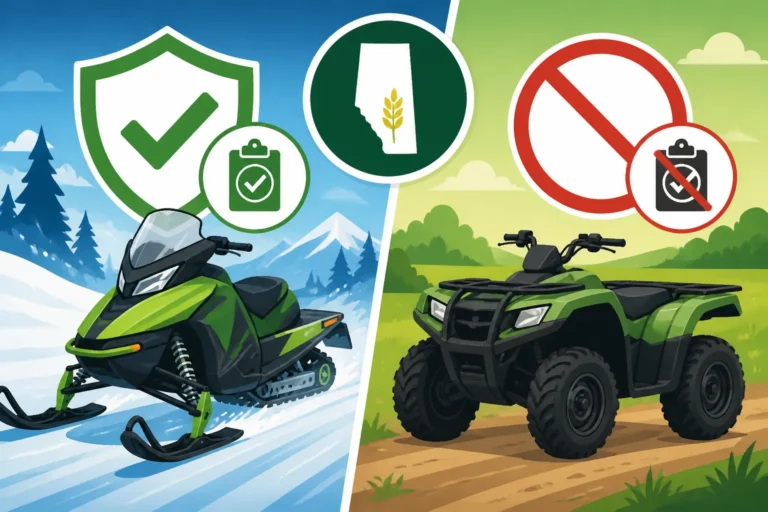
This is where much of the confusion truly sets in for Saskatchewan riders. If you've ever owned a snowmobile in this province, you know full well that you do need to register it with the province and get a plate and sticker. So, why the discrepancy? The answer lies in separate legislation. Snowmobiles are governed by a different set of rules, the Snowmobile Act, which mandates provincial registration. This means when you buy a snowmobile, whether new or used, you go through a process similar to registering a car, getting a number plate and paying an annual fee.
For ATVs and UTVs, as mentioned, the All Terrain Vehicles Act focuses purely on operational rules, not registration. This fundamental difference means that while your snowmobile needs that annual sticker to be legally ridden, your ATV does not. It’s a subtle but significant distinction that many people, understandably, mix up. They assume if one off-road machine needs it, the other must too. But that's not the case here in Saskatchewan. It's important to remember that [Saskatchewan Registers Snowmobiles, Not ATVs], and therefore [Snowmobiles Must Be Registered Even Though Quads Are Not]. This is a key piece of information that can save you a lot of time and confusion when dealing with your machines.
Proving Ownership Without a Provincial System
Since there's no official provincial registry for ATVs in Saskatchewan, a common and very valid question arises: "How on earth do I prove I actually own this thing?" It's a fair concern, especially if you're buying a used machine, looking to sell one, or, heaven forbid, it gets stolen. Without a title or a registration certificate issued by the province, the burden of proof falls on different documents. This is where meticulous record-keeping becomes your best friend and where understanding the role of a solid bill of sale is absolutely critical. It might feel a bit old-fashioned compared to the digital registries of other jurisdictions, but it's the system we work with here.
The Importance of a Bill of Sale
In Saskatchewan, your bill of sale isn't just a receipt; it's the bedrock of your ATV ownership. Think of it as your most vital document, standing in for the provincial registration or title that doesn't exist. A well-drafted bill of sale clearly establishes the transfer of ownership from the seller to you, making it invaluable for various situations, from insurance claims to resales. This document should be detailed and unambiguous, leaving no room for doubt about who owns the machine and when that ownership transferred. It's not enough to scribble a quick note on a napkin; you need something official and comprehensive. This is precisely why having a robust template is so beneficial for anyone engaged in private sales.
When creating or receiving a bill of sale, always ensure it includes critical information. This means the full legal names and addresses of both the buyer and the seller, the date of the transaction, and the purchase price. Most importantly, it must accurately describe the ATV, including the make, model, year, and its unique Vehicle Identification Number (VIN) or serial number. Without a VIN, proving the specific machine is yours can become a nightmare. Both parties should sign and date the document, and it's a good idea to have a witness if possible, or even get it notarized for extra peace of mind, though that's not strictly required. You can find excellent templates for these documents from reliable sources like LawDepot, which provides legally sound forms tailored for various transactions, including private vehicle sales. Having a clear, professional bill of sale means you're equipped to demonstrate [Saskatchewan Proof of Ownership Without a Registry] and that [Saskatchewan Bills of Sale Do the Work].
What to Do If You Don't Have a Formal Bill of Sale
Life happens, and sometimes a formal, detailed bill of sale isn't available. Perhaps you inherited an old family quad, or you bought a machine years ago from a friend, and the paperwork has since gone missing. This situation, while not ideal, isn't insurmountable, but it does require some extra steps to establish ownership. The goal is to create a paper trail that is as strong as possible, even in the absence of the original document. You'll need to gather any available evidence to support your claim.
If you find yourself without a bill of sale, consider drafting a sworn affidavit or a statutory declaration. These are legal documents where you solemnly affirm that you are the rightful owner, detailing how you acquired the ATV (e.g., inherited, purchased from a specific person whose details you can recall, or received as a gift). It's crucial to include all known details of the machine, such as the VIN, make, model, and year, along with any supporting evidence like old insurance policies, repair records, or even photographic evidence showing your possession over time. Having this document signed in front of a Commissioner for Oaths or a Notary Public adds significant legal weight to your claim. While it's not a replacement for a bill of sale at the time of purchase, it's the next best thing for asserting ownership retrospectively. This is particularly relevant for situations like [Saskatchewan Paperwork Without a Receipt] or when dealing with [Saskatchewan Paperwork After the Owner Dies]. LawDepot can also offer templates for statutory declarations, which can be invaluable in these specific circumstances, ensuring you have a legally recognized way to document your ownership history.
Local Initiatives: When a "Plate" Might Be Required
While the province itself might not issue a "quad sticker" or registration plate, that doesn't mean you're entirely off the hook when it comes to displaying some form of identification on your ATV. This is a common point of confusion, and it highlights the decentralized nature of ATV regulation in Saskatchewan. The reality is that many rural municipalities (RMs) and villages have taken it upon themselves to create their own local bylaws and permit systems, especially in areas popular for recreational riding. These local initiatives are designed to manage ATV use within their specific boundaries, often for safety, noise control, or to generate funds for trail maintenance.
This patchwork system means that you absolutely need to do your homework before riding in any given area. What's perfectly legal in one RM might require a permit just a few kilometres down the road in another. It’s a classic example of local control filling a gap that the provincial government chose not to address. If you’re planning a trip to a new riding area, a quick call to the local RM office or a check of their website is always a good idea to avoid any unwelcome surprises or fines.
Rural Municipalities and Local Permits
Many popular recreational destinations across Saskatchewan, particularly those with a significant influx of tourists and seasonal residents, have implemented their own ATV permit or plate schemes. These are not provincial registrations, but rather local permits that allow you to operate your ATV within the specific municipality’s jurisdiction, typically on designated roads, trails, or ditches that are otherwise off-limits. For example, communities like Candle Lake or the District of Lakeland are well-known for having such bylaws in place. If you plan on riding within these areas, you'll need to acquire their specific permit or plate.
The reasons behind these local schemes are often practical. They help the local authorities regulate where and when ATVs can be ridden, address safety concerns on shared roads, and sometimes, the fees collected go directly towards maintaining local trails or infrastructure. So, while you're not getting a "provincial quad sticker," you might very well need a "Candle Lake permit" or a "Lakeland plate." This is a crucial distinction, and ignoring it can lead to fines or even the impoundment of your machine. These local initiatives effectively create [Saskatchewan Municipal Plate Schemes] to manage local ATV traffic and provide a level of oversight that the province doesn't. They truly [Municipal Plates Fill the Gap the Province Left] in terms of local management and funding for ATV-related services.
What a Local Plate Entails
So, you've discovered that the RM or village you plan to ride in requires a local plate or permit. What exactly does that involve? Typically, these local permits come with a specific fee and often need to be renewed annually. The process is usually straightforward: you visit the local municipal office, fill out a form with your ATV's details (make, model, VIN), show proof of ownership (your trusty bill of sale!), and pay the required fee. Once processed, you'll receive a physical plate or a decal that must be visibly displayed on your ATV while riding within that municipality.
The fees for these municipal plates can vary. For instance, [Candle Lake Charges $25 for an ATV Permit], while other municipalities might have different structures. These funds are often earmarked for local trail development, maintenance, or enforcement, meaning your fee helps support the very infrastructure you'll be enjoying. It’s also important to note that these plates usually have an expiry date, and it’s up to you to keep track of the [Saskatchewan Municipal Plate Renewals] deadline, which is often tied to a specific date like April 30th. Furthermore, unlike a provincial registration that might transfer with a vehicle, municipal plates are typically non-transferable; if you sell your quad, the new owner will need to apply for their own permit. Understanding these nuances is key to riding responsibly and legally in Saskatchewan's diverse municipal landscape, and you'll want to factor [Saskatchewan Municipal Plate Costs] into your annual riding budget.
Practical Implications for Saskatchewan ATV Owners
The absence of a provincial ATV registration system in Saskatchewan can feel like a mixed blessing. On one hand, it often means less bureaucracy and fewer annual fees for many riders. On the other, it can introduce some unique challenges and require a bit more diligence on your part, particularly when it comes to matters of ownership, financing, and protecting your investment. Understanding these practical implications is essential for any ATV owner in the province, whether you're a seasoned rider or just thinking about purchasing your first quad. It’s all about being prepared for scenarios that might play out differently than they would with a traditionally registered vehicle.
Buying and Selling an Unregistered ATV
Buying or selling an ATV in Saskatchewan primarily revolves around the strength and clarity of your bill of sale. Since there's no central registry, the bill of sale acts as the definitive proof of ownership transfer. For buyers, this means thoroughly inspecting the machine, verifying the VIN (Vehicle Identification Number) matches the paperwork, and ensuring the seller can provide a clear, detailed bill of sale. Don't be shy about asking questions and requesting all necessary information. It's also wise to check if the VIN has been reported stolen, although without a central registry, this relies heavily on police databases. When [Buying From a Private Seller in Saskatchewan], it's crucial to be diligent.
For sellers, crafting a comprehensive bill of sale is equally important. This document protects you by proving that ownership has officially transferred, absolving you of future liability for the machine. Clearly state the "as-is" condition of the sale and ensure all machine details are accurate. When it comes to [Selling a Quad Privately in Saskatchewan], a well-executed bill of sale prevents headaches down the road. Furthermore, remember that while there's no registration fee, Saskatchewan Provincial Sales Tax (PST) generally applies to private sales of ATVs, unlike some other used goods. This is a point of confusion for many, but the province does require buyers to self-assess and pay PST on the purchase price. A reliable template from a service like LawDepot can ensure your bill of sale includes all the necessary legal clauses and details, providing peace of mind for both parties in the transaction.
Insurance, Financing, and Theft Recovery
The lack of provincial registration often raises questions about other essential aspects of ATV ownership, such as insurance, financing, and what happens if your machine goes missing. Fortunately, despite the absence of a provincial plate, these services are still very much available, though they might have slightly different considerations.
Insurance: You absolutely can, and should, insure your ATV in Saskatchewan. In fact, liability insurance is legally required for anyone operating an ATV on public lands, highways, or within provincial parks. Most insurance providers in Saskatchewan offer specific ATV/UTV policies that cover liability, collision, comprehensive damage, and theft, even without a provincial registration number. Your policy will rely on the ATV's VIN for identification. It's crucial to ensure you have adequate coverage, as [Saskatchewan's Minimum Insurance Requirement] is a provincial mandate. Without a provincial registry to track ownership, insurance becomes an even more vital safety net, protecting you financially in case of an accident or theft. When it comes to [Insuring a Quad That Has No Plate], local brokers are well-versed in handling these policies.
Financing: Getting a loan for an unregistered ATV is also possible. Financial institutions in Saskatchewan, including banks and credit unions, are accustomed to financing these types of vehicles. The financing agreement will typically use the ATV's VIN as the primary identifier, rather than a registration number. Lenders will perform their due diligence, checking for liens against the VIN to ensure clear title, even without a provincial system. While you might not have a formal "title" document, your bill of sale, combined with the VIN, serves as the necessary proof of ownership for the financing process. Therefore, [Financing an Unregistered Machine in Saskatchewan] is a common practice, with dealers and financial institutions offering various loan terms.
Theft Recovery: This is perhaps where the lack of a provincial registry feels most keenly. Without a central database of registered owners, tracking down a stolen ATV can be more challenging. However, it's not impossible. Law enforcement relies heavily on the VIN. When your ATV is stolen, you'll file a police report, providing the VIN and any other identifying features. This information is then entered into national databases. While a plate might offer a quick visual identifier, the VIN is the ultimate key for identification and recovery. Strong evidence of ownership, such as your detailed bill of sale (perhaps one created using a tool like LawDepot), along with insurance policies that list the VIN, becomes paramount in assisting the police and supporting any [Saskatchewan Insurance Claims Without a Plate]. Always keep a record of your VIN in a safe place, separate from your machine.
| Feature | Provincial ATV Registration (Saskatchewan) | Provincial Snowmobile Registration (Saskatchewan) | Municipal ATV Plate/Permit (e.g., Candle Lake) |
|---|---|---|---|
| Provincial Registry | No | Yes (SGI) | No (Local Municipality Only) |
| Issued Plate/Sticker | No | Yes (Plate and Decal) | Yes (Specific Local Plate/Decal) |
| Legal Requirement | No (Provincially) | Yes (For operation) | Yes (For operation within municipality) |
| Proof of Ownership | Bill of Sale, VIN | Registration certificate, Bill of Sale, VIN | Bill of Sale, VIN (to obtain permit) |
| Primary Purpose | N/A | Identification, revenue, tracking | Local regulation, trail funding, identification |
| Annual Fees | No | Yes | Yes (Varies by municipality) |
| Identification Number | VIN | VIN, Registration Plate Number | VIN, Municipal Plate Number |
Disclaimer
This article is for general informational purposes only and does not constitute professional advice. Laws, prices and regulations vary by location and change over time. Consult a qualified professional for guidance on your specific situation.