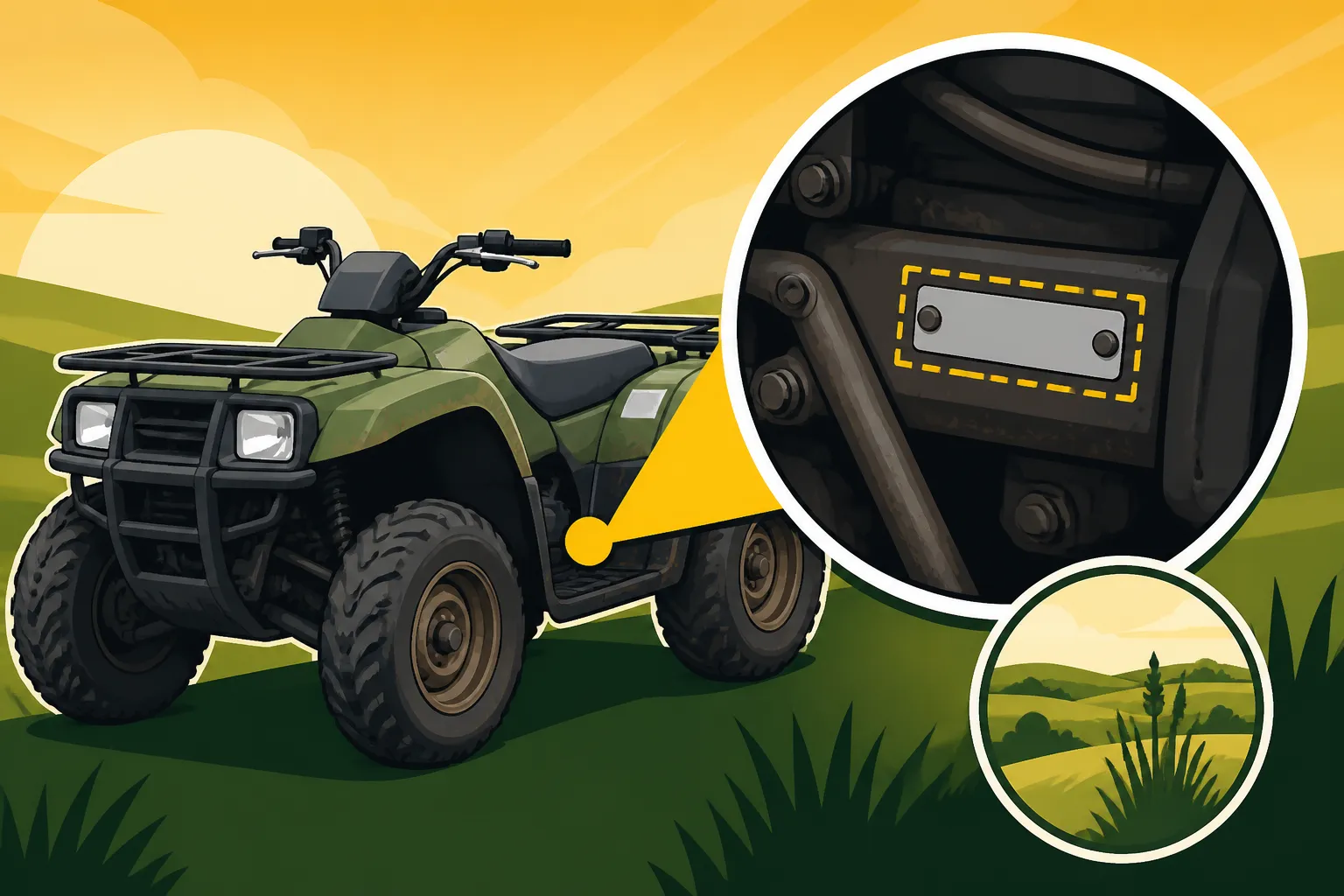
Finding the Serial Number on an Older Prairie Machine
It's a familiar scene across Saskatchewan: you've just bought a classic prairie quad, or maybe you're finally getting around to selling that trusty old side-by-side that's been faithful for years. Everything's going great until you hit the brick wall of "Where on earth is the serial number?" Unlike the sleek, easily located VINs on newer machines, older ATVs and UTVs, especially those that have seen years of Saskatchewan grit and grime, can make this simple task feel like a treasure hunt with a missing map. This guide is here to walk you through the frustrating but necessary process of locating that elusive serial number on your vintage off-road machine, ensuring you have the documentation you need for sales, insurance, or just peace of mind.
The Challenge of the Faded VIN on Prairie Quads
Anyone who's spent time around older ATVs and UTVs knows that finding their serial number isn't always as straightforward as checking a sticker. These machines lead tough lives, often exposed to harsh elements, demanding work, and enthusiastic recreational use. Over time, the very identifiers meant to last a lifetime can fade into obscurity, leaving owners scratching their heads and sometimes feeling a little bit stuck.
Why Older Machines Hide Their Secrets Best
The relentless Saskatchewan weather, from scorching summers to brutal winters, takes its toll on everything, and ATV frames are no exception. Paint chips, rust sets in, and vital markings can become obscured. Beyond the elements, consider the sheer amount of wear and tear these machines endure. Dirt, mud, gravel, and countless hours of vibration can slowly erode engraved or stamped numbers. Unlike cars, where the VIN is typically in a few standardized and protected spots, older ATVs and UTVs sometimes had less consistent placement for their serial numbers, and often in more exposed areas. Furthermore, an older machine might have passed through several hands, each owner perhaps unknowingly adding to the wear and tear that hides the VIN. Maintenance, repairs, and aftermarket modifications can sometimes cover up or accidentally damage these critical identification points.
The Importance of a Readable VIN
Even though Saskatchewan doesn't have a provincial registration system for ATVs and UTVs, that serial number, often referred to as a Vehicle Identification Number (VIN), is still incredibly important. Think of it as your machine's unique fingerprint. It's crucial for several reasons:
First and foremost, it establishes unique identification. If your machine is ever stolen, having an accurate VIN is paramount for reporting it to the police and increasing the chances of recovery. Without it, your quad is just another "red utility ATV" to the authorities, making their job infinitely harder. You'll find that [Saskatchewan Stolen Machine Reports] rely heavily on these unique identifiers.
Secondly, for insurance purposes, the VIN is non-negotiable. Insurance companies need this number to properly identify the asset they are covering. Without a clear VIN, obtaining comprehensive or even basic liability insurance can be difficult, if not impossible. Imagine trying to make a claim after a mishap; [Saskatchewan Insurance Claims Without a Plate] become much more complicated without a definitive way to identify your machine.
Finally, and perhaps most commonly, the VIN is absolutely essential when buying or selling an ATV or UTV. When you're the buyer, you need to verify the VIN against any documentation (like a bill of sale) to ensure you're buying the correct machine and to check for any potential stolen status. As a seller, providing a clear VIN assures your buyer of the machine's identity and can prevent future headaches. In Saskatchewan, where there's no provincial registration, the bill of sale really is king, and it needs to accurately reflect the machine's VIN. [How to Prove You Own an ATV in Saskatchewan] starts with that number.
Where to Hunt for Your ATV or UTV Serial Number
Okay, so you understand why you need it. Now, let's get down to where to actually find it. Over the years, manufacturers have used various spots, but there are some common go-to areas on the frame that you should prioritize in your search.
Primary Locations on the Frame
The most common place for an ATV or UTV serial number is directly on the frame itself. Manufacturers usually stamp or engrave it into a sturdy, non-removable part of the chassis. Here are the prime suspects:
- Front Frame, Under the Handlebars: This is one of the most popular locations, especially on many older utility quads. Look on the frame tube running vertically or horizontally just below the handlebars, often on the right-hand side (when sitting on the machine). It might be on a small metal tag welded to the frame, or directly stamped into the metal.
- Lower Frame Rail, Near the Foot Pegs: Another frequent spot is along the main frame rail, often around the area where your right foot rests, or just forward of it. It can be stamped on the top or side of the rail. You might need to kneel down and look up from underneath, or get right down on the ground to see it clearly.
- Under the Seat/Rear Fender: Remove the seat and inspect the frame rails beneath it, particularly where the seat latches or bolts down. Sometimes the number is stamped on a cross-member or a vertical support in this area. For UTVs, you might need to lift the dump box or rear cargo bed to expose these frame sections.
- Steering Head/Neck Area: On some models, especially older sportier ATVs, the VIN might be found on the steering head, which is the part of the frame where the front forks or steering column attach. It could be on the front, side, or even top of this tube.
- A-Arms or Suspension Mounts: While less common for the main VIN, some manufacturers might have stamped secondary identification numbers on major suspension components or where the A-arms attach to the frame. These aren't usually the primary VIN, but if you're truly stumped, it's worth a look.
Pro Tip: Always focus on the actual frame. Any numbers on plastic body panels, engine covers, or removable parts are likely part numbers, not the primary VIN.
Engine and Transmission Stampings
It's common for engines to have their own serial numbers. These are usually stamped directly onto the engine block or crankcase. While these numbers are critical for engine parts identification and warranty work, they are not the primary VIN for the entire vehicle. The engine serial number is distinct from the vehicle's VIN, and while sometimes they might seem similar or sequential, they serve different purposes. Don't confuse the two, especially when dealing with paperwork for a sale or insurance. The main number you're looking for, the one that identifies the entire machine, will be on the frame itself, not the engine. This is a common confusion point when [Finding the Serial Number on an Older Prairie Machine].
Checking Manufacturer Tags and Decals
While they are often the first things to disappear or become unreadable on older machines, don't completely discount manufacturer tags, stickers, or decals. In some cases, a sturdy metal plate, often riveted to the frame, might still exist with the VIN clearly embossed on it. These are typically found in protected areas, like inside a storage compartment or under a fender. Plastic stickers, on the other hand, are highly susceptible to fading, peeling, and damage from the elements. If you do find a sticker, be extremely gentle when trying to clean it. It's a long shot, but sometimes a faint outline can still be discerned.
Strategies for Uncovering a Stubborn VIN
So you've checked all the common spots, and the numbers are still playing hide-and-seek. Don't give up hope yet! There are several techniques you can employ to bring those elusive digits into clear view. Patience and a methodical approach are your best friends here.
Cleaning and Preparation Techniques
The first step in uncovering a hidden VIN is often good old-fashioned cleaning. Years of accumulated mud, rust, paint, and grease can perfectly obscure even deeply stamped numbers.
- Degreasers and Wire Brushes: Start with a good quality degreaser to cut through any oily grime. Let it soak for a few minutes, then use a stiff bristled brush or a soft wire brush (like a brass brush, which is less aggressive than steel) to gently scrub the area. Be careful not to scrub too hard, especially if you suspect the numbers are only lightly stamped or on a thin metal plate.
- Sandpaper (Light Touch Only!): If rust is the main culprit, very fine-grit sandpaper (e.g., 220-grit or finer) can carefully remove surface rust. The key here is lightness. You're trying to remove rust from the numbers, not sand the numbers off. Use short, controlled strokes and stop as soon as you see any hint of metal.
- Good Lighting is Your Ally: Natural daylight is often best, but if you're in a shed or garage, grab a powerful flashlight or a work light. Try shining the light from different angles – sometimes the numbers will "pop" into view as shadows are cast by the indentations. A headlamp can be invaluable, leaving your hands free to clean and manipulate the machine.
- Mirrors and Magnifying Glasses: For those really tight or awkward spots, a small inspection mirror (like what mechanics use) can help you see around corners or into recesses. A magnifying glass can also help clarify faint impressions once you've cleaned the area.
Rubbings and Photography for Legibility
Once the area is as clean as possible, if the numbers are still faint, you can try some techniques to make them more visible for documentation.
- The Pencil Rubbing Method: This classic technique can often reveal numbers that are almost invisible to the naked eye.
- Place a thin piece of paper (like tracing paper or even a standard sheet of printer paper) directly over the suspected VIN area.
- Using the side of a pencil (preferably a soft lead pencil, like a 2B or 4B), gently rub the lead back and forth over the paper. The raised areas (the metal surrounding the stamped numbers) will pick up less lead, while the indentations of the numbers will remain darker, creating a reverse image that makes the digits legible. This is especially helpful if you're documenting the machine, and can really help when [Photographing the VIN at a Saskatchewan Sale].
- Advanced Photography: Your smartphone camera can be surprisingly powerful here.
- Take multiple photos from different angles. Use your phone's flash, but also try taking photos with an external light source (like a flashlight) shining across the numbers at a shallow angle – this often highlights the indentations by creating shadows.
- Use the macro function (if your phone has one) or zoom in after taking the photo.
- Adjust contrast and brightness in your photo editing app. Sometimes, simply increasing the contrast can make faint numbers stand out against a rusty background.
Deciphering Faint or Partially Obscured Numbers
Even with the best cleaning and photography, you might still end up with a few indecipherable digits. This is where a bit of knowledge about VIN structure can help fill in the blanks.
- Standard VIN Structure (Modern Machines): Most modern vehicles (including ATVs/UTVs from the mid-80s onwards) use a 17-character VIN. Each character has a specific meaning:
- Positions 1-3: World Manufacturer Identifier (WMI) – tells you the country and manufacturer.
- Positions 4-9: Vehicle Descriptor Section (VDS) – describes the vehicle (model, body type, engine type, etc.).
- Position 10: Model Year (often a letter or number).
- Position 11: Plant Code (where it was manufactured).
- Positions 12-17: Vehicle Indicator Section (VIS) – the unique serial number specific to that vehicle.
- Older Machine Variations: Very old ATVs (pre-1980s) might have shorter serial numbers, sometimes 10-12 characters, and their structure can be less standardized. However, most manufacturers still included a model year indicator and a sequential production number.
- Context Clues: If you know the make and approximate year of your machine, you might be able to deduce some of the missing digits. For instance, if you have most of the WMI and VDS, you can often narrow down what the missing characters likely represent by comparing them to VINs from similar models and years. Online VIN decoders, though mainly for road vehicles, can sometimes help you understand the pattern if not the exact digits for your off-road machine.
When the VIN is Gone: Alternative Proof and Next Steps
What if, despite all your efforts, the VIN is completely unreadable, missing, or so badly damaged that it's beyond recognition? This is a tough spot, but it's not a dead end, especially here in Saskatchewan where our non-registered system places a higher value on other forms of proof.
Relying on the Bill of Sale and Ownership History
In Saskatchewan, because ATVs and UTVs are not provincially registered or titled, the chain of ownership relies heavily on bills of sale. If your VIN is unreadable, a clear and comprehensive bill of sale becomes your absolute most vital piece of documentation.
- The Primary Document: A well-drafted bill of sale, signed by both buyer and seller, detailing the machine's description (make, model, year, colour), sale price, date of sale, and the full contact information of both parties, is your primary proof of ownership. This document essentially stands in for a registration. For future sales, this is what you'll pass on to the next owner. Remember that [Saskatchewan Bills of Sale Do the Work] of official registration in our province.
- Previous Bills of Sale: If you have them, collect all previous bills of sale for the machine. A complete chain of ownership, even without a perfect VIN, strengthens your claim. This is a critical point that helps [Your Bill of Sale Stands In for a Registration].
- Creating a Robust Bill of Sale: When buying or selling, never underestimate the power of a detailed bill of sale. Services like LawDepot offer customizable templates for bills of sale that can be tailored to include all necessary details, even allowing for specific notes about the condition of the VIN or other unique identifiers. This can provide a layer of legal protection and clarity for both parties, making it easier to navigate issues like a missing VIN.
Dealing with a Damaged or Unfindable VIN
If the VIN is truly gone, or if you suspect foul play (e.g., it looks intentionally altered), you have a few options:
- Consult a Dealer: Your local ATV/UTV dealer might be able to offer assistance. They often have experience with older models and might know alternative locations for numbers, or have access to manufacturer databases that could help. They can sometimes trace a machine's history with partial numbers or specific engine codes.
- Local Law Enforcement: If you believe the VIN has been tampered with or is completely missing, it's wise to contact your local RCMP or municipal police. They can inspect the machine and advise on next steps. They might be able to perform a forensic examination to reveal hidden numbers or confirm if the machine is stolen. Be prepared that they may not be able to issue a new VIN, but they can document the situation, which is important. [Saskatchewan Stolen Machine Reports] often originate from an unfindable VIN.
- SGI-Certified Mechanic: An SGI-certified mechanic might also be able to help. While not directly related to registration (which we don't have for quads), their expertise in vehicle inspection can be valuable in identifying unique features or confirming the machine's identity to the best of their ability.
- Aftermarket Labeling: For future peace of mind, once you've established ownership as best you can, consider adding your own unique identifier (perhaps engraved into a non-removable part of the frame that's not easily accessible) and documenting it thoroughly. This won't be a VIN, but it could help you identify your machine if stolen in the future, alongside a comprehensive description and photos.
Documenting a Machine for Future Sales or Insurance
Even without a perfect VIN, meticulous documentation is your best defence and your greatest asset.
- Photographic Evidence: Take high-resolution photos of every angle of your ATV or UTV. Include unique dents, scratches, aftermarket accessories, and any visible (even if faint) serial numbers or engine numbers. Date-stamp these photos if possible. These pictures, combined with a detailed description, can be invaluable for insurance claims or future sales. [Checking a Serial Number Twice Before You Pay] is vital, and photos of that number are your proof.
- Detailed Descriptions: Write down a comprehensive description of the machine, including make, model, year, colour, engine size, specific features, and any modifications. If the VIN is unreadable, clearly state this on your bill of sale and provide as much detail as possible about the condition of the VIN area.
- Secure Paperwork: Keep all bills of sale, insurance policies, and any correspondence related to the machine in a safe, fireproof place, and consider digital backups. Having a robust set of documents makes everything smoother, whether you're dealing with insurance, selling it, or proving ownership after a theft. When creating documents like a bill of sale, consider using a service like LawDepot. Their templates allow you to include specific clauses about the machine's condition, including details about a damaged or unreadable VIN, ensuring transparency and reducing potential disputes. This level of detail protects both the buyer and the seller, especially in scenarios where traditional registration isn't an option. For more on this, check out [Saskatchewan Paperwork for a Bush Machine].
Table: Common VIN/Serial Number Locations
Here's a quick reference for where to typically start your search, keeping in mind that older machines can sometimes deviate from these general rules:
| Machine Type | Primary VIN Location (Most Common) | Secondary/Other Locations (Worth Checking) | Key Considerations for Older Machines |
|---|---|---|---|
| Utility ATV | Front frame (under handlebars), lower frame rail (right side, near footrest) | Under seat, near engine mounts | Often obscured by mud/grime. Rust is a common issue. |
| Sport ATV | Steering head/neck, front frame rail | Lower frame rails | Exposure to impacts/scratches on trails. |
| Utility UTV/Side-by-Side | Frame rail (driver's side, near door opening), under dump box/rear cargo area | Below windshield, accessible from interior | Can be covered by accessories or protective guards. |
| Mini-Bike/Youth Quad | Lower frame rail, swing arm pivot area | Engine casing | Small size makes areas hard to reach; often less protected. |
Finding the serial number on an older prairie machine can be a real test of patience, but it's an essential task for any ATV or UTV owner in Saskatchewan. By understanding where to look, how to clean and clarify the numbers, and what to do if they're completely gone, you can confidently manage your machine's documentation. Remember, even without provincial registration, a solid bill of sale and thorough personal records are your best defence. When preparing those vital documents, tools like LawDepot can provide the structured, legally sound templates you need to ensure every detail is covered. Taking these steps protects your investment and provides peace of mind on the open trails of Saskatchewan.
Disclaimer
This article is for general informational purposes only and does not constitute professional advice. Laws, prices and regulations vary by location and change over time. Consult a qualified professional for guidance on your specific situation.