Photographing the VIN at a Saskatchewan Sale
Buying an ATV or UTV in Saskatchewan can feel like navigating a bit of a Wild West scenario when it comes to official documentation. Unlike cars or even snowmobiles, there's no provincial registration or title for these machines. This unique situation often leaves buyers feeling a little exposed, wondering how they can truly protect their investment and prove legitimate ownership. This guide is here to cut through that confusion, walking you through the absolutely critical step of photographing the Vehicle Identification Number (VIN) at the point of sale, ensuring you have robust proof and peace of mind.
Why Photographing the VIN is Non-Negotiable in Saskatchewan
When you're shelling out good money for an ATV or UTV, you want to be sure you're getting a legitimate machine and that you have the paperwork to back it up. In Saskatchewan, where formal registration is absent, the VIN becomes your anchor of authenticity. Skipping this step is like buying a house without ever seeing the deed – it’s just asking for trouble down the line.
The Lack of a Provincial Registry for ATVs
It's a fact that often surprises new riders and even some seasoned folks: Saskatchewan does not have a provincial registry for ATVs. This isn't an oversight, it's just the way the system is set up. You won't be heading to a provincial office to get a plate or a title for your quad, which can be a real head-scratcher if you're used to how other vehicles are managed. This situation creates a unique set of challenges and responsibilities for ATV and UTV owners, especially when buying or selling.
Without a central provincial database to record ownership, things like proving you actually own the machine or confirming its history become entirely dependent on your personal documentation. This is where your bill of sale and, crucially, high-quality photographs of the VIN come into play. They become your de facto "registration" and "title," forming the bedrock of your ownership claim. It’s a very different system from what you might be familiar with if you also own a snowmobile; for those, there absolutely is a provincial registration process you need to follow, and fees associated with it. [Saskatchewan Registers Snowmobiles, Not ATVs]
Proving Ownership and Deterring Theft
In the absence of a provincial title, your bill of sale is your primary document for proving ownership. But what if that bill of sale gets lost, or if there's a dispute? This is precisely where clear, dated photographs of the VIN become your ultimate backup. A comprehensive set of photos, taken at the time of purchase, provides undeniable visual evidence linking the specific machine (identified by its unique VIN) to your transaction. It’s hard to argue with a picture. [Saskatchewan Proof of Ownership Without a Registry]
These photos also play a vital role in deterring theft and aiding in recovery. While a VIN photo won't stop someone from stealing your quad, it drastically improves your chances of getting it back. If your machine ever goes missing, law enforcement will ask for the VIN to enter it into national databases. Having a clear photo ensures you have the correct number, without transcription errors, ready to provide instantly. This isn't just about showing the police you own it; it’s about giving them the exact, verifiable identifier they need to track it. Think of it as a fingerprint for your quad. If your machine is ever stolen, having this documentation can be the difference between a successful recovery and a lost cause. [Saskatchewan Theft Recovery Without a Registry] Your insurance company will also want this information immediately for any claim.
Where to Find and How to Photograph the VIN on an ATV/UTV
Finding the VIN on an ATV or UTV might not always be as straightforward as spotting it on a car's dashboard. These machines are designed for rough terrain, and their identification numbers can sometimes be tucked away, or even partially obscured by mud and grime. Knowing where to look and how to get a good shot is half the battle.
Common VIN Locations on Different Machines
The VIN (Vehicle Identification Number) is a unique 17-character alphanumeric code that acts as the machine's individual fingerprint. It’s stamped onto the frame of your ATV or UTV. While locations can vary slightly between manufacturers and models, there are a few common spots you should always check first:
- Front Right Frame Rail: Many manufacturers place the VIN on the frame rail, usually on the right-hand side (when sitting on the machine), just behind the front wheel or near the front suspension. It might be stamped directly into the metal or on a small, affixed plate.
- Rear Frame Rail: For some models, especially utility-focused UTVs, the VIN might be found on the rear frame rail, often near the cargo bed or the rear axle.
- Steering Head/Handlebar Stem: On some ATVs, the VIN can be found stamped on the metal portion of the steering head, visible when you turn the handlebars from side to side.
- Engine Casing: Less common for the primary VIN, but sometimes a partial VIN or engine serial number might be cast into the engine block. Always look for the 17-character VIN on the frame first, as that's the official identifier.
When dealing with older machines, finding the VIN can sometimes be a bit of a scavenger hunt. Years of mud, rust, and general wear and tear can obscure these numbers. Don't be afraid to bring a wire brush or some cleaner to gently reveal the characters. Sometimes, they're not on a flat, easily readable surface but stamped into a curve, requiring you to get down on your hands and knees and use a flashlight to read each character. For those older prairie machines that have seen a lot of miles and weather, you might really need to hunt for it. [Finding the Serial Number on an Older Prairie Machine] Always ensure that every single character is legible, even if it requires a bit of elbow grease.
Best Practices for Capturing a Clear VIN Photo
Once you've located the VIN, the goal is to get photos that are undeniably clear and comprehensive. This isn't just a quick snap; it's about creating solid evidence.
- Clean the Area: Before taking any photos, thoroughly clean the area around the VIN. Use a brush, a rag, or even a can of compressed air to remove dirt, mud, grease, or rust that might be obscuring the numbers. Even a thin layer of dust can make characters look blurry in a photo.
- Ensure Good Lighting: Natural daylight is almost always best. Position yourself or the machine so that the VIN is well-lit, but avoid direct glare that can wash out the numbers. If you're in a shaded area or indoors, use a flashlight or your phone's flash, but make sure it doesn't create reflections that obscure the VIN. Try different angles with your light source.
- Take Multiple Photos from Various Angles:
- Wide Shot: Start with a wider shot that shows the VIN in context, along with a recognizable part of the machine (e.g., the front wheel, a piece of the engine, the cargo bed). This helps prove that the VIN belongs to this specific machine.
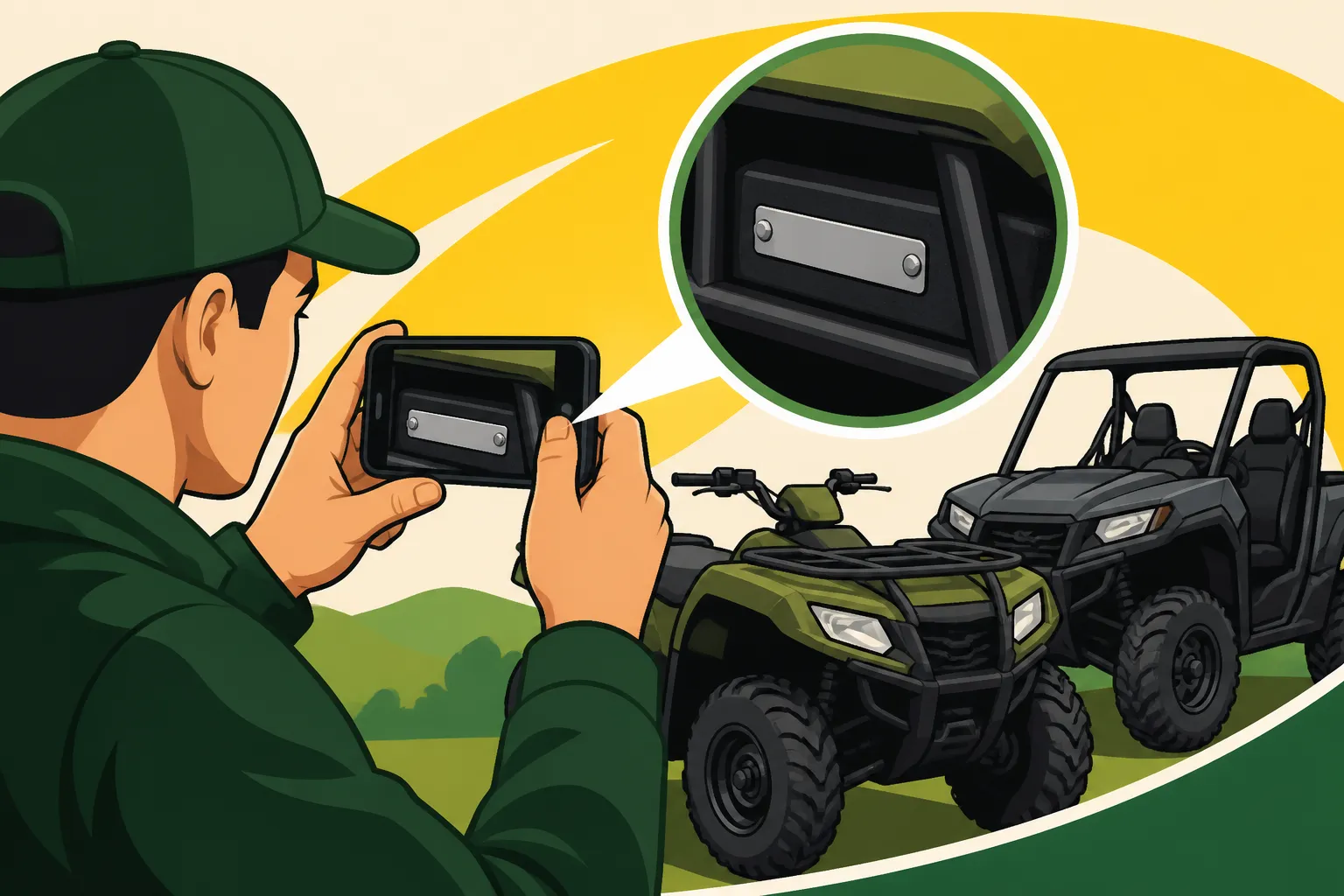
- Close-Up (Full VIN): Get a super close, perfectly focused shot of the entire 17-character VIN. Make sure every single digit and letter is sharp and readable. Take several of these, even if you think you have a good one.
- Angled Shots: Take a few photos from slightly different angles. Sometimes, a character that looks like an "8" from one angle might clearly be a "B" from another due to how it's stamped.
- Check for Clarity Immediately: Review your photos on your phone's screen right away. Zoom in to confirm that every character is crisp and unambiguous. If there's any doubt, reshoot it. It's much easier to retake the photo on the spot than to realize later you have unreadable documentation.
- Consider a Reference Object: For an extra layer of proof, you could place a small, easily identifiable object (like a business card or a key) next to the VIN in one of your photos. This isn't strictly necessary but can add context.
- Integrate with Your Bill of Sale: The VIN is a critical piece of information that must be included on your bill of sale. Ensure the VIN written on the bill of sale perfectly matches the VIN in your photographs and on the machine itself. This consistency is vital for establishing proof of ownership. Many people use a template from a service like LawDepot to ensure all the necessary fields are covered, which includes a dedicated spot for the VIN. [What Your Bill of Sale Needs to Cover]
What to Do with Your VIN Photos After the Sale
Once you've successfully purchased your ATV or UTV and snapped those all-important VIN photos, your job isn't quite done. The real value of this documentation comes from how you manage and use it in the future. Proper storage and understanding how to leverage these photos are key to safeguarding your investment.
Storing and Using Your VIN Documentation
Think of your VIN photos as precious digital assets. Losing them could put you in a tough spot down the road. You need a robust strategy for storage and easy access.
First and foremost, create multiple copies. Don't just leave them on your phone. Upload them to a cloud storage service (like Google Drive, Dropbox, or iCloud) immediately after the sale. This ensures they're backed up and accessible even if your phone is lost or damaged. Additionally, save them to an external hard drive or your computer, and consider emailing a set to yourself for yet another backup.
Next, integrate them with your other ownership documents. The VIN photos should be kept alongside your bill of sale. Ideally, you’d print out a copy of the photos and staple them directly to your physical bill of sale. This creates a powerful, undeniable package of proof. Remember, in Saskatchewan, the bill of sale is the primary document proving your ownership of an ATV. [Saskatchewan Bills of Sale Do the Work] The VIN photos reinforce and validate that bill of sale, making it much harder for anyone to dispute your claim to the machine.
This robust documentation isn't just for your peace of mind; it's crucial for any future transactions. When it comes time to sell your quad privately in Saskatchewan, being able to present a clear, documented chain of ownership, complete with VIN photos, will inspire confidence in potential buyers. It demonstrates transparency and honesty, making your machine more appealing and potentially helping you secure a better price. Buyers are naturally wary of machines with no clear paperwork, and your diligence here will set you apart. [Selling a Quad Privately in Saskatchewan] It can also be invaluable in resolving any disputes that might arise, whether with a previous owner, a new buyer, or an insurance company.
Checking the VIN for a Stolen Machine or Liens
Before you even finalize the purchase, those VIN photos (or simply writing down the VIN) give you the power to do some critical due diligence. In a province without ATV registration, you’re largely on your own when it comes to verifying a machine’s legitimacy.
The first, and arguably most important, check is to see if the ATV or UTV has been reported stolen. You can usually do this by contacting your local RCMP detachment or municipal police force. Provide them with the full 17-character VIN, and they can run it through national stolen vehicle databases. This small step can save you a world of heartache and legal trouble. Imagine buying a quad, only to find out later it was stolen – you could lose your money and the machine, even if you bought it in good faith. [Searching for a Stolen Quad Without a Registry] Always, always, always make this check before handing over any money. [Checking a Serial Number Twice Before You Pay]
Checking for liens is a bit trickier in Saskatchewan for unregistered ATVs because there isn't a central provincial registry to log them against. For vehicles with registration, you'd typically check the Personal Property Registry. Since ATVs aren't registered, a lien might not be formally recorded against the VIN in the same way it would be for a car. This doesn't mean liens can't exist; a seller might have used the ATV as collateral for a loan, and that loan could still be outstanding. While it's harder to check conclusively, your best bet is to ensure the seller explicitly states in the bill of sale that the machine is free of all liens and encumbrances. While not foolproof, it provides you with legal recourse if a lien were to surface later. Always be cautious if the deal feels too good to be true or if the seller seems hesitant about providing clear documentation. [Saskatchewan Liens on an Unregistered Machine]
Avoiding Common Pitfalls When Documenting Your ATV Purchase
Even with the best intentions, it's easy to fall into traps when buying an ATV or UTV, especially in a system like Saskatchewan's where provincial registration isn't required. Being aware of these common pitfalls can save you significant headaches, money, and stress down the road.
The "No Paperwork" Trap
This is perhaps the biggest red flag you can encounter when buying a used ATV or UTV. A seller claiming to have "no paperwork" for a machine, especially a relatively newer one, should immediately raise suspicions. While it's true that there's no provincial registration, every new ATV or UTV sold by a dealer comes with manufacturer's documentation and a bill of sale. Even private sales should generate a bill of sale. A lack of any documentation for a recent purchase is highly problematic.
Some sellers might claim they bought it from a friend, or it's "just a bush machine," implying paperwork isn't needed. While machines used exclusively on private land or for specific agricultural purposes might fall under certain exemptions in the Act, this doesn't excuse a complete lack of ownership history. [Saskatchewan Machines Used Only on Family Land] What they might really be saying is that they don't have a legitimate claim to the machine themselves, or they're trying to hide its true origins.
When faced with a "no paperwork" scenario, your best bet is often to walk away. The risks simply aren't worth the potential savings. Without a bill of sale and a verifiable VIN, you have virtually no legal proof of ownership. If the machine turns out to be stolen, you're out of luck and could face legal repercussions yourself. If you ever want to sell it, you'll run into the same problem, significantly reducing its resale value and your pool of potential buyers. You need a clear chain of ownership, and a missing link at the start means endless trouble. [Saskatchewan Machines With No Paperwork]
Incomplete or Incorrect Information
Even if a seller does provide paperwork, it's crucial to scrutinize it for completeness and accuracy. A hastily written bill of sale that's missing key details or contains errors can be almost as problematic as no paperwork at all.
Here's what to watch out for:
- Missing or Partial VIN: The VIN on the bill of sale must be the full, 17-character number, and it must precisely match the number stamped on the machine itself. Even a single digit off can invalidate the document in a legal context. This is why your VIN photos are so critical for cross-referencing.
- Vague Machine Description: The bill of sale should clearly identify the machine by make, model, year, and colour. "Red Quad" isn't enough; "2020 Honda Foreman Rubicon 520, Red" is what you need.
- Incomplete Seller Information: The seller's full legal name, address, and contact information should be clearly written. You should also verify this information against their government-issued ID. A bill of sale with only a first name or a fake address is useless if you ever need to contact them.
- Purchase Price Discrepancies: Ensure the stated purchase price is accurate. This is important for your own records and for any potential tax implications.
Any discrepancies between the VIN on the machine, the VIN in your photos, and the VIN on the bill of sale can create major problems. If there’s a mismatch, it immediately casts doubt on the legitimacy of the transaction and your ownership claim. If you notice an error on the spot, insist that the seller correct it and initial the change. If they're unwilling to make corrections or seem evasive, it's another sign to proceed with extreme caution.
Using a standardized bill of sale template, such as those available from reputable sources like LawDepot, can help ensure all necessary fields are included and properly filled out. These templates are designed to protect both buyer and seller by covering all the essential information. Even if you're [Writing a Bill of Sale by Hand at a Farm Gate], take your time and be meticulous. The effort you put into thorough documentation at the point of sale will pay dividends in peace of mind for years to come.
| Step for VIN Verification | Purpose | Key Action |
|---|---|---|
| Locate VIN | Identify the unique serial number on the physical machine. | Check frame rails, steering head. Clean area if dirty. |
| Photograph VIN | Create irrefutable visual evidence linking the VIN to the specific machine and the date of sale. | Take multiple clear, focused photos from various angles in good light. |
| Record VIN on Bill of Sale | Ensure the VIN is accurately transcribed onto the legal document of ownership. | Write the full 17-character VIN correctly on the bill of sale. |
| Verify Seller ID | Confirm the seller's identity matches the name on the bill of sale. | Ask for government ID and compare details. |
| Check for Stolen Status | Confirm the machine has not been reported as stolen. | Contact local RCMP or police with the VIN. |
| Store Documentation Securely | Protect your proof of ownership against loss or damage. | Keep digital copies (cloud, external drive) and a physical copy with photos. |
Disclaimer
This article is for general informational purposes only and does not constitute professional advice. Laws, prices and regulations vary by location and change over time. Consult a qualified professional for guidance on your specific situation.