Looking for a Registry That Does Not Exist
It's a common question, and one that often leads to a lot of head-scratching and frustration for new and seasoned riders alike: "Where do I go to register my ATV in Saskatchewan?" The honest, and sometimes bewildering, answer is that for ATVs (All-Terrain Vehicles) and UTVs (Utility-Terrain Vehicles) in Saskatchewan, there simply isn't a provincial registry to be found. This guide is here to cut through the confusion and explain why the province doesn't register these machines, what that means for you, and how you can still ensure you're riding legally and responsibly.
The Provincial Truth: No ATV Registration in Saskatchewan
Many riders move to Saskatchewan from other provinces or states, or even just hear stories from friends, and naturally assume that registering an ATV is a standard procedure, just like with a car or a snowmobile. It's a perfectly logical assumption, but in this province, it's just not the case for quads and side-by-sides.
Why Riders Often Get Confused
The confusion often stems from a few key areas. First, other provinces across Canada do indeed have provincial registration systems for ATVs. So, if you're an experienced rider from Alberta or Ontario, you'd naturally expect to do the same thing here. It's a deeply ingrained habit for many vehicle owners. Second, and perhaps the biggest source of local confusion, is the fact that snowmobiles are registered provincially in Saskatchewan. People see their neighbours with snowmobile plates and decals and wonder why their quad doesn't get the same treatment. The distinction between these two types of off-road vehicles can feel arbitrary if you're not familiar with the specifics of the province's legislation. You might be [Looking for a Registry That Does Not Exist] if you're expecting a provincial office to issue you an ATV plate.
It's important to understand that this isn't an oversight or a temporary situation; it's by design. The provincial government has chosen a different approach for regulating ATVs. While there is comprehensive legislation in place governing their operation – specifically [Saskatchewan's All Terrain Vehicles Act] – that act does not include a requirement for provincial registration or a provincial titling system for ATVs. This can feel like a peculiar gap in what many would consider standard vehicle administration, leading to a lot of head-scratching when you're trying to do your due diligence.
What "No Registration" Actually Means for Your Quad
When we say [Saskatchewan Does Not Register ATVs], it means there's no provincial database holding information about your ATV's ownership, no official certificate of registration issued by the province, and no annual decal or plate to renew. This absence has several significant implications. For starters, it means there's no central government body tracking ATV ownership changes, nor is there a provincial record of liens against these machines, which can impact financing and private sales. Without a provincial registry, there's also no standard provincial plate or sticker to display on your quad. [Saskatchewan Has No ATV Plate or Decal] issued by the province, which is often a surprise for visitors and new residents.
Instead, the province places the onus on the individual to maintain their own proof of ownership and ensure they comply with other regulations under the Act, such as age restrictions, helmet laws, and insurance requirements. This hands-off approach to registration means that while you don't have the annual chore of renewing a plate, you do have a greater responsibility to keep your personal documentation in order, especially if you ever need to prove ownership or deal with law enforcement. It’s a double-edged sword: less bureaucracy on one hand, but more personal responsibility for record-keeping on the other.
Proving Ownership Without a Provincial Registry
Since there's no official provincial register for ATVs, how do you actually prove that you own your machine? This is where good old-fashioned paperwork, often overlooked in the digital age, becomes absolutely critical.
The Importance of a Solid Bill of Sale
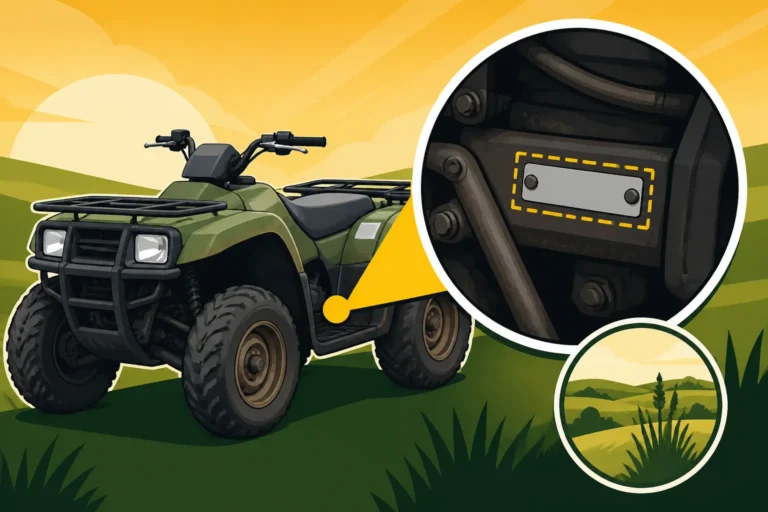
In Saskatchewan, your primary proof of ownership for an ATV or UTV is a comprehensive bill of sale. Think of it as your machine's birth certificate and deed rolled into one. When you purchase an ATV, whether new from a dealer or used from a private seller, you absolutely must get a detailed bill of sale. This document should clearly state the buyer's name and address, the seller's name and address, the date of sale, the purchase price, and most importantly, a full description of the ATV. This description must include the make, model, year, and the Vehicle Identification Number (VIN) or serial number. Without a proper bill of sale, you're essentially riding a machine that, on paper, has no clear owner, which can lead to huge headaches down the road.
A well-crafted bill of sale protects both the buyer and the seller. For the buyer, it proves you legally acquired the machine, which is crucial for insurance purposes, reporting theft, or if a peace officer ever questions your ownership. For the seller, it proves you've relinquished ownership and are no longer responsible for the machine. You can find templates online, and services like LawDepot offer customizable legal documents, including bills of sale, that can help ensure you cover all the necessary bases. It really is the bedrock of ATV ownership in Saskatchewan. Without it, you'll be hard-pressed to confirm [Saskatchewan Proof of Ownership Without a Registry] when you need it most. This document is not just a formality; it's your only official record.
What to Do If You Don't Have Traditional Paperwork
What if you bought your ATV years ago, or inherited it, and never got a formal bill of sale? This is a surprisingly common scenario and one that can cause significant stress. Without a bill of sale, proving ownership becomes much more challenging. You'll need to gather any other documentation you might have: old insurance policies listing the machine, receipts for parts or service with the VIN, or even sworn affidavits from witnesses who can attest to your ownership. In some cases, a previous owner might be willing to provide a belated bill of sale if you can track them down.
If you find yourself in this situation, it's vital to act proactively. If you're planning to sell the machine, be prepared for potential buyers to be wary, as they will face the same challenges. You'll likely need to create a detailed bill of sale when you sell it, even if you can't provide one from your original purchase. LawDepot, for instance, provides templates that can be used to create these documents, even if you’re reconstructing the ownership chain. Always be upfront about the lack of original paperwork. For law enforcement purposes, a combination of consistent possession, insurance, and other corroborating evidence might suffice, but it's always a weaker position than having a clear bill of sale. The goal is to be able to answer the question: [How to Prove You Own an ATV in Saskatchewan] clearly and unequivocally.
Understanding What Does Require Registration (and What Doesn't)
The provincial government's stance on ATVs can be a bit confusing, especially when compared to other recreational vehicles or to what other jurisdictions do. It's crucial to understand these distinctions.
Snowmobiles: A Different Story Entirely
Here's where a lot of the local confusion really kicks in. While ATVs are not registered provincially, snowmobiles absolutely are. If you own a snowmobile in Saskatchewan, you are required to register it with Saskatchewan Government Insurance (SGI) and display a valid registration plate and decal. This registration typically includes a basic amount of third-party liability insurance. This is why you see snowmobilers with plates and why, if you own both, you might find yourself wondering why one machine has official paperwork and the other doesn't.
The difference in treatment between ATVs and snowmobiles is a specific policy choice within the province's legislative framework. [Saskatchewan Registers Snowmobiles, Not ATVs], and this has been the case for a long time. The fees and processes for snowmobile registration are well-established, and they are renewed annually. This contrast highlights that the provincial government could implement an ATV registry if it chose to, but it has simply opted not to. Understanding this difference is key to navigating the regulations for your specific recreational vehicle. For a deeper dive, you can compare the two systems in [Saskatchewan Snowmobile Registration Compared].
Municipal Plates: A Local Exception, Not a Provincial Rule
To add another layer of nuance, while the province doesn't register ATVs, some individual municipalities in Saskatchewan have taken it upon themselves to create their own local registration or permit schemes. These are often in smaller towns or resort communities where ATV use on municipal roads or within town limits is common and needs local regulation. For example, some villages or rural municipalities might require you to purchase a local permit or plate to ride your ATV on designated streets or trails within their jurisdiction.
These municipal plates are not provincial registrations. They are local bylaws and requirements, and they only apply within the boundaries of that specific municipality. A municipal plate from, say, Candle Lake, won't be recognized as a provincial registration if you're riding outside of Candle Lake's specific zones. These schemes are typically designed to fund local trail maintenance, manage traffic, and ensure accountability within their smaller communities. If you plan to ride in a particular town or rural municipality, it's always a good idea to check their local bylaws beforehand. You'll find that [Saskatchewan Municipal Plate Schemes] exist, but they are localized and independent, filling a gap the province has left open. These local rules can be a bit of a patchwork, so always do your homework for your specific riding area.
| Feature | ATVs in Saskatchewan (Provincial) | Snowmobiles in Saskatchewan (Provincial) |
|---|---|---|
| Provincial Registration | No | Yes |
| Provincial Plate/Decal | No | Yes |
| Proof of Ownership | Bill of Sale (primary) | Certificate of Registration (primary) |
| Mandatory Insurance | Yes (third-party liability) | Yes (bundled with registration) |
| Governing Act | The All Terrain Vehicles Act | The Snowmobile Act |
| Municipal Plates | Some municipalities require them | Not applicable (provincially registered) |
Practical Implications for Buying, Selling, and Insuring Your ATV
The lack of a provincial registry profoundly impacts how you handle your ATV throughout its lifespan, from the moment you acquire it to when you pass it on. It places more responsibility on you, the owner, to ensure everything is above board.
Navigating Private Sales in Saskatchewan
When buying or selling an ATV privately in Saskatchewan, the absence of a provincial registry means that all the due diligence falls squarely on the buyer and seller. There's no SGI record to check for outstanding liens or to verify the seller's ownership. This makes a robust [Saskatchewan Bills of Sale for a Quad] absolutely essential. As a buyer, you must insist on a clear, detailed bill of sale from the seller, including their full contact information, the machine's VIN, and the full purchase price. Verify the VIN on the machine against the bill of sale. If possible, ask for the previous bill of sale as well, to establish a chain of ownership. If the seller can't provide one, or seems hesitant, proceed with extreme caution. This is where using a service like LawDepot to draft or review your bill of sale can provide peace of mind.
For sellers, providing a professional and thorough bill of sale is equally important. It protects you from any future claims or disputes regarding ownership once the machine has left your possession. Be transparent about the machine's history, condition, and any known issues. Without a provincial registry to handle the official transfer, the bill of sale is the single most important document in a private sale transaction. Failing to create a clear document can lead to significant problems down the line for both parties, potentially even legal disputes. [Selling a Quad Privately in Saskatchewan] relies heavily on clear, undisputed paper trails.
Insurance and Law Enforcement in a No-Registry Province
Despite the lack of provincial registration, you are still legally required to carry third-party liability insurance for your ATV in Saskatchewan. This insurance protects you financially if you're involved in an accident and cause injury or damage to another person or their property. This is non-negotiable and something a peace officer can ask you to prove at any time, especially if you're operating on public lands or ditches. You can purchase this insurance through private brokers. Unlike snowmobiles, where basic liability is bundled with registration, for ATVs, you need to proactively seek out an insurance policy. For detailed information on what you need, check out [Saskatchewan Insurance Requirements for Riders].
From a law enforcement perspective, the lack of a registry can complicate things, particularly in cases of theft. Without a central database, tracking stolen ATVs can be more challenging. However, police will still use the VIN to try and identify machines and check for stolen property reports. It also means that when an officer stops you, your proof of ownership (your bill of sale) and proof of insurance are what they will be looking for. Always carry these documents, or easily accessible copies, when you ride. The lack of registration doesn't mean a lack of rules; the [Saskatchewan All Terrain Vehicles Act] is still very much in effect, governing how and where you can operate your quad, and you are expected to comply with all its provisions. If you're looking to finance an ATV, lenders will often still secure a lien against the machine, even without a provincial registry, which can be noted on the bill of sale. Understanding [Financing an Unregistered Machine in Saskatchewan] is important for buyers and sellers alike.
Disclaimer
This article is for general informational purposes only and does not constitute professional advice. Laws, prices and regulations vary by location and change over time. Consult a qualified professional for guidance on your specific situation.