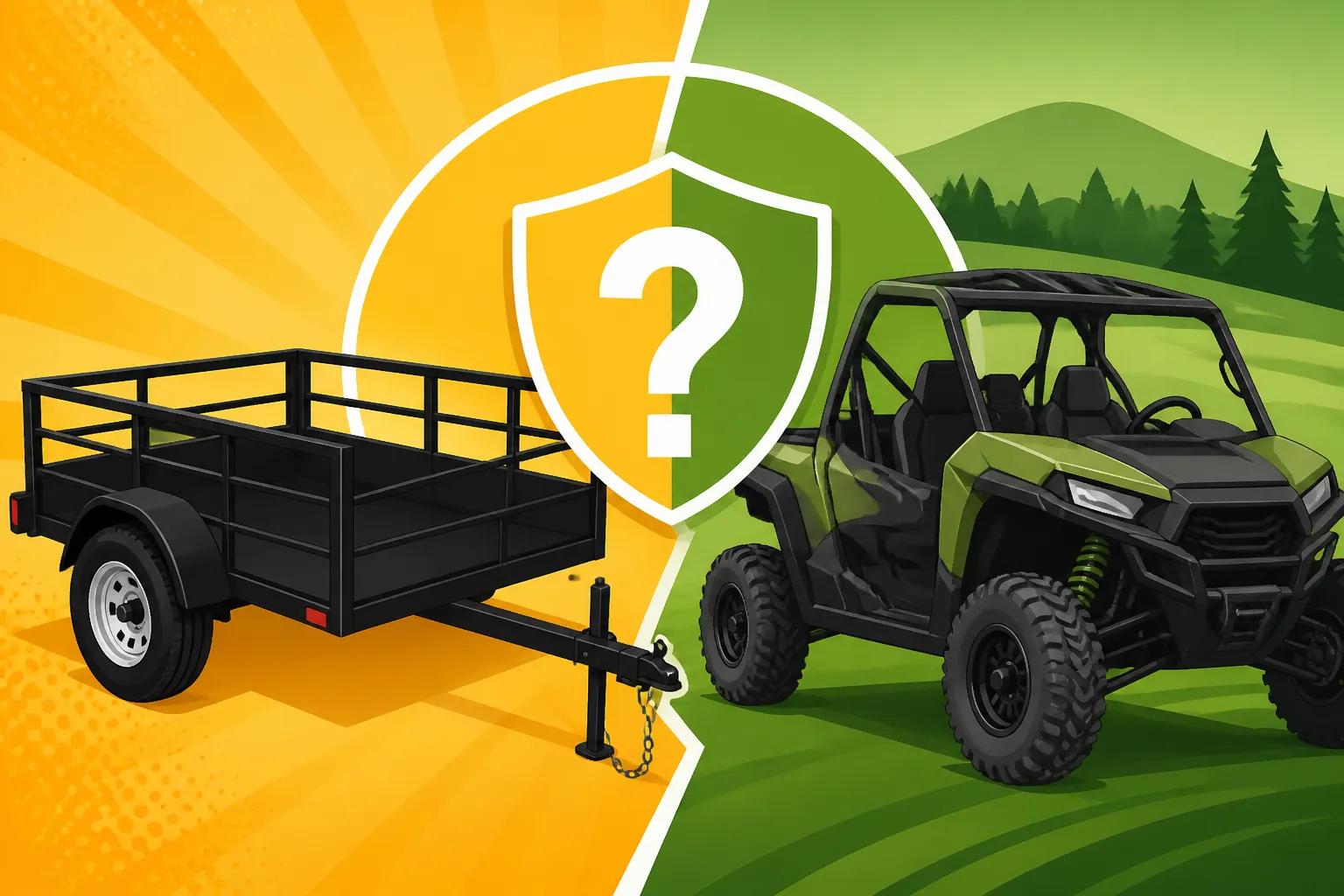
Do Utility Trailers Need Their Own Plates?
It’s a common scenario out here on the prairies: you’ve got your trusty ATV or UTV, maybe even a new side-by-side, and you’re ready to haul some gear, a bit of firewood, or even another quad to your favourite riding spot. You know your ATV doesn't need a provincial registration plate, which is a unique quirk of Saskatchewan. But then you hitch up a small utility trailer, and a nagging question pops into your head: do these trailers need their own plates, even if the machine pulling them doesn't? It's a source of real confusion for many riders, and this guide is here to clear it all up.
The Core Question: Do Utility Trailers Need Plates in Saskatchewan?
This is where many riders get understandably tripped up, often assuming that since their ATV or UTV doesn't have a provincial plate, anything it pulls would also be exempt. Unfortunately, that's not quite how the rules work here in Saskatchewan, and it can lead to some unexpected headaches if you're not careful.
Provincial Registration for Trailers
The simple, unvarnished truth is that, yes, almost all utility trailers operated on public roads in Saskatchewan require registration. This isn't a rule tied to your ATV or UTV; it's a rule tied to the trailer itself and its intended use on any road, highway, or public thoroughfare. Unlike ATVs, which fall under the province's specific [Saskatchewan Does Not Register ATVs] policy, trailers are generally covered by broader vehicle registration rules administered by Saskatchewan Government Insurance (SGI).
Think of it this way: the province views the ATV as an off-road recreational vehicle, with specific rules about where and how it can operate, many of which aim to keep it off main roadways. However, a utility trailer, regardless of what's pulling it, is designed to transport goods, and when that transport happens on a public road, it enters a different regulatory category. This means whether you're pulling a small aluminum trailer designed for a quad or a larger enclosed cargo trailer, if it hits a paved highway, a gravel grid road, or even a public dirt track, it needs to be properly registered.
Why the Confusion Exists
The lack of provincial ATV registration is definitely the biggest source of this confusion. Many new and even experienced riders in Saskatchewan find it counter-intuitive that they don’t need a plate for their quad, but the little trailer carrying their tools or hunting gear does. It creates a mental disconnect where people mistakenly extend the ATV's exemption to anything associated with it.
Consider the provincial approach to other recreational vehicles. [Saskatchewan Registers Snowmobiles, Not ATVs], and those snowmobiles absolutely need a valid plate and proper insurance. So, if you're pulling a sled with your truck, the sled itself would have its own registration, and if you were using a sled trailer, that trailer would also need registration. The ATV situation is an anomaly, and it’s critical not to let that anomaly dictate your understanding of other vehicle types. The rules for trailers are firmly rooted in their use as transport vehicles on public rights-of-way, entirely separate from the off-road status of your quad. This distinction is paramount, and overlooking it can lead to more than just a stern talking-to from a peace officer.
What Kind of Trailers Need Plates?
The phrase "utility trailer" can cover a huge range of equipment, from a tiny custom-built hauler for a single chainsaw to a tandem-axle beast meant for moving heavy machinery. The key question, however, isn't usually about the size or type of trailer, but rather its intended use on public land.
Small Utility Trailers vs. Large Cargo Trailers
When we talk about utility trailers, we're thinking of anything from a small, single-axle trailer often pulled behind an ATV or UTV to move firewood, tools, or supplies around a property, all the way up to larger, highway-capable cargo trailers used to transport an ATV or two to a riding destination. The provincial rules typically don't differentiate much based on the size or capacity when it comes to the fundamental requirement for registration. If it's got wheels and you're hitching it up to a vehicle to travel on a public road, regardless of how small or simple it is, it's generally going to need registration.
For instance, that little 4×6 utility trailer you bought from the hardware store to haul garden waste or your ice fishing shack? Yes, it needs a plate. The slightly larger open trailer you use to take your side-by-side out to the trails near Christopher Lake? Absolutely, it needs its own registration. The expectation is that any trailer used for transport on a public road, even a seldom-used grid road, will be identifiable and properly registered. This provides a level of accountability and ensures that all vehicles contributing to road wear and tear, or involved in potential accidents, can be tracked.
Exemptions for Off-Road or Private Land Use
Now, there are some very specific and quite narrow exemptions where a utility trailer might not need a plate. These almost exclusively revolve around the trailer being operated entirely off the public road system.
If your utility trailer never, ever touches a public highway, road allowance, grid road, or municipal street, then it generally doesn't require SGI registration. This would include situations like:
- Exclusively on Private Farmland: You use the trailer solely within the boundaries of your own farm property, moving feed, tools, or equipment from one field to another, without ever driving it out onto the county road. This falls under the spirit of [Saskatchewan Private Land Exemptions], where machinery used strictly on private land isn't subject to public road regulations.
- Within a Confined Yard or Construction Site: If the trailer is used only within a defined work site, like a large farmyard, industrial complex, or construction zone, and never leaves that private property onto public access points.
- On a Trapline or Lease Without Public Access: For those operating in remote areas, if your trapline or lease access roads are entirely private and you never connect to a public road, the trailer might be exempt.
The crucial caveat here is "exclusively." The moment even one tire of that trailer rolls onto a public road, highway shoulder, or road allowance, it immediately becomes subject to the provincial registration requirements. There's no grey area for "just a little bit" or "only for a short distance." If you're using your ATV and trailer to move brush from your cabin down to a burn pile that's accessible via a short public road, that trailer needs a plate. The convenience of a quick public road hop simply isn't an exemption. It's a common mistake, and it's one that can unfortunately lead to fines and other complications.
How to Register Your Utility Trailer in Saskatchewan
Registering a utility trailer in Saskatchewan is a fairly straightforward process, primarily handled through SGI (Saskatchewan Government Insurance). It's quite different from the non-existent ATV registration, bringing trailers more in line with cars, trucks, and even snowmobiles.
The Registration Process
To register your utility trailer, you'll need to visit an SGI motor licence issuer. These are located in towns and cities across the province. You can't just send a form in; you generally need to go in person to complete the transaction.
Here's what you'll typically need to bring with you:
- Proof of Ownership: This is critical. For a new trailer, this would be a New Vehicle Information Statement (NVIS) or a manufacturer's statement of origin. For a used trailer, you'll need a properly completed bill of sale. A bill of sale is your primary document for proving you own the trailer, similar to how [Saskatchewan Bills of Sale Do the Work] for proving ATV ownership. Make sure the bill of sale clearly identifies the trailer, the seller, the buyer, the date of sale, and the purchase price. It should also include the trailer's Vehicle Identification Number (VIN) or serial number. If you're dealing with a private sale, using a clear, detailed bill of sale template, perhaps from a resource like LawDepot, can save you a lot of grief down the road.
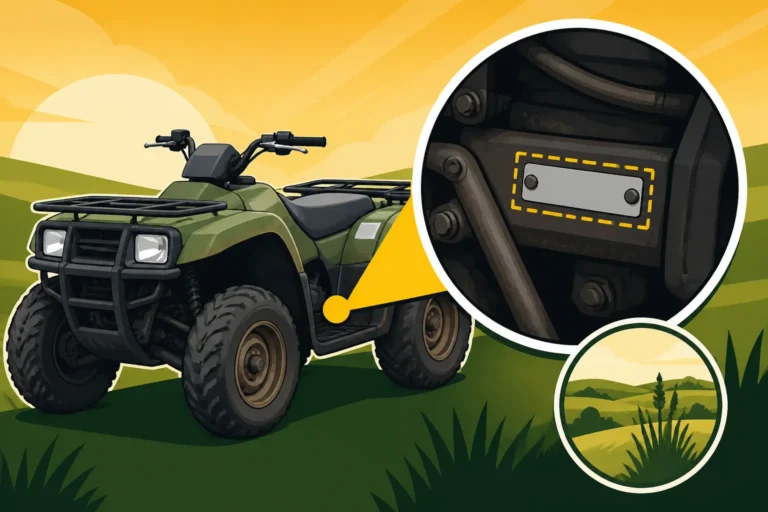
- Trailer Information: You'll need the trailer's VIN or serial number. This is usually stamped on the frame, often near the tongue. Make sure you've located it before you go. You'll also need to know the trailer's make, model, year (if applicable), and Gross Vehicle Weight Rating (GVWR).
- Personal Identification: Your valid Saskatchewan driver's license or other government-issued ID.
- Payment: Be prepared to pay the registration fees.
At the issuer's office, you'll fill out the necessary forms, providing all the required details about yourself and the trailer. The SGI representative will process your information, and once approved, you'll be issued a licence plate for your trailer and a registration certificate. Remember, [Saskatchewan Has No Registration Fee] for ATVs, but this is definitely not the case for trailers.
Costs and Renewals
The cost to register a utility trailer in Saskatchewan varies depending on factors like its weight, the type of trailer, and the length of the registration period. You'll typically pay an annual fee. SGI's fees are subject to change, so for the most current figures, it's always best to check their official website or inquire directly at an SGI motor licence issuer. Don't rely on old information you find online; things can shift.
Trailer registrations, like other vehicle registrations, have staggered expiry dates throughout the year. When you first register, you might pay a prorated amount to get you to a specific expiry month. After that, you'll renew annually. You'll receive a renewal notice in the mail or electronically, reminding you when your registration is due. Renewals can often be done online, by phone, or in person at an SGI issuer, making it quite convenient. Keeping your trailer registration current is just as important as keeping your vehicle registration current.
Proof of Ownership and Bills of Sale
As mentioned, a solid bill of sale is absolutely essential, especially if you're buying a used utility trailer privately. While [Saskatchewan Has No Title to Transfer] for ATVs, the bill of sale serves as your definitive proof of ownership for a trailer.
A good bill of sale for a utility trailer should include:
- Full legal names and addresses of both the seller and the buyer.
- Date of the sale.
- Detailed description of the trailer: make, model, year (if known), colour, and crucially, the VIN or serial number.
- Purchase price.
- Signatures of both parties.
If you're buying from a private seller, taking the time to write up a clear and comprehensive bill of sale, perhaps using a template from a reputable source like LawDepot, is a smart move. It protects both you and the seller and provides the necessary documentation for SGI. Without proper proof of ownership, you could face delays or even be unable to register the trailer. Just as with [Saskatchewan Bills of Sale for a Quad], accuracy and completeness are key. [Your Bill of Sale Stands In for a Registration] in cases where official titles don't exist, and for trailers, it's the foundation of your legal ownership.
Enforcement and Consequences of Unplated Trailers
Operating an unregistered utility trailer on public roads in Saskatchewan isn't just a minor oversight; it's a violation of provincial law that can carry real consequences. Peace officers, including the RCMP and municipal police, are well aware of registration requirements for trailers, even if they're used in conjunction with unregistered ATVs.
Police and Peace Officer Checks
If you're towing a utility trailer on any public road, from a busy highway to a quiet rural grid road, you can expect that a peace officer might pull you over to verify its registration. Just as they would check the registration of your truck or car, they are within their rights to inspect the trailer you're pulling.
An officer might ask to see:
- Your driver's license: To ensure you're a licensed operator.
- Your vehicle's registration and insurance: For the towing vehicle.
- The trailer's registration certificate: This is the document proving the trailer is legally registered with SGI.
- Proof of ownership for the trailer: If there's any doubt about who owns it.
This is a scenario where [What an Officer Can Ask to See on a Grid Road] extends beyond just your ATV to anything you're pulling. If you don't have the necessary paperwork, or if the trailer isn't registered, you're looking at potential problems. Officers are trained to recognize the visual cues of unregistered trailers, even small ones, and will act accordingly.
Fines and Penalties
Operating an unregistered utility trailer can result in significant fines. These fines are typically administrative penalties, meaning they are issued by an officer on the spot, but they can still be substantial. The specific amount can vary, but generally, operating an unregistered vehicle or trailer is not a cheap ticket.
Beyond fines, there's also the possibility of your trailer being seized or impounded. If an officer determines that the trailer is being operated illegally, they have the authority to remove it from the roadway. This means not only a fine but also the additional costs of impoundment, storage fees, and potentially administrative release fees, which can quickly add up. These can be a real logistical nightmare, especially if you're far from home or a service centre.
The onus is entirely on the owner and operator to ensure that the trailer is properly registered before it ever hits a public road. Claiming ignorance or assuming the ATV's rules apply simply won't hold up in court.
Insurance Implications
This is a critical, and often overlooked, aspect of unplated trailers. Even if your ATV or UTV has robust liability insurance (which it needs to operate on most public land and for general protection, as covered in [Saskatchewan Insurance Requirements for Riders]), an unregistered trailer can complicate things immensely in the event of an accident.
Most standard ATV insurance policies are designed to cover the operation of the ATV itself. While they might extend to damage caused by an attached implement or trailer if the trailer is legal and properly used, they are not designed to cover the liability of an illegally operated piece of equipment.
If you're involved in an accident while towing an unregistered trailer, your insurance company could potentially deny coverage for any damage or injury caused by that trailer. This could leave you personally liable for significant costs, including property damage, medical bills, and legal fees. Even if the primary cause of the accident was something else, the fact that the trailer was unregistered could be used by adjusters or opposing legal counsel to complicate your claim and potentially shift blame or reduce payouts. It's a risk simply not worth taking, especially when trailer registration is relatively affordable compared to the potential financial fallout of an accident.
Special Considerations for ATV/UTV Specific Trailers
Beyond the general rules for utility trailers, there are a few specific situations and types of trailers that often come up in the ATV/UTV community that are worth exploring. These include agricultural use, homemade trailers, and how visitor vehicles are handled.
Agricultural and Farm Use
Saskatchewan has a strong agricultural base, and ATVs and UTVs are indispensable tools on many farms and ranches. For utility trailers used exclusively for farming operations, there are often specific considerations.
If a utility trailer is only used for agricultural purposes on a farm, such as hauling feed, tools, or small equipment from one field to another, or within the confines of the farm property, and it never touches a public road, it would fall under the private land exemptions discussed earlier. This aligns with rules for [Saskatchewan Machines Used on a Farm], where the focus is on the operational use, not necessarily the type of machine.
However, the definition of "agricultural implement" versus a "utility trailer" can sometimes be nuanced. Generally, if it's a purpose-built piece of farm machinery like a baler, seeder, or combine header cart, it might be categorized differently. But a standard small utility trailer, even if used on a farm, if it's taken off the farm property onto a public road, loses that exemption and requires registration. For example, if you haul your quad and a small utility trailer loaded with fencing supplies down a grid road to a distant pasture that's still part of your farm, that trailer still needs a plate because it's on a public thoroughfare. It's a distinction that often catches people out.
Homemade Trailers
It's not uncommon for resourceful individuals to build their own utility trailers, especially smaller ones designed to be pulled behind an ATV or UTV. The question then becomes: how do you register a trailer that doesn't have a factory-issued VIN?
SGI has a process for registering homemade trailers. It typically involves:
- Safety Inspection: The trailer will need to undergo a safety inspection to ensure it meets basic roadworthiness standards (lights, tires, coupling, safety chains, etc.).
- Weight Certification: You'll need to determine and certify the trailer's weight. This might involve taking it to a certified scale.
- VIN Assignment: SGI will assign a unique Vehicle Identification Number (VIN) to the homemade trailer. This VIN must be permanently affixed to the trailer's frame.
- Proof of Materials: You might need to provide receipts or documentation for the major components used in its construction (axles, tires, frame materials) to prove legitimate ownership of the parts.
This process ensures that even homemade trailers are safe for public roads and can be properly identified. While it adds a few extra steps compared to registering a manufactured trailer, it's a necessary part of the process if you intend for your creation to travel beyond your private property.
Trailers Used by Visitors
Saskatchewan is a popular destination for outdoor enthusiasts, and many visitors bring their ATVs, UTVs, and accompanying trailers from other provinces or even the United States. The rules for visitors and their vehicles are generally based on reciprocity.
If a visitor from Alberta, Manitoba, or Montana brings a utility trailer that is properly registered and plated in their home jurisdiction, that registration is typically recognized in Saskatchewan. This falls under the general principle of [Saskatchewan Rules for an Out-of-Province Machine], where a valid registration from elsewhere is accepted for a temporary visit. They don't need to get a Saskatchewan plate.
However, if a visitor arrives with an unregistered utility trailer, even if they're from a jurisdiction that might have more lenient trailer rules (which is less common for trailers than it is for ATVs), they would be subject to Saskatchewan's laws regarding unregistered vehicles on public roads. The responsibility still rests with the operator to ensure their entire rig complies with the laws of the province they are currently operating in. It's always a good idea for visitors to double-check Saskatchewan's regulations before they head out, especially regarding anything they are towing.
Comparative Table: ATV/UTV vs. Utility Trailer Registration in Saskatchewan
To help clarify the differences, here's a quick comparison of the registration requirements for ATVs/UTVs versus utility trailers in Saskatchewan:
| Feature | ATV / UTV | Utility Trailer |
|---|---|---|
| Provincial Registration | No (province-wide) | Yes (required by SGI) |
| Provincial Licence Plate | No (province-wide) | Yes (issued by SGI) |
| Cost of Registration | None (provincial) | Yes (annual fees, varies by weight/type) |
| Proof of Ownership | Bill of sale [Saskatchewan Has No Title to Transfer] | Bill of sale/NVIS (needed for SGI registration) |
| Municipal Plates | Yes, some RMs issue [Saskatchewan Municipal Plate Schemes] | No (municipalities don't plate utility trailers) |
| Insurance Requirements | Yes (minimum $200,000 liability) | Yes (part of SGI registration, often liability only) |
| Required on Public Roads | No (unless specific bylaws allow, or for crossing) | Yes (if used on any public road) |
| Exemption for Private Land | Yes (if exclusively on private land) | Yes (if exclusively on private land) |
| VIN / Serial Number | Yes (important for ownership/theft) | Yes (essential for SGI registration) |
This table really highlights the contrasting approaches. While the province decided [Why Saskatchewan Never Built a Quad Registry], they absolutely maintain a robust system for trailers.
Conclusion
The bottom line for anyone operating an ATV or UTV in Saskatchewan is this: while your quad itself might not need a provincial registration plate, any utility trailer you hitch up to it and use on a public road absolutely does. The rules for trailers are distinct from those governing ATVs and UTVs, and they align more closely with the registration requirements for other road-going vehicles. Taking a little time to ensure your trailer is properly registered with SGI will save you from potential fines, impoundment, and significant insurance complications down the road. Don't let the unique nature of ATV registration lead you into a preventable bind. Always make sure your trailer has its plate before you hit the pavement or the grid.
Disclaimer
This article is for general informational purposes only and does not constitute professional advice. Laws, prices and regulations vary by location and change over time. Consult a qualified professional for guidance on your specific situation.