Paperwork for a Quad Kept at a Northern Cabin
Keeping an ATV or UTV at your northern cabin in Saskatchewan is a huge convenience, offering freedom to explore the vast wilderness right from your doorstep. However, it also brings a unique set of worries, especially when it comes to paperwork and proving ownership, given that Saskatchewan doesn't have a provincial registration system for these machines. This guide will walk you through the essential documents you need, how to safeguard them, and what steps to take to ensure your peace of mind and protect your investment in the wild beauty of Saskatchewan.
Understanding Saskatchewan's Unique Approach to ATV Ownership
One of the biggest head-scratchers for many ATV and UTV owners, especially those new to Saskatchewan or from other provinces, is the fact that there’s no provincial registry for these machines. You won't find a provincial office where you can get a license plate or a decal for your quad, nor will you receive a title certificate in the mail like you would for a car or even a snowmobile. This can be incredibly frustrating and confusing, leaving many riders wondering how on earth they're supposed to prove they own their machine, especially when it's tucked away at a remote cabin miles from any official-looking document.
The reality is that [Saskatchewan Does Not Register ATVs] at a provincial level. This means there's no central government database tracking who owns which quad, unlike the systems in place for cars, trucks, or even snowmobiles which do require registration in Saskatchewan. This lack of a formal registry means the onus is entirely on you, the owner, to maintain your own proof of ownership. This might seem like an oversight, but it’s the system we operate under, and understanding it is the first step to properly protecting your machine.
Instead of a provincial plate or decal, your proof of ownership hinges entirely on your purchase documentation. This makes a robust bill of sale absolutely critical, as it serves as your primary legal record. Without a provincial system, there's no official paper trail beyond what you create and meticulously keep. Many folks look for a registry that simply doesn't exist, which can lead to anxiety when trying to understand their responsibilities. Don't worry, we'll dive into exactly what documents you need to collect and safeguard to avoid any headaches down the trail.
Essential Paperwork to Keep Safe for Your Cabin Quad
Since there’s no provincial registration for ATVs and UTVs in Saskatchewan, your ownership proof rests solely on your personal documents. For a machine kept at a northern cabin, where access to important papers might be limited and incidents can feel even more isolated, having your ducks in a row is paramount. You need a system that works, whether you're dealing with a lost key, a warranty claim, or the unfortunate event of theft.
The Bill of Sale: Your Most Crucial Document
This cannot be stressed enough: your bill of sale is the single most important piece of paperwork you have for your ATV or UTV. Think of it as your machine's birth certificate and title all rolled into one. When [Saskatchewan Bills of Sale Do the Work], they need to be thorough and accurate. If you bought your quad new from a dealer, you’ll likely have a comprehensive sales agreement. If you purchased it privately, you need to ensure the bill of sale covers all the bases.
A proper bill of sale should include:
- Full names and addresses of both buyer and seller: Leave no room for ambiguity.
- Detailed description of the ATV/UTV: Make, model, year, colour.
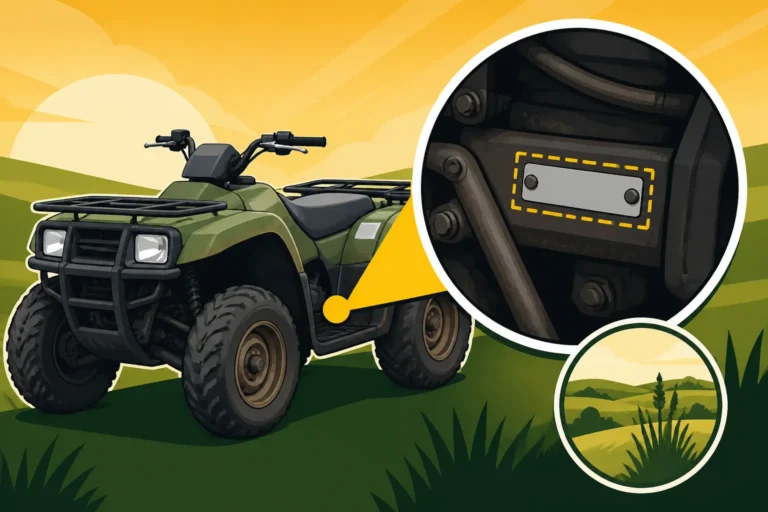
- The Vehicle Identification Number (VIN): This is non-negotiable. Always double-check that the VIN on the paperwork exactly matches the one physically stamped on your machine. This is your quad's unique identifier.
- Purchase price: This is important for tax purposes and establishing value.
- Date of sale: Clear and precise.
- Signatures of both buyer and seller: Often, having a witness sign can add an extra layer of security, though not always legally required.
You might be thinking, "What if I just bought it from my buddy at the lake?" Even then, take the time to draft a proper bill of sale. Resources like LawDepot offer templates that can help you create a professional and legally sound document quickly and easily. Having this detailed record is fundamental to [How to Prove You Own an ATV in Saskatchewan]. It might seem like a hassle at the time, but the peace of mind it provides if any issues arise is invaluable.
Insurance Policy Documentation
While Saskatchewan doesn't mandate provincial registration, it absolutely does require insurance. Specifically, you need to have a minimum amount of liability insurance to legally operate an ATV or UTV in the province. This is crucial for protecting yourself and others in case of an accident. [Saskatchewan Insurance Requirements for Riders] are non-negotiable, and a peace officer can ask to see proof of insurance.
Your insurance policy documents should clearly show:
- Your name and policy number.
- The ATV/UTV details: Make, model, year, and most importantly, the VIN that matches your machine.
- Coverage dates and limits: What exactly are you covered for, and for how long?
- Contact information for your insurer: In case you need to file a claim.
Keep a copy of your current insurance card or policy declaration page at your cabin, or even better, a waterproof copy stored on the machine itself. For a machine kept remotely, having this information readily accessible can make a world of difference if you need to report an incident or make a claim from a far-off location.
Other Useful Documents and Best Practices
Beyond the bill of sale and insurance, other pieces of paperwork, or even digital records, can prove incredibly helpful.
- Original Manufacturer's Statement of Origin (MSO) or Certificate of Origin (COO): If you bought your machine new, this document essentially acts as its first title. While not transferable like a car title in Saskatchewan, it confirms the machine's initial manufacturer and specifications.
- Previous Bills of Sale: If you bought your quad used, try to get copies of previous bills of sale if available. A chain of ownership can further strengthen your claim.
- Maintenance Records: While not proof of ownership, good maintenance records (receipts for parts, service invoices) show you've cared for the machine, which can be valuable if you ever sell it or need to prove its condition.
- Photographic/Video Evidence: Take clear photos or a video of your ATV/UTV, including its VIN, any unique identifying features, and the general condition. Store these digitally on a cloud service. This can be critical evidence in case of theft or damage.
- Owner's Manual: This contains important information about operation, maintenance, and specifications.
Where to Store Your Paperwork:
This is crucial, especially for a cabin quad. You absolutely should not keep all your original documents on the quad itself or tucked away at the cabin where they could be lost to fire, flood, or theft.
- Secure Home Storage: Keep original, irreplaceable documents like the MSO and your primary bill of sale in a fireproof safe at your primary residence.
- Cabin Copy: A waterproof, sealed envelope with copies of your bill of sale and insurance policy can be kept at the cabin for quick reference.
- Digital Backups: Scan all documents and save them to a secure cloud storage service. This ensures you can access them from anywhere, even if physical copies are lost.
Here's a quick overview of essential documents and storage recommendations:
| Document Type | Description | Storage Recommendation | Importance Level |
|---|---|---|---|
| Bill of Sale | Primary proof of ownership with VIN, buyer/seller details, price, date. | Original at home (safe), Copy at cabin (waterproof), Digital backup. | Critical |
| Insurance Policy/Card | Proof of liability coverage, machine details, policy dates. | Original at home, Copy at cabin/on machine (waterproof), Digital backup. | Critical |
| Manufacturer's Statement | Original factory document detailing the machine. | Original at home (safe), Digital backup. | High |
| Previous Bills of Sale | History of ownership if purchased used. | Original at home (safe), Digital backup. | Medium |
| Maintenance Records | Receipts for parts, service invoices. | At home (file), Digital backup. | Low/Medium |
| Photos/Video | Visual record of the machine, VIN, unique features. | Digital backup (cloud storage). | High |
Always remember that for your quad at the cabin, prevention is better than cure. Having your documents well-organized and safely stored is a vital part of protecting your investment.
Dealing with Theft, Damage, or Disputes Without a Provincial Registry
The absence of a provincial ATV registry can make certain situations, like theft or damage, feel even more complicated. You might wonder, "How do police track a stolen quad if there's no central database?" or "What does my insurance company need if I don't have a registration number?" These are valid concerns, and while the process might differ from a registered vehicle, it's certainly not impossible to navigate.
Reporting a Stolen ATV or UTV
If your quad goes missing from your northern cabin, your first call, naturally, is to the RCMP or local police detachment. They will need specific information to launch an investigation. This is where your meticulously kept paperwork truly shines.
- The VIN is paramount: The Vehicle Identification Number (VIN) is the primary identifier for your machine. This is what police will use to enter your machine into national stolen vehicle databases (like CPIC in Canada). Without a VIN, or if the VIN on your machine has been tampered with, the process becomes significantly more challenging. This highlights why having your [Saskatchewan Serial Number Records] accurate and accessible is so vital.
- Bill of Sale as Proof of Ownership: When you report the theft, the police will ask for proof that you actually own the machine. Your bill of sale is this proof. It validates your claim and provides the necessary details about the machine's origin and your purchase.
- Detailed Description and Photos: Provide as much detail as possible: make, model, year, colour, any unique modifications (winch, specialized tires, stickers, dents). Share those photos or videos you took earlier! This helps officers identify your machine if it's found.
While [Saskatchewan Stolen Machine Reports] won't involve checking a provincial ATV registry, the national database system still plays a crucial role. The challenge lies in police being able to verify ownership and identify the specific machine without a provincial plate or decal. This is why personal diligence in record-keeping is so critical.
Making an Insurance Claim
If your quad is damaged or stolen, you'll need to contact your insurance provider. They will also require proof of ownership and a detailed description of the machine.
- Proof of Ownership: Again, your bill of sale will be the primary document. Your insurer needs to confirm you are the legal owner of the machine for which you are making a claim.
- VIN Verification: The VIN on your policy must match the VIN on your bill of sale and, ideally, the VIN on the physical machine (if it’s damaged rather than stolen).
- Circumstances of the Incident: Be prepared to provide a detailed account of what happened, where, and when. Photos of damage are also extremely helpful.
Remember, [Saskatchewan Insurance Claims Without a Plate] are common, so your insurer is used to dealing with non-registered ATVs. What they do rely on heavily is consistent documentation – that the VIN on your policy, your bill of sale, and the machine itself all align.
Handling Disputes
Imagine a scenario where a boundary dispute arises, or someone claims your machine is theirs. Without a provincial registry, resolving such issues can be tricky. This is another area where a robust bill of sale, potentially drafted with a template from LawDepot, becomes your best friend. It clearly outlines the transfer of ownership to you, minimizing ambiguity. If you’ve loaned your quad to a friend for the weekend at the cabin, a simple loan agreement, even a handwritten one, can prevent misunderstandings. Having your ownership documented in black and white provides a strong legal foundation should a dispute ever escalate.
Selling or Transferring Ownership of a Cabin Quad
Whether you're upgrading, moving, or simply no longer need your ATV at the cabin, eventually you might consider selling it or passing it on. Without a provincial title, the process of transferring ownership relies entirely on private agreements and robust paperwork. This is particularly important when dealing with private sales, where trust and clear documentation are paramount.
Preparing for a Private Sale
When [Selling a Quad Privately in Saskatchewan], your primary responsibility is to provide the buyer with clear proof of ownership. This is not just a courtesy; it's essential for the buyer to be able to insure the machine and establish their own ownership.
- The Bill of Sale (Again!): This is where your original bill of sale comes into play. You will need to create a new bill of sale for the new buyer, clearly detailing the transaction. This new document effectively transfers ownership from you to them. A comprehensive template, perhaps from LawDepot, can ensure no critical details are missed.
- VIN Verification: Ensure the VIN on your current bill of sale (the one proving your ownership) matches the VIN on the machine, and that the new bill of sale for the buyer also accurately reflects this VIN.
- Gather All Relevant Documents: Provide the buyer with copies of your original bill of sale (or the MSO if you have it), the new bill of sale for their purchase, and any maintenance records. The more complete the documentation, the smoother the sale and the more confidence the buyer will have.
It's a common mistake for sellers to overlook the importance of a detailed bill of sale for the buyer, assuming "it's just a quad, no registration needed." However, this document is the buyer's only proof of ownership and their key to securing insurance and peace of mind.
What the Buyer Needs
A smart buyer will ask for a thorough bill of sale. They need this for:
- Proof of Ownership: To demonstrate they legally purchased the machine.
- Insurance: Their insurance company will require the VIN and proof of ownership to issue a policy.
- Resale Value: A well-documented history can enhance the machine's resale value down the line.
Advise your buyer to make copies of all documents and store them securely, just as you have. A seamless transfer of paperwork ensures a positive experience for both parties and avoids potential headaches in the future.
Gifting or Inheriting a Quad
If you decide to gift your cabin quad to a family member, or if it's part of an estate, a formal transfer of ownership is still required, even without a registry.
- Gift: For a gift, you should still draft a "bill of gift" or a simple transfer document. This record should state that the machine (with its VIN) is being gifted from you to the recipient, dated and signed by both parties (and witnessed, if possible). This document serves as the recipient's proof of ownership.
- Inheritance: In the case of inheritance, the estate's executor will typically handle the transfer. The will or letters of administration, along with the machine's existing paperwork, will be used to transfer ownership to the designated heir. A formal letter from the executor, detailing the transfer of the specific ATV (with VIN), will then serve as the heir's proof of ownership.
In all these scenarios, the underlying principle is the same: without a government registry, every transfer of ownership, whether by sale, gift, or inheritance, must be clearly and comprehensively documented in a private agreement to ensure the new owner has undisputed proof. [Your Bill of Sale Stands In for a Registration] in every sense of the word, providing legal clarity in a system that otherwise relies on individual record-keeping.
Disclaimer
This article is for general informational purposes only and does not constitute professional advice. Laws, prices and regulations vary by location and change over time. Consult a qualified professional for guidance on your specific situation.