Saskatchewan Private Land Exemptions
It's easy to get tangled up in all the rules and regulations that come with owning an ATV or UTV here in Saskatchewan. One of the biggest areas of confusion, and frankly, frustration, for many riders is understanding what applies when you're just trying to enjoy your machine on your own land. This guide is here to untangle that knot, walking you through the specific exemptions the province has in place for private land use, so you can ride with confidence and clarity.
Understanding the Core Principle of Private Land Exemptions
There's a fundamental difference in how the province views ATV use on public roads and trails versus on your own property. It's a distinction that can save you a lot of headache once you understand it.
The "All Terrain Vehicles Act" and Its Scope
When most people talk about ATV rules in Saskatchewan, they're usually referring to "The All Terrain Vehicles Act." This piece of legislation, passed back in 1988, was primarily designed to govern how these machines are operated in public spaces. Think about it: roads, ditches, Crown land, designated trails – these are the areas where the Act really flexes its muscle. It sets out rules for things like age limits, helmet use, insurance, and even speed limits, all with public safety and environmental protection in mind.
However, this focus on public areas can lead to a lot of head-scratching when you're just puttering around your acreage. It feels counter-intuitive to apply the same rules for driving down a grid road to simply moving a bale of hay in your own field. Riders often express genuine confusion, wondering if they need a special license or if their child needs to be a certain age just to ride a quad on the back forty of their farm. The Act, in many ways, reflects a more urban-centric view of vehicle operation, which doesn't always translate perfectly to the vast, private landscapes of Saskatchewan.
The truth is, the intention of the Act was never to micromanage every single instance of ATV use, particularly not on private property where the owner assumes most of the responsibility and risk. It's about regulating the interaction between ATVs and the general public, and ensuring a baseline of safety when machines share space with other vehicles and pedestrians. This foundational understanding is key to grasping why private land exemptions exist in the first place. You can dive deeper into the overarching regulations by reading about [Saskatchewan's All Terrain Vehicles Act].
What "Private Land" Truly Means Under the Act
So, if the Act focuses on public spaces, what exactly constitutes "private land" in this context? It's pretty straightforward: private land refers to any property that is privately owned, leased, or otherwise lawfully occupied by an individual or entity, where you have explicit permission to be. This isn't just about having a title deed in your name; it's about having legitimate control or access to the land.
For instance, your own farmyard, the pasture you lease from your neighbour, the quarter section of bush you own for hunting, or even your cabin lot by the lake all fall under the umbrella of private land. What matters is that it's not Crown land, a public road allowance, or a municipal park. If you're a tenant on a property, and your landlord has given you permission to operate your ATV there, that's also considered private land for your use. The key is that the land is not open to the general public for unrestricted access and use.
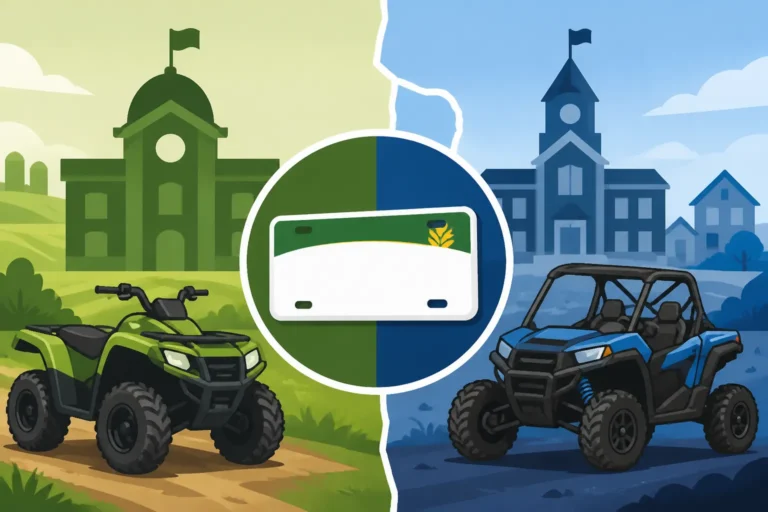
The exemptions primarily kick in when you are operating an ATV on your own land, or land that you have a legal right to occupy and use for such purposes. This distinction is crucial because it immediately sets apart your recreational or work activities on your property from riding through a provincial park or on a public grid road. When we talk about Saskatchewan Private Land Exemptions, we're really focusing on those specific situations where the provincial Act takes a step back.
Why These Exemptions Exist: Practicality and Property Rights
The existence of private land exemptions isn't an oversight; it's a deliberate and practical approach to governance, deeply rooted in the realities of life in Saskatchewan and fundamental property rights. Imagine if every farmer needed a special permit to drive their quad from the barn to the back forty to check on cattle, or if kids couldn't learn to ride a mini-bike in their own yard. It would be an administrative nightmare and would place an unreasonable burden on landowners.
One of the primary reasons these exemptions exist is pure practicality. ATVs and UTVs are indispensable tools for many people in rural Saskatchewan. They're used for farming, ranching, checking traplines, maintaining properties, and accessing remote cabins. To impose the same rigid licensing, registration, and age restrictions for these functional uses on private land as for public road use would severely hinder day-to-day operations and recreational activities. The government understands that people need to use their machines efficiently and without excessive red tape on their own property.
Furthermore, these exemptions uphold fundamental property rights. Landowners have the right to control and manage their property as they see fit, within the bounds of general law. This includes allowing themselves and their immediate family members to operate vehicles like ATVs on their land. While public safety is paramount on shared spaces, the private domain allows for a different set of expectations and responsibilities, where the landowner is often best positioned to assess and manage risks. It's a recognition that what happens on your own farm, in your own yard, or at your own cabin is largely your prerogative, as long as it doesn't infringe on the rights or safety of others off your property.
Specific Exemptions for Owner-Occupied and Family Land
When it comes to your own property, the rules become significantly more flexible. It’s here that Saskatchewan really acknowledges the unique needs of landowners and their families.
Riding on Your Own Occupied Land
This is perhaps the most significant and straightforward exemption. If you own and occupy a piece of land, you (as the owner) are generally exempt from many of the core operational requirements of the All Terrain Vehicles Act while operating your ATV on that land. This means things like the provincial registration requirement (which, let's be honest, doesn't actually exist for ATVs anyway!), driver's licence requirements, and even age restrictions that apply to public areas often don't apply when you're strictly on your own property.
Think about the myriad ways this applies to daily life across the province. You might be using your quad to pull a small trailer full of tools from your shed to a fence line on your acreage near Lumsden. Or perhaps you're simply riding around your farm in the Swift Current area, checking irrigation pivots. Maybe you're moving firewood from one corner of your bush lot at your cabin near Christopher Lake. In all these scenarios, because you are on land that you own and occupy, the stricter provincial operational rules regarding licences and age are relaxed. It’s all about the reasonable use of your own property for your own purposes, whether it’s work or recreation.
This exemption is designed to allow landowners to manage their property, carry out tasks, and enjoy their leisure without having to jump through hoops that were intended for public spaces. It simplifies things considerably for the vast majority of ATV owners who primarily use their machines close to home. Just remember, while the Act might step back, common sense and safety still need to be your top priorities to prevent accidents on your property.
Immediate Family Members and Their Privileges
The private land exemption extends beyond just the registered owner to include their immediate family members. This is incredibly helpful for families who want to enjoy their ATVs together or for kids learning the ropes in a safe, controlled environment. Generally, immediate family includes your spouse, children, parents, and siblings. If these individuals are operating an ATV on land that you, as the owner, occupy, they can often do so without being subject to the full spectrum of public land regulations.
Imagine your teenager, perhaps 14 years old, learning to ride a smaller quad on the expansive fields of your family farm near Estevan. On a public grid road, they would be subject to strict age requirements and supervisor rules, as well as needing a driver's licence if they are 16 or over. But on your private farm property, under your supervision, these provincial restrictions often don't apply. This allows for practical, hands-on learning in a familiar environment. Similarly, a parent visiting the family farm might hop on a quad to help with chores or just take a leisurely ride around the property, benefiting from the same exemptions.
It's important to remember that this "immediate family" clause is tied to the concept of the owner-occupied land. It's not a blanket exemption that allows family members to ride anywhere. It's specifically about their use on the owner's private property. For more detail on these specific relationships, you might look into [Saskatchewan Immediate Family Exemptions]. This provision ensures that families can continue their rural traditions and make good use of their ATVs without unnecessary regulatory hurdles on their own land.
The Nuances of Rented or Leased Private Land
While the primary exemption focuses on owner-occupied land, the spirit of "private land" can extend to land that is rented or leased, but with some important nuances. If you are leasing a pasture for your cattle, for example, and you need to use your ATV to check on your herd, that land is considered private for your operational purposes. The key here is that you have a legal right to occupy and use that land.
However, if you are simply a guest on someone else's rented or leased property, the situation can become a bit more complex. You would ideally need explicit permission from the leaseholder or, even better, from the actual landowner, to operate your ATV there. A casual verbal agreement might suffice for friendly neighbours, but for anything more formal, or to avoid potential misunderstandings, having something in writing is always the safest bet. This could be a simple note or a clause within a broader lease agreement.
Consider a scenario where you've rented a cabin at a lake that sits on privately owned land, and you want to use your UTV to haul gear from the cabin to a private dock. You'd need to ensure that your rental agreement, or a separate conversation with the cabin owner, explicitly permits ATV use on that property. Without that clear permission, you could inadvertently be trespassing or violating the terms of your rental. Always clarify the scope of your access and use when operating on rented or leased private land to ensure you're on solid legal ground.
Exemptions for Agricultural and Business Use
Saskatchewan's economy has a strong foundation in agriculture and natural resources, and ATVs and UTVs are often critical tools for these industries. The provincial Act recognizes this by providing specific exemptions for machines used in these capacities on private lands.
Farming and Ranching Operations
For farmers and ranchers across Saskatchewan, ATVs and UTVs aren't just recreational vehicles; they are indispensable pieces of equipment, as vital as a tractor or a pickup truck. These machines are used daily for an incredible array of tasks: herding cattle and sheep, checking miles of fence lines, scouting crops for pests or disease, transporting tools and supplies to remote parts of a field, or even carrying feed to livestock in areas inaccessible to larger vehicles. Their versatility, maneuverability, and lower operating costs make them ideal for the demands of agricultural work.
Given this heavy reliance, the All Terrain Vehicles Act provides significant exemptions for machines used strictly for agricultural purposes on private agricultural land. This means that when you're using your quad or side-by-side to perform farm duties on your own fields, pastures, or leased agricultural properties, you are generally not subject to the same strict provincial regulations concerning age, licensing, or even helmet use that might apply on public roads or Crown land. This practical approach acknowledges that farmers need to operate their businesses efficiently without undue regulatory burdens for activities essential to food production. You can find more specific details on [Saskatchewan Machines Used on a Farm].
It's a recognition that the environment of a working farm is inherently different from a public road. While safety remains paramount, the specific rules are relaxed to allow for the functional use of these machines. This doesn't mean safety can be ignored, but rather that the owner/operator on private agricultural land has more autonomy in determining safe practices for their specific operations.
Commercial and Industrial Applications
Beyond agriculture, ATVs and UTVs are workhorses in many other commercial and industrial sectors across Saskatchewan, especially in our vast northern regions and resource-rich areas. Trappers use them to access remote traplines, hauling equipment and furs over rugged terrain. Forestry workers might use them to survey timber plots or transport small tools. In the oil and gas industry, ATVs are often employed on lease sites for inspections, maintenance, or moving personnel and light equipment across rough terrain. Construction companies use them on private job sites for material transport or supervisor mobility.
In these commercial and industrial contexts, when an ATV or UTV is being used strictly for business purposes on privately owned or leased commercial/industrial land, similar exemptions often apply. The Act is generally designed not to impede legitimate business operations that take place off public thoroughfares. This means that a trapper operating their quad on their registered trapline on private or leased Crown land (with appropriate permits for the trapline itself) isn't facing the same provincial ATV operational rules as someone joyriding on a public trail. The focus is on the purpose of the use and the location of the operation.
For businesses operating in these remote or specialized environments, efficiency and access are key. The exemptions allow companies and individuals to utilize ATVs as vital tools without bogging them down with public-use regulations. Understanding [Saskatchewan Machines Used on a Trapline] can provide further clarity on how these exemptions are applied in specific commercial settings.
Employee Use and Employer Responsibilities
When ATVs are used in agricultural or commercial settings, it's often employees who are operating them. In these situations, while the provincial Act's registration or licensing requirements might be relaxed for the machine's operation on private land, employer responsibilities under occupational health and safety regulations become critical. An employer has a legal duty to ensure the safety of their workers, which includes providing proper training, maintaining equipment, and implementing safe operating procedures for ATVs.
For example, a rancher might hire a summer student to help with cattle. While that student might not need a provincial driver's licence to operate a quad on the private ranch land, the rancher is responsible for ensuring the student is competent, properly trained, and operating the machine safely. This could involve providing hands-on instruction, ensuring the ATV is in good working order, and supplying appropriate safety gear like helmets. Similarly, an oilfield company using UTVs on a lease site must comply with industry-specific safety protocols, site orientations, and ensure their employees are certified to operate the equipment.
So, while the provincial ATV Act might take a backseat, other significant legal and ethical responsibilities step forward. Employers need to prioritize safety and training to protect their workforce, regardless of the exemptions related to public land use. This creates a balance: facilitating necessary work while upholding the duty of care for those performing it.
Navigating Permission and Proof on Private Land
Even with private land exemptions, navigating access to land you don't own outright requires a clear understanding of permission and sometimes, a little bit of paperwork.
The Importance of Expressed Permission
The private land exemptions are fantastic when you own the land, but what if you want to ride on a friend's farm or across a neighbour's field to get to your cabin? This is where expressed permission becomes absolutely critical. Without it, you are simply trespassing, and that can lead to significant problems, both legally and socially. A friendly wave from the landowner might feel like permission, but for anything beyond a quick, casual interaction, something more explicit is always better.
Verbal permission is a start, and often sufficient between trusted neighbours. However, misunderstandings can happen, or a new landowner might not be aware of previous arrangements. That's why stressing the value of written permission is so important. A simple, signed note stating that you have permission to operate your ATV on specific dates or for a specific purpose on their property can save a lot of grief. It protects both you and the landowner. You have proof of your right to be there, and the landowner has a clear record of who they've allowed on their property. This can be especially useful if a peace officer or another concerned party questions your presence.
For those who want to ensure their permission is legally sound and clearly documented, resources like LawDepot can be incredibly helpful. They offer templates for various agreements, including permission to enter property, which can be easily adapted for ATV use. Having a clear record not only prevents disputes but also demonstrates respect for the landowner's property rights. Think about it: a quick call or a written note before you unload your quad can save you from a heated confrontation or a potential trespass charge. For more insights, consider [Getting Written Permission From a Farm Landowner].
When Private Land Borders Public Access
This is where things can get incredibly tricky for riders in Saskatchewan. It's rare that private land exists in a complete vacuum, completely cut off from public roads, municipal ditches, or Crown land. Your private trail might lead directly to a grid road, or your pasture might share a fence line with a section of provincial forest. The moment your wheels leave private property and touch public land, even momentarily, the provincial All Terrain Vehicles Act kicks back in with all its requirements.
This means you need to be acutely aware of property lines and boundaries. What might be perfectly permissible on your private land – like a 12-year-old riding a quad without a driver's licence – instantly becomes a violation the second they enter a public ditch. Many riders don't realize that even riding in the ditch beside a public road is subject to rules. You need to know when you're on public access land and adjust your riding behaviour, equipment, and licensing status accordingly. This might involve making sure your machine is insured for public use, that you have a valid driver's licence, and that any underage riders are properly supervised or dismount to cross a road.
It's not uncommon for a scenic private trail to connect to a more extensive network on Crown land. Before you plan such a ride, make sure you understand the rules for both. Check out [Saskatchewan Crown Land Access Rules] and [Saskatchewan Ditch Riding and the 2-Metre Rule] to ensure you're compliant as you transition from private to public spaces. Ignorance of these boundaries is not a valid defence if you encounter a peace officer.
Dealing with Trespass and Landowner Rights
The flip side of needing permission is understanding the consequences of not having it. Riding on someone else's private land without explicit permission is trespassing, and it's a serious matter in Saskatchewan. Landowners have legal rights to protect their property, and if you're found riding on their land without consent, they have every right to ask you to leave. If you refuse, or if you cause damage, the situation can escalate quickly, potentially leading to legal charges or civil action.
Landowners can post "No Trespassing" signs, or even "No ATV" signs, and these must be respected. Even if there are no signs, the land is still private, and you are expected to know that. The frustration of dealing with trespassers is a common complaint among rural landowners, and it can sour relationships between recreationists and property owners. This is one of the reasons why having clear, documented permission is so vital – it shows respect for the landowner and prevents unnecessary confrontations.
The penalties for trespassing can range from fines to, in more severe cases involving damage or repeated offences, more significant legal repercussions. Beyond the legal aspect, there's the reputational damage; word travels fast in rural communities. Always err on the side of caution. If you're unsure if a piece of land is private or if you have permission, assume it's private and seek permission before you ride. For a deeper dive into this issue, refer to [Saskatchewan Trespass Law for Riders]. Respecting private property is fundamental to maintaining positive relationships within the riding community and with landowners.
Common Misconceptions and Clarifications
The world of ATV regulations can be a minefield of misinformation. Let's clear up some common myths about riding on private land in Saskatchewan.
The Myth of "No Rules" on Private Land
This is perhaps the most dangerous misconception circulating among ATV riders: the idea that if you're on private land, there are absolutely no rules whatsoever. While it's true that many of the specific operational requirements of the All Terrain Vehicles Act do not apply when you're strictly on private, owner-occupied land, it is absolutely false to assume a free-for-all. General laws, safety principles, and common sense still very much apply.
For instance, while a 12-year-old might be able to ride an ATV on their parent's private farm without a driver's licence, that doesn't mean they can ride dangerously, without a helmet, or engage in reckless behaviour. If an accident occurs due to negligence, there can still be significant liability for the landowner. Furthermore, provincial laws regarding impaired operation (such as driving under the influence of alcohol or drugs) apply whether you're on a public road or a private field. These are criminal matters, not just ATV Act violations.
The exemptions in the Act are very specific: they relate to provincial ATV registration, licensing, age restrictions, and certain equipment requirements when operating on public land. They do not grant immunity from all other laws, nor do they absolve you of the responsibility to operate your machine safely and considerately. Thinking you have "no rules" is a recipe for accidents, injuries, and potential legal headaches. Always prioritize safety, regardless of where you are riding.
Insurance Still Matters, Even on Your Own Property
Here's another big one: many people believe that if they're only riding their ATV on their own private property, they don't need any insurance. While the All Terrain Vehicles Act primarily mandates liability insurance for machines operating on public land, ditches, or roads, having liability insurance is still incredibly important, even when you're strictly on your own property. In fact, it's arguably more critical for private land use, where your personal liability as a landowner can come into play.
Imagine this scenario: a friend is visiting your farm, and you let them take your ATV for a spin around the yard. They hit an unexpected bump, lose control, and are seriously injured. Or, even simpler, your child is riding on your property and accidentally collides with someone else, causing injury or property damage. Without proper liability insurance, you, as the landowner and potentially the owner of the ATV, could be personally responsible for significant medical costs, lost wages, and other damages. This could put your personal assets, like your home or farm, at severe risk.
Your standard home insurance policy might offer some limited coverage for recreational vehicles on your property, but often it's not comprehensive enough for ATV-specific incidents, especially if you have guests. It's highly recommended to look into a dedicated ATV insurance policy that specifically covers liability for accidents occurring on your private land, even if the provincial Act doesn't strictly demand it for such use. Protecting yourself, your family, and your guests from financial ruin is always a smart move. For more details on what's required for public land, check [Saskatchewan Insurance Requirements for Riders].
Local Bylaws and Private Land
While the provincial All Terrain Vehicles Act might take a step back on private land, you cannot forget about your local municipality. Some cities, towns, villages, and even rural municipalities (RMs) in Saskatchewan have their own bylaws that can affect ATV use, even on private property, particularly in more populated areas. These bylaws often address issues like noise, nuisance, or hours of operation.
For instance, if you live on an acreage just outside of a town, but still within its municipal boundaries or a closely regulated RM, there might be bylaws limiting how late you can operate noisy vehicles like ATVs, even in your own yard. This is often in response to noise complaints from neighbours, aiming to maintain peace and quiet within residential or semi-residential zones. Similarly, some municipalities might have specific rules about where vehicles can be stored or operated, even on private lots, if it impacts public view or safety.
It's always a good idea to check with your local municipal office or visit their website to review any existing bylaws concerning ATV use in your area. What's perfectly acceptable in a remote, unorganized territory might not fly in a bustling residential area. A quick phone call can prevent potential fines or neighbourly disputes. Understanding [Saskatchewan Municipalities With ATV Bylaws] is crucial for ensuring you're compliant with all local regulations, provincial exemptions notwithstanding.
Practical Scenarios and What to Consider
Let's look at some real-life situations where private land exemptions come into play and what else you should keep in mind.
Weekend Fun at the Cabin
Picture this: it's a beautiful long weekend, and you've hauled your family and your UTV out to your cabin at Candle Lake. Your cabin property is private land, nestled in the trees, and you're planning to use the UTV to haul gear from the truck down to the lakefront, perhaps take the kids for a gentle ride on the trails you've cut on your own lot, or even ferry supplies between your cabin and a friend's cabin on an adjacent private lot (with their permission, of course!).
In this scenario, because you are on your own private property (or a friend's with permission), many of the provincial ATV Act rules about driver's licences, age restrictions for riders, and even helmet use might not strictly apply while you are only on that private land. Your 14-year-old, who doesn't have a driver's licence, could operate the UTV under your supervision for these tasks. However, this is where "common sense" and "safety first" become your guiding principles. Even without a legal mandate, wearing helmets, operating at safe speeds, and ensuring riders are competent are crucial to preventing accidents and injuries.
Moreover, while you're on private land, you need to be mindful of noise, especially if you have close neighbours. Local bylaws from the rural municipality or cabin association might have rules about quiet hours or excessive noise. And, of course, the moment you decide to venture off your cabin property onto a public road, trail, or Crown land, all the provincial rules kick back in. So, always know your boundaries. For more information specific to cabin use, check out [Saskatchewan Machines Used at a Cabin].
Managing a Commercial Property
Consider an example of a small construction company based in Saskatoon that owns a large, fenced-off industrial yard where they store equipment and materials. They have a fleet of utility quads and side-by-sides that their employees use daily to move tools, transport small loads of material around the yard, or access different parts of the property quickly. This industrial yard is private commercial property.
In this context, the company benefits from the private land exemptions. Their employees, assuming they are competent and trained, can operate these machines within the confines of the yard without needing the specific provincial ATV registration (which again, doesn't exist for ATVs provincially) or individual driver's licences solely for yard operation. The primary concern shifts from provincial ATV Act compliance to workplace safety and operational efficiency. The company must ensure the machines are well-maintained, that operators receive adequate safety training (which may include formal ATV safety courses), and that they adhere to all occupational health and safety regulations for their workplace.
Employer liability insurance is absolutely critical here, covering any accidents or injuries that might occur on the job. While the provincial ATV Act might not be their immediate concern, WCB (Workers' Compensation Board) regulations and the company's own internal safety policies are paramount. The focus is on creating a safe and productive work environment that effectively utilizes these valuable machines for business purposes without unnecessary regulatory burdens.
Buying and Selling an ATV for Private Land Use
Even if you intend for an ATV to only ever be used on private land, the buying and selling process in Saskatchewan still requires proper attention to paperwork. Since Saskatchewan does not have a provincial ATV registry or a title system like you might find for cars or snowmobiles, your proof of ownership relies heavily on your bill of sale.
When you buy an ATV, whether new from a dealer or used from a private seller, you need a clear and comprehensive bill of sale. This document serves as your official proof that you are the machine's rightful owner. This is true even if you only plan to ride it on your acreage and never take it on a public road. Without a solid bill of sale, proving ownership later could be difficult, especially if the machine is stolen or if you ever decide to sell it yourself. A detailed bill of sale should include the make, model, year, and crucially, the Vehicle Identification Number (VIN) or serial number of the ATV, along with the names and signatures of both the buyer and seller, and the date of sale. [How to Prove You Own an ATV in Saskatchewan] is a very important read here.
For those engaging in private sales, especially without a dealer involved, resources like LawDepot can provide templates for professional and legally sound bills of sale. This ensures all the necessary information is captured, safeguarding both the buyer and seller. This simple step protects your investment and ensures you have the necessary documentation, even if your machine never leaves your private property. For more on this, check out [Saskatchewan Bills of Sale Do the Work].
| Feature | On Private, Owner-Occupied Land | On Public Roads/Ditches/Crown Land |
|---|---|---|
| Provincial ATV Registration | Not required (doesn't exist) | Not required (doesn't exist) |
| Driver's Licence | Generally not required | Required (16+ with valid license) |
| Minimum Age to Operate | No specific minimum (owner discretion) | 16 (or 12+ with supervisor/course) |
| Helmet Use | Strongly recommended | Required |
| Liability Insurance | Strongly recommended | Minimum $200,000 required |
| Proof of Ownership | Bill of sale essential | Bill of sale recommended |
| Local Bylaws | May apply (e.g., noise) | May apply |
| Impaired Operation | Illegal (Criminal Code applies) | Illegal (Criminal Code applies) |
Disclaimer
This article is for general informational purposes only and does not constitute professional advice. Laws, prices and regulations vary by location and change over time. Consult a qualified professional for guidance on your specific situation.