Which Municipalities Run Their Own Plate Scheme
It's incredibly frustrating when you're trying to do the right thing and follow the rules, but the rules themselves feel like a labyrinth, especially when it comes to ATVs here in Saskatchewan. Many riders assume there's a straightforward provincial registration process for their quad, only to discover there isn't one, leaving them scratching their heads about how to legally operate their machine. This guide aims to clear up that confusion by explaining exactly which municipalities in Saskatchewan have taken the initiative to implement their own ATV plate schemes, what those schemes entail, and why they exist in the first place.
The Provincial Reality and Local Solutions for ATV Registration
One of the biggest sources of confusion for ATV owners in Saskatchewan stems from a fundamental difference in how various recreational vehicles are treated under the law. Unlike snowmobiles, which have a provincial registration system with mandatory fees and insurance, ATVs in Saskatchewan are not subject to a province-wide registration or titling system. This means there's no central database, no provincial plate, and no universal sticker you can buy for your quad from the provincial government. For many years, this absence left a significant gap, particularly in areas where ATV use was popular and growing. [Saskatchewan Does Not Register ATVs] is a fact that often catches new and even long-time riders off guard.
In response to this void, a number of forward-thinking municipalities across the province decided to create their own local solutions. These aren't "registration" in the same sense as a car or a snowmobile, but rather local permit or plate schemes designed to manage ATV traffic within their specific jurisdictions. These initiatives often come from a desire to ensure responsible riding, fund local trail development, and address public safety concerns within their communities. It's a pragmatic approach, recognizing that while the province hasn't stepped in, local governments have a vested interest in regulating off-highway vehicle use on their roads, ditches, and trails. This local approach means that understanding where you ride is just as important as knowing how to ride.
Why Municipalities Stepped Up
The decision by some municipalities to implement their own plate schemes wasn't made on a whim. It often arose from a direct need to address local issues. For instance, communities popular with recreational riders, like those with lakes or extensive natural areas, found themselves grappling with an increase in ATV traffic on municipal roads, ditches, and designated riding areas. Without any provincial oversight, local authorities felt they lacked the tools to identify operators, enforce local bylaws, or ensure riders carried adequate insurance.
By introducing a local plate or permit, municipalities gain a crucial mechanism for accountability. These schemes help them track who is operating ATVs within their boundaries, and the associated fees can be directed towards valuable community resources. This can include maintaining and developing [Why Plate Revenue Funds Local Trails], installing signage, or funding enforcement efforts by local peace officers. It shifts the burden of managing ATV use from an unaddressed provincial issue to a locally controlled and funded initiative, giving residents and visitors clearer guidelines for where and how they can ride.
Distinguishing Provincial Absence from Local Permits
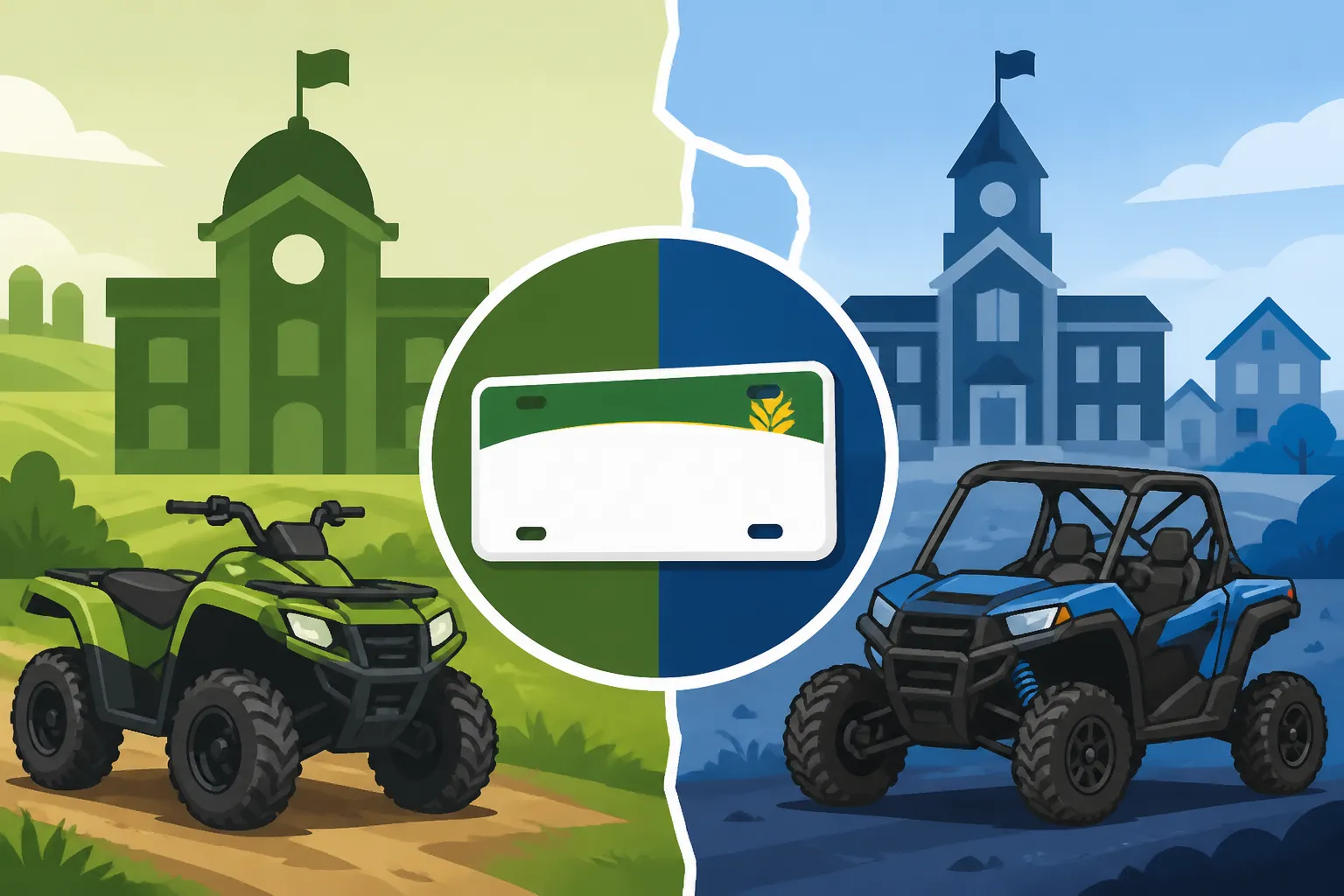
It's absolutely vital to understand that a municipal plate or permit is not a provincial registration. When you see a local plate on an ATV in, say, the District of Lakeland, it doesn't mean Saskatchewan has suddenly started registering quads province-wide. It simply means that specific municipality has a bylaw requiring a permit or plate to operate an ATV within its defined borders, usually on municipal roads, ditches, or approved trails.
This distinction is key for riders. Your municipal plate might allow you to legally ride on certain streets in one village, but it holds no legal weight in a neighbouring rural municipality that doesn't have its own scheme. This patchwork approach can be confusing, highlighting the need for riders to proactively research the specific bylaws of any area they plan to ride in. While [Saskatchewan Has No ATV Plate or Decal] at the provincial level, these local initiatives fill a significant gap, providing a framework for responsible use in the communities that choose to adopt them.
Identifying Municipalities with Plate Schemes and How to Get Yours
So, which municipalities have actually taken the plunge and implemented these local plate schemes? While a comprehensive, constantly updated provincial list isn't centrally maintained (because there's no provincial registry for ATVs!), some prominent examples have emerged over the years, often in areas known for recreational activity or with a significant year-round ATV presence. Communities like the District of Lakeland and the Village of Candle Lake are well-known examples of places that have established their own local ATV permit systems. These jurisdictions require riders to obtain a municipal plate or permit to operate their ATVs on designated roads, ditches, or trails within their boundaries.
For riders, the most reliable way to determine if a particular area has a plate scheme is to directly contact the rural municipality, town, or village office where you plan to ride. Their administrative staff or local council will be able to provide the most current information regarding local bylaws and requirements. It's always better to make a quick phone call or check their official website before you haul your machine to a new area. Many [Saskatchewan Rural Municipalities and Plates] have taken this step, recognizing the unique needs and challenges of managing ATV use locally.
Typical Requirements for a Municipal Plate
When a municipality does have a plate scheme, the requirements for obtaining one are generally straightforward, focusing on proof of ownership, insurance, and compliance with local bylaws. You'll typically need to:
- Provide Proof of Ownership: Since there's no provincial title for ATVs, a robust bill of sale is crucial. This document, detailing the buyer, seller, machine make, model, VIN, and purchase price, serves as your primary proof. Tools like LawDepot can be incredibly helpful for drafting a comprehensive and legally sound [What Your Bill of Sale Needs to Cover], whether you're buying privately or from a dealer.
- Show Proof of Insurance: Adequate liability insurance is almost always a requirement. Municipalities want to ensure that if an accident occurs, there's coverage in place, protecting both the rider and the public. [Saskatchewan Insurance Requirements for Riders] are critical, regardless of whether you have a municipal plate.
- Pay the Fee: There will be a modest annual fee associated with the plate or permit. This fee helps fund the administration of the program and often contributes directly to local trail maintenance or other ATV-related initiatives.
- Complete an Application: You'll typically fill out a simple form at the municipal office, providing your personal details and machine information.
For example, when obtaining a plate in a place like Candle Lake, you might find yourself completing a simple form and paying a fee. [Candle Lake Charges $25 for an ATV Permit] gives you an idea of the shape of these costs. This small investment helps ensure you're riding legally and contributing to the local infrastructure that supports ATV use.
The Benefits of Local Plate Schemes
These municipal plate schemes offer tangible benefits to both riders and the communities that implement them. For riders, having a clear permit or plate provides peace of mind, knowing they are complying with local regulations and can enjoy designated riding areas without fear of fines. It simplifies interactions with local authorities, as the plate clearly indicates compliance.
For municipalities, the benefits are multi-faceted:
- Revenue Generation: The permit fees, while often small individually, collectively provide a dedicated revenue stream. This money can be used to improve local infrastructure, maintain ditches for safe riding, or even establish and maintain specific ATV trails.
- Enhanced Safety and Accountability: A visible plate makes it easier for peace officers to identify machines and operators, improving accountability and making it simpler to enforce local bylaws regarding speed, noise, and prohibited areas.
- Community Planning: These schemes allow municipalities to better understand the volume of ATV use within their boundaries, aiding in future planning for recreational facilities and infrastructure.
- Local Control: Perhaps most importantly, it gives local communities the power to manage ATV use in a way that best suits their unique environment and resident needs, rather than waiting for a provincial solution that may never materialize.
These local solutions highlight a proactive approach to managing recreational vehicle use in the absence of broader provincial oversight.
Understanding Municipal Plate Requirements and Limitations
Getting a municipal plate might seem like the final step, but it's really just the beginning of understanding your responsibilities. While it grants you permission to ride in a specific area, there are crucial details about the application process, where the plate is valid, and its ongoing costs that every rider needs to know. It’s not a one-and-done solution for the entire province.
Application Process and Documentation
The process for getting a municipal plate is designed to be relatively straightforward, often handled directly at the local municipal office. Here's a general idea of what to expect:
- Visit the Municipal Office: Head to the administration office of the village, town, or rural municipality that has the plate scheme. They'll have the application forms and staff ready to assist you.
- Provide Identification: You'll need valid government-issued identification, typically a driver's licence, to prove who you are. Remember, [Saskatchewan Requires a Driver's Licence] for operating an ATV, with specific exceptions for supervised youth.
- Proof of Ownership: This is where your paperwork truly shines. As there’s no provincial registry, a clear bill of sale is your golden ticket. It should include the VIN, make, model, and year of the ATV, along with the names of the buyer and seller. If you're buying a machine, ensure you have a robust bill of sale, which you can easily create and customize using a service like LawDepot, to avoid any future ownership disputes. [Saskatchewan Bills of Sale Do the Work] as primary ownership documents.
- Proof of Insurance: You'll need to demonstrate that your ATV is insured for at least the provincial minimum liability coverage. An insurance card or certificate from your provider will suffice. [Saskatchewan's Minimum Insurance Requirement] is a provincial standard, applicable even with local plates.
- Pay the Fee: Be prepared to pay the annual permit fee. This can often be done via cash, debit, or even e-transfer, as is sometimes the case in places like Candle Lake. [Paying for an ATV Permit by E-Transfer] simplifies the process for some.
- Receive Your Plate/Permit: Once all requirements are met and the fee is paid, you'll be issued your municipal plate or decal, along with instructions on where to display it.
This process ensures that the municipality has a record of who is operating an ATV within their jurisdiction and that the rider meets basic safety and accountability standards.
Where the Plate is Valid and Its Expiry
This is perhaps the most critical distinction to grasp: a municipal plate is generally only valid within the specific boundaries of the municipality that issued it. It does not grant you permission to ride on public lands or municipal roads in other jurisdictions that do not have their own plate scheme, or in those that do but are not your issuing municipality. It's a local permit for a local area.
For example, a plate obtained from the District of Lakeland allows you to legally operate your ATV according to their bylaws within their district. It doesn't mean you can then take that same plate to a different rural municipality across the province and expect it to be valid there. Each municipality's scheme is independent.
Furthermore, these plates come with an expiry date, typically on an annual cycle. Many municipal plates, such as those in the District of Lakeland, expire on April 30th each year. [Saskatchewan Lakeland Plate Expiry in April] is a common deadline. This means you’ll need to renew it annually to maintain compliance. [Saskatchewan Municipal Plate Renewals] are a routine part of the process, often at a slightly reduced cost compared to the initial issuance. Failure to renew and operate an unplated machine where a plate is required can lead to fines. [Saskatchewan Fines for Riding Without a Plate] can be substantial, making it crucial to stay on top of your renewals.
Costs and What They Cover
The cost of a municipal plate is typically a modest annual fee. As mentioned earlier, [Saskatchewan Municipal Plate Costs] are designed to be affordable for riders while providing a consistent funding stream for the municipality. These fees are not arbitrary; they directly support the local infrastructure and services that make ATV riding safer and more enjoyable.
For instance, the revenue generated from these plates often goes towards:
- Trail Maintenance and Development: In areas with designated trails, these fees can help clear brush, maintain surfaces, and install signage, enhancing the riding experience.
- Bylaw Enforcement: Funds can support local peace officers in monitoring ATV use, enforcing speed limits, and ensuring riders adhere to other local regulations.
- Public Safety Initiatives: This might include educational campaigns or the placement of safety signage in high-traffic ATV areas.
While there is no provincial fee for ATV registration, the small fee for a municipal plate directly contributes to the local community that is welcoming ATV riders. It's an investment in local riding opportunities and responsible recreation.
| Feature | Provincial ATV Registration (Saskatchewan) | Municipal ATV Plate Scheme (e.g., Candle Lake, Lakeland) |
|---|---|---|
| Existence | Does Not Exist | Exists in specific, self-governing municipalities |
| Purpose | N/A | Local regulation, safety, trail funding |
| Cost | N/A (No registration fee) | Modest annual fee (e.g., $25) |
| Validity | N/A | Only within the issuing municipality's boundaries |
| Required Documents | N/A | Proof of ownership (Bill of Sale), Insurance, ID |
| Proof of Ownership | N/A | Critical, as no provincial title exists |
| Insurance Requirement | Required provincially (liability) | Often required by municipal bylaw for plate issuance |
| Enforcement | N/A | Local peace officers enforce municipal bylaws |
| Contribution to Trails | N/A | Often directly funds local trail development/maintenance |
| Exemptions | N/A | Local bylaws may define specific exemptions |
Navigating Bylaws and Riding Responsibly
Acquiring a municipal plate is a great step toward responsible ATV operation, but it’s crucial to remember that the plate is just one piece of the puzzle. Beyond the plate itself, you must always adhere to the local bylaws of the specific municipality you're riding in, as these rules can vary significantly from one community to another. Knowing the local laws is just as important as knowing your machine.
Beyond the Plate: Local Riding Rules
A municipal plate signifies your compliance with that community’s permit system, but it doesn't automatically mean you have free rein. Every municipality with a plate scheme, and indeed many without, will have specific bylaws governing ATV use. These bylaws cover a range of operational aspects, including:
- Speed Limits: Municipalities often impose specific speed limits for ATVs, especially on shared roads or in residential areas. These are often lower than typical highway speeds. For instance, [Saskatchewan Lakeland Speed Limits] are designed to ensure safety within that district.
- Prohibited Streets and Areas: Certain streets, main thoroughfares, or sensitive areas like beaches or park zones may be off-limits to ATVs. [Saskatchewan Lakeland Prohibited Streets] is an example of specific designations you'd need to be aware of. Similarly, [Saskatchewan Beach and Lakeshore Rules] often restrict machine access to protect natural environments and public enjoyment. Always look for posted signage and consult local bylaws.
- Time of Day Restrictions: Some bylaws may restrict ATV operation during certain hours, particularly at night, to reduce noise complaints.
- Noise Regulations: Many communities have specific noise bylaws that apply to all vehicles, including ATVs. Modifying exhaust systems can lead to fines if your machine exceeds acceptable noise levels.
- Helmet and Safety Gear: While provincial law requires helmets and eye protection, local bylaws might reiterate or add further specific safety requirements.
The bottom line is that getting a plate is about permission, but understanding the bylaws is about how you exercise that permission. Ignorance of a bylaw is rarely an acceptable defence. Before you venture out, especially in a new area, make it a habit to perform [Saskatchewan Bylaw Lookups Before You Ride].
Inter-Municipal Travel and Visitor Rules
What happens if you're riding through multiple municipalities, some with plates and some without? Or if you're visiting from out-of-province? This is where things can get truly complex, underscoring the fragmented nature of ATV regulation in Saskatchewan.
- Riding Between Municipalities: If you have a plate from one municipality and ride into another that has its own plate scheme, you might be required to obtain a second plate for that jurisdiction. If you ride into a municipality that has no plate scheme, you don't need a plate, but you must still adhere to all provincial ATV rules and any local bylaws (e.g., speed limits, prohibited roads) that may exist in that area. Your original plate doesn't grant you universal access.
- Out-of-Province Visitors: For visitors, the situation is relatively straightforward: you don't need to register your ATV in Saskatchewan because no provincial registry exists. However, if you plan to ride within a municipality that does have a plate scheme (like Candle Lake or the District of Lakeland), you will generally be expected to comply with their local permit requirements. It's best for [Saskatchewan Visitors and Municipal Plates] to check with the specific municipality they intend to ride in. Crucially, all visitors must carry proof of adequate liability insurance, as [Saskatchewan Insurance Requirements for Riders] are non-negotiable across the province. [Saskatchewan Visitors From Alberta] or [Saskatchewan Visitors From Manitoba] will find their home province's registration irrelevant, but their insurance is paramount.
The Role of Documentation
In a province without a centralized ATV registry, robust documentation becomes even more critical. Beyond your municipal plate (if applicable) and insurance, always carry proof of ownership. A well-crafted bill of sale is indispensable. Whether you drafted it yourself using a reputable resource like LawDepot or received one from a dealer, ensure it's easily accessible while riding. This document not only proves you own the machine but can be vital in situations like an accident, a theft, or an interaction with law enforcement.
For example, if an officer asks for proof of ownership, your bill of sale is what will establish your legal right to the machine. [Saskatchewan Proof of Ownership on the Trail] is good practice for any rider, regardless of whether a municipal plate is required in their riding area. Accurate and accessible paperwork can save you a lot of hassle and potential legal complications.
Disclaimer
This article is for general informational purposes only and does not constitute professional advice. Laws, prices and regulations vary by location and change over time. Consult a qualified professional for guidance on your specific situation.