Saskatchewan Ditch Riding and the 2-Metre Rule
Riding your ATV or UTV in Saskatchewan is an incredible way to experience our beautiful province, whether you’re working the land or just out for an adventure. But if you've ever felt a knot in your stomach wondering if you're actually allowed to be in that ditch, or how close is too close to the road, you're definitely not alone. It's a common point of confusion for many riders, and this guide is here to clear up the mystery around Saskatchewan’s ditch riding rules, particularly the often-misunderstood 2-metre rule, so you can ride with confidence and stay on the right side of the law.
Understanding Saskatchewan's Ditch Riding Landscape
Let's face it, figuring out exactly where you can and can't ride your ATV or UTV in Saskatchewan can sometimes feel like trying to solve a prairie riddle. There are big, open spaces, but also very specific rules that aren't always immediately obvious. This uncertainty often leads to frustration and, worse, puts riders at risk of fines or accidents.
The All-Too-Common Confusion Around ATV Rules
Many riders, whether they're seasoned veterans or just starting out with their first quad, grapple with the nuances of where they can actually operate their ATVs and UTVs in Saskatchewan. The ditches, in particular, often feel like a grey area, leaving folks scratching their heads and worrying about unforeseen penalties. It’s easy to get conflicting advice from friends around the campfire or hear different interpretations online, which only adds to the confusion and makes you wonder who to believe.
Unlike some other provinces that might boast extensive, well-marked trail systems or straightforward provincial registration protocols, Saskatchewan's approach to ATVs is, shall we say, rather unique. We don't have a provincial registration system for ATVs like we do for snowmobiles, which often means riders rely more on roadsides and ditches for access, especially when moving between properties or seeking out less travelled paths. This makes understanding the specific rules for these areas absolutely crucial for any rider.
For many of us out here on the prairies, riding in the ditch isn't just about recreational fun; it’s an integral part of our outdoor lifestyle, whether you're navigating to a prime hunting spot, meticulously checking fence lines across vast farmland, or simply enjoying a casual evening ride to take in a sunset. Because of its practical importance and widespread use, getting a clear picture of what's allowed and what's not in the ditch is vital for both safety and legal compliance.
Where Do ATVs Fit into Saskatchewan's Roadways?
[Saskatchewan's All Terrain Vehicles Act] is the primary piece of legislation that governs how and where these machines can operate in our province. While the Act is fairly clear on some aspects, such as age restrictions for operators or the mandatory use of helmets, the specifics of roadway use—and by extension, ditches—can be surprisingly intricate and leave many riders feeling unsure of their ground.
For a significant number of rural residents, their ATV or UTV isn't just a weekend toy; it's a critical tool for daily chores, managing livestock, or accessing remote areas of their property that a truck simply can't reach. This dual-purpose utility often blurs the lines between private land use and public right-of-way, creating a real need for clear, understandable guidelines on ditch riding that accommodate both recreational and occupational uses.
You certainly won't find dedicated ATV lanes or designated multi-use trails running alongside most of our provincial highways! Because of this, riders naturally look to the shoulders and ditches as a legitimate means of travel, especially when they need to move between fields, access certain provincial parks that allow quads, or simply get from point A to point B in areas where no dedicated off-road trails exist. It’s a pragmatic solution for many, but one that comes with its own set of rules.
Grasping the underlying legal framework here is your first and best defense against an unpleasant encounter with a peace officer or, worse, an avoidable accident. This foundational knowledge isn't just about memorizing rules; it's about appreciating why the 2-metre rule exists, understanding its intent, and knowing how to apply it correctly in the diverse Saskatchewan landscape.
The Heart of the Matter: The 2-Metre Rule Explained
This is where we get into the nitty-gritty of ditch riding. Everyone talks about the "2-metre rule," but what does it actually mean, and what parts of the road are we talking about? Let's break it down so there's no confusion.
Defining "Ditch" and "Travelled Portion"
To really understand the 2-metre rule, we need to clarify some key terms. When the law refers to riding in a "ditch," it's specifically talking about the unpaved area that runs alongside a highway or grid road. This isn't just any open field next to the road; it's the land that constitutes the public right-of-way, typically engineered for proper drainage and designed to support the integrity of the roadbed itself. It's often where you'll find drainage culverts and a gradual slope away from the main road.
The "travelled portion" of the highway, on the other hand, is exactly what it sounds like: the part of the road surface where cars, trucks, and other on-road vehicles are actively driving. This includes the asphalt or paved surface on a highway, or the main graded and maintained surface on a gravel grid road. Crucially, it typically extends right to the white line, if present, or to the outermost edge of the regularly used and maintained roadway, excluding the shoulder in many cases.
Understanding this precise distinction is absolutely critical because the entire 2-metre rule hinges upon it. If you allow your ATV or UTV to venture too close to the "travelled portion" where vehicles are moving at speed, you’re not only risking a violation of the law but, more importantly, you're putting yourself, your passengers, and other motorists at a significantly higher risk of a serious collision. This distinction is the bedrock of safe ditch riding.
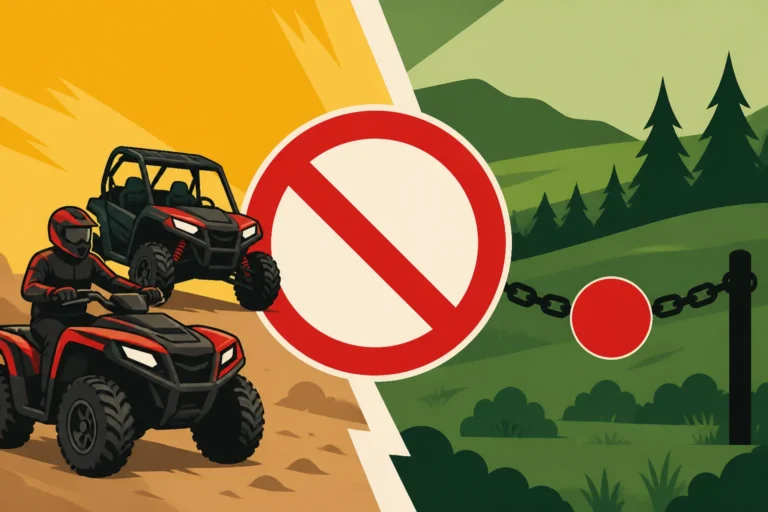
The ditch, by its very nature and design, is intended to provide a buffer zone, a separation from the high-speed traffic. This is precisely why it is generally considered the permissible area for ATVs when they need to operate in proximity to a public road. Maintaining this physical separation is paramount for the safety of all individuals using the public right-of-way, both on and off their machines. For clarity, this is precisely what [Saskatchewan Ditch Riding and the 2-Metre Rule] aims to enforce.
The Law's Specifics: Staying 2 Metres Away
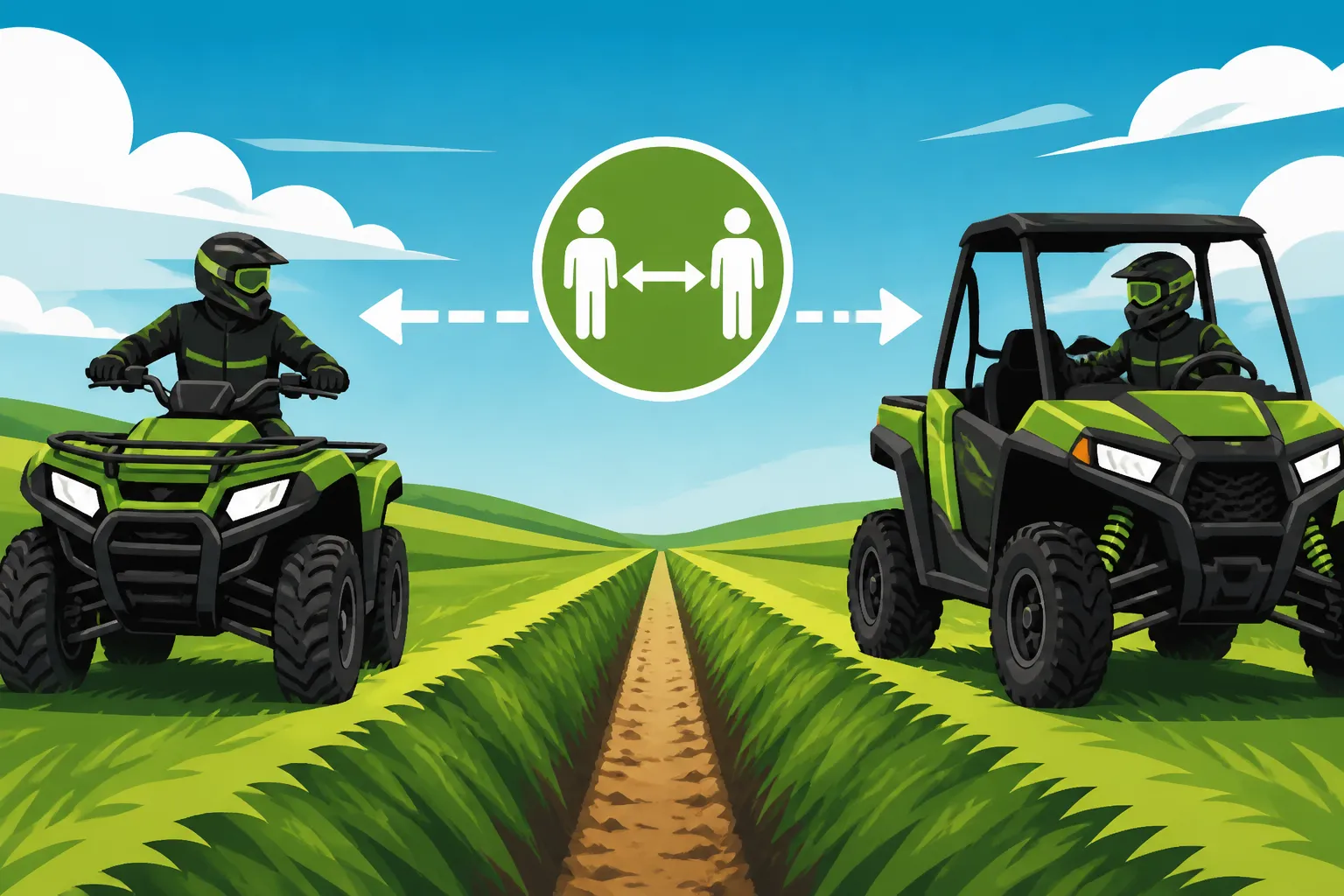
The core requirement of [Saskatchewan Ditch Riding and the 2-Metre Rule] is quite straightforward, yet it's frequently misinterpreted or underestimated by riders. The rule mandates that an ATV or UTV must operate at least 2 metres (which is approximately 6.5 feet) away from the "travelled portion" of any highway or public road. This is a minimum distance, not a target, and it applies to all parts of your machine, including any attachments.
This isn't merely a polite suggestion; it is a legally binding requirement under [Saskatchewan's All Terrain Vehicles Act]. To visualize it, imagine an invisible, continuous line running parallel to the very edge of the pavement, or the outermost graded section of a gravel road. Your ATV or UTV, including its widest points and any cargo or accessories, must remain entirely outside of that 2-metre wide zone at all times.
Think of it practically: if you see a car driving along what most people consider the shoulder of a paved road, and your ATV is right there beside it, chances are you are too close and violating the rule. The clear intent behind this specific distance is to keep ATVs well clear of the active lanes of vehicle traffic, thereby significantly minimizing the risk of collisions and providing a crucial margin of safety for all road users, including those on four wheels.
Failing to rigorously adhere to this 2-metre separation can result in immediate fines and, in more severe situations, potentially lead to much more serious consequences if an accident or incident occurs. It's one of those regulations that, while appearing deceptively simple on paper, can be surprisingly easy to inadvertently violate without constant, diligent attention, especially when traversing varied terrain or encountering changing ditch conditions.
Why the 2-Metre Rule Exists: Safety and the Law's Intent
The 2-metre rule isn't some arbitrary line in the sand; it's a carefully considered regulation designed with multiple layers of safety and practicality in mind. It protects everyone, from the ATV rider to the family in the car speeding down the highway.
Minimizing Collisions with On-Road Traffic
Let’s be honest about the reality of riding: ATVs and UTVs, particularly when they’re operating in ditches, are often much less visible to the drivers of cars, trucks, and larger vehicles on the main road. Their relatively lower profile, the dust clouds they can kick up on dry days, or even the intense glare of the sun at certain times can make them incredibly hard to spot quickly. The 2-metre rule directly addresses this by creating a vital and legally mandated separation zone.
This prescribed distance provides on-road drivers with considerably more time to react if an ATV were to, for example, inadvertently swerve closer to the road, or if the ATV rider suddenly needs to make an emergency maneuver. It’s fundamentally about reducing the probability of a catastrophic encounter between a fast-moving, heavy on-road vehicle and a lighter, slower off-road machine, a scenario that rarely ends well for the ATV operator.
Picture a large semi-truck barreling down the highway at 100 km/h. That driver is intensely focused on the road ahead and the vehicles immediately around them. An ATV suddenly appearing too close to the shoulder can be an alarming and potentially unmanageable surprise for them. That 2-metre buffer is specifically designed to mitigate these kinds of sudden, high-risk situations, offering a crucial safety cushion.
Ultimately, it’s a proactive safety measure, one that intelligently recognizes the inherent and significant differences in speed, size, and maneuverability between typical highway vehicles and off-road ATVs. By maintaining this separation, the rule helps protect not only the ATV rider from potential injury but also the occupants of the on-road vehicle from being involved in an accident they had little to no control over.
Preventing Roadway Damage and Erosion
Beyond the critical aspect of human safety, the 2-metre rule also plays a significant, albeit less obvious, role in protecting the physical integrity of our public roadways and the land immediately adjacent to them. ATVs and UTVs, especially heavier models or those equipped with aggressive, knobby tires, can cause considerable wear and tear on soft shoulders, the delicate edges of pavement, and the immediate graded areas of gravel roads.
When machines are constantly operating right at the edge of the paved or graded portion of the road, it can lead to a host of problems: crumbling pavement edges, deep and unsightly ruts that become hazards for other vehicles, and accelerated erosion of the roadbed itself. All of these issues invariably require expensive and time-consuming repairs, which are paid for by all taxpayers. The 2-metre separation effectively positions the ATV further into the generally more robust, unpaved portion of the ditch, which is typically better equipped to handle the stresses of off-road vehicle traffic without degradation.
This might seem like a minor technical point, especially when you're focused on the thrill of the ride, but the costs associated with maintaining and repairing our provincial and municipal infrastructure are truly substantial. Regulations are often a delicate balance of permitting public access while simultaneously minimizing public expense and environmental impact. Ditch riding, when conducted responsibly and in strict adherence to the 2-metre rule, contributes positively to striking that essential balance.
Therefore, this aspect of the rule is a testament to the practical, long-term considerations that are factored into crafting these regulations. It looks beyond just the immediate safety of individuals to the broader implications for public infrastructure, ongoing maintenance budgets, and the long-term sustainability of our road network.
Ensuring Clear Sightlines for All Drivers
When an ATV or UTV operates too close to the travelled portion of the road, it can create significant visibility hazards, especially for other drivers. This is particularly true on winding curves, over blind hills, or when larger vehicles are passing, as the ATV can momentarily disappear from view or appear unexpectedly. This can be especially dangerous for motorists who are trying to merge onto a highway, make a turn, or even for those trying to spot pedestrians, cyclists, or other potential hazards.
The 2-metre rule is specifically designed to help ensure that ATVs remain in a position where they are considerably less likely to create blind spots or present sudden, unexpected obstacles to other drivers. By maintaining this distance, it allows everyone on or near the road to have a clearer, more unobstructed view of their surroundings, enhancing the predictability of the environment for all users.
Consider driving conditions at dusk, dawn, or during adverse weather like fog or heavy rain. An ATV blending into the background, operating too close to the edge of the road, can pose a major visibility challenge for drivers. The mandated separation gives both the ATV rider and other drivers a much better chance to see and be seen, thereby avoiding potential conflicts. These considerations are also why rules like [Saskatchewan Night Travel Direction Rules] are so important.
This foresight embedded within the regulation ultimately helps to maintain a predictable, safe, and less stressful driving environment for all users of the public right-of-way, including farmers pulling their heavy equipment, daily commuters, and even recreational cyclists or pedestrians.
Practicalities of Ditch Riding: What it Looks Like on the Ground
Knowing the rule on paper is one thing, but actually applying it out in the real world, where ditches aren't always perfect and predictable, is another. Let's talk about how to keep that 2-metre buffer even when the terrain gets tricky.
Riding the Edge: Applying the Rule in Real-World Scenarios
So, you're out on your trusty quad, maybe a powerful Polaris or a nimble Can-Am, exploring the vast rural landscapes of Saskatchewan. The grid roads seem to stretch into infinity, and the ditches often appear inviting and unobstructed. But the crucial question remains: how do you consistently and effectively maintain that legally mandated 2-metre distance from the travelled portion of the road?
Maintaining this distance requires a constant and heightened awareness of your machine's position relative to the road. While it might feel incredibly easy and spacious on a wide-open prairie road, the situation changes dramatically as you approach features like culverts, field access points, areas with dense brush, or even just a particularly steep embankment. In these situations, the practical width of the ditch can narrow significantly, and this is precisely where your vigilance and judgment become absolutely critical.
It’s not uncommon for ditches to be uneven, unexpectedly filled with standing water, or to contain hidden obstacles like rocks or old fence posts. In such moments, you might instinctively be tempted to creep closer to the road's edge to find a smoother, drier, or less challenging path. However, that's exactly the point where you risk violating the 2-metre rule and exposing yourself to danger. Your priority must always be to maintain that 2-metre separation, even if it means significantly slowing down or finding a slightly rougher but still legal path through the ditch.
For those of you who have customized your UTVs with wider stances, lift kits, or larger aftermarket tires from brands like SuperATV, remember that these modifications might mean your machine occupies more space. This implies you’ll need an even greater margin of error to ensure that your entire machine, from tire to tire, remains completely clear of the 2-metre zone. When in doubt, always err on the side of caution and give yourself plenty of extra room.
When the Ditch Narrows: Navigating Obstacles Safely and Legally
Saskatchewan ditches, much like the landscape itself, are rarely uniform or perfectly smooth channels. During your rides, you’ll inevitably encounter a variety of obstacles, ranging from utility poles, firmly planted fence posts, deep erosion ruts, sudden washouts, and even unexpected wildlife. These real-world challenges can present a dilemma, forcing you to make a quick decision: do you risk encroaching too close to the road, or do you seek a safe and legal alternative?
If you find that the ditch becomes genuinely impassable while strictly maintaining the 2-metre rule—perhaps due to a significant obstruction or an extremely narrow section—you may need to consider temporarily leaving the immediate ditch area. This could involve seeking a safe, legal detour onto adjacent private land (but only with explicit prior permission from the landowner!) or, in extremely tight or hazardous spots, even dismounting and walking your machine through, if that’s a feasible and safe option.
It’s absolutely crucial to remember that while the ditch is generally fair game for ATV use, it is never an invitation to compromise your safety or disregard the law. If you reach a point where you genuinely cannot maintain the 2-metre rule due to an obstacle, you must critically assess whether continuing on that specific path is responsible or even safe. Pushing through simply because you don't want to stop is a recipe for trouble.
In many cases, the most responsible and safest solution is to simply turn around and find an entirely different route, rather than attempting to push the limits of the law and potentially face a costly ticket or, worse, become involved in a serious accident. Proactive route planning, especially when you're venturing into unfamiliar territory, can significantly help in avoiding these kinds of dangerous predicaments entirely.
Crossing Highways and Intersections: Special Considerations
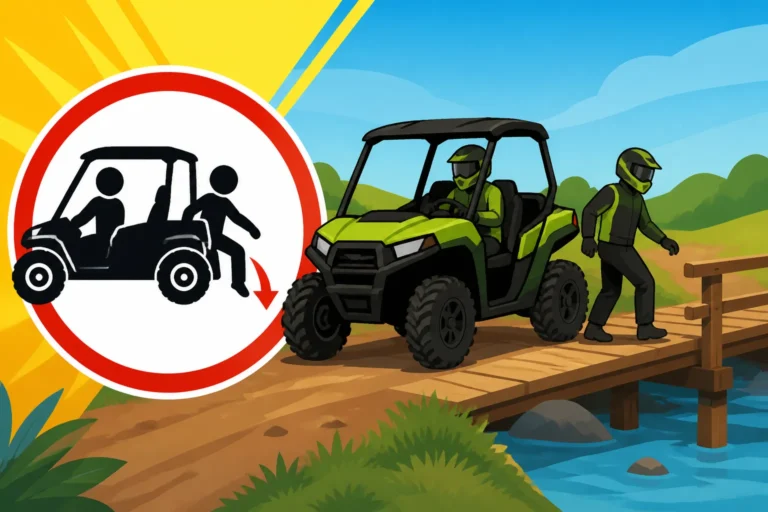
While the 2-metre rule governs your general travel within the ditch, specific regulations kick in when you need to cross a highway or navigate an intersection. You absolutely cannot simply barrel across a main road directly from the ditch. Our provincial regulations are very clear on this: [Saskatchewan Crossings Require Passengers to Dismount], and the operator must bring the ATV to a complete and controlled stop before even attempting a crossing.
The explicit rule for crossing a highway or major road is to do so by the shortest, most direct route possible, ideally perpendicular to the flow of traffic, and only after you have thoroughly ensured that it is entirely safe to proceed. This means you must transition purposefully from the ditch, directly across the travelled portion of the highway, and into the ditch on the opposite side, minimizing your time spent in the active traffic lanes.
When approaching and navigating intersections, extra vigilance is absolutely paramount. Even if you are technically operating within the ditch, you are still interacting with potential road traffic that may not expect you. Therefore, it is essential to be highly visible, clearly signal your intentions to other drivers, and always, without exception, yield the right-of-way to vehicles that are already on the main road.
These moments of transition—from ditch to road and back again—are inherently high-risk. Taking your time, making clear eye contact with drivers, and ensuring that your machine is in excellent working order (especially brakes and lights) are critical steps. Remember, [Saskatchewan Crossing by the Shortest Route] is not just a suggestion for efficiency; it is a critical safety directive designed to reduce your exposure to fast-moving highway traffic.
Navigating Exceptions and Local Bylaws
As if provincial rules weren't enough to keep straight, the complexities grow when you consider local nuances and specific exemptions. It's not a one-size-fits-all situation, and understanding these layers is crucial for legal riding.
When the Rules Don't Apply: Exemptions and Specific Scenarios
While the 2-metre rule is a generally enforced and critical regulation for ATV operation in Saskatchewan, it's important to recognize that there are specific, legally defined scenarios where ATVs might operate under different allowances or even be exempt from certain aspects of the Act. For instance, machines that are used strictly for legitimate agricultural purposes on a working farm or ranch might have different operational allowances when they are crossing or operating very near certain roadways to perform essential farm tasks, provided they are not being used recreationally.
Similarly, specific cities, towns, or [Saskatchewan Rural Municipality Rules] might have their own unique bylaws that either place further restrictions on, or in some rarer cases, even explicitly permit, different forms of ATV access to certain roadways or ditches within their geographical jurisdiction. This means you absolutely cannot assume that what is perfectly legal in one small community will be equally permissible in the next one you ride through.
It is also vital to clearly differentiate between using an ATV or UTV purely for recreational purposes versus using it as an essential tool for work. The [Saskatchewan's All Terrain Vehicles Act] often makes specific allowances for bona fide work-related activities, such as inspecting pipelines or managing forestry, but even in these cases, the overriding principles of safety, caution, and responsible operation always remain paramount.
The golden rule here is always to verify if an exemption specifically applies to your precise situation, and critically, never just assume it does. When you are in any doubt whatsoever, or if the circumstances seem ambiguous, your safest and most legally sound course of action is always to strictly adhere to the standard 2-metre rule and all other general provincial regulations. This approach will consistently keep you out of trouble.
Municipal Bylaws: What You Need to Know Locally
Here's where the provincial picture can get a bit more intricate for riders: while the province of Saskatchewan establishes the overarching and general rules for ATV operation, individual cities, towns, and particularly [Saskatchewan Rural Municipalities and Plates] possess the autonomous authority to create and enforce their own specific bylaws concerning ATV operation within their respective municipal boundaries. This means a patchwork of regulations across the province.
Some municipalities might, for example, have very specific bylaws that permit ATVs and UTVs on certain designated streets, roads, or ditches during particular times or for certain purposes, while other nearby municipalities might choose to outright ban them from all public roadways within their jurisdiction. This creates a situation where what is perfectly legal and accepted in one small town could be strictly prohibited and ticketable just a few kilometres down the road in another.
Therefore, before you make any plans to ride your ATV or UTV through an unfamiliar municipality, it is not just recommended, but absolutely essential to thoroughly check their current local bylaws. A quick, proactive phone call to the municipal office or a visit to their official website can be an invaluable step that saves you a considerable amount of grief, potential fines, and wasted travel time. Don't rely on hearsay; get the official word. These [Saskatchewan Municipal Bylaws on Roads] can and do supersede provincial guidelines in specific localized areas, so knowing them is non-negotiable.
Making the common mistake of ignoring local bylaws simply because you are only aware of the broader provincial rules is a surefire way to run into trouble. Municipalities are becoming increasingly active in regulating ATV use to address specific local concerns, such as noise complaints, safety in residential areas, or preservation of sensitive local environments. Always do your due diligence and check with the local authorities when venturing into new or unfamiliar territories.
Administrator Orders and Crown Land Rules
Beyond the specific regulations for ditches and municipal roads, there's another important layer of rules to consider, particularly when you're looking to ride on [Saskatchewan Rules for Riding Crown Land]. The provincial government, through various ministries and agencies, has the authority to issue what are known as administrator orders. These orders are often implemented, especially concerning critical issues such as environmental protection, fire safety, or crucial wildlife management, and they can significantly impact where and when you are permitted to ride your ATV or UTV.
These administrator orders have the power to temporarily close down specific Crown land areas to all off-road vehicle traffic, or they might restrict ATV access to only certain designated trails or existing pathways. It’s a very common occurrence, for instance, during periods of heightened wildfire risk, to see comprehensive bans on all off-road vehicle use enacted in designated high-risk zones across the province. Ignoring such bans carries very serious consequences for both your wallet and potentially the environment.
Therefore, it is absolutely essential for every rider to proactively check the relevant government websites and official announcements for any current fire bans or other administrative orders that may be in effect before you even consider heading out for a ride. Ignorance of these orders is simply not a valid defense in the eyes of the law, and the penalties for contravention can be quite severe, especially when they relate to wildfire prevention. [Saskatchewan Wildfire Closures and Riding] is a critical concern for all riders, and you have a responsibility to be informed.
Understanding the hierarchy of these different rules—the overarching provincial Act, specific municipal bylaws, and any active administrator orders—is fundamentally crucial for any responsible and legal ATV or UTV operation across the wonderfully diverse landscapes of Saskatchewan. Always layer your knowledge to ensure full compliance.
Essential Gear and Responsible Riding Practices for Ditches
Riding in ditches might seem casual, but it still demands the same, if not more, attention to safety and proper gear as any other type of riding. Visibility and protection aren't just good ideas; they're often legal requirements and can literally save your life.
Visibility is Key: Lighting, Flags, and Apparel
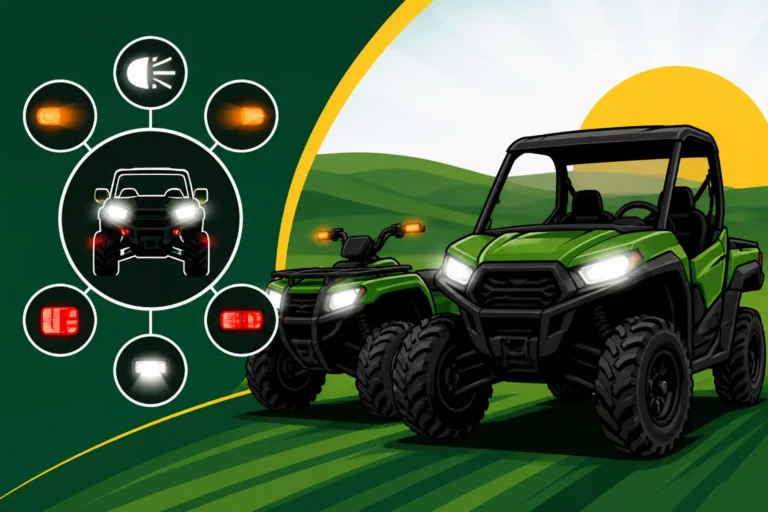
Riding your ATV or UTV in ditches inherently means you’re often operating at a significantly lower profile compared to the on-road traffic travelling at much higher speeds, making your visibility to others absolutely paramount. This necessitates ensuring that your machine is equipped with fully functional and appropriate lighting, which becomes even more critical if you anticipate riding near dawn, dusk, or during periods of adverse weather conditions like fog or heavy rain.
Beyond just factory lights, consider adding a bright orange or fluorescent safety flag to your machine, especially if your riding route takes you through areas with tall grass, uneven terrain, or rolling hills where sightlines can be severely limited. Every additional measure you take to make yourself stand out helps immensely, whether you’re being spotted by another ATV rider in the ditch or a motorist on the main highway. Think of it as your personal beacon.
Wearing bright, high-contrast clothing is also an incredibly smart and often overlooked move. Fluorescent greens, vibrant oranges, or vivid yellows can make a huge difference in how quickly and easily a driver spots you from a distance, giving them crucial extra seconds to react. Companies like SuperATV offer a variety of aftermarket accessories, including robust whip lights and highly visible flags, that can significantly boost your presence and overall visibility, enhancing your safety profile considerably.
Adopt this mindset: you want to be seen from the greatest possible distance, under any conditions. Don't rely solely on the factory-installed lights of your machine; actively enhance your visibility in every practical way you can. This isn't just about compliance; it's about self-preservation.
Safety Gear: Helmets, Eye Protection, and More
Let’s be crystal clear: when it comes to riding an ATV or UTV in Saskatchewan, your helmet is not optional—it's absolutely non-negotiable. The [Saskatchewan ATV Helmet Law] mandates that you must wear a helmet specifically designed for off-road use, and it must be securely fastened at all times. This piece of equipment is your absolute first line of defense in the event of an accident, even if it's just a low-speed tip-over in the ditch. Don't skimp on this.
Beyond head protection, proper eye protection, such as impact-resistant goggles or a shatterproof face shield, is also a mandatory requirement under provincial law. Ditches can be notoriously dusty, muddy, or have low-hanging branches and debris that can easily impair your vision. Maintaining clear and unobstructed vision is fundamentally crucial for safe and responsive operation of your machine. The [Saskatchewan Helmet and Eye Protection Rules] exist for a very good reason: to protect your most vital senses.
Furthermore, while not always strictly mandated by law for recreational riding, it is highly advisable to go beyond the minimum. Invest in sturdy boots that provide ample ankle support and protection, wear long pants made of durable material, and always have long sleeves to protect your arms. These items shield you from scrapes, potential impacts, and even nasty exhaust burns. Good quality gloves also offer enhanced grip and valuable protection for your hands.
Being properly geared up isn't just about meticulously avoiding a ticket; it's about proactively minimizing the severity of injuries when the unexpected inevitably happens. And let’s be realistic, in the unpredictable environment of a ditch, unexpected events can certainly occur at any moment.
Pre-Ride Checks and Environmental Awareness
Before you even think about pushing that start button and heading out, make it a steadfast habit to perform a thorough, quick walk-around inspection of your ATV or UTV. Methodically check your tires for proper pressure and any signs of damage, test both front and rear brakes for responsiveness, confirm all your lights are functioning correctly, check fluid levels, and ensure there are no loose parts that could potentially detach during your ride. A mechanical failure, particularly while navigating the uneven terrain of a ditch, can very quickly escalate into a dangerous and uncontrollable situation.
Be acutely mindful and respectful of the ditch environment itself. Are there hidden culverts that could surprise you, unexpected rocks lurking beneath the grass, or sections of deep standing water that could pose a hazard? Are you approaching private property where you might inadvertently trespass, requiring you to seek [Saskatchewan Private Land Permission] beforehand? Your riding style and speed should always adapt directly to the prevailing conditions and potential hazards of the environment.
Environmental responsibility is also a key component of being a good steward of our land. Make a conscious effort to stick to established paths or existing tracks within the ditch area, actively avoid tearing up delicate vegetation unnecessarily, and—this is crucial—always pack out absolutely everything you pack in. Leaving no trace ensures that these areas remain accessible, beautiful, and pristine for both your future enjoyment and for all other users of the land.
Finally, being truly prepared also means carrying a basic repair kit for minor issues, a well-stocked first-aid kit for unexpected injuries, and adequate water to stay hydrated. Remember that cell service can be notoriously spotty or non-existent in many rural Saskatchewan areas, so don't rely on it as your sole means of communication in an emergency. Checking [Saskatchewan Trail Conditions Before You Haul] is just as important for ditches as it is for any designated trail.
Common Misconceptions and Avoiding Costly Mistakes
There's a lot of folklore and misinformation circulating about ATV use in Saskatchewan ditches. Letting these myths guide you can lead to serious consequences, from hefty fines to impounded machines. Let's set the record straight.
"It's Just a Ditch, No One Cares": Why That's Wrong
This particular phrase, "It's just a ditch, no one cares," is arguably the most dangerous and prevalent misconception circulating among ATV and UTV riders in Saskatchewan. Many individuals incorrectly assume that because a ditch isn't a paved road or a designated trail, the rules for operating an off-road vehicle within it are either extremely lax, selectively enforced, or even entirely non-existent. This belief could not be further from the truth and is a direct pathway to serious trouble.
The reality is that ditches are unequivocally considered part of the public right-of-way. As such, they are fully subject to the comprehensive regulations outlined in the [Saskatchewan's All Terrain Vehicles Act] and any relevant local municipal bylaws. Peace officers, which include members of the RCMP, local municipal police forces, and even provincial park rangers, are well aware of ATV activity in these areas and frequently patrol them. Just because you don't immediately see a police cruiser doesn't mean they aren't around, or that they won't promptly respond to a complaint from a concerned citizen or landowner about illegal or irresponsible riding.
Operating your ATV or UTV irresponsibly or illegally within a ditch, whether it's by violating the 2-metre rule, speeding, or otherwise breaking the law, can very quickly lead to the issuance of tickets, significant fines, and under certain aggravating circumstances, even the immediate seizure of your machine. The [Saskatchewan Seizure and Impoundment Rules] are very real and can be an extremely harsh and costly reality for those who choose to ignore the established regulations.
Ultimately, treating the ditch with the proper respect, both for the letter of the law and for the sensitive environment it represents, reflects positively on the entire ATV community. This responsible behaviour helps to preserve access for all future riders and fosters a better relationship with landowners and other rural residents. Conversely, a cavalier attitude jeopardizes riding opportunities for everyone.
The Cost of Non-Compliance: Fines and Penalties
Operating your ATV or UTV in direct violation of the 2-metre rule, or any other provision detailed within [Saskatchewan's All Terrain Vehicles Act], can result in far more than just a stern warning; it can lead to genuinely significant financial penalties. While the specific monetary amounts for fines can fluctuate and are subject to change, the Act generally sets a maximum fine of $1,000 for various contraventions, a sum that can certainly make a dent in your recreational budget.
Beyond the immediate sting of a monetary fine, repeated offences or serious infractions, particularly those involving public safety or property damage, can potentially lead to your machine being impounded by authorities. When this happens, you will be responsible for not only the initial fines but also daily storage fees at an impound lot, and potentially other administrative charges, all of which you must pay before you can even attempt to get your machine back. This scenario can quickly accumulate into a very expensive and regrettable lesson.
Even worse, consider the catastrophic implications if an accident occurs while you are operating your ATV in violation of the law. In such a situation, your existing insurance policy might be jeopardized, or an insurer could potentially deny coverage, leaving you personally and completely liable for all damages, injuries, and associated legal costs. This could quickly amount to hundreds of thousands of dollars. Always rigorously check your [Saskatchewan Insurance Requirements for Riders] and ensure you are fully compliant.
These aren't just theoretical possibilities or abstract warnings; they represent very real and tangible consequences that riders in Saskatchewan have faced and continue to face. It is unequivocally far more prudent and financially sensible to invest the time in knowing the rules and consistently abiding by them, rather than gambling with your hard-earned money, your freedom to ride, and your peace of mind.
The Importance of a Valid Driver's Licence and Insurance
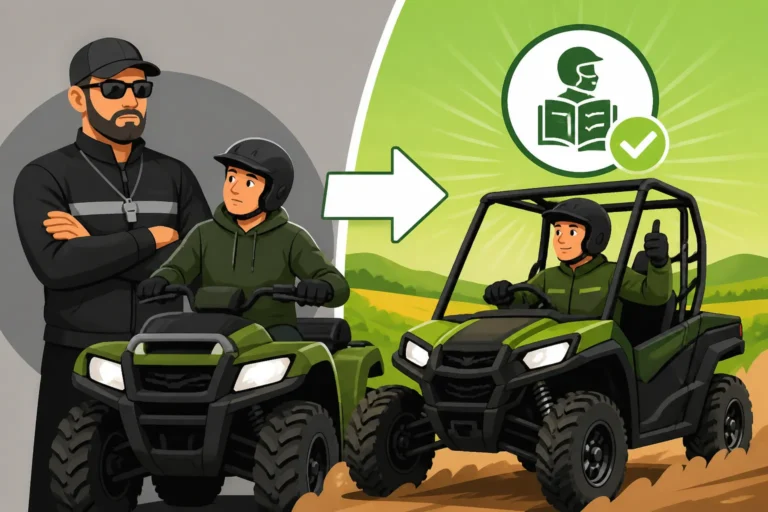
Let's not overlook some fundamental legal requirements that apply to ATV operation, including riding in ditches, which are sometimes mistakenly ignored by riders. First and foremost, [Saskatchewan Requires a Driver's Licence] to operate an ATV or UTV on public land, which explicitly includes public road allowances and ditches. This isn't just a rule reserved for cars and trucks; it applies equally to off-road vehicles when they are interacting with public infrastructure. And for younger riders, there are very strict [Saskatchewan ATV Age Requirements] and mandatory supervision rules that must be rigorously followed.
Furthermore, it is legally mandated that you carry a minimum amount of liability insurance for your ATV or UTV. The [Saskatchewan Minimum Insurance Requirement] is in place specifically to help protect you and others in the unfortunate event of an accident. It is not enough to just have it; you should always have readily accessible proof of this valid insurance with you while you are riding, as a peace officer may ask to see it at any time.
Imagine the immense stress and financial burden of being involved in a minor fender bender in a ditch with another machine, or causing damage to private property, only to discover that you are not properly licensed to operate the machine or that your insurance policy is not valid for your specific use. The ensuing legal headaches, financial repercussions, and personal liabilities would be truly immense and deeply regrettable.
These are not trivial regulations; they are fundamental responsibilities for any vehicle operator, and ATVs and UTVs are absolutely no exception to these rules. Do not under any circumstances overlook these basic and essential requirements; they are just as crucial for your safety and legal compliance as the 2-metre rule itself.
Looking Ahead: The Future of Ditch Riding in Saskatchewan
The world of ATV riding is always changing, and Saskatchewan is no exception. As our communities grow and evolve, so do the discussions around how we share our roads and natural spaces.
Evolving Regulations and Community Advocacy
The regulatory landscape governing ATV and UTV use is far from static. As the popularity of off-road riding continues its upward trend, and as our rural communities experience growth and demographic shifts, there's always the potential for existing rules and regulations to evolve. For instance, discussions around [Saskatchewan Lobbying for ATV Registration] have surfaced from time to time, indicating a desire from some quarters to move towards a more formalized system, similar to what's in place for snowmobiles.
This is precisely where organized rider groups and provincial associations play an incredibly vital role. These entities serve as crucial advocates for responsible access, promoting clear, sensible, and equitable regulations that balance rider enjoyment with public safety and environmental protection. By actively joining a local ATV club or a provincial association, you not only stay informed about potential changes but also gain a valuable voice in these ongoing policy discussions and public consultations.
The ongoing and dynamic dialogue between dedicated riders, private landowners, various government bodies, and concerned citizens will undoubtedly continue to shape how and where we can all enjoy our machines in the future. Remaining engaged, informed, and actively participating in these conversations is absolutely crucial to protecting and even expanding riding opportunities for everyone.
Whether the efforts are focused on pushing for the development of more designated provincial trails, advocating for more consistent and standardized municipal bylaws, or refining existing ditch-riding rules to be more practical and universally understood, collective action and a unified voice from the riding community can truly make a significant difference in shaping policy for the better.
Promoting Responsible Use and Shared Space
Ultimately, the long-term future and continued accessibility of ditch riding, and indeed ATV and UTV use across Saskatchewan in general, hinge almost entirely on the responsible actions and prudent judgment of individual riders. Every single time you choose to ride respectfully, diligently adhere to all provincial and local rules, and consistently demonstrate good judgment and consideration for others, you are actively contributing to a positive public perception of ATVs. This helps foster an environment where access is maintained, rather than restricted.
Sharing our valuable land and the public right-of-way with a diverse array of other users—including hard-working farmers operating large machinery, leisurely pedestrians, adventurous cyclists, and all other types of on-road drivers—means consistently exercising courtesy, awareness, and a proactive attitude. We all share this incredible province, and demonstrating mutual respect and consideration for everyone goes an incredibly long way in fostering harmonious coexistence.
As the popularity and prevalence of ATVs and UTVs continue to grow across Saskatchewan, so too does the critical need for ongoing education and unwavering adherence to all established rules. Companies like SuperATV provide fantastic gear and innovative accessories, but it is always the rider's personal responsibility to use these tools wisely, safely, and, most importantly, legally. Technology enhances the experience, but rider responsibility ensures its sustainability.
Let's collectively work together to ensure that ditch riding remains a safe, legal, and widely accepted component of Saskatchewan's vibrant and cherished outdoor lifestyle for many years to come. By doing our part, we safeguard the future of our sport for ourselves and for generations of riders to follow.
Here’s a quick summary of essential considerations for ditch riding:
| Aspect | Legal Requirement (Minimum) | Best Practice (Enhanced Safety) |
|---|---|---|
| Distance from Road | At least 2 metres from travelled portion | Maintain as much distance as safely possible |
| Visibility | Working headlights and taillights | Add whip flags, bright clothing, aftermarket lights |
| Helmet | Approved ATV helmet, securely fastened | Full-face helmet, properly fitted and maintained |
| Eye Protection | Goggles or shatterproof shield | Anti-fog goggles, consider tinted for sun, clear for night |
| Driver's Licence | Valid driver's licence | Carry physical licence and relevant certifications |
| Insurance | Minimum liability insurance | Higher liability limits, comprehensive coverage |
| Local Bylaws | Know and obey local municipal bylaws | Check ahead for unknown areas, carry RM contact info |
| Environmental Impact | No explicit provincial rule on damage | Stay on existing paths, avoid sensitive areas, pack out all trash |
| Pre-Ride Checks | Basic machine functionality | Full walk-around check: tires, brakes, fluids, lights |
| Obstacle Navigation | Maintain 2m rule, seek alternatives if impassable | Slow down, assess risks, avoid unapproved detours |
Disclaimer
This article is for general informational purposes only and does not constitute professional advice. Laws, prices and regulations vary by location and change over time. Consult a qualified professional for guidance on your specific situation.