Saskatchewan’s 80 km/h Speed Limit
It's incredibly frustrating when you just want to take your ATV or UTV out for a ride in Saskatchewan, but the rules around roads and speed limits feel like a tangled mess. You hear whispers about what's allowed on grid roads versus ditches, what happens after dark, and whether that 80 km/h sign applies to you. This guide is here to untangle all those confusions, specifically focusing on Saskatchewan's 80 km/h speed limit and the broader regulations that dictate where and how you can safely and legally operate your off-road machine on or near public thoroughfares.
Understanding Saskatchewan's Foundational ATV Road Rules
Before we dive into specific speed limits, it's essential to grasp the fundamental principles that govern ATV and UTV operation on public roads and highways in Saskatchewan. Unlike some other jurisdictions, Saskatchewan has a very specific framework, outlined primarily in [Saskatchewan's All Terrain Vehicles Act], that clarifies when and where these machines can intersect with the regular flow of traffic. Ignoring these foundational rules can lead to serious legal consequences, not to mention putting yourself and others at risk.
The General Prohibition and Its Exceptions
Generally speaking, you cannot just hop on your quad or side-by-side and cruise down any paved road or highway in Saskatchewan. The Act establishes a clear prohibition against operating an ATV on a public highway. However, and this is where the nuances come in, there are crucial exceptions designed to accommodate the practical realities of life, especially in rural areas where ATVs are often essential tools for work or the most direct route between properties. These exceptions aren't carte blanche to roam free, though; they come with strict conditions. For instance, you might be permitted to cross a highway, ride in the ditch alongside it, or even use certain municipal roads if specific bylaws allow it. Each exception is narrowly defined, and understanding these specifics is paramount for any rider. It's not enough to know an exception exists; you need to know precisely what that exception entails and how to comply with it to stay within the bounds of the law. This framework aims to balance the utility of ATVs with the safety concerns of shared public spaces.
When you're out there, it’s easy to think "everyone does it," but that's a dangerous mindset. Just because you see others riding in a particular way doesn't mean it's legal or safe. Always refer back to the Act and any local bylaws. For example, some remote gravel roads might feel like a free-for-all, but the law still applies. If you're using your ATV for farming or ranching operations, you'll find certain allowances, but even these are often contingent on factors like the type of road, the time of day, and whether you're actively engaged in an agricultural task. It’s a complex tapestry of rules, designed to prevent uncontrolled use while still allowing for necessary access and recreation where appropriate.
The Driver's Licence Requirement
One of the most frequently misunderstood aspects of ATV operation in Saskatchewan is the driver's licence requirement. Many assume that because an ATV isn't a "car," you don't need a regular driver's licence to operate one. This is a common misconception that can lead to significant penalties. In Saskatchewan, if you are operating an ATV on public land where the Act applies, including ditches, roads (where permitted), and Crown land, you absolutely must possess a valid driver's licence. [Saskatchewan Requires a Driver's Licence] for anyone operating an ATV or UTV under the Act. This isn't just a suggestion; it's a legal mandate. The only exceptions typically relate to operation on private land where the Act might not apply, or very specific supervised youth scenarios, which we'll discuss shortly.
This requirement is in place for a good reason: safety. Operating an ATV, especially near or on public roads, demands a certain level of judgment, understanding of traffic laws, and operational skill. A driver's licence signifies that you've met at least a basic standard of road knowledge and competency. If you're pulled over by a peace officer while operating an ATV without a valid licence where one is required, you could face fines, and your machine could even be seized. It's not worth the risk. Make sure your licence is current and always carry it with you when you're riding anywhere off your own private property.
Age Restrictions and Supervision Mandates
Another critical element of Saskatchewan's ATV rules pertains to age, particularly for younger riders. The Act is quite clear on this: [Saskatchewan Bans Riders Under 16] from operating ATVs on public land and roads, with very specific exceptions. This isn't just about preventing joyrides; it's about acknowledging the inherent risks of these powerful machines and the developmental stages of young individuals. Teenagers under 16 generally lack the experience, judgment, and physical capability to safely navigate the complexities of ATV operation in potentially hazardous environments, especially near vehicular traffic.
However, the Act does provide a path for responsible youth riders aged 12 and over. A child between 12 and 15 years of age can operate an ATV on public land if they are under the direct supervision of an adult who holds a valid driver's licence and has held it for at least 365 days. This is known as [Saskatchewan's 365-Day Supervisor Rule]. The supervisor must be within sight and hearing of the youth operator at all times. Furthermore, a youth needs to have successfully completed an approved ATV safety course. This layered approach ensures that while young people can learn to ride, they do so under strict guidance and with foundational safety knowledge, minimizing risks. For any youth under 12, the rules are even more stringent – they are generally prohibited from operating an ATV on public land. Always check the specific requirements and consider a youth-specific machine if you're introducing children to riding.
The 80 km/h Speed Limit: Where It Applies and Why
Now, let's talk about the specific speed limit that often causes confusion for ATV and UTV riders in Saskatchewan: the 80 km/h rule. This isn't a blanket speed limit for all ATV operation, but it is a very important one when you venture onto certain public pathways. Understanding its context is key to avoiding tickets and ensuring safety.
Speed Limits on Grid Roads and Ditches
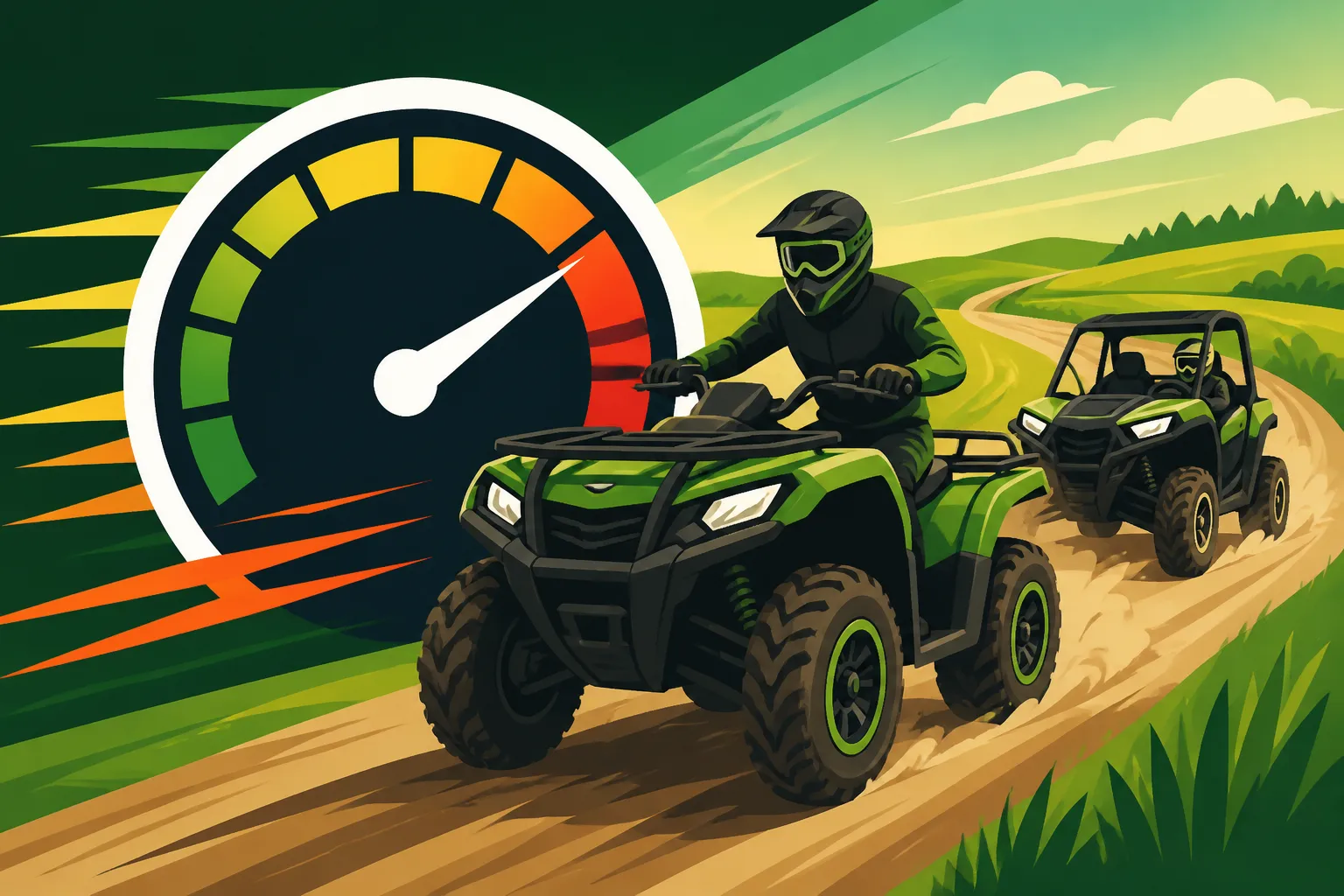
The 80 km/h speed limit in Saskatchewan primarily applies to ATVs and UTVs operating in the ditches adjacent to public highways, including many of the gravel grid roads that crisscross the province. It's a specific provision within the Act that acknowledges the reality of travel in rural areas where ATVs are often the most practical means of transportation for short distances or between fields. However, this isn't an invitation to treat the ditch like a race track. The limit is 80 km/h, but safe operation often dictates a much slower speed, especially considering uneven terrain, hidden obstacles, and potential interactions with other vehicles or wildlife. [Saskatchewan Ditch Riding and the 2-Metre Rule] also comes into play here, requiring you to stay a minimum of two metres from the travelled portion of the highway.
It’s easy to get caught up in the thrill of riding, especially on a relatively open stretch of ditch. However, remember that the ditch is not an open trail. It’s part of the public highway allowance and comes with its own set of responsibilities. If you're approaching an intersection, a private driveway, or an area with reduced visibility, common sense and the law demand you slow down significantly, often well below 80 km/h. Exceeding this limit, even in what feels like a remote location, can lead to a speeding ticket, just as if you were in a car. Officers regularly monitor these areas, and the penalties for excessive speed can be substantial.
Why the Limit Exists: Safety and Control
The 80 km/h speed limit for ATVs in ditches isn't an arbitrary number; it's a carefully considered balance between allowing practical use of these machines and maintaining public safety. ATVs and UTVs handle very differently from cars, especially at speed. They have a higher center of gravity, shorter wheelbases, and are designed for off-road conditions, not sustained high-speed travel on relatively flat, hard-packed surfaces. At 80 km/h, a sudden bump, a hidden culvert, or an unexpected steering input can quickly lead to a loss of control, a rollover, or a collision.
The Act sets this limit to provide a reasonable maximum speed where a rider can still maintain control of their machine, react to unforeseen hazards, and minimize the severity of an accident if one occurs. Think about the potential for rocks, debris, or even deep ruts hidden in tall grass in a ditch. At higher speeds, these become deadly traps. Even a seasoned rider can be caught off guard. This limit also implicitly encourages riders to be more aware of their surroundings and to ride defensively. The design of many aftermarket accessories, like those from SuperATV, often prioritizes durability and control for challenging terrains, which becomes even more critical when operating at higher speeds, even if it's within the legal limit. It’s about ensuring that the machine is manageable and that the operator has the best chance of responding to dynamic conditions.
Consequences of Exceeding the Speed Limit
Let's be blunt: exceeding the 80 km/h speed limit for ATVs in Saskatchewan's ditches or other designated areas comes with real and unpleasant consequences. It's not just a slap on the wrist. First and foremost, you're looking at a speeding ticket. The fines can be significant and will escalate the faster you were going over the limit. These aren't minor infractions; they can impact your driving record and lead to increased insurance premiums, just like a speeding ticket in your car. A peace officer will treat this offense seriously because of the inherent dangers involved.
Beyond the immediate financial hit, there are other repercussions. If you're involved in an accident while exceeding the speed limit, your liability could be significantly increased. Your insurance company might view you as negligent, potentially complicating your claim or even leading to a denial of certain coverages. Furthermore, excessive speed demonstrates a disregard for safety, which can reflect poorly on the entire ATV riding community. Law enforcement and government bodies are constantly assessing the safety of off-road vehicle use, and a pattern of speeding infractions could contribute to stricter regulations or reduced access in the future. Always adhere to the speed limits, not just to avoid a ticket, but to protect yourself, your passengers, and the future of ATV riding in the province.
Navigating Specific Road Scenarios in Saskatchewan
Riding an ATV or UTV in Saskatchewan isn't just about knowing your speed limit; it's about understanding how to handle specific situations when your machine interacts with the regular road network. These scenarios require careful attention to detail and adherence to precise rules to ensure everyone's safety.
Crossing Highways and Intersections Safely
One of the most common instances where an ATV will interact with a public highway is during a crossing. You're out on the trails or moving between properties, and a paved highway or busy intersection stands in your way. It's crucial to remember that you cannot simply drive across as if you were in a car. [Saskatchewan Crossings Require Passengers to Dismount] before the crossing even begins. This is a non-negotiable safety measure; no one should be on the machine during the actual crossing.
The operator must bring the ATV to a complete stop, yield to all highway traffic, and then proceed directly across the highway by the shortest route possible. You can't meander, turn, or ride alongside the highway for any distance. The goal is to minimize the time the ATV is on the travelled portion of the road. This short, direct crossing reduces the risk of collision with fast-moving traffic. Visibility is key here; choose a crossing point where you have a clear view of oncoming traffic from both directions, and drivers on the highway can see you well in advance. Never assume a driver sees you, especially if your machine is small or obscured by terrain.
Rules for Riding in Ditches and Medians
We've already touched on the 80 km/h speed limit in ditches, but there's more to ditch riding than just speed. The Act allows for the operation of ATVs in a ditch adjacent to a highway, but with strict conditions. You must stay a minimum of two metres from the travelled portion of the highway, as mentioned earlier in [Saskatchewan Ditch Riding and the 2-Metre Rule]. This distance is critical for safety, creating a buffer between your off-road machine and highway traffic. It's a common mistake for riders to hug the shoulder, which reduces this safety margin.
What about medians? Those strips of land separating opposing lanes of traffic on a divided highway might seem like an appealing shortcut or alternative path. However, the rules are clear: you cannot operate an ATV in a median that is less than 50 metres wide. For wider medians, specific permissions or local bylaws might apply, but generally, medians are off-limits. The reasoning is similar to ditch riding – it's about keeping ATVs separated from high-speed traffic and preventing unexpected maneuvers that could lead to accidents. Always be aware of your surroundings and adhere to these separation rules to ensure both your safety and the smooth flow of regular traffic.
Bridge and Weir Crossings
When your path takes you to a bridge or weir, the rules for ATV operation become even more specific. Generally, operating an ATV on a bridge or weir is prohibited. These structures are designed for vehicular traffic, and introducing an ATV can create safety hazards, not just for the ATV operator but also for other users and the structural integrity of the bridge itself. While some local bylaws might create very specific exceptions for certain structures, the default rule is to avoid them.
If you encounter a bridge or weir, you generally have two options: find an alternative route that avoids the structure entirely, or if it's absolutely necessary and permitted, dismount and walk your machine across. This is similar to the rule for crossing highways, emphasizing the need to minimize the risk associated with ATVs on infrastructure designed for different types of vehicles. Always look for signage or consult local authorities if you're unsure about a specific bridge. Don't make assumptions, as the penalties for unauthorized operation on these structures can be severe.
Lighting, Equipment, and Passenger Regulations
Safe ATV and UTV operation in Saskatchewan goes beyond just speed and location; it also heavily involves the equipment on your machine and how you carry passengers. These regulations are designed to enhance visibility, protect riders, and prevent dangerous overloading. Many riders turn to brands like SuperATV for accessories that meet or exceed these requirements, enhancing both safety and performance.
Essential Lighting for Night Travel
If you plan to ride your ATV or UTV after dark, or even in conditions of limited visibility like heavy fog or falling snow, proper lighting isn't just a good idea – it's a legal requirement. Your machine must be equipped with at least one headlight that emits a white light and is visible from a distance of 150 metres, as well as a taillight that emits a red light visible from the same distance. Both must be on during the "night travel" period, which is generally defined as half an hour after sunset to half an hour before sunrise, or whenever visibility is poor.
Additionally, the direction of travel for ATVs at night when operating adjacent to a highway (like in the ditch) must follow the same direction as the highway traffic. This means you should be moving with the flow of traffic, not against it, to ensure that your lights are visible to approaching vehicles from the rear. Adequate lighting, perhaps with auxiliary LED light bars from SuperATV, dramatically improves your visibility to others and your ability to see hazards on the trail or in the ditch. Neglecting lighting requirements can lead to fines and, more critically, significantly increase your risk of an accident during low-light conditions.
Helmet and Eye Protection Requirements
When it comes to personal safety equipment, Saskatchewan has clear mandates for ATV and UTV riders. A helmet is not optional; it's absolutely required for anyone operating or riding as a passenger on an ATV or UTV on public land where the Act applies. The helmet must meet specific safety standards, such as those set by the Canadian Standards Association (CSA), Snell, or the U.S. Department of Transportation (DOT). This isn't just any helmet; it needs to be an approved, protective headgear designed for powersports. [Saskatchewan Helmet and Eye Protection Rules] are very specific.
In addition to a helmet, eye protection is also mandatory. This could be a face shield integrated into your helmet, or separate goggles. The key is that the eye protection must be shatterproof to protect your eyes from debris, dust, branches, and insects. Tinted eyewear is acceptable during the day, but at night, your eye protection must be clear to ensure unimpeded vision. For riders who prefer open-face helmets, goggles are a must. Always ensure your helmet fits snugly, is properly fastened, and your eye protection is clean and scratch-free for optimal visibility.
Passenger Rules: When and Where It's Allowed
Carrying passengers on an ATV or UTV is another area where many riders make assumptions, often leading to dangerous situations. The rule in Saskatchewan is straightforward: you can only carry a passenger on an ATV or UTV if the machine is specifically designed by the manufacturer to carry more than one person. This means it must have a designated seat and footrests for the passenger. A standard single-rider ATV, even if it has a long seat, is not designed to carry a passenger, and doing so is illegal and incredibly dangerous.
Side-by-sides (UTVs) are generally designed for multiple occupants and typically have dedicated seats and seatbelts. However, even with a UTV, you cannot exceed the manufacturer's stated seating capacity. All passengers, regardless of age, must also wear an approved helmet and appropriate eye protection. Riding with an extra person perched precariously on a rack or squeezed onto a single seat dramatically alters the machine's balance and handling, making rollovers far more likely. It also puts the passenger at extreme risk in the event of a sudden stop or collision. Always prioritize safety and comply with [Saskatchewan Rules for a Child Passenger] and adult passengers by only carrying them on machines designed for that purpose, and ensure they are properly geared up.
The Crucial Role of Municipal Bylaws
While Saskatchewan's All Terrain Vehicles Act sets the provincial framework, it's absolutely vital for riders to understand that local municipal bylaws can significantly alter or further restrict ATV and UTV access within specific town, village, or rural municipality boundaries. Ignoring these local rules can quickly turn a legal ride into an illegal one, resulting in fines and frustration.
How Local Bylaws Impact Road Access
Many riders assume that if the provincial Act allows something, it's permitted everywhere. However, this is not the case when it comes to road access for ATVs and UTVs. Municipalities in Saskatchewan have the authority to create their own bylaws governing the operation of ATVs on roads, streets, and even ditches within their jurisdiction. This means that a grid road that is perfectly legal to ride in one Rural Municipality (RM) might be entirely prohibited in an adjacent RM. [Saskatchewan Municipal Bylaws on Roads] are a patchwork, not a unified blanket.
Some municipalities might completely prohibit ATVs on any public road or ditch within their limits, while others might designate specific routes, impose stricter speed limits than the provincial 80 km/h, or restrict hours of operation. These bylaws are often enacted to address local concerns such as noise, safety in populated areas, or to protect sensitive environments. Before you trailer your machine to a new area or even explore further afield in your own region, it's your responsibility as a rider to check the specific bylaws of the municipality you plan to ride in. A quick call to the municipal office or a check of their website can save you a lot of hassle.
Reading and Understanding Municipal Signage
When a municipality enacts bylaws that restrict or permit ATV access on certain roads, they are generally required to post clear signage. These signs are your visual cues and are legally binding. Ignoring a sign that says "ATV Prohibited" or "No Off-Road Vehicles" won't be an acceptable excuse if you're stopped by a peace officer or municipal bylaw officer. These signs will typically be white with black lettering, clearly stating the prohibition or restriction, and must be of a certain size to be enforceable, as noted in [Prohibition Signs Must Be 60 Centimetres Square].
Conversely, some municipalities might use signage to designate specific routes where ATVs are permitted. These signs are equally important to recognize, as they indicate where you can ride. The key is to be observant and understand that roadside signs aren't just for cars. They apply to all vehicle operators, including those on ATVs and UTVs. Always keep an eye out for these local directives, especially when entering or exiting a town or village boundary.
Getting Information from Your Rural Municipality
Given the variability of municipal bylaws, one of the best proactive steps you can take as an ATV or UTV rider is to directly contact the relevant Rural Municipality (RM) office, town office, or village office to inquire about their specific rules. Don't rely on word-of-mouth or assumptions. The staff at these offices are generally happy to provide information regarding local bylaws concerning off-road vehicles. [Planning a Village Office Visit Before You Drive] or even just a phone call can save you a lot of trouble.
When you call or visit, be specific about your intentions. For example, you might ask: "Are ATVs permitted on grid roads in your RM? If so, are there any restrictions on speed, time of day, or specific roads? Are ditches open for ATV use?" You might also ask if they have any local plate schemes, like some resort villages do. Having this information upfront ensures you're riding legally and responsibly, and shows respect for the local community and their regulations. This proactive approach not only keeps you out of trouble but also helps foster positive relationships between riders and local authorities.
Insurance, Enforcement, and Penalties
Even with all the rules for speed, access, and equipment, there's a crucial layer of protection and accountability that every Saskatchewan ATV and UTV rider needs to understand: insurance, and how law enforcement ensures compliance with the Act.
Saskatchewan's Minimum Insurance Requirement
It’s easy to focus on the fun parts of riding, but neglecting insurance is a serious mistake. In Saskatchewan, if you operate an ATV or UTV on public land, including roads, ditches, or designated trails, you are legally required to have a minimum amount of liability insurance. [Saskatchewan's Minimum Insurance Requirement] states that you must carry at least $200,000 in third-party liability coverage. This insurance protects you financially if you're found responsible for an accident that causes injury to another person or damage to their property.
Many riders assume their home insurance or auto insurance policy might cover their ATV, but this is often not the case, or the coverage may be extremely limited. It's almost always necessary to purchase a dedicated ATV or UTV insurance policy. This policy will typically cover the mandatory liability, and you can usually add optional coverages like collision, comprehensive (for theft or vandalism), and specific coverage for any valuable aftermarket accessories you've installed, perhaps from SuperATV. Carrying proof of this insurance with you while riding is also mandatory, as a peace officer can ask to see it. Getting caught without the required insurance can lead to significant fines and potential seizure of your machine.
What Peace Officers Look For
When you're out riding your ATV or UTV in Saskatchewan, particularly near or on public roads, you should be prepared for potential interactions with peace officers, including RCMP, municipal police, or conservation officers. They are authorized to enforce the All Terrain Vehicles Act and related regulations. So, [What an Officer Can Ask to See on a Grid Road] goes beyond just your driver's licence.
Officers will typically check for several key compliance points:
- Driver's Licence: Do you have a valid licence?
- Age Compliance: Is the operator of legal age, or is a youth properly supervised and certified?
- Insurance: Can you provide proof of valid third-party liability insurance?
- Helmet and Eye Protection: Are you and any passengers wearing approved helmets and eye protection?
- Machine Equipment: Is your ATV or UTV equipped with the required lights if riding at night or in low visibility?
- Passenger Rules: Are you carrying passengers legally (i.e., on a machine designed for it, and not overloading)?
- Speed and Operation: Are you adhering to posted speed limits, staying 2 metres from the travelled portion of the highway, and operating safely?
- Bylaw Compliance: Are you in an area where ATV operation is permitted by local municipal bylaws?
Officers are focused on ensuring safety and compliance with the law. A polite and cooperative attitude goes a long way.
Fines and Legal Ramifications for Violations
Ignoring Saskatchewan's ATV and UTV rules can lead to a range of legal and financial penalties. The All Terrain Vehicles Act outlines various offenses and their corresponding fines, which can quickly add up. [Saskatchewan Fines Capped at $1,000] are the maximum under the Act for a single offense, but multiple infractions can accumulate. For example, operating without a valid licence, without insurance, and speeding could result in several separate tickets.
Common violations and their potential consequences include:
- No Driver's Licence: Fine and potential machine seizure.
- No Insurance: Significant fine, potential machine seizure, and liability for damages in an accident.
- Speeding: Fine based on how far over the limit you were.
- No Helmet/Eye Protection: Fine for each person not compliant.
- Illegal Passenger: Fine.
- Operating in a Prohibited Area (e.g., unauthorized roads, closed Crown land): Fine, potential trespass charges.
- Operating impaired: Very severe penalties, similar to impaired driving in a car, including licence suspension, heavy fines, and even jail time.
Beyond fines, certain serious infractions can lead to your machine being impounded, requiring you to pay towing and storage fees to retrieve it, in addition to the fine. Repeated offenses or very serious violations could even lead to a court appearance. It’s always best to err on the side of caution and ensure you're fully compliant before you hit the trails or the ditches.
Best Practices for Responsible Road Riding
Navigating Saskatchewan's diverse landscape on your ATV or UTV can be an incredible experience, but it requires more than just knowing the rules; it demands a commitment to responsible riding practices. These best practices not only keep you safe and legal but also help preserve access for all riders.
Pre-Ride Checks and Maintenance
Before you even turn the key, a thorough pre-ride check is non-negotiable, especially if you plan to be near public roads or areas with potential traffic. This routine check helps identify potential mechanical issues that could lead to a breakdown or, worse, an accident. Many aftermarket parts, including those from SuperATV, are designed for durability, but regular inspection is still crucial.
Your pre-ride checklist should include:
- Tires: Check air pressure and condition (no cuts, bulges, or excessive wear).
- Brakes: Test both front and rear brakes for proper function and feel.
- Lights: Ensure headlights, taillights, and brake lights are all working correctly.
- Fluids: Check oil, coolant (if applicable), and brake fluid levels.
- Controls: Verify throttle, steering, and all switches operate smoothly.
- Fasteners: Quickly check for any loose nuts, bolts, or components that could vibrate off.
- Fuel: Make sure you have enough fuel for your planned ride.
Regular maintenance, following your machine's service schedule, is also vital. A well-maintained machine is a reliable machine, reducing the chances of an unexpected issue that could leave you stranded or, more dangerously, cause a loss of control on a grid road or ditch.
Planning Your Route and Knowing Local Rules
Never head out blindly, especially if your ride will involve municipal roads or navigating between properties. Always plan your route in advance, identifying where you'll be on private land, Crown land, or areas under municipal jurisdiction. This planning phase is where you confirm those crucial local bylaws. As discussed, [Asking Your Rural Municipality About a Grid Road] is a smart move. Check maps, consult with local riders, or directly contact municipal offices to understand specific restrictions or permitted routes.
Consider the time of day you'll be riding. Will it be dark? Then ensure your lighting is fully functional. Will there be heavy agricultural traffic on grid roads? Adjust your route or timing accordingly. Understanding the terrain, potential hazards, and where you might encounter other vehicles or pedestrians is paramount. A well-planned route minimizes surprises and helps you stay within legal and safe parameters, especially when adhering to rules like the 80 km/h speed limit or the 2-metre ditch riding separation.
Carrying Necessary Documentation
We’ve covered what an officer can ask for, but actually having those documents on hand is the final piece of the puzzle. Always carry your valid driver's licence and proof of insurance when operating your ATV or UTV on public land. It’s also a good idea to have some form of identification. While not always legally required, a copy of your bill of sale or other proof of ownership can also be beneficial in certain situations, such as if your machine is impounded or if there's a question of theft.
Consider keeping these documents in a waterproof bag or pouch secured on your machine, perhaps in a glove box or storage compartment. Don't carry them in a way that they could easily fall out or get lost. Having your papers in order makes any interaction with law enforcement smooth and quick, allowing you to get back to enjoying your ride with minimal delay. It’s a small effort that prevents big headaches.
| Rule Category | Standard Application | Key Details for ATV/UTV Riders |
|---|---|---|
| Speed Limit | 80 km/h on certain public pathways (e.g., ditches) | Applies to ATVs/UTVs in ditches adjacent to highways. Must still operate at a safe speed for conditions. Exceeding limit results in fines. |
| Driver's Licence | Required for operation on public land/roads | Must possess a valid driver's licence. No exceptions for adult riders on public land. |
| Age Requirement | Minimum 16 years old for unsupervised riding | Riders 12-15 require direct supervision by a licenced adult (365+ days) and completion of an approved safety course. Under 12 generally prohibited on public land. |
| Insurance | Minimum $200,000 third-party liability | Mandatory for public land operation. Must carry proof. Separate ATV policy often needed. |
| Helmet & Eye Protection | Mandatory for all riders/passengers | Helmet must be approved (CSA, Snell, DOT). Eye protection (goggles/face shield) must be shatterproof. |
| Ditch Riding | Permitted with restrictions | Must stay at least 2 metres from the travelled portion of the highway. Subject to the 80 km/h speed limit and local bylaws. |
| Highway Crossings | Highly restricted | Passengers must dismount. Operator stops, yields, crosses by shortest route. Cannot ride along highway. |
| Medians | Prohibited if less than 50 metres wide | Generally off-limits. Check specific local bylaws for wider medians, but default assumption should be prohibition. |
| Night Lighting | Headlight (white) & Taillight (red) visible from 150m | Lights must be on from 30 min after sunset to 30 min before sunrise, or in poor visibility. Travel in the same direction as traffic if in ditch. |
| Passengers | Only on machines designed for multiple occupants | Machine must have a designated seat and footrests for each passenger. Max capacity must not be exceeded. All passengers need helmets and eye protection. |
| Municipal Bylaws | Can add further restrictions or designate routes | Riders must check local town/village/RM bylaws before riding. Signage is legally binding. Ignorance is not an excuse. |
Disclaimer
This article is for general informational purposes only and does not constitute professional advice. Laws, prices and regulations vary by location and change over time. Consult a qualified professional for guidance on your specific situation.