Saskatchewan Lighting Requirements on a Machine
Riding your ATV or UTV in Saskatchewan is an incredible experience, but the joy can quickly turn to frustration if you’re unsure about the rules, especially when it comes to something as crucial as lighting. It's easy to assume your machine is ready to go, but missing a key light or having the wrong kind can lead to unexpected fines or, worse, an unsafe situation. This guide is here to unravel the complexities of Saskatchewan’s lighting requirements for ATVs and UTVs, ensuring you know exactly what your machine needs to stay legal and, most importantly, safe on the trails and designated roads.
The Foundation: Why ATV Lighting Rules Matter in Saskatchewan
Before diving into the specifics, it's really important to understand that these rules aren't just bureaucratic red tape. They are there for your safety and the safety of everyone else you might encounter, whether that's another rider, a pedestrian, or someone in a full-sized vehicle. Visibility is paramount, especially as daylight fades or conditions get murky. For us riders, dealing with differing regulations across provinces or even within municipalities can be a real headache, but knowing what's expected in Saskatchewan specifically saves a lot of grief.
The provincial government, through various acts and regulations, lays out what’s required. These rules are designed to prevent accidents by making sure your machine is seen and that you can see where you're going. Ignoring them isn't just a risk for a ticket; it's a risk to your well-being. Peace officers and park officials are often out doing [Saskatchewan Equipment Checks by Officers], and proper lighting is one of the first things they'll look for.
Understanding the All Terrain Vehicles Act and Lighting
The backbone of ATV and UTV rules in Saskatchewan is the All Terrain Vehicles Act. This piece of legislation outlines everything from age restrictions to operational rules, and yes, equipment requirements like lighting are front and center. It doesn't always go into excruciating detail on every single component, but it provides the framework that the more specific regulations build upon.
What riders often find challenging is that while the Act sets the stage, the nitty-gritty can be found in associated regulations, or even municipal bylaws if you're riding within town limits. This layered approach means you can’t just assume one set of rules applies everywhere. It’s why getting a clear picture of what the province expects for your lights is so vital, especially if you plan on operating your machine beyond private land. When in doubt, always refer back to the Act to ensure your machine meets the basic criteria.
The Role of Lighting in Rider Safety and Visibility
Think about a late afternoon ride that stretches into dusk, or a sudden change in weather bringing heavy fog or rain. Without proper lighting, you become virtually invisible. This isn't just about other vehicles; it's about seeing obstacles on the trail, like fallen branches, rocks, or unexpected dips. A good lighting setup illuminates your path, allowing you to react safely and maintain control. It also ensures that if you're riding with a group, everyone can track each other's position.
Beyond your immediate surroundings, effective lighting ensures that if you're sharing a grid road or making a quick, legal crossing of a highway, you are clearly visible to drivers of cars and trucks. Their speed and size mean they need every possible warning to see you and react. The regulations, though sometimes feeling cumbersome, are essentially your allies in staying safe and preventing collisions. It’s about being proactive rather than hoping for the best.
Front and Rear Lighting: The Essentials for Saskatchewan Riders
When it comes to lights on your ATV or UTV in Saskatchewan, there are distinct requirements for the front and the rear of your machine. You can't just have one or the other and call it good. These rules are designed to ensure you can both see what's ahead and be seen by anyone behind you. Many machines come with basic lighting from the factory, but riders often enhance these or question if their stock setup is sufficient for all conditions.
Headlights: Illuminating Your Path Forward
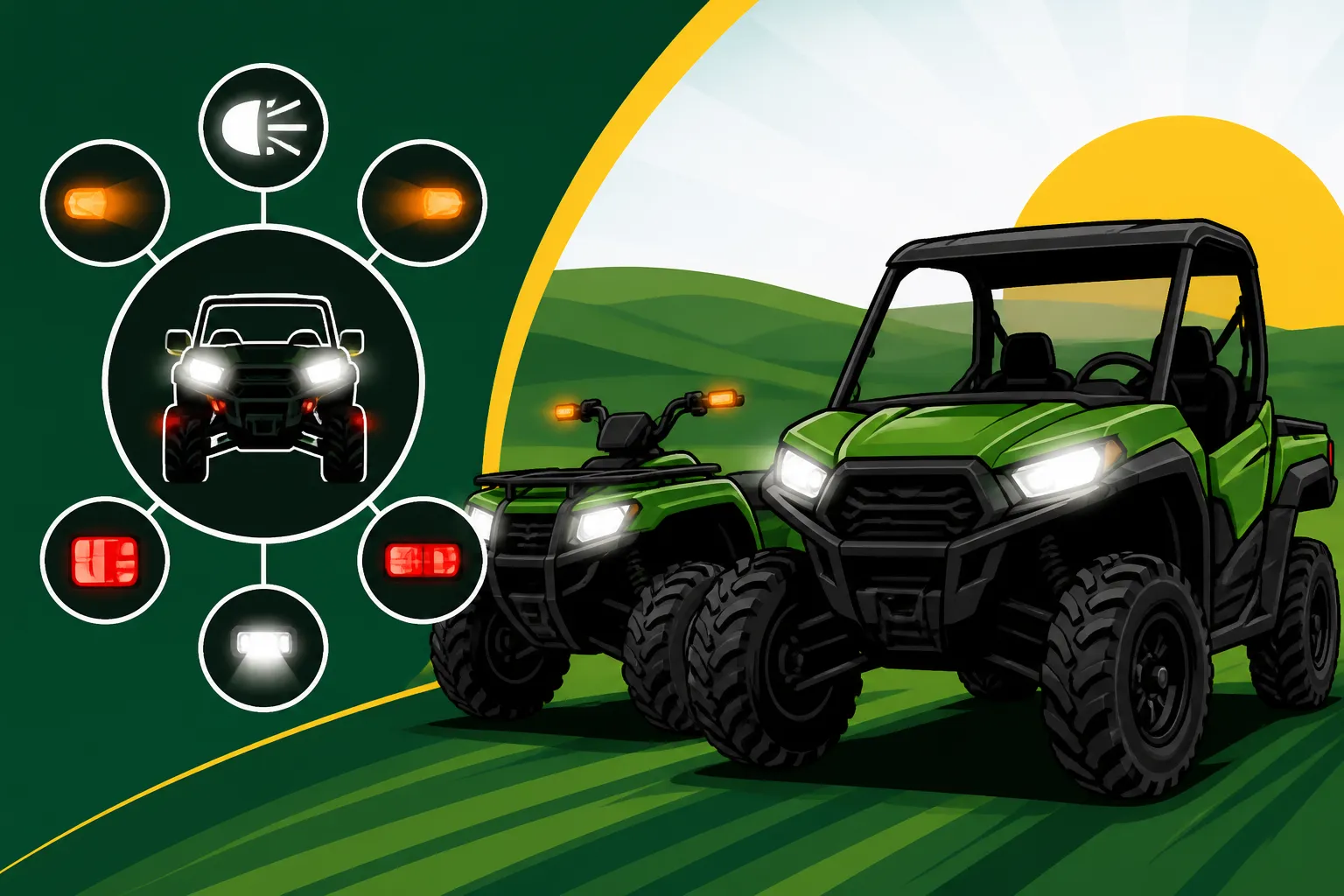
Your machine absolutely needs at least one headlight. The Act specifies it must be capable of illuminating persons and vehicles at a certain distance. This isn't just a faint glow; it needs to be a proper beam. Generally, your headlight must be capable of showing an object or person at least 60 metres (about 200 feet) ahead of you. This is crucial for riding after dark, allowing you enough reaction time to navigate obstacles or react to changing terrain.
The colour of your headlight is also specific: it must emit a white light. No fancy blue, green, or red headlights are allowed on the front. This standardisation helps other operators immediately identify your machine and its direction of travel. While many stock machines meet this requirement, if you're upgrading, make sure your new lights conform to the white light standard. Some riders opt for brighter LED headlights from brands like SuperATV to enhance their forward visibility beyond the minimum, which is a smart move for safety, as long as they emit the correct colour light and are aimed properly so as not to blind oncoming traffic. For more on navigating low-light conditions, check out [Saskatchewan Rules for Riding After Dark].
Taillights: Ensuring You're Seen from Behind
Just as vital as your headlight is your taillight. The All Terrain Vehicles Act requires at least one red taillight that is visible from a specified distance from the rear. This distance is typically around 150 metres (about 500 feet), ensuring that anyone approaching from behind has ample warning of your presence. The red colour is universally recognized as a rear-facing indicator, just as white signifies the front.
It’s not uncommon for taillights to get caked with mud or snow, especially during a vigorous ride. It's your responsibility to ensure they remain clean and visible. A quick check before you head out, and periodically during a long ride, can save you a lot of hassle. While standard taillights are usually sufficient, some riders opt for brighter LED taillights or even add additional rear lights for enhanced visibility, especially if they frequently ride in dusty conditions or plan on using their machine on public access points like grid roads where visibility is paramount.
Brake Lights: Signalling Your Intentions
In addition to a constant taillight, your ATV or UTV must be equipped with a red stop lamp, commonly known as a brake light. This light needs to be activated whenever you apply your brakes and must be visible from the same distance as your taillight (150 metres). This is a critical safety feature, as it clearly signals your deceleration to anyone behind you, giving them time to react and avoid a collision.
Many modern ATVs and UTVs come standard with integrated brake lights that are sufficiently bright. However, older machines, or those that have seen a lot of hard use, might have dim or non-functional brake lights. It’s a good habit to test your brake light regularly. Just squeeze the brake lever or press the pedal and have someone check that the light illuminates brightly. If you ride frequently in areas with other traffic, ensuring your brake light is always working perfectly is a small effort for a huge safety gain.
When Do You Need Your Lights On?
It's not enough to just have the lights on your machine; you need to know when to use them. Saskatchewan law is quite clear about the conditions under which your lights must be active. This isn't just about nighttime riding; it also extends to other situations where visibility is compromised.
Nighttime Operation: Half an Hour After Sunset and Before Sunrise
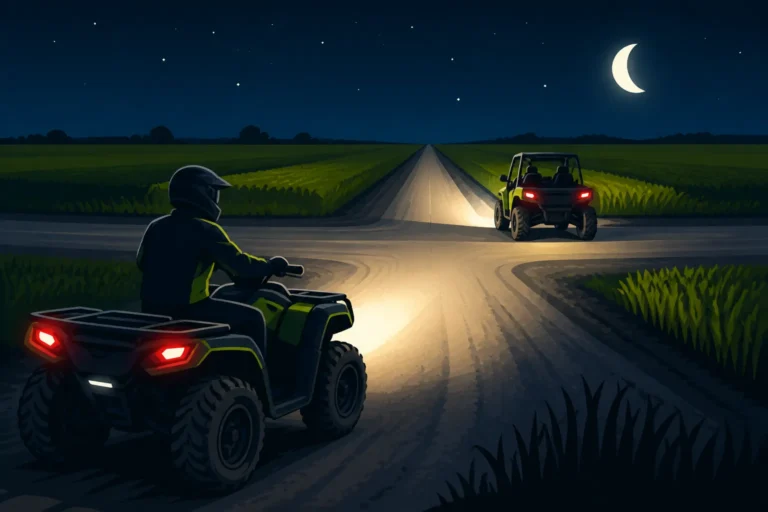
The most obvious time you need your lights on is during what the Act refers to as "night." Specifically, your lights must be illuminated from half an hour after sunset until half an hour before sunrise. This rule is consistent with traffic laws for other vehicles and is designed to cover the periods of twilight when natural light is insufficient for safe visibility. This applies whether you're on a designated trail, a grid road, or even moving between fields on your own property if it involves crossing any public access.
Many riders, especially those who enjoy longer rides that stretch into the evening, find themselves riding during these times. It’s not just about turning on your headlights and taillights; it's about ensuring they are clean, fully functional, and properly aimed. An officer conducting [Saskatchewan Equipment Checks by Officers] will certainly be looking for this. If you're out past sunset, having a reliable lighting system isn't optional; it's a legal and safety imperative.
Reduced Visibility Conditions: Fog, Rain, Snow, and More
Beyond the specific sunset/sunrise window, the Act also mandates the use of lights whenever atmospheric conditions reduce visibility to less than 150 metres (approximately 500 feet). This covers a broad range of scenarios: heavy fog, pouring rain, blowing snow, or even significant dust clouds on a dry day. In these conditions, your lights serve a dual purpose: to help you see the terrain and to make your machine visible to others.
This is where investing in quality lighting can really pay off. While stock lights meet the minimum, enhanced LED light bars or auxiliary lights from companies like SuperATV can dramatically improve your ability to see through thick conditions. Remember, just because it's daytime doesn't mean your lights can be off. If you can't clearly see 150 metres ahead, or if you think others might struggle to see you from that distance, flick those lights on. It’s always better to be over-cautious than to risk an accident or a [Saskatchewan Fines Capped at $1,000].
Other Lighting and Equipment Considerations
While headlights and taillights are the main focus, there are other aspects of lighting and equipment that contribute to overall safety and compliance in Saskatchewan. These can sometimes be overlooked but are just as important for a safe and legal ride.
Reflectors: Passive Safety When Lights Are Off
Even when your lights are off during daylight hours, or if your electrical system fails, passive reflectors play a vital role in your machine's visibility. The Act requires certain reflectors to be present on your ATV or UTV. Typically, this includes:
- Rear Reflectors: At least one red reflector mounted on the rear, visible from 150 metres. This often works in conjunction with your taillight, but provides a safety net if the power is out.
- Side Reflectors: Amber reflectors on each side near the front, and red reflectors on each side near the rear, visible from 60 metres. These are crucial for side-on visibility, especially when crossing roads or operating in areas with other traffic.
Many machines come with these reflectors from the factory, but they can get damaged, fall off, or become covered in mud. A quick visual inspection is always a good idea. These simple, inexpensive components offer critical passive safety, making your machine more visible even in ambient light or when illuminated by another vehicle's headlights.
Spark Arrestors: Not a Light, But Critical Equipment
While not a lighting requirement, a properly functioning spark arrestor is another essential piece of equipment mandated by Saskatchewan law, particularly for riding on Crown land or during wildfire season. A spark arrestor prevents hot carbon particles from escaping your exhaust and potentially starting a fire. This is especially important given Saskatchewan's often dry conditions. [Saskatchewan Spark Arrestor Guidance] is not to be taken lightly.
An officer checking your machine might not just look at your lights; they'll also check for a spark arrestor. Operating without one, especially during dry periods, carries severe penalties beyond those for lighting infractions, given the immense danger of wildfires. It's a key part of responsible riding and a commitment to protecting our natural spaces.
Turn Signals and Hazard Lights: When Are They Required?
The All Terrain Vehicles Act primarily focuses on basic forward and rear visibility through headlights, taillights, and brake lights. Unlike cars, ATVs and UTVs are not universally required to have turn signals or hazard lights by provincial law for general operation. However, this is one of those areas where municipal bylaws or specific operational contexts can introduce additional requirements.
If you are riding on certain designated municipal roads where ATVs are permitted, the local bylaw might require turn signals for clear communication with other road users. Furthermore, if you’re using your UTV for commercial purposes or have modified it extensively, adding turn signals and hazard lights is a wise safety upgrade, even if not strictly mandated by the province for recreational use. Always check local regulations if you plan to ride on paved roads or within town limits.
Here’s a quick overview of key lighting requirements:
| Light Type | Colour | Location | Minimum Visibility Distance | When Required |
|---|---|---|---|---|
| Headlight | White | Front | 60 metres (200 feet) | Half-hour after sunset to half-hour before sunrise; reduced visibility conditions |
| Taillight | Red | Rear | 150 metres (500 feet) | Half-hour after sunset to half-hour before sunrise; reduced visibility conditions |
| Brake Light | Red | Rear | 150 metres (500 feet) | When brakes are applied |
| Rear Reflector | Red | Rear | 150 metres (500 feet) | Always present |
| Front Side Reflectors | Amber | Front Sides | 60 metres (200 feet) | Always present |
| Rear Side Reflectors | Red | Rear Sides | 60 metres (200 feet) | Always present |
Aftermarket Lighting and Compliance
Many riders want to upgrade their lighting, either for better performance, aesthetic reasons, or to customize their machine for specific riding conditions. While aftermarket lights can greatly enhance your riding experience, it’s critical to ensure they comply with Saskatchewan's regulations.
Enhancing Your Visibility Beyond the Minimum
It's common for riders to feel that stock lighting, while legally compliant, isn't always enough for truly challenging conditions. This is where quality aftermarket lighting can make a huge difference. Products like LED light bars, auxiliary floodlights, or spot beams can dramatically increase your visibility and improve your ability to see the trail. Companies like SuperATV offer a wide range of lighting solutions designed specifically for off-road machines, providing durable and powerful options.
However, remember the colour requirements for headlights (white) and taillights (red). While a powerful white LED light bar on the front can be a fantastic addition for trail riding, ensure it doesn't interfere with your primary headlight's function or blind oncoming riders if used on shared paths. For the rear, additional red auxiliary lights can boost your presence significantly in dusty or snowy conditions, making you much safer.
Avoiding Common Lighting Mistakes and Fines
One of the easiest ways to get a ticket for lighting is simply not having your lights on when required. Riders often forget the "half an hour after sunset" rule, or neglect to turn on their lights during a sudden rain shower. Another common mistake is having lights that are too dim or obstructed by mud, snow, or cargo. Always give your lights a quick wipe down before heading out and throughout a long day.
Using incorrect colours is another no-no. While some riders like to add decorative coloured lights, ensure these don't interfere with or replace your legally required white front and red rear lights. For instance, putting a blue light on the front of your ATV could easily be mistaken for an emergency vehicle. Also, bright auxiliary lights should be used responsibly. Blasting a 50-inch light bar on a busy trail or grid road at night can blind other operators, leading to dangerous situations and potential legal trouble. [Saskatchewan Ticket Costs for Riders] can quickly add up, so it's always better to be safe and compliant.
The Importance of Proper Aiming and Wiring
Even the best lights are useless if they're not aimed correctly. Headlights that point too high will blind oncoming riders, while those aimed too low will drastically reduce your effective range of vision. Take the time to adjust your headlights so they illuminate the path ahead without scattering light unnecessarily or creating glare for others.
Furthermore, any aftermarket lighting needs to be properly wired. Poor wiring can lead to electrical shorts, drained batteries, or even fire hazards. If you're not comfortable with electrical work, it's always best to have a qualified technician install your auxiliary lighting. This ensures reliability and prevents issues that could leave you stranded or, worse, compromise your machine's safety systems. A well-installed and properly aimed lighting system is a major component of safe operation, contributing significantly to your overall [Saskatchewan Insurance Requirements for Riders] by reducing risk.
Riding an ATV or UTV in Saskatchewan offers unparalleled freedom, but it comes with the responsibility of understanding and adhering to the rules. Proper lighting isn't just a legal formality; it's a fundamental aspect of your safety and the safety of everyone sharing the trails and roads. By ensuring your machine's lights are compliant, functional, and used correctly, you're not just avoiding fines; you're actively contributing to a safer and more enjoyable riding experience for all. So, before your next adventure, give those lights a quick check and ride with confidence!
Disclaimer
This article is for general informational purposes only and does not constitute professional advice. Laws, prices and regulations vary by location and change over time. Consult a qualified professional for guidance on your specific situation.