Saskatchewan Crossings Require Passengers to Dismount
It can be incredibly frustrating to be out enjoying a beautiful Saskatchewan day on your ATV, perhaps with a buddy or your child riding along, only to encounter a road crossing and wonder if you're actually following all the rules. The truth is, many riders are often unclear about the specific requirements, especially when it comes to passengers during those brief, but critical, moments of crossing a public road. This guide is here to untangle the complexities of Saskatchewan's regulations concerning ATV passengers and road crossings, helping you understand precisely what's expected of you to keep everyone safe and avoid unexpected fines.
The Core Rule: Dismounting for Crossings
One of the most surprising, and often overlooked, rules for ATV operation in Saskatchewan is what happens to your passengers when you need to cross a public road. Unlike riding on a designated trail or private land, the moment you transition onto or across a provincial highway or municipal road, even for a few seconds, the rules tighten considerably. This isn't just a suggestion; it's a specific requirement under the province's All Terrain Vehicles Act.
Understanding the "Dismount" Requirement
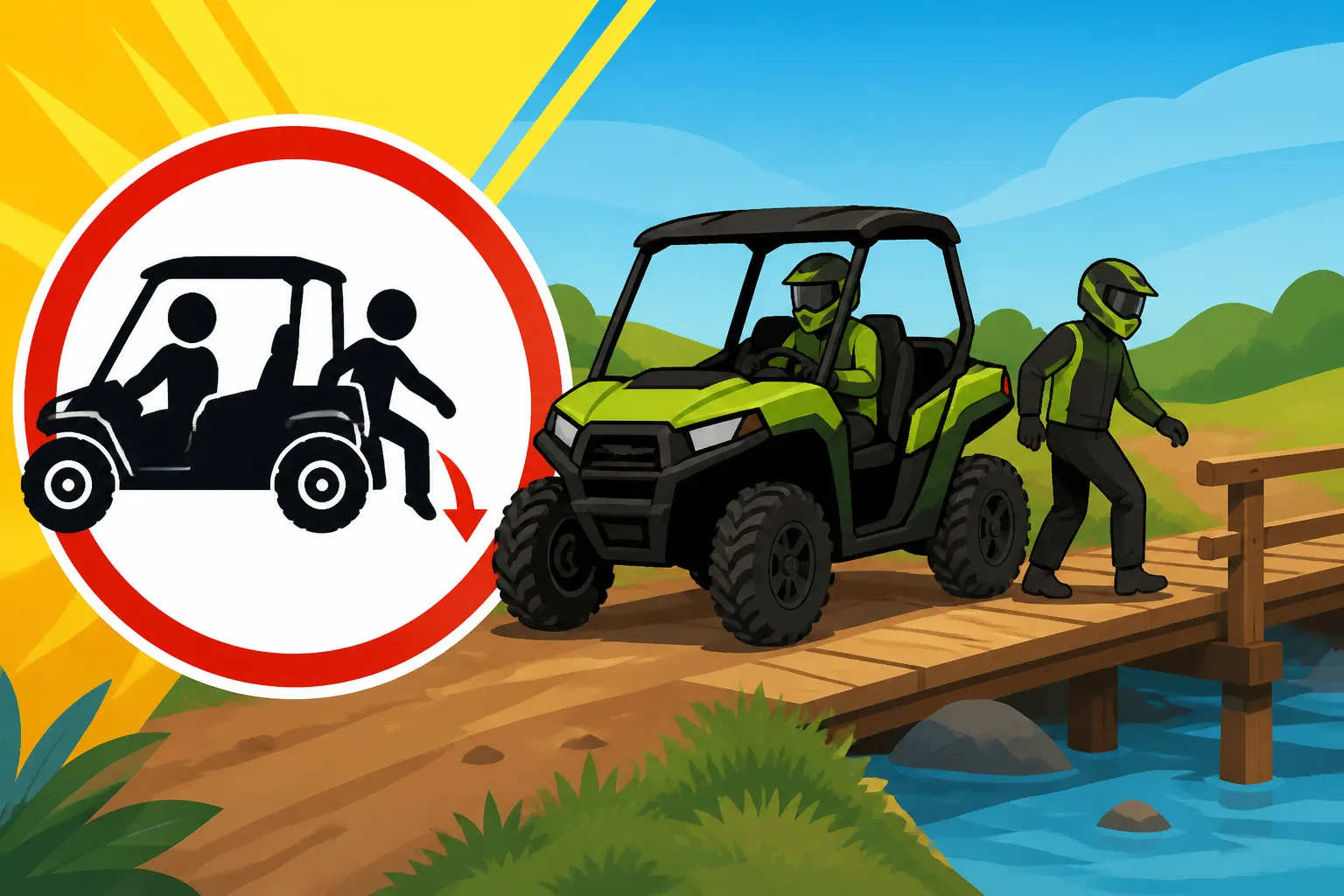
Let's paint a picture: you're out with a group, perhaps heading to a different section of Crown land or needing to get from one side of a grid road to the other to continue your adventure. You have your child riding behind you on a machine clearly designed for two people. As you approach the paved highway, you bring your ATV to a complete stop, just as you're supposed to. But here’s the kicker: before you even think about accelerating across, your passenger needs to get off the machine. This applies whether your passenger is an adult, a teenager, or a younger child. They must dismount and, in many interpretations, walk or stand clear of the roadway while the operator crosses alone.
This rule often catches people off guard because it feels counterintuitive. Why dismount for such a short distance? The intent is purely safety. During a road crossing, an ATV and its occupants are at their most vulnerable. The dismounting requirement is a measure to reduce potential injury to passengers in the event of a collision with a motor vehicle on the highway. Once the operator has safely crossed and is clear of the travelled portion, the passenger can then re-mount. This process applies to any public roadway, from major highways to gravel grid roads, unless a specific municipal bylaw states otherwise for local roads. You can find more detail on this specific requirement in [Saskatchewan Crossings Require Passengers to Dismount].
Why This Rule Exists: Safety First
The provincial government, through the All Terrain Vehicles Act, prioritizes safety above all else, especially when ATVs interact with conventional road traffic. Public roads are inherently designed for faster-moving, enclosed vehicles, not open-air off-road machines. The dynamics of an ATV, its limited visibility to other drivers, and the exposure of its occupants make any road crossing a high-risk maneuver. When a collision occurs involving an ATV, passengers, particularly children, are at a significantly higher risk of severe injury.
By requiring passengers to dismount, the rule aims to minimize the number of individuals exposed to this risk at any given moment. It’s a stark reminder that while ATVs are fantastic for recreation and work, they are not cars or trucks when it comes to road interaction. This is also why [Saskatchewan Crossings by the Shortest Route] is another key rule: the less time an ATV is exposed to road traffic, the safer everyone is. It might seem like an inconvenience, but considering the potential consequences of an accident, it’s a small price to pay for an added layer of protection.
Who Can Ride Anyway? ATV Passenger Rules in Saskatchewan
Beyond the dismounting rule for crossings, it's crucial to understand the broader context of who can even be a passenger on your ATV in Saskatchewan. Not all machines are created equal when it comes to carrying extra weight, and not all riders are legally permitted to carry passengers. Getting this wrong can lead to serious fines and, more importantly, put lives at risk.
Machines Designed for Passengers
First things first: your ATV must be specifically designed by the manufacturer to carry a passenger. This isn't a suggestion; it's a legal requirement. You can't just throw a cushion on the back rack of your single-rider utility quad and call it good. Machines built for passengers, often called "two-up" ATVs or "side-by-sides" (UTVs), have a longer seat, specific footrests for the passenger, and often grab handles. If your machine only has one seat and no dedicated passenger accommodation, it's a single-rider vehicle, end of story. Carrying anyone on a machine not designed for it is a violation of the Act and incredibly dangerous.
Imagine a situation where you're riding your standard quad, and your friend hops on the back, straddling the rear rack. While it might seem harmless for a short distance, the machine's suspension, weight distribution, and braking system are not engineered for that extra passenger. This can lead to instability, loss of control, and a much higher chance of an accident, especially on uneven terrain or during an emergency stop. Always verify your machine's design and ensure it meets the criteria for carrying passengers. For further clarification, refer to [Saskatchewan Passengers Only on Designed Machines].
Age Restrictions for Passengers
While there isn't a specific minimum age for a passenger on an ATV that's designed to carry one, the general safety principles of the Act still apply. The operator is responsible for the safe operation of the machine and the well-being of their passenger. This implies that the passenger must be able to sit securely, reach the footrests, and hold onto the grab handles, remaining stable and balanced throughout the ride. If a child is too small to do these things comfortably and safely, they shouldn't be a passenger, regardless of what the machine is designed for.
For instance, trying to squeeze two smaller children onto a two-up ATV might technically fit the "designed for passengers" rule, but if they can't both maintain proper posture and grip, you're compromising their safety. Common sense and a strong focus on the child's ability to participate in their own safety (by holding on properly) should guide your decision. Always prioritize the child's safety and ability to ride securely, even if the machine technically has space.
Navigating Roads: Beyond Just Crossings
While the focus here is on passenger dismounting for crossings, it's part of a larger tapestry of rules governing ATV use on or near public roads in Saskatchewan. Understanding these broader regulations is essential for safe and legal operation, regardless of whether you have a passenger or not. Misunderstanding these rules is a common source of tickets and accidents.
The Shortest Route and Full Stop Rules
When you do need to cross a highway, the law is quite clear: you must do so by the shortest, most direct route available. This means no meandering diagonal crossings or riding alongside the highway for any unnecessary distance before turning across. You must also bring your ATV to a complete stop before entering the travelled portion of the highway, checking for traffic in both directions, just as you would in a car at a stop sign. This applies not just to paved highways but also to gravel grid roads and municipal streets.
Consider a scenario where you're riding your ATV on an old field road, approaching a busy provincial highway. You can see a shortcut through a shallow ditch that would get you across faster, but it's not the most direct perpendicular route. Taking that shortcut might seem convenient, but it increases your time on the road, your blind spots, and your legal risk. Always stick to the most direct path and come to a full, deliberate stop. The intent here is to minimize exposure to other vehicles, making the crossing as quick and predictable as possible. You'll find this reinforced in [Saskatchewan Rules for Crossing a Highway].
Ditch Riding and the 2-Metre Rule
In Saskatchewan, riding in the ditch parallel to a highway is a common practice, but it comes with its own set of rules. The most significant is the "2-metre rule," which states that your ATV must operate at least two metres from the travelled portion of the highway. This creates a buffer zone between your off-road machine and fast-moving traffic, enhancing safety for everyone. This rule is in place to prevent ATVs from inadvertently swerving into traffic or obscuring the view of oncoming vehicles.
However, it's critical to remember that this privilege doesn't extend everywhere. Some municipalities have specific bylaws that prohibit ditch riding within their boundaries, regardless of the 2-metre rule. So, while you might be legally riding the ditch outside a town, once you enter its municipal limits, that same ditch might be off-limits. Always check local bylaws before you ride, especially if you're exploring new areas. For more on this, check out [Saskatchewan Ditch Riding and the 2-Metre Rule]. This applies to you whether you are riding a utility quad or a more powerful side-by-side from a brand like SuperATV.
Speed Limits and Night Travel
Even when legally operating an ATV on a road or in a ditch where permitted, specific speed limits and lighting requirements apply. When operating on a public road, or where a municipal bylaw allows it, your speed cannot exceed 80 km/h. This is a maximum, and often, much lower speeds are appropriate given conditions and visibility. When riding after dark, your ATV must have its headlights and taillights on, ensuring you're visible to other traffic. Additionally, if you have a passenger on a machine designed for two, ensure your lighting is sufficient to make your combined presence known.
Picture yourself riding home as dusk settles, traversing a grid road where ATVs are permitted. Even if the road is quiet, your lights are critical for visibility. [Saskatchewan Lighting Rules at Night] emphasizes the importance of proper illumination, not just for you to see, but for others to see you. For added safety and visibility, some riders install aftermarket lighting kits or additional reflective strips. Companies like SuperATV offer a range of lighting solutions, from LED light bars to enhanced tail lights, that can dramatically improve your visibility during low-light conditions, beyond just meeting the minimum legal requirements.
Enforcement, Penalties, and Owner Liability
Ignoring Saskatchewan's ATV rules isn't just a matter of inconvenience; it carries real legal consequences. Peace officers are empowered to enforce the All Terrain Vehicles Act, and violations can result in fines, machine seizure, and significant liability issues, especially if an accident occurs. Being informed isn't just about avoiding a ticket; it's about protecting yourself and your assets.
What an Officer Can Ask to See on a Grid Road
If you're stopped by a peace officer while operating your ATV, whether it's on a grid road, crossing a highway, or on Crown land, they have the authority to ask for specific documentation and verify compliance with the Act. This includes requesting your driver's licence (yes, you need one to operate an ATV in Saskatchewan), proof of insurance, and possibly proof of ownership for the machine. While there's no provincial registration for ATVs in Saskatchewan, insurance is mandatory, and having it readily available is crucial.
Imagine you're approached by an officer. Being polite and cooperative, and having your documents ready, can make a big difference. For example, if you're asked to prove you have a valid driver's licence and you produce it, that's one less concern. If you're riding with a child passenger and they're required to dismount for a crossing, an officer will be looking to ensure that rule is followed. For a deeper dive into what an officer might ask for, refer to [What an Officer Can Ask to See on a Grid Road].
Consequences of Non-Compliance
The penalties for violating the All Terrain Vehicles Act can range from monetary fines to more serious consequences like machine seizure. Riding without a valid driver's licence, operating an uninsured ATV, or carrying a passenger illegally can all result in tickets. These fines can quickly add up, turning an enjoyable ride into a costly mistake. For instance, operating an ATV while your driver's licence is suspended or disqualified carries even more severe penalties.
Here's a quick overview of potential issues:
| Violation Type | Potential Consequence |
|---|---|
| Unlicensed Operator | Fines, potential for licence suspension/disqualification if repeated |
| Uninsured ATV Operation | Fines, potential for machine seizure |
| Operating Not Designed for Passengers | Fines |
| Passenger Not Dismounting for Crossing | Fines |
| Exceeding Speed Limits | Fines |
| Improper Lighting at Night | Fines |
| Riding in Prohibited Areas | Fines, potential for machine seizure |
| Operating Under the Influence | Severe fines, licence suspension, vehicle seizure, potential criminal charges |
These penalties underscore the importance of knowing and following the rules. Ignorance of the law is not a defence, and it won't prevent you from facing these consequences.
Owner's Responsibility
Beyond the operator, the owner of the ATV bears significant responsibility. If you lend your machine to someone, and they violate the Act, you, as the owner, can be held liable. This is particularly relevant if an accident occurs or if a ticket is issued. The Act often places a reverse onus on the owner, meaning it's up to you to prove that you took all reasonable precautions to prevent the violation. This could involve ensuring the borrower had a valid licence, knew the rules, and was operating the machine safely.
Consider a scenario where you lend your two-up side-by-side to a friend, who then allows a passenger to remain on board while crossing a paved highway, resulting in a ticket. While your friend receives the ticket, you, as the owner, could also be drawn into the legal process and potentially face liability. This is why understanding [Saskatchewan Owner Liability Rules] is so critical. Always ensure anyone borrowing your ATV is fully aware of the regulations, especially around passengers and road crossings, and is a competent, licensed operator.
Ensuring Your Machine and Gear are Road-Ready
Following the rules is one thing, but being prepared with the right equipment and a properly maintained machine is another crucial layer of safety for any ATV rider in Saskatchewan, especially when you might encounter roads. A well-equipped machine and properly geared-up rider are far safer on any terrain, including during road interactions.
Essential Safety Equipment for Riders
Saskatchewan law mandates specific safety equipment for ATV riders. A properly fitted helmet is non-negotiable, and it must meet approved safety standards (like DOT, Snell, or ECE). It’s not just a recommendation; it’s the law. Eye protection, such as goggles or a face shield, is also required to protect your vision from dust, debris, and insects. While not legally mandated for adults, sturdy footwear, long pants, and long-sleeved shirts are always highly recommended to protect against scrapes, impacts, and exhaust heat.
Think about a hot summer day. It might be tempting to ride in a t-shirt and shorts, but a sudden fall, even at low speed, can cause significant road rash. Protecting your skin and head is paramount. Furthermore, if you're riding with a passenger, ensure they also have all the necessary safety gear, especially a helmet and eye protection. Their safety is just as important as yours, if not more so, given their often more exposed position. Don't forget to review [Saskatchewan Helmet and Eye Protection Rules] for all the specifics.
Machine Lighting and Visibility
For those inevitable moments when your ATV must interact with public roads, adequate machine lighting is crucial, particularly if you're riding anywhere near dawn, dusk, or night-time. As mentioned, headlights and taillights are mandatory after sunset and before sunrise. However, even during daylight hours, enhancing your machine's visibility can significantly reduce risk. This might include adding reflective tape to your machine, wearing high-visibility clothing, or upgrading your ATV's lighting system.
While the stock lights on most ATVs meet the minimum legal requirements, they are often designed more for off-road illumination than for being seen by oncoming traffic. Consider brighter LED headlights or additional auxiliary lights to make your presence undeniable to drivers. For example, some riders add amber marker lights or extra tail lights. These kinds of thoughtful upgrades, which can be found from aftermarket suppliers like SuperATV, contribute significantly to your safety profile, making you more noticeable during road crossings and ditch riding.
Upgrades for Enhanced Road Safety
Beyond basic maintenance and lighting, several aftermarket upgrades can enhance your ATV's safety and performance, especially for riders who frequently cross roads or operate in areas where visibility is a concern. Wider mirrors, for instance, can provide a better field of view for monitoring traffic, which is critical during crossings. Upgraded horn systems can make your presence more audible to other vehicles.
For those who rely on their side-by-sides for work or extensive trail riding with passengers, considering more robust tire options that offer better grip on varying surfaces, including pavement for those short crossings, can be a smart move. Companies like SuperATV specialize in durable accessories and parts, from tires that improve on-road manners to more powerful lighting kits that ensure you’re seen. While these aren't always legally required, investing in such upgrades is a proactive step towards a safer riding experience for both you and your passengers, offering peace of mind when your off-road machine momentarily shares space with the on-road world.
Disclaimer
This article is for general informational purposes only and does not constitute professional advice. Laws, prices and regulations vary by location and change over time. Consult a qualified professional for guidance on your specific situation.