Saskatchewan Rules for Riding a Pipeline Cut
Riding ATVs and UTVs across Saskatchewan's vast landscape is an undeniable draw, but navigating the rules around specific features like pipeline cuts can feel like trying to find your way through a dense fog without a compass. Many riders mistakenly assume these cleared paths are fair game, only to find themselves facing fines or land disputes. This guide is here to cut through that confusion, clarifying the legalities and best practices for riding on pipeline cuts in Saskatchewan, helping you stay safe, legal, and respectful of the land.
Understanding Pipeline Cuts and Their Legal Status
Before you even think about dropping your tailgate and unloading your quad, it's absolutely crucial to understand what a pipeline cut actually is, and more importantly, who owns it. Many riders envision these long, cleared corridors as dedicated trails, an open invitation to explore. However, the reality is far more complex, and misinterpreting the legal status can lead to serious consequences.
What Defines a Pipeline Cut in Saskatchewan?
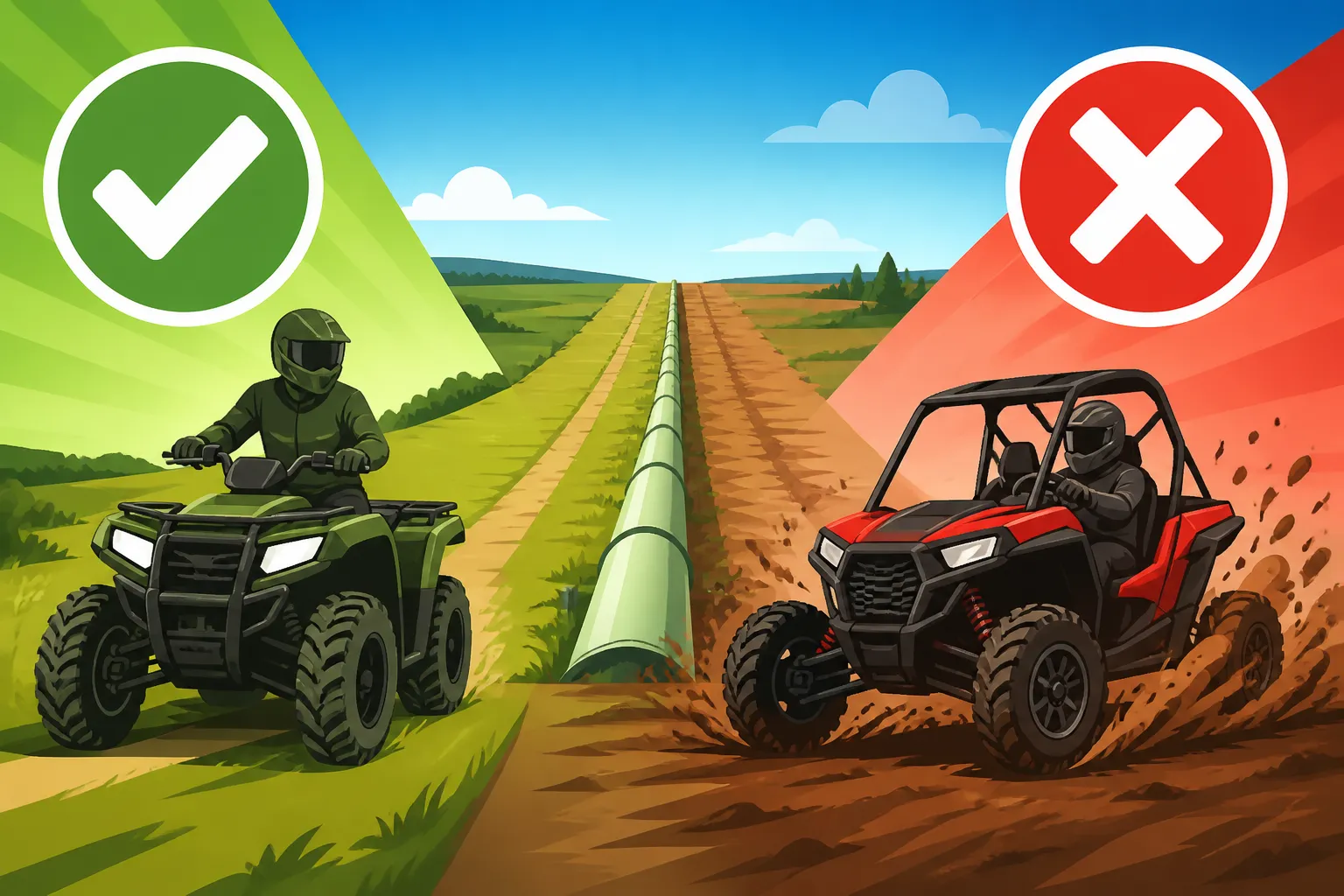
A pipeline cut, also known as a right-of-way, is a strip of land where an energy company has buried a pipeline. These areas are typically cleared of trees and major vegetation to allow for construction, maintenance, and emergency access to the pipeline. They create visible linear features across the landscape, often stretching for many kilometres, which is precisely what makes them attractive to ATV and UTV riders looking for long, uninterrupted routes. They are not, however, public lands or designated trails in the traditional sense. The land itself still belongs to someone – either the Crown (provincial or federal government) or a private landowner. The pipeline company simply holds an easement or a right-of-way that grants them specific access and use rights for their infrastructure.
This distinction is vital. Just because a pipeline company has the right to use that strip of land for their pipeline doesn't mean you have the right to use it for recreational riding. Their rights are specific to pipeline operations, not general public recreation. The clearing simply facilitates their work, it doesn't automatically create a public access trail for ATVs. Often, these cuts cross various types of land, from private farmland to Crown lands, and the rules of access change dramatically depending on what lies beneath your tires.
Crown Land vs. Private Land on Pipeline Cuts
The legal framework for riding a pipeline cut hinges almost entirely on whether the land it traverses is Crown land or privately owned. This is where many riders get into trouble, as a pipeline cut can easily switch between land types without any clear signage to indicate the change. It's not uncommon for a single pipeline to cross multiple parcels of both Crown and private property during its journey across the province.
When a pipeline cut crosses private land, which includes agricultural land, leased Crown land (like grazing leases), or other titled properties, you absolutely need explicit permission from the landowner or leaseholder before riding. Without it, you are trespassing, pure and simple. This applies even if the pipeline company has an easement across that private land. Your permission must come from the person who holds the surface rights. Imagine riding across someone's backyard because a utility company has an access line there; it's essentially the same principle. Ignoring this can lead to property damage claims, fines, and a sour relationship with local landowners. [Saskatchewan Private Land Permission] is not just a suggestion; it's a legal requirement.
For Crown land, the situation is often seen as more permissive, but it's far from a free-for-all. While much Crown land in Saskatchewan is generally open to recreational use, specific restrictions and administrative orders can and do apply. For instance, some Crown lands may have seasonal closures, be part of ecological reserves, or have specific restrictions due to wildlife management or forestry operations. You can't just assume that because it's Crown land, you can ride anywhere. Some pipeline cuts on Crown land might even be managed under specific agreements that prohibit motorized vehicle use. Understanding [Saskatchewan Crown Land Access Rules] is essential before planning your ride.
Legal Considerations for Riding Pipeline Cuts
Navigating the legalities of riding ATVs and UTVs on pipeline cuts in Saskatchewan requires a solid understanding of a few key pieces of legislation and common sense. It's not just about what you can do, but what you should do to be a responsible rider and avoid legal headaches. The lack of specific "pipeline cut" regulations means you need to apply broader land use and ATV rules to these unique linear features.
Trespass Laws and Owner Permission
The most significant legal hurdle for riding pipeline cuts, particularly those crossing private property, is the law of trespass. In Saskatchewan, the Trespass to Property Act makes it clear: if you enter private land without permission, you are trespassing. This isn't just a polite request; it's a legal prohibition with real consequences. A pipeline right-of-way, while used by a utility company, does not strip the underlying landowner of their right to control access. They still own the land.
This means that if you're riding a pipeline cut that traverses a farmer's field, a rancher's grazing lease, or any other private parcel, you must have permission. This isn't always easy to get, as many landowners are hesitant due to concerns about liability, crop damage, fence damage, or the disruption of livestock. Always seek written permission if possible, and carry it with you. Verbal permission can be harder to prove if challenged. Neglecting this crucial step can lead to a peace officer issuing a ticket or, in more severe cases, an owner pursuing civil action for damages. Familiarize yourself with [Saskatchewan Trespass Law for Riders] to understand your obligations.
It's also worth noting that even on Crown land, certain areas, such as [Saskatchewan Grazing Lease Permission] areas, operate much like private land in terms of access. While the Crown owns the land, the leaseholder has significant control over who can access it and for what purposes. Always inquire with the leaseholder before entering, as they are responsible for the well-being of their livestock and the integrity of their operation.
General ATV & UTV Regulations on These Areas
While there are no specific laws just for pipeline cuts, all general ATV and UTV regulations still apply when you're riding on them. This includes rules from [Saskatchewan's All Terrain Vehicles Act] and its associated regulations. You can't just ignore these because you're on a pipeline cut. This means:
- Age and Supervision: Riders must meet age requirements. For example, riders under 16 need to be supervised by someone 18 or older who has held a driver's license for at least 365 days, or have completed an approved safety course. [Saskatchewan Rules for a 12-Year-Old Rider] applies on a pipeline cut just as it does elsewhere.
- Helmet and Eye Protection: Helmets are mandatory for all riders and passengers. Eye protection is also required. Always ensure your gear meets accepted safety standards. [Saskatchewan Helmet and Eye Protection Rules] are non-negotiable.
- Insurance: You must have liability insurance. While Saskatchewan doesn't have provincial ATV registration, basic third-party liability insurance is a legal requirement for operating a quad anywhere other than your own private property. [Saskatchewan Minimum Insurance Requirement] helps protect you and others in case of an accident.
- Lights: If riding after dark, your machine must have proper lighting. [Saskatchewan Lighting Rules at Night] ensure you're visible and can see obstacles.
Beyond these core safety rules, always be mindful of environmental protection. Pipeline cuts, while cleared, are still natural environments. Avoid disturbing wildlife, stay on existing paths (even if informal), and pack out everything you pack in. Any modifications to your machine, like robust skid plates or specific tires for varied terrain from brands like SuperATV, should always prioritize safety and minimize environmental impact.
Administrative Orders and Bylaws
Adding another layer of complexity, specific administrative orders or municipal bylaws can impact riding on pipeline cuts. Even if the land is Crown land, the provincial government can issue orders that restrict or prohibit ATV use in certain areas. These orders might be seasonal, in response to environmental concerns, or part of land management strategies. For example, during high fire risk seasons, [Saskatchewan Wildfire Closures and Riding] might temporarily restrict access to certain Crown lands, including pipeline cuts that cross them.
Similarly, rural municipalities (RMs) or villages may have their own bylaws that regulate ATV use within their boundaries. While these often focus on road use, they can sometimes extend to specific land use restrictions. It's always a good idea to check with the local RM office if you're planning to ride extensively in their area, especially if the pipeline cut is near residential or sensitive areas. [Saskatchewan Municipal Bylaws on Roads] often extend to other areas within their jurisdiction, even if not explicitly pipeline cuts.
Understanding these layers of permission and regulation can feel overwhelming, but a little research beforehand can save you a lot of grief.
Practical Advice for Responsible Riding on Pipeline Cuts
Riding on pipeline cuts can offer some truly unique and enjoyable experiences, whether you're using them as access routes to hunting grounds or just enjoying the open spaces. However, with this freedom comes a significant responsibility. Being a good steward of the land and a respectful neighbour is paramount, especially given the sensitive nature of these corridors.
Obtaining Permission: The Golden Rule
Seriously, I cannot stress this enough: always get permission. This is the single most important piece of advice for riding pipeline cuts, particularly on private or leased land. Don't assume. Don't guess. Take the time to find out who owns or leases the land and ask for explicit permission.
Here’s how you can approach it:
- Identify the Landowner/Leaseholder: This can be the trickiest part. Local RM offices often have mapping systems that can identify land ownership. For grazing leases on Crown land, the Ministry of Agriculture or local land offices might be able to direct you.
- Make Contact: Approach them respectfully. Explain what you want to do (ride your ATV on the pipeline cut), when you plan to do it, and assure them you will respect their property. Many landowners are more amenable if they understand your intentions and feel you respect their land.
- Get it in Writing: If permission is granted, ask for it in writing. A simple email or a signed note stating the dates or duration of permission can save you a lot of trouble later. Keep it with you when you ride.
- Respect Their Conditions: The landowner might impose conditions, such as "stay strictly on the cut," "no riding near livestock," or "only on weekends." Abide by these conditions without exception. Building trust goes a long way.
Ignoring this step is not just rude; it's illegal and can damage the reputation of all ATV riders. One bad apple really can spoil the bunch, leading to more widespread restrictions for everyone.
Safety and Environmental Stewardship
Riding on pipeline cuts presents unique safety and environmental considerations that need to be addressed. These aren't manicured trails; they are active industrial corridors that can have hidden hazards.
- Watch for Hazards: Pipeline cuts can be uneven, have washouts, exposed rocks, or even old equipment left behind. There might be service roads or smaller access trails that intersect the main cut. Always be vigilant for obstacles. Investing in quality protective gear, like a sturdy helmet and body armour, is crucial. Heavy-duty bumpers and full skid plates, such as those offered by SuperATV, can protect your machine from unforeseen impacts.
- Pipeline Infrastructure: Remember, there's a pipeline buried beneath you. While unlikely, heavy machinery from maintenance crews might be working in the area. Stay clear of any active work sites, flagged areas, or monitoring equipment. Damage to pipeline infrastructure, even accidental, can have severe consequences.
- Environmental Impact: Stay on the cleared path to minimize your environmental footprint. Avoid tearing up fragile vegetation or creating new trails. Be aware of potential for soil erosion, especially on inclines or after rain. Pack out all your trash, and avoid disturbing wildlife or sensitive habitats. [Saskatchewan Rules of Operation on a Trail] emphasize responsible riding, and pipeline cuts are no exception.
- Fire Safety: Especially during dry seasons, be acutely aware of fire risk. Ensure your machine has a working spark arrestor, and avoid parking on dry grass where a hot exhaust could ignite a fire. Carry basic fire suppression gear if riding in remote areas. [Saskatchewan Spark Arrestor Guidance] is not just a recommendation, it's a legal requirement.
By taking these precautions, you not only protect yourself and your machine but also uphold the integrity of the environment and the land you're riding on.
Planning Your Route and Being Prepared
A little preparation goes a long way when riding pipeline cuts. Given their often remote nature and varying terrain, being prepared for anything is smart.
- Mapping and Navigation: Don't rely solely on visual cues. Use GPS or detailed maps to understand the land ownership beneath the cut. Tools like online land ownership maps can be incredibly helpful for identifying private parcels. Know where you're going, and have a plan for egress.
- Weather Awareness: Saskatchewan weather can change rapidly. Check the forecast before you head out and be prepared for rain, wind, or sudden temperature drops. Muddy conditions can quickly turn a fun ride into a recovery mission.
- Emergency Gear: Always carry a well-stocked first-aid kit, tools for basic repairs, extra fuel, water, and emergency communication devices (like a satellite messenger) if cell service is spotty. Let someone know your route and expected return time. A winch, especially a robust one from SuperATV, can be a lifesaver if you get stuck in a particularly muddy or challenging section.
- Group Riding: Riding with a buddy or in a small group is always safer, especially in remote areas. It provides an extra set of hands in case of a breakdown or emergency.
By planning your route carefully and being prepared for potential challenges, you can ensure a safer and more enjoyable experience on Saskatchewan's pipeline cuts.
Potential Penalties and Risks
Ignoring the rules and responsibilities associated with riding on pipeline cuts in Saskatchewan can lead to a host of unpleasant consequences, ranging from minor fines to significant legal and financial burdens. It's not just about getting caught; it's about the broader impact your actions can have.
Fines and Enforcement
The most immediate consequence of illegal riding on a pipeline cut is a fine. If you're caught trespassing on private land, you can face penalties under the Trespass to Property Act. These fines can be substantial. Beyond direct fines for trespassing, you could also be ticketed for other infractions under [Saskatchewan's All Terrain Vehicles Act], such as not wearing a helmet, operating an uninsured machine, or underage riding. [Saskatchewan Fines Capped at $1,000] are a real possibility for a single offence, and multiple infractions can quickly add up.
Peace officers, including RCMP, conservation officers, and municipal bylaw enforcement, have the authority to issue these tickets. They are often patrolling areas known for ATV use, and pipeline cuts are certainly on their radar due to the frequent conflicts with landowners. An officer can also demand proof of insurance and compliance with safety regulations. Failing to produce these can lead to further fines or charges. [Proof of Insurance Is What Saskatchewan Officers Ask For] even if there's no provincial registration.
Machine Seizure and Impoundment
In more serious cases, or for repeat offenders, a peace officer has the power to seize your ATV or UTV. [When a Peace Officer Can Seize Your Quad] includes situations where the machine is being operated unlawfully, such as by a disqualified driver or in a manner that endangers others. If your machine is seized, you'll not only face the fines but also impoundment fees, towing costs, and administrative charges to get your machine back. This can quickly amount to hundreds or even thousands of dollars, far outweighing the cost of taking the time to get permission. The process of [Getting a Seized Quad Released by the Board] can be lengthy and frustrating.
Civil Liability and Damages
Beyond fines and impoundment, you could face civil liability. If your riding causes damage to private property – for example, tearing up a farmer's field, damaging a fence, or disturbing livestock – the landowner can sue you for the cost of repairs and any economic losses. This liability extends to injury. If someone is injured on private land due to your actions, even if accidental, you could be held financially responsible. [Saskatchewan Owner Liability Rules] mean that even if someone else is riding your machine, you, as the owner, can still be held liable.
This is where having proper insurance is absolutely critical. While it won't prevent you from being fined or sued, it can provide crucial financial protection in the event of an accident or damage claim. Without it, you could be on the hook for significant out-of-pocket expenses.
Reputation and Future Access
Finally, there's the less tangible but equally important risk to the overall reputation of ATV riders in Saskatchewan. When riders disregard property rights, safety, and environmental stewardship, it creates animosity with landowners, government officials, and the general public. This negative perception can lead to tighter restrictions, more enforcement, and less access for everyone in the future. Respectful and responsible riding ensures that these areas, when permitted, remain available for enjoyment. By being a considerate rider, you contribute to a positive future for the sport in Saskatchewan.
Riding pipeline cuts in Saskatchewan offers an incredible opportunity to explore the province's diverse landscapes, but it's an opportunity that must be approached with knowledge, respect, and a commitment to responsible riding. By understanding the legal distinctions between Crown and private land, obtaining explicit permission when needed, prioritizing safety, and minimizing environmental impact, you can ensure your adventures are both thrilling and legitimate. Always remember that these cleared paths are not inherently public trails, and a little homework can prevent a lot of heartache. Ride smart, ride safe, and ride legally.
Disclaimer
This article is for general informational purposes only and does not constitute professional advice. Laws, prices and regulations vary by location and change over time. Consult a qualified professional for guidance on your specific situation.