Saskatchewan Seat Belt Rules
Many riders in Saskatchewan might feel a bit lost in the maze of regulations surrounding ATVs and UTVs, especially when it comes to something as fundamental as seat belts. With the sheer variety of machines out there, it's easy to wonder if that side-by-side you just bought has the same rules as your old quad, or if the farm-use exemption actually applies to you. This comprehensive guide is here to untangle the specifics of Saskatchewan's seat belt rules for off-road vehicles, helping you understand your obligations and keep everyone safe on the trails and roads.
The Core Distinction: ATVs Versus UTVs in Saskatchewan Law
The first step to understanding seat belt rules in Saskatchewan is recognizing that not all "off-road vehicles" are treated equally under the law, especially when it comes to the fundamental design differences between traditional ATVs and their larger, often more car-like cousins, UTVs. This distinction is absolutely critical because the presence or absence of a factory-installed seat belt system often dictates whether its use is legally required. It's not just about what you call your machine; it's about how the provincial legislation, specifically The All Terrain Vehicles Act, defines and, by extension, regulates it.
The All Terrain Vehicles Act and Its Scope
In Saskatchewan, the primary piece of legislation governing off-road vehicle operation is The All Terrain Vehicles Act. While the name might suggest it only applies to traditional "quads," the Act is designed to encompass a broader range of machines. It defines an "all terrain vehicle" quite broadly, focusing on vehicles designed for off-road use, primarily for recreational or utility purposes. However, the Act itself doesn't explicitly mandate seat belt use for all machines. Instead, it relies on general principles of safe operation and, crucially, the manufacturer's design. If a machine comes from the factory with seat belts installed, it's generally understood that those belts are part of its intended safety system and must be used. [Saskatchewan's All Terrain Vehicles Act] is your primary legal reference here.
A traditional ATV, often referred to as a quad, is typically designed for a single rider, or sometimes a rider and one passenger, straddling the machine like a motorcycle. These machines are not typically equipped with seat belts from the factory because the rider's position and active engagement with the machine's balance are fundamental to its operation. In fact, a seat belt on a traditional ATV could hinder a rider's ability to shift their weight and maintain control, potentially making a rollover more dangerous rather than less. Therefore, for these machines, the conversation around seat belts is generally non-existent from a legal standpoint, though other safety measures like helmets are paramount.
On the other hand, Utility Terrain Vehicles (UTVs), or side-by-sides, are built with a different philosophy. They feature bucket seats or bench seats, a steering wheel, and often a roll-over protective structure (ROPS). Their design inherently allows for occupants to be contained within the vehicle, much like a car or truck. It's precisely this design that triggers the expectation and, often, the legal requirement for seat belt use. Manufacturers of UTVs install seat belts as a primary safety feature to work in conjunction with the ROPS to protect occupants in the event of a tip or rollover. The province's approach to enforcement generally aligns with the manufacturer's original safety design, meaning if a UTV has them, you're expected to use them.
Evolution of Machine Design and Safety Expectations
The landscape of off-road vehicles has evolved dramatically over the years. What started primarily with three-wheelers and then quads has expanded to include a huge array of UTVs, from compact two-seaters to massive multi-passenger utility vehicles. This evolution in design has brought with it an evolution in safety expectations and, consequently, legal interpretations. Early ATVs were simpler, often more rudimentary machines, while today's UTVs can boast advanced suspension, power steering, and sophisticated safety features.
As UTVs have become more popular for both recreational riding and heavy-duty work, their resemblance to traditional automobiles has grown. This has naturally led to an increased expectation from the public and legislators that safety features common in cars, such as seat belts, should be used when present. The logic is straightforward: if a vehicle is designed to contain its occupants with a roll cage and seats, then the restraining device (the seat belt) is crucial to keeping those occupants inside that protective shell during an incident. Without the seat belt, a rider can be ejected from the vehicle during a sudden stop, turn, or rollover, negating the very protection the ROPS provides.
This shift means that while the core Act from 1988 might not have specifically envisioned the modern side-by-side with its advanced safety features, the spirit of the law and broader safety principles dictate that when a manufacturer includes a safety device like a seat belt, it must be used. It's about respecting the engineering that went into making the machine safer. The ongoing discussion around [Saskatchewan Lobbying for ATV Registration] also often touches upon standardizing safety equipment and rules across different machine types, reflecting the public's growing awareness and demands for safer riding practices.
Specific Seat Belt Requirements in Saskatchewan
Alright, let's get down to the nitty-gritty of when and where those seat belts absolutely must be fastened. It's not just a suggestion; for specific types of machines and situations in Saskatchewan, using your seat belt is a non-negotiable legal requirement. The key often lies in the original design of the vehicle itself. If a manufacturer deemed a seat belt necessary for the safe operation of their machine, then the expectation is that you will use it. Ignoring this isn't just a gamble with your safety; it's a direct contravention of responsible operating practices.
When Seat Belts Are Mandatory for Off-Road Vehicles
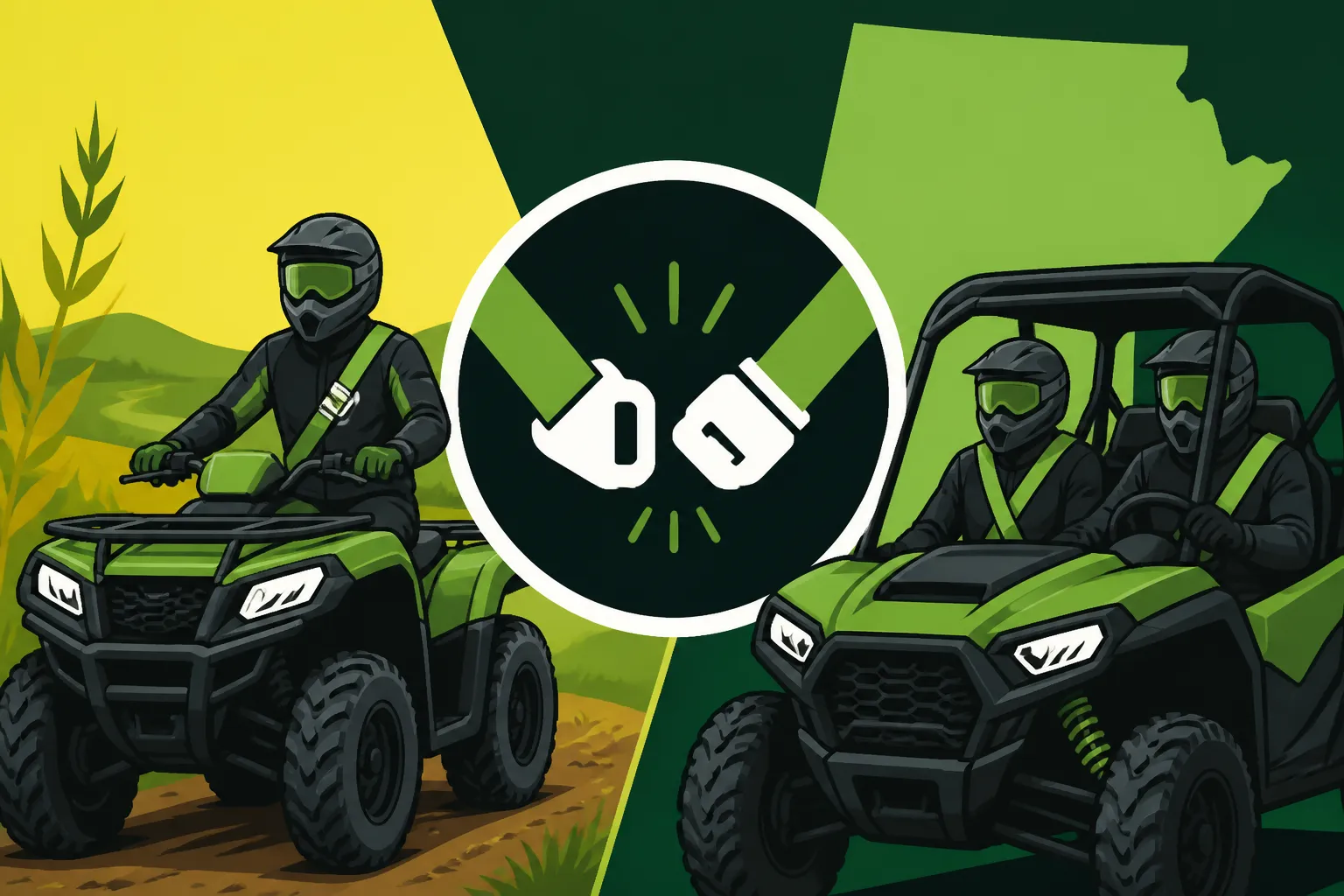
In Saskatchewan, seat belts are mandatory for any off-road vehicle that was manufactured with them as original equipment. This almost exclusively applies to UTVs, or side-by-sides, which are designed with enclosed or semi-enclosed cabs and seating arrangements that resemble a car. Unlike ATVs where the rider shifts their weight, UTV occupants sit in a fixed position, making seat belts crucial for preventing ejection during rollovers, sudden stops, or collisions. If your side-by-side has seat belts installed by the factory, you and all passengers are legally required to wear them whenever the machine is in operation. This applies whether you're working on a farm, traversing a bush trail, or even just moving the machine across a yard.
The rule isn't complicated: if it has them, use them. This is consistent with road vehicle rules and a fundamental safety principle. The engineers who designed your UTV put those belts there for a reason – to keep you safely inside the protective cage (Roll Over Protective Structure, or ROPS) in case of an incident. Without the belt, the ROPS offers little protection as you could be thrown from the vehicle and injured. This applies to all occupants, from the driver to every passenger. It’s a simple click that can literally save lives or prevent serious injuries. This requirement is implicitly supported by the broader safety mandates within [Saskatchewan's All Terrain Vehicles Act], which emphasizes operating machines in a safe and responsible manner.
Passengers and Seat Belt Use in UTVs
When it comes to passengers, the rules are just as stringent, if not more so, than for the driver. Every passenger in a UTV must also wear a seat belt if the machine is equipped with them. The machine must also be designed to carry the number of passengers it's transporting. For instance, a two-seater UTV should only have two occupants, both belted in. Trying to squeeze three people into a two-seater and leaving someone unbelted is not only unsafe but also a clear violation of safety regulations. Manufacturers design their machines with specific passenger capacities and corresponding safety restraints for a reason.
This is particularly important when considering younger passengers. While [Saskatchewan Rules for a Child Passenger] address age requirements for riding ATVs, the fundamental principle for UTVs remains: if a seat belt is available, it must be used. It's the responsibility of the operator to ensure that all passengers are properly secured before the machine is put into motion. This includes making sure the belts are snug and correctly positioned across the body, not twisted or worn. Aftermarket modifications to increase passenger capacity without adding appropriate, certified seat belt systems are generally not advised and could lead to serious liability issues and safety risks. Companies like SuperATV offer a range of aftermarket safety accessories, including harness systems, that can enhance occupant safety, but these should always complement, not replace, the use of factory-installed seat belts unless they are part of a certified, integrated safety upgrade.
Proper Use and Maintenance of Restraint Systems
Simply having a seat belt isn't enough; it must be used correctly and maintained properly to offer its full protection. A seat belt that is not buckled, is twisted, or is routed incorrectly provides little to no protection in an accident. Riders should always ensure the lap belt sits low across the hips, not on the stomach, and the shoulder strap crosses the chest and shoulder, away from the neck. These seem like basic car safety rules, but they are equally vital in an off-road environment where impacts and rollovers can be more unpredictable and violent.
Beyond correct use, regular maintenance of your UTV's restraint system is crucial. Check seat belts periodically for any signs of wear, fraying, cuts, or damage to the buckle mechanism. Exposure to the elements, dirt, and dust common in off-road riding can degrade seat belt webbing over time. If a belt shows signs of damage, it should be replaced immediately. Similarly, inspect the mounting points of the seat belts to ensure they are secure and free from rust or corrosion. An otherwise perfectly good belt is useless if its anchor point fails. Investing in high-quality replacement parts or considering enhanced harnesses from reputable brands can further ensure safety. Many riders looking for robust, durable options turn to aftermarket solutions, and brands like SuperATV are well-known for producing heavy-duty harnesses and seat belt kits designed to withstand the rigours of off-road use, often exceeding factory standards in durability. Proper maintenance ensures that when you need your seat belt most, it will perform as intended.
Exemptions and Specific Scenarios for Seat Belts
While the general rule for UTVs is "if it has a seat belt, use it," like most regulations, there can be specific scenarios or conditions that riders often wonder about. Saskatchewan's regulations are designed to be practical, but they don't always cover every unique situation in explicit detail. This often leads to confusion, especially for those who use their machines for a blend of work and recreation. Understanding these nuances can help riders stay compliant and safe, avoiding potential misunderstandings or penalties.
The Farm, Ranch, and Lease Exceptions
One common area of inquiry revolves around the use of ATVs and UTVs for agricultural purposes. Many farmers, ranchers, and those working on leases rely heavily on these machines for daily tasks, from checking fences to herding cattle. While specific, broad "seat belt exemptions" for agricultural use aren't explicitly laid out in the same way as, say, certain road-use exemptions for farm machinery, the emphasis remains on the manufacturer's design. If a UTV is used on a farm and equipped with seat belts, those belts are still expected to be used. The nature of the work, even if it involves frequent stops and starts, does not automatically negate the safety design of the vehicle.
However, the context of operation often comes into play. Enforcement officers understand that moving a UTV slowly across a field to check a fence line is different from high-speed recreational riding. The primary goal of the legislation and enforcement is to ensure safe operation. The key takeaway here is that agricultural use doesn't typically provide a blanket exemption from using factory-installed seat belts in UTVs. Instead, riders should focus on operating the machine responsibly in all conditions. [Saskatchewan Machines Used on a Farm] are still subject to the general safety tenets of the Act.
Off-Road and Private Land Considerations
Another common question is whether seat belt rules apply when riding strictly off-road, perhaps on private property or within designated trails. The answer is a resounding yes, for machines equipped with seat belts. The All Terrain Vehicles Act primarily governs the operation of ATVs and UTVs, irrespective of whether they are on public land, designated trails, or private property (though private land offers certain exemptions regarding where you can ride, not how safely you must operate the machine itself). If your UTV has seat belts, they must be worn when operating the machine on your own land, on a friend's farm with permission, or on a trail system.
The rationale is simple: the risks associated with off-road vehicle operation, such as rollovers, collisions with obstacles, or sudden stops, are present regardless of the land ownership. In fact, uneven terrain and unpredictable conditions off-road can often increase these risks compared to paved surfaces. Therefore, the safety features designed into the UTV, including seat belts, are just as, if not more, vital in an off-road setting. Relying on [Saskatchewan Private Land Exemptions] to bypass safety equipment use is a dangerous misunderstanding of the spirit of the law, which prioritizes operator and passenger safety. Even on private land, you carry the moral and often legal responsibility to ensure safe operation for yourself and any passengers.
Aftermarket Accessories and Compliance
Many riders customize their UTVs with aftermarket accessories to enhance performance, utility, or safety. This brings up questions about how these modifications interact with seat belt requirements. Generally, if you modify your UTV's original seat belt system, any replacement or enhancement must meet or exceed the safety standards of the original equipment. For instance, some riders opt for 4-point or 5-point harnesses for increased security, especially in aggressive riding conditions. These are considered enhancements, and as long as they are properly installed and used, they contribute to safety.
However, removing factory-installed seat belts without replacing them with an equivalent or superior certified system would be a clear violation of safety expectations and potentially the law. Similarly, modifying seating to add more passengers without installing corresponding, appropriate restraint systems is highly risky and likely non-compliant. When considering aftermarket safety accessories, it's always best to choose reputable manufacturers known for quality and safety. Brands like SuperATV offer a variety of seating and restraint upgrades, from harness bars to full racing harnesses, designed for specific UTV models. They are a good example of companies that prioritize safety in their aftermarket offerings, providing solutions that not only fit perfectly but also enhance the overall protection offered by your machine. Always ensure any aftermarket installation is done correctly, ideally by a professional, to ensure its effectiveness.
Enforcement and Penalties for Non-Compliance
Nobody wants a ticket, especially when you're out enjoying the wide-open spaces of Saskatchewan on your UTV. But beyond the financial sting, there's the very real risk that non-compliance with seat belt rules could lead to severe injuries in an accident. Peace officers in Saskatchewan are well-versed in the All Terrain Vehicles Act, and they are out there ensuring that riders are adhering to the safety regulations. Understanding what they look for and the potential consequences of not buckling up can serve as a powerful motivator to always use your seat belt.
What Peace Officers Look For on the Trail
When a conservation officer, RCMP member, or other designated peace officer encounters you operating your UTV, they're not just looking for speeding or reckless operation. They are conducting a comprehensive safety check. One of the first things they will visually confirm, especially in a side-by-side, is whether all occupants are wearing their seat belts. This check is often quick and can be done from a distance, or up close during a stop. They will also look to see if the machine is designed to carry the number of passengers it has, and if each passenger has an available, properly functioning seat belt.
Officers are also trained to spot obvious deficiencies in safety equipment, which includes damaged or improperly used seat belts. If your seat belt is frayed, if the buckle isn't engaging, or if it's clear you're intentionally trying to bypass the system (e.g., tucking it behind you), you could be subject to enforcement. They understand that off-road vehicles operate in demanding environments, but that doesn't excuse neglecting fundamental safety. They are there to enforce [Saskatchewan Equipment Checks by Officers] and ensure that the safety features installed by the manufacturer are being utilized as intended. Their focus is on prevention, making sure everyone gets home safely at the end of the day.
Potential Fines and Consequences
Operating a UTV without using a factory-installed seat belt, or allowing a passenger to ride unbelted, can lead to fines under The All Terrain Vehicles Act. While specific fine amounts can change and vary by the discretion of the officer and the specific circumstances, they are generally in line with other safety infractions under the Act. It's not a minor slap on the wrist; fines are designed to be a deterrent, emphasizing the seriousness of these safety regulations. [Saskatchewan Fines Capped at $1,000] are possible for various offences, and seat belt non-compliance can certainly fall into a category where a significant penalty is applied.
Beyond the immediate fine, there are other potential consequences. Repeated infractions could lead to more severe penalties or increased scrutiny. More importantly, in the event of an accident, not wearing a seat belt could significantly impact any insurance claims you might make. Insurance providers often look at whether safety equipment was being used properly. If you or a passenger were injured and not wearing a seat belt, even if the accident wasn't directly your fault, the compensation for injuries could be reduced, or even denied, if it's determined that the injuries would have been less severe or avoided entirely had the seat belt been used.
Owner Liability and Responsibility
As the owner or operator of a UTV, you bear a significant responsibility for the safety of yourself and your passengers. This extends beyond just wearing your own seat belt; it includes ensuring that everyone else in your vehicle is also properly secured. If you allow someone to ride in your UTV without using a seat belt, and they are subsequently injured, you could be held liable. This is particularly relevant if the passenger is a minor. The Act places considerable onus on the operator to ensure safe practices.
This principle of owner liability is a crucial aspect of [Saskatchewan Owner Liability Rules]. It's not enough to simply have seat belts; you must enforce their use among your passengers. Before every ride, take a moment to confirm that all seat belts are fastened and correctly adjusted. This proactive approach not only keeps you compliant with the law but, more importantly, fosters a culture of safety for everyone enjoying the ride with you. Educating your passengers, especially children, about the importance of seat belts sets a good example and contributes to overall safer off-road experiences in Saskatchewan.
Safety Beyond the Law: Why Seat Belts Are Critical
Even if there were no specific laws dictating seat belt use, the inherent risks of operating an off-road vehicle, especially a UTV, make seat belts an absolute necessity. The dynamic and often unpredictable nature of off-road terrain means that rollovers, impacts, and sudden stops are not just possibilities; they are real probabilities. Relying solely on your own quick reflexes or the strength of a roll cage without a seat belt is a dangerous gamble that can have life-altering consequences. This isn't just about avoiding a ticket; it's about coming home in one piece.
The Physics of a Rollover
Understanding what happens during a UTV rollover truly underscores the importance of a seat belt. When a UTV tips or rolls, the forces involved are immense and chaotic. Without a seat belt, occupants are violently tossed around inside the vehicle's protective structure, or worse, ejected completely. Being ejected means you could be crushed by the rolling vehicle, or land on hard, uneven ground from a significant height, leading to severe head trauma, spinal injuries, or broken bones. The Roll Over Protective Structure (ROPS) is designed to create a survival space, but it can only do its job if you remain within that space. The seat belt is the key component that keeps you there.
Think of it this way: the ROPS is a cage, and the seat belt is what keeps the bird inside the cage during a storm. If the bird isn't secured, it will be thrown against the bars or out through any opening. Even if the UTV doesn't roll completely, sudden changes in direction, hitting a bump, or braking hard can cause occupants to be slammed against the interior, or worse, thrown out. These forces are far too strong for human grip alone to withstand. The seat belt absorbs and distributes these forces across the strongest parts of your body, significantly reducing the risk of severe injury.
Complementary Safety Gear: More Than Just a Belt
While seat belts are foundational for UTV safety, they are part of a broader safety system that includes other crucial gear. Helmets, for instance, are legally required for almost all ATV and UTV operators and passengers in Saskatchewan, regardless of age or experience. A helmet protects your head from impacts, which is critical whether you're ejected or simply hit your head on the ROPS during a violent jolt. [Saskatchewan Helmet and Eye Protection Rules] are very clear on this. Eye protection is another must, safeguarding against flying debris, dust, and branches.
Beyond the head, appropriate riding gear—long sleeves, long pants, gloves, and sturdy boots—offers protection against scrapes, abrasions, and impacts. While not legally mandated in the same way as helmets or seat belts, these items provide an additional layer of defense against the harsh realities of off-road environments. Together, seat belts, helmets, and protective clothing form a comprehensive safety ensemble that dramatically reduces the risk of serious injury. It's about layering protection, ensuring that if one safety measure is challenged, another is there to back it up.
Choosing Aftermarket Upgrades for Enhanced Safety
For many dedicated riders, factory-installed safety features are just a starting point. The aftermarket industry offers a wealth of upgrades designed to enhance UTV safety, from more robust seat belts and harnesses to improved roll cages and door systems. While factory belts are designed to meet minimum safety standards, some riders, especially those engaging in more aggressive riding or competition, seek out multi-point harnesses (4-point, 5-point, or 6-point) that offer superior containment and support. These harnesses secure the rider more tightly to the seat, preventing excessive movement during extreme maneuvers or impacts.
When considering such upgrades, it's vital to choose high-quality products from reputable manufacturers. Brands like SuperATV are recognized for their durable and well-engineered aftermarket safety accessories, including racing harnesses, harness bars, and robust seating options. These products are often built to withstand more extreme forces than stock equipment and can significantly improve occupant safety. However, always ensure that any aftermarket safety equipment is installed correctly, ideally by a professional, and that it integrates effectively with the existing safety features of your UTV. Don't compromise on safety for the sake of aesthetics or cheap alternatives; your life, and the lives of your passengers, are worth the investment.
Here's a quick reference table to help clarify:
| Machine Type | Seat Belts Required (if factory equipped)? | Helmet Required? | Common Passenger Capacity | Key Safety Feature for Rollover |
|---|---|---|---|---|
| Traditional ATV | No (not factory equipped) | Yes | 1-2 (straddled) | Rider skill, active balance |
| UTV (Side-by-Side) | Yes (if factory equipped) | Yes | 2-6+ (seated) | ROPS (Roll Over Protective Structure) & Seat Belts |
Common Questions Riders Ask About Seat Belts
Riders often have specific situations they're curious about regarding seat belt rules, and these questions frequently pop up in forums, at dealerships, or during safety courses. The Act, while comprehensive, can sometimes leave room for interpretation, especially as machine technology and riding habits evolve. Let's tackle some of these common inquiries to provide clarity and ensure everyone in Saskatchewan is riding as safely and compliantly as possible.
What if My UTV Came Without Seat Belts?
This is a less common scenario with modern UTVs, as almost all models manufactured in recent years come standard with seat belts due to widespread safety standards and consumer expectations. However, if you happen to own an older UTV, or a highly specialized utility machine that genuinely did not come with factory-installed seat belts, the legal expectation for their use changes. Generally, if the machine was never equipped with seat belts by the manufacturer, then the specific legal mandate to "use factory-installed seat belts" wouldn't apply directly.
However, this does not mean you are exempt from the general responsibility to operate your machine safely and protect yourself and your passengers. In such cases, it's highly recommended to investigate aftermarket seat belt or harness systems that can be safely installed. While the law might not compel you, common sense and a commitment to safety certainly should. Retrofitting with high-quality, properly installed seat belts or harnesses significantly enhances safety. Always check with a professional or the manufacturer for suitable retrofit options. [Saskatchewan Insurance Requirements for Riders] often considers all reasonable safety measures, even if not explicitly legislated for every single machine type.
Can I Replace My Factory Seat Belts with Aftermarket Harnesses?
Absolutely, and many riders do, especially those involved in performance riding, racing, or who simply want an enhanced level of safety. Replacing factory 3-point seat belts with 4-point, 5-point, or even 6-point harnesses is a popular modification. These multi-point harnesses provide greater security and prevent occupants from moving around excessively in their seats during aggressive driving, steep inclines, or potential rollovers. They distribute impact forces more broadly across the body, often leading to better protection than a standard 3-point belt.
The key considerations when making such an upgrade are quality and proper installation. You must choose harnesses from reputable manufacturers who design products specifically for off-road vehicle use. Brands like SuperATV are excellent examples, offering robust, durable harness systems that are engineered for specific UTV models. Installation should ideally be done by a certified technician or someone with significant experience to ensure that the harnesses are mounted correctly to structural points and will perform as intended in an accident. Never compromise on the integrity of the mounting points or the quality of the harness itself. The goal is to enhance safety, not create new risks.
Are Seat Belts Required for Farm-Specific ATVs/UTVs?
This question often arises because farm vehicles sometimes have specific exemptions for on-road use or certain operational requirements. However, as discussed earlier, the general principle for UTVs in Saskatchewan is that if the machine came with factory-installed seat belts, they must be used, regardless of whether the machine is being used for farm work, ranching, or recreational riding. The Act doesn't provide a blanket "farm use" exemption specifically for seat belts on UTVs.
The rationale is that the risks of a rollover or impact are present whether you're checking cattle or trail riding. A UTV's design, with its roll cage and seating, inherently requires seat belts for occupant containment. While the speed and manner of operation on a farm might differ from recreational riding, the basic physics of a rollover remain the same. Therefore, to ensure safety and compliance, always buckle up in a UTV, even when performing agricultural tasks. This aligns with the broader safety message for [Saskatchewan Machines Used on a Farm], which still emphasizes safe and responsible operation.
What About Children in UTVs? Do They Need Special Restraints?
For children riding in UTVs, the rules regarding seat belts are the same as for adults: if the machine is equipped with factory seat belts, they must be worn. However, an additional layer of consideration applies to ensure the seat belt fits the child correctly. Standard adult seat belts might not provide optimal protection for very young or small children, as the shoulder strap could ride too high on the neck, or the lap belt might not sit properly across the hips.
In cases where a factory seat belt does not fit a child properly, it's crucial to use appropriate child restraints that are suitable for off-road vehicles. This might include booster seats or specialized harness systems designed for children in off-road environments. These systems ensure the child is properly secured and that the forces of an impact are distributed safely across their body. Always refer to the UTV manufacturer's guidelines regarding child passengers and consider consulting with a safety expert or specialized dealer for advice on the best restraint options for children. Remember, the operator is responsible for ensuring all passengers, especially children, are safely secured. [Saskatchewan Rules for a Child Passenger] highlight the importance of adult supervision, but proper physical restraint is equally vital.
Disclaimer
This article is for general informational purposes only and does not constitute professional advice. Laws, prices and regulations vary by location and change over time. Consult a qualified professional for guidance on your specific situation.