Saskatchewan Bylaws That Permit Road Riding
It can be incredibly frustrating to feel like you're constantly guessing about where you can legally ride your ATV or UTV in Saskatchewan, especially when it comes to shared roads. One minute you think you understand the provincial rules, and the next you hear whispers about a nearby town that lets quads on its streets, leaving you wondering if you’re missing something important. This guide will cut through the confusion and explain how local municipal bylaws can actually create legal road riding opportunities for off-road machines in Saskatchewan, giving you a clearer picture of where you can go.
Understanding the Provincial Framework for Road Riding
Before we dive into the local rules that can change things up, it's crucial to understand the baseline – what the province generally says about riding ATVs and UTVs on its roads. This is often where the biggest misunderstandings happen, and why many riders feel restricted.
The General Provincial Prohibition on Highways
Let's be blunt: the provincial All Terrain Vehicles Act generally prohibits the operation of ATVs and UTVs on provincial highways and most primary roads. When people talk about "street legal" in Saskatchewan, they're usually referring to other provinces where you can simply register your quad and drive it like a car. That's just not the case here. This broad prohibition is the default, and it means you can't just hop on your machine and cruise down a highway to the next town. It's a significant barrier for many riders who wish they could connect trails or access amenities without having to trailer their machines everywhere. This is why many riders are left scratching their heads, thinking they're completely shut out from any kind of road use. For a deeper dive into the basic rules, check out [Saskatchewan ATV Road Rules Explained].
This foundational rule often sets a tone of despair for riders, making them feel like their machines are confined to private land or very specific, remote trails. It's easy to get discouraged when you see the long stretches of road between potential riding spots and know you can't legally traverse them. This provincial stance is largely about public safety, separating slower-moving off-road vehicles from faster highway traffic, but it definitely creates logistical headaches for those of us who love to explore the backcountry on four wheels. The lack of a provincial registration system for ATVs further complicates things, as there's no simple "plate" that indicates road legality across the board.
Ditch Riding and the 2-Metre Rule
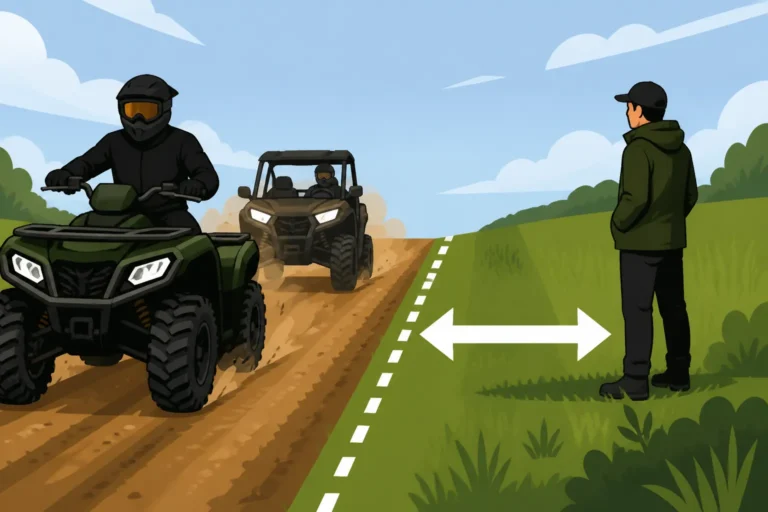
Now, while full-on road riding is generally out, the province does permit what's known as "ditch riding" under very specific conditions. This isn't quite the same as riding on the paved or gravel surface of a road, but it's often the closest legal proximity many riders get to a public thoroughfare. The key here is the [Saskatchewan Ditch Riding and the 2-Metre Rule], which dictates that an ATV or UTV must be operated in the ditch, at least two metres from the travelled portion of the highway. This rule is designed to keep ATVs clear of active traffic lanes while still allowing some access alongside roads.
However, ditch riding comes with its own set of responsibilities and limitations. You're still subject to speed limits, and you must operate safely and considerately. The two-metre rule can be tricky to judge, especially in areas where ditches are shallow or overgrown, leading to potential accidental violations. Furthermore, this permission to ride in ditches can be revoked or further restricted by municipal bylaws, adding another layer of complexity. So, while it's a useful exception for getting from point A to point B without a trailer in some rural areas, it's far from a blanket permission to operate freely beside all roads.
Limited Crossing Privileges
Beyond ditch riding, provincial law also provides very specific, and often cumbersome, rules for how ATVs and UTVs can cross public highways. You can't just zip across whenever you feel like it. The provincial rules are very clear about requiring passengers to dismount, coming to a complete stop, and crossing by the shortest, most direct route possible. These aren't just suggestions; they are legal requirements designed to minimize risk at intersections and major roadways. For example, the rules regarding [Saskatchewan Crossings Require Passengers to Dismount] and [Saskatchewan Crossings by the Shortest Route] are non-negotiable and aim to ensure maximum visibility and minimize the time an ATV is exposed to traffic.
These crossing rules highlight the province's cautious approach to ATVs on or near conventional roads. They are meant to be temporary, quick, and executed with extreme care. For many riders, these limitations mean that planning a route often involves finding ways to avoid major road crossings altogether, or budgeting extra time and effort for these specific maneuvers. It’s a clear indication that, at the provincial level, ATVs are not considered regular road vehicles, and any interaction with main roads is heavily regulated to prioritize the safety of all road users.
How Municipalities Can Create Road Riding Opportunities
While the provincial rules might seem restrictive, there's a beacon of hope for many riders: local municipal bylaws. This is where the landscape of ATV and UTV access can change dramatically, allowing for sanctioned road riding that would otherwise be off-limits.
The Power of Local Bylaws to Override Provincial Bans
Here's the exciting part for Saskatchewan riders: the provincial All Terrain Vehicles Act actually grants specific authority to cities, towns, villages, and rural municipalities to create bylaws that permit the operation of ATVs and UTVs on public roads within their jurisdiction. This is not a loophole; it's a deliberate provision in the Act that recognizes the unique needs and circumstances of different communities. Essentially, while the province sets a general rule, it empowers local governments to make exceptions that better serve their residents and visitors. This local control means that if you're looking to ride on a specific road, the first place to check isn't just the provincial act, but the municipal bylaws. It’s a critical distinction, and understanding [Saskatchewan Municipal Bylaws on Roads] is key to unlocking new riding possibilities.
This ability for local governments to create their own rules is a game-changer because it allows for flexibility that a province-wide blanket rule simply can't provide. A small, remote village, for instance, might rely on ATVs for local transport and access to lakes or trails, and a bylaw can formalize this use. This local autonomy means that some communities actively embrace ATV and UTV use on their roads, understanding the economic and recreational benefits it can bring. It's truly a testament to the diverse needs across Saskatchewan that this provision exists, allowing communities to tailor rules that make sense for their specific environment, whether it's facilitating access to a popular fishing spot or allowing farmers to use their quads to check fields.
Types of Municipalities That Adopt Bylaws
You might be wondering which types of municipalities are most likely to adopt these kinds of bylaws. Generally, you'll find them more commonly in rural municipalities, villages, and smaller towns, especially those with strong recreational or agricultural ties. Communities that serve as hubs for outdoor enthusiasts, or those situated near extensive trail networks or natural attractions, often see the value in allowing controlled ATV access on their roads. For example, a town known for its fishing lakes or hunting opportunities might permit ATVs on certain streets to allow riders to reach boat launches or designated hunting zones.
Conversely, larger cities or more densely populated urban centres are far less likely to have bylaws permitting ATV road use, simply due to increased traffic, safety concerns, and the impracticality of integrating off-road vehicles into a busy streetscape. However, even within rural municipalities, the bylaws can vary widely. Some might open up a vast network of gravel roads, while others might be limited to very specific streets leading to a provincial park or a local business. It truly is a local decision, driven by community needs, public feedback, and the vision of local councils. This variation means you can't assume what's allowed in one village will be permitted in another, even if they're close by.
Specific Road Permitting Language in Bylaws
When a municipality decides to create a bylaw permitting ATV or UTV road riding, the language they use is incredibly specific, and it's vital to read every detail. These aren't general "you can ride anywhere" proclamations. Instead, they meticulously outline which specific roads or sections of roads are open to ATVs, what the operating hours are, and often, what kind of equipment your machine needs to have. For instance, a bylaw might state that "ATVs are permitted on all municipal gravel roads within the village limits, between sunrise and sunset, excluding Main Street and Highway 10 access roads." This level of detail is crucial for both riders and enforcement officers.
Furthermore, these bylaws often include specific requirements for the machines themselves. While the provincial Act has basic requirements for helmets and eye protection, a municipal bylaw might add requirements for turn signals, mirrors, or even a horn, bringing your off-road machine closer to road-legal standards. This is where accessories from companies like SuperATV can become invaluable. Imagine a bylaw requires functional turn signals for road use; a comprehensive turn signal kit from SuperATV could be exactly what you need to make your machine compliant. Without meeting these specific equipment standards, even on a permitted road, you could still face a fine. Always remember, the bylaw is the rulebook for that specific community.
What to Look For in a Permitting Bylaw
So, you've identified a municipality that might have a bylaw. Great! But what exactly should you be looking for within that bylaw to ensure you're riding legally and safely? It's not just about finding a "yes" or "no" answer; it's about understanding the specific conditions.
Designated Streets and Speed Limits
The absolute first thing to pinpoint in any municipal bylaw permitting ATV road use is the exact list of designated streets. These bylaws almost never grant carte blanche access to every single road in a community. Instead, they will explicitly name the streets, avenues, or even entire classes of roads (like "all unimproved roads" or "all streets west of Highway X") where ATVs and UTVs are permitted. Riding on a street not explicitly designated in the bylaw is just as unlawful as riding on a provincial highway. It’s essential to have a map, or at least a clear mental picture, of these permitted routes.
Hand-in-hand with designated streets are the specific speed limits. Even if a road typically has a 50 km/h speed limit for cars, the bylaw might impose a lower speed limit for ATVs and UTVs, perhaps 30 km/h or even less. This is for safety, acknowledging the different handling characteristics of off-road machines. Always assume the lowest posted speed limit unless the bylaw states otherwise for ATVs. Failing to adhere to these specific speed limits, even on a designated street, can quickly lead to a ticket. For more on this, consult [Saskatchewan Municipal Speed Limits for Quads]. It's about blending in safely with other local traffic, especially in residential areas where children and pets might be present.
Operating Conditions and Equipment Requirements
Beyond where and how fast you can ride, municipal bylaws will also detail how you must operate your machine and what equipment it needs. These are often crucial details that riders overlook. Common operating conditions include specific hours of operation (e.g., no riding after dark, or only during certain daylight hours), noise restrictions, and rules about how passengers can be carried. It's not uncommon for a bylaw to require additional safety gear or modifications that go beyond the provincial minimums. For example, while the province requires helmets and eye protection, a bylaw might mandate turn signals, brake lights, mirrors, or even a horn for road use.
This is where planning ahead and potentially upgrading your machine comes into play. If your local bylaw requires full road-legal lighting, including turn signals and a horn, you might need to invest in an aftermarket kit. Companies like SuperATV specialize in these kinds of accessories, offering everything from advanced LED lighting kits to complete street-legal kits designed to meet various regulatory requirements. Having the right equipment isn't just about compliance; it's about making your machine more visible and safer for everyone on the road. Always verify the specific requirements in the bylaw itself; don't assume your current setup is sufficient. And remember to adhere to [Saskatchewan Helmet and Eye Protection Rules] at all times, as these are provincial minimums that apply everywhere.
Permit Requirements and Fees
Many municipalities that permit ATV road riding will also require riders to obtain a local permit or purchase a municipal plate. This isn't just bureaucracy; it's often a way for the municipality to fund the maintenance of local trails, cover administrative costs, and keep a record of who is operating ATVs on their roads. These permits or plates are not provincial registrations, which don't exist for ATVs in Saskatchewan. Instead, they are specific to that particular municipality. You might need to visit the municipal office, fill out an application, and pay a fee to obtain one.
The cost and duration of these permits vary widely. Some might be annual, expiring on a specific date (like many snowmobile registrations), while others might be for a shorter term, such as a weekend or a season. It's crucial to understand that a permit from one municipality does not typically grant you permission to ride in another. If you plan to ride through several communities, you might need to acquire permits from each. Always inquire about [Saskatchewan Municipal Plate Schemes] and the associated [Saskatchewan Municipal Plate Costs] well in advance of your trip. Having your permit clearly displayed on your machine, as required by the bylaw, can save you a lot of hassle if you're ever stopped by a local peace officer.
Finding and Interpreting Municipal Bylaws
Knowing that bylaws exist is one thing; actually finding and understanding them for your chosen riding area is another. It requires a bit of detective work, but it's well worth the effort to ensure you're riding legally.
Researching Bylaws in Your Area or Destination
The best way to find out if a municipality permits ATV road riding is to go directly to the source: the municipality itself. Most cities, towns, and villages now have official websites where they post their bylaws. Start by searching for the official website of the specific municipality you plan to visit or ride in. Look for sections related to "bylaws," "transportation," "recreation," or "off-highway vehicles." You might have to dig a bit, but often a simple search within their site for "ATV bylaw" or "all-terrain vehicle" will bring up the relevant document.
If you can't find it online, or if the language is unclear, don't hesitate to call the municipal office directly. Ask to speak with someone in administration who can clarify the rules regarding ATVs and UTVs on public roads. They are usually happy to provide guidance to ensure visitors and residents alike are compliant. Remember, it's always better to ask beforehand than to risk a ticket or, worse, an accident. This proactive research is what we mean by [Saskatchewan Bylaw Lookups Before You Ride]—it's an essential step in your ride planning. Trust me, a quick phone call can save you a whole lot of headache and potential fines.
Common Bylaw Provisions and Restrictions
When you're poring over a municipal bylaw, you'll notice some common themes and restrictions that tend to pop up, even in permitting bylaws. These aren't meant to spoil your fun, but rather to ensure public safety and minimize nuisance for residents. One very common restriction is the prohibition of ATVs on main commercial streets or within a certain proximity to schools, playgrounds, and hospitals. These areas are typically high-traffic or sensitive zones where off-road vehicle activity might be deemed disruptive or unsafe.
Another frequent provision limits ATV use to specific purposes, such as accessing trailheads, reaching local businesses (like a gas station or restaurant), or getting to a specific lake access point. Some bylaws might even explicitly state that recreational "cruising" on roads is prohibited, even if transit is allowed. You might also see restrictions on noise levels, particularly in residential areas, or requirements for maintaining a safe distance from pedestrians and other vehicles. Understanding these nuances is key to responsible riding and helps maintain good relations between riders and the community. Ignoring these common-sense rules could lead to the bylaw being amended or even revoked, impacting everyone.
Understanding Enforcement and Penalties
Let's talk about what happens if you don't follow these bylaws. Just because a local bylaw permits road riding doesn't mean it's a free-for-all. Municipal bylaws are legally binding, and local peace officers, RCMP, or even bylaw enforcement officers can issue tickets for violations. The penalties for non-compliance can range from substantial fines to, in more serious cases, the impoundment of your machine. Riding on a prohibited street, exceeding the posted ATV speed limit, or operating without a required municipal permit are all common infractions that can lead to a costly citation.
It’s important to remember that these municipal fines are separate from any provincial penalties you might incur for violating the All Terrain Vehicles Act itself (e.g., riding without a helmet or appropriate insurance). While the provincial Act has a maximum fine of [Saskatchewan Fines Capped at $1,000], municipalities set their own fine schedules, which can still be significant. Ignorance of the law is rarely an excuse, so taking the time to understand the bylaws is your best defense against unexpected costs. Always operate your machine with respect for the local rules and the community you are riding in, as this goodwill helps ensure continued access for everyone.
Preparing Your Machine and Yourself for Permitted Road Riding
Okay, you've done your homework, found a permissive bylaw, and you're ready to hit the local roads. Now, it's time to ensure both you and your machine are fully prepared for this kind of riding.
Ensuring Your ATV/UTV Meets Requirements
This step is critical. Just because a bylaw allows ATVs on certain roads doesn't mean your stock off-road machine is automatically ready. As discussed, many bylaws require specific equipment that goes beyond what’s typically found on a trail-ready ATV or UTV. Think about what a car needs: headlights, taillights, brake lights, turn signals, mirrors, and often a horn. While an ATV bylaw might not require all of these, it's highly likely to demand some or most for safety and visibility on shared roads.
This is where investing in road-legal accessories becomes essential. Companies like SuperATV offer a fantastic range of products specifically designed to make your off-road machine more compliant and safer for road use. You can find comprehensive turn signal kits that integrate seamlessly with your machine's wiring, side mirrors for better situational awareness, and upgraded lighting systems for increased visibility, especially during dusk or dawn. For instance, a durable, easy-to-install turn signal kit from SuperATV can take the guesswork out of meeting a bylaw's signaling requirements. Don't overlook these items; they're not just about avoiding a ticket, but about significantly enhancing your safety and the safety of others when sharing the road. A well-equipped machine looks responsible and helps build trust with local communities.
Carrying Necessary Documentation
Even without a provincial ATV registration, you still need to carry important documents when riding on any public road, whether it's provincially or municipally regulated. The absolute minimum you should have on your person is your valid driver's licence. Remember, the All Terrain Vehicles Act requires operators to hold a valid driver's licence, with certain exceptions for supervised youth. You also need proof of insurance. While Saskatchewan doesn't have a specific ATV registration system that automatically includes insurance like snowmobiles do, you are still legally required to have at least $200,000 in third-party liability insurance. An officer can, and likely will, ask to see this. Carrying a copy of your [Saskatchewan Insurance Proof on the Trail] is non-negotiable.
In addition to your licence and insurance, if the municipality you're riding in requires a local permit or plate, make sure you have it with you and displayed as required. Some riders even carry a printed copy of the relevant municipal bylaw, or at least have it easily accessible on their phone, to quickly clarify rules if questioned. Being prepared with all your documentation shows responsibility and can help smooth over any interactions with enforcement officers. It demonstrates that you've done your homework and are committed to legal and safe operation.
Riding Responsibly and Respectfully
Finally, and perhaps most importantly, when you do get the green light to ride your ATV or UTV on municipal roads, do so with the utmost responsibility and respect. The privilege of road access in these communities often hinges on the behaviour of riders. Loud, aggressive, or careless operation can quickly lead to public complaints, which can in turn prompt municipal councils to review and potentially revoke their permissive bylaws. We've seen it happen in other areas where a few bad apples spoil it for everyone.
Always obey posted speed limits, yield to other vehicles and pedestrians, and be mindful of noise levels, especially in residential areas. Wave to local residents, slow down when passing homes, and keep dust to a minimum on gravel roads. Your actions reflect on the entire ATV and UTV community. By riding courteously and safely, you help foster a positive image for off-road recreation and solidify the argument for continued and even expanded access. Remember, you're not just riding for yourself; you're representing all ATV and UTV enthusiasts in Saskatchewan.
Here's a quick comparison of provincial rules versus what a municipal bylaw might allow:
| Feature | Provincial General Rules (No Permitting Bylaw) | Municipal Bylaw Permitted Riding |
|---|---|---|
| Main Highways | Generally Prohibited | Almost universally prohibited |
| Ditches | Permitted with restrictions (2m from travelled portion) | Still apply, or bylaws might supersede/clarify |
| Local Streets | Prohibited | Designated streets may be permitted |
| Speed Limit | N/A (as generally prohibited on roads) | Specified by bylaw, often lower than for cars |
| Crossing Roads | Very specific rules, passengers dismount, shortest route | Specific rules, may be streamlined or part of route |
| Permit/Plate | Not required provincially (for ATVs) | Often required; municipal plates or permits |
| Equipment Needs | Helmet, eye protection, lights after dark (basic) | May require additional road-specific gear (signals, mirrors, horn) |
| Hours of Operation | No specific road hours (as generally prohibited) | Often specified (e.g., daylight hours only) |
| Insurance Requirement | $200,000 third-party liability | $200,000 third-party liability (provincial minimum) |
Disclaimer
This article is for general informational purposes only and does not constitute professional advice. Laws, prices and regulations vary by location and change over time. Consult a qualified professional for guidance on your specific situation.