Saskatchewan Bylaws That Prohibit Riding
There’s nothing quite as frustrating as loading up your quad, driving out to a new spot in Saskatchewan, and then discovering local rules mean you can’t ride where you intended. Many riders don't realize that beyond provincial laws, cities, towns, villages, and rural municipalities have their own specific bylaws that can prohibit or severely limit where you can operate your ATV or UTV. This guide will help you understand these local prohibitions, what they mean for your riding adventures, and how to avoid an unwelcome surprise.
Understanding Municipal Authority Over ATV Riding
When it comes to riding your ATV or UTV in Saskatchewan, it's easy to focus solely on the provincial laws laid out in The All Terrain Vehicles Act. However, a significant layer of regulation comes from our local governments. Municipalities, whether they be bustling cities, quiet towns, charming villages, or vast rural municipalities (RMs), have the authority to create their own rules regarding off-highway vehicle operation within their boundaries. This local control often catches riders off guard, leading to confusion and, sometimes, fines.
The Power of Rural Municipalities and Villages
Imagine you’re heading out for a ride through some beautiful Saskatchewan backcountry. You’re on a grid road, enjoying the scenery, but suddenly you see a sign you didn’t expect. Rural municipalities, in particular, wield considerable power to dictate where ATVs and UTVs can and cannot go on public lands under their jurisdiction. This often includes specifying which grid roads, ditches, or undeveloped areas are off-limits, even if they might seem like open game at first glance. For example, a particular RM might decide that due to environmental concerns, or perhaps ongoing gravel hauling operations, certain secondary roads or pathways are prohibited for ATV use. They might enact specific rules for areas close to residential developments, even if they're still technically rural.
Villages, while smaller in scale, can be even more restrictive. Given their tighter confines and closer proximity of homes, it's common for villages to have bylaws that outright ban ATV operation on all streets, sidewalks, and public green spaces within their limits. Think of a small village like Craven or Lumsden; the idea of quads roaring down main street or cutting through the local park doesn't usually sit well with residents looking for peace and quiet. These bylaws are often a direct response to noise complaints, safety concerns, or to protect pedestrian-heavy areas. They essentially create pockets where recreational riding is simply not permitted, regardless of provincial guidelines.
Overlapping Provincial and Local Rules
It's a common misconception that if something isn't explicitly banned by the province, it's allowed. Not so, particularly with ATVs. Saskatchewan’s provincial ATV Act sets a baseline for safety and operation, but it explicitly allows municipalities to enact stricter bylaws. This means you might be perfectly within your rights under provincial law to, say, ride on the ditch beside a grid road, but a local bylaw from that specific RM could supersede this and prohibit ditch riding in certain areas. This layered approach means riders must be diligent about checking both provincial regulations and local rules.
Consider the rules for riding on a frozen lake or river. Provincially, there are exceptions that permit this during winter. However, a specific municipality surrounding a lake, such as the District of Lakeland or the Village of Candle Lake, might have their own bylaws that restrict access to certain portions of the ice or impose speed limits, or even prohibit access from certain points to protect ice fishing shacks or local wildlife. You might have a well-maintained machine, perhaps with some sturdy SuperATV accessories for winter riding, but if you haven't checked the local bylaw, you could still be in violation. Understanding [Saskatchewan Municipal Bylaws on Roads] is crucial, as is knowing how they interact with provincial rules. It's not always about finding a "loophole;" it's about respecting the local community's decisions for their area.
Common Prohibited Areas Defined by Bylaws
Local bylaws often focus on specific types of areas where ATV and UTV operation causes the most concern. These are typically places where public safety, peace, or environmental protection are priorities. Understanding these common prohibitions can help you anticipate where you might not be allowed to ride and plan your routes accordingly.
Town Streets and Residential Zones
One of the most frequent prohibitions you'll encounter in Saskatchewan is the ban on ATVs and UTVs on urban streets and within residential areas. While [Saskatchewan ATV Road Rules Explained] details provincial provisions for crossing highways or riding ditches, municipalities often completely close their local streets to these machines. This isn't just about noise; it's about safety for pedestrians, cyclists, and other drivers. In towns like Nipawin or Estevan, you'll find that operating a quad on main thoroughfares or residential side streets is generally a no-go, unless specifically designated by a bylaw for purposes like accessing a trail or for specific agricultural use.
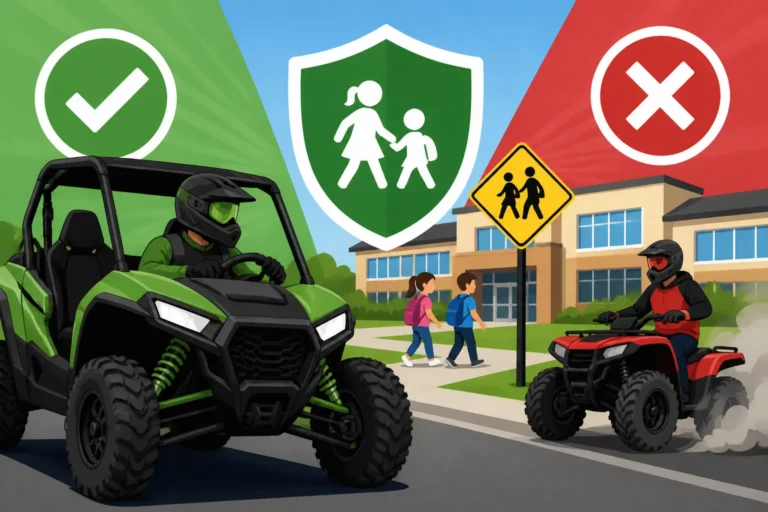
Bylaws in these areas typically aim to reduce traffic congestion, prevent damage to road infrastructure not designed for off-road tires, and maintain the quiet enjoyment of homes. Imagine a child playing in a cul-de-sac or someone enjoying their backyard barbecue. The sound and presence of ATVs can be disruptive and create perceived safety risks, even if the driver is operating responsibly. Many municipalities, like the Town of Unity or the City of Humboldt, have explicit bylaws stating that ATVs are not permitted on any public road, lane, or thoroughfare within their corporate limits, with very few, if any, exceptions. Even riding on the boulevard or sidewalk is almost universally prohibited.
Sensitive Ecological or Recreational Spaces
Saskatchewan is renowned for its natural beauty and outdoor recreational opportunities, but many of these sensitive areas are protected by local bylaws. Municipalities often prohibit ATV use in parks, nature reserves, public green spaces, and areas identified as having delicate ecosystems. This could be a conservation area managed by a rural municipality, a local park within a town, or even undeveloped land intended for future public use. The rationale is clear: ATVs can cause significant environmental damage, including soil erosion, disruption of wildlife habitats, and the spread of invasive species.
For instance, the RM of Buckland, near Prince Albert, might have specific areas designated for wildlife protection where ATV access is restricted. Similarly, a town might ban ATVs from their local sports fields, walking trails, or community gardens to prevent damage and ensure these spaces remain safe and enjoyable for all residents. These bylaws also protect the aesthetic value of these areas, ensuring they remain tranquil and pristine. If you're looking to explore, always check for specific prohibitions in areas marked as parks, reserves, or recreational zones. The province itself also has [Saskatchewan Crown Land Prohibition Regulations] that riders must respect, but local bylaws can add even more layers of restriction.
Lakeshore Setbacks and Water Bodies
Saskatchewan is home to thousands of lakes and rivers, making water activities a significant part of summer life. To protect these vital resources and the enjoyment of cottagers and residents, many municipalities enforce strict lakeshore setback rules for ATVs and UTVs. This means you cannot ride your machine within a certain distance from the high-water mark of a lake or river. These bylaws are designed to prevent shoreline erosion, protect aquatic habitats, reduce water pollution from fuel or oil, and minimize noise disturbance for those enjoying the waterfront.
The District of Lakeland and the Village of Candle Lake are prime examples of municipalities with specific bylaws regarding lakeshore access. These often stipulate a 10-metre setback or similar, preventing riders from getting too close to the water's edge, even on public land. This also applies to beaches and designated swimming areas, which are almost universally off-limits to vehicles for safety reasons. You might see a rider using a durable SuperATV winch to help retrieve a boat, but even in such scenarios, the approach to the water needs to respect these setback rules. Knowing [Saskatchewan Beach and Lakeshore Rules] as dictated by local bylaws is essential for respectful and lawful operation around these precious water bodies.
Here’s a quick overview of common prohibited areas and the reasons behind the bans:
| Prohibited Area | Common Rationale | Typical Municipalities |
|---|---|---|
| Town/City Streets | Public safety, noise reduction, infrastructure protection | Cities, Towns, Villages |
| Residential Neighbourhoods | Noise complaints, safety for children/pedestrians, quiet enjoyment | Cities, Towns, Villages |
| Public Parks | Environmental protection, damage prevention, general public safety | Cities, Towns, Villages, RMs |
| Nature Reserves/Eco-Areas | Habitat preservation, preventing erosion, protecting sensitive flora/fauna | RMs, some Cities/Towns |
| Lakeshores/Beaches | Water quality, erosion control, noise reduction, safety for swimmers | Villages, RMs (especially resort areas) |
| Sidewalks/Boulevards | Pedestrian safety, property damage prevention | Cities, Towns, Villages |
Signs and Enforcement of Local ATV Bans
So, you understand that municipalities can create bylaws, but how do you actually know where you’re prohibited from riding? This is where proper signage and enforcement come into play. While ideally, every prohibited area would be clearly marked, the reality can sometimes be a bit more complex. However, peace officers and bylaw enforcement are equipped to act on violations, whether a sign is present or not.
Recognizing Official Prohibition Signs
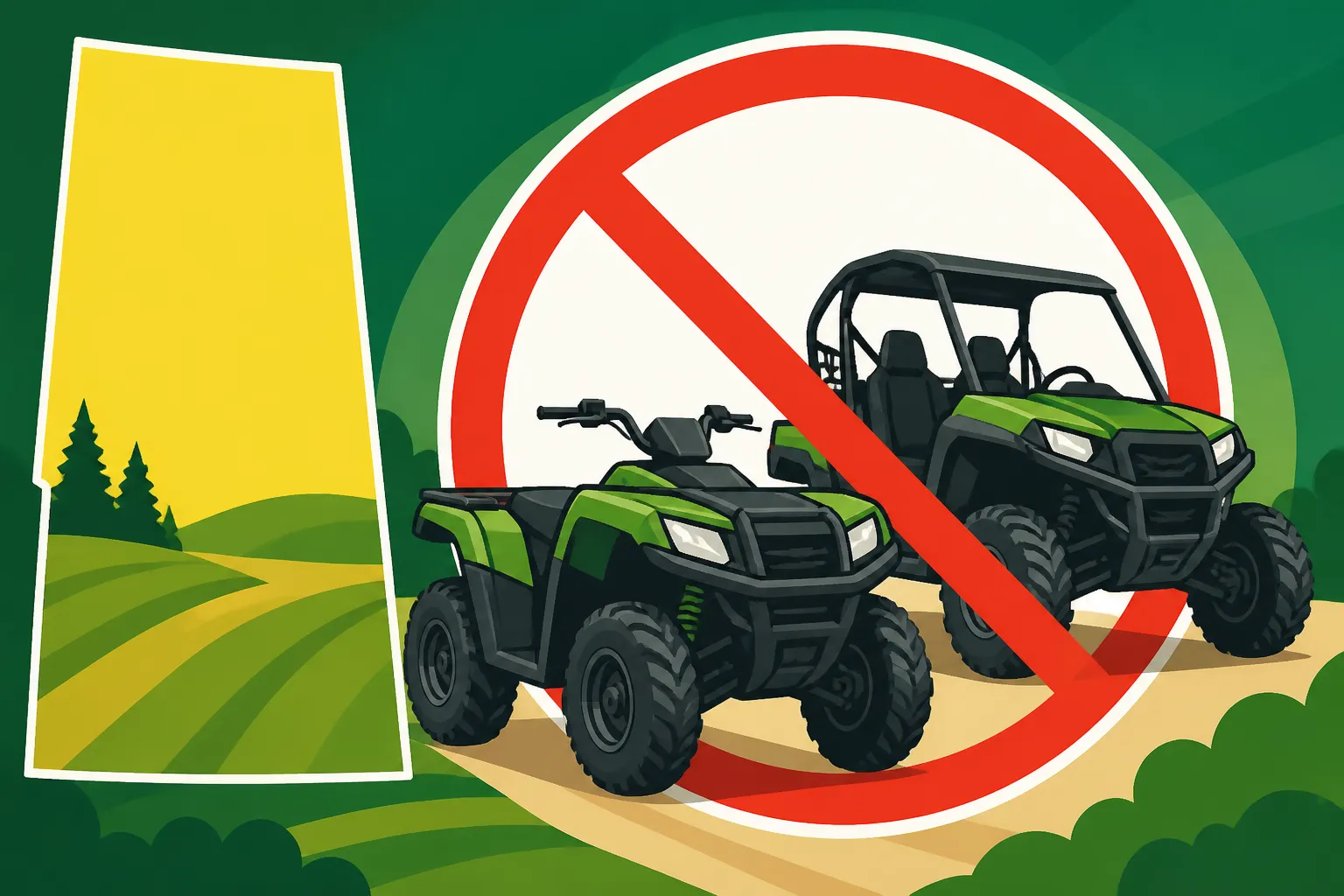
The most straightforward way to know an area is off-limits is through clear, official signage. Municipalities are required to post signs that are readily visible and conform to certain standards if they want to enforce a prohibition. These signs often feature a symbol of an ATV with a red circle and a diagonal line through it, or simply text stating "No ATV Access" or "Off-Highway Vehicles Prohibited." [Saskatchewan Sign Requirements for Prohibitions] usually stipulate minimum size and colour standards to ensure they are easily seen and understood by riders.
When you're out riding, especially in new territory, keep a keen eye out for these indicators. They might be at the entrance to a park, at intervals along a specific stretch of road, or at the boundary of a residential development. A missing sign, however, doesn't always give you a free pass. Ignorance of a bylaw is generally not considered a valid defense. It’s always best practice to check the local municipal website or contact the RM office directly before you head out, particularly for areas you're unfamiliar with. A quick call to the local village office before you start exploring around Candle Lake, for instance, can save you a lot of trouble.
Consequences of Violating Bylaws
The repercussions of riding where prohibited can range from a stern warning to significant fines and even machine impoundment. Municipalities take their bylaws seriously, especially when they are put in place to address public safety or environmental concerns. If a peace officer or bylaw officer catches you in violation, they have the authority to issue a ticket. [Saskatchewan Fines Capped at $1,000] under the provincial ATV Act, but local bylaws can have their own fee schedules, which can add up quickly.
Beyond monetary penalties, repeated infractions or severe violations could lead to your machine being seized. In some cases, if damage is caused to public or private property, you could also face civil liability. For example, if you ride an ATV on a designated pedestrian trail and damage it, you might be responsible for repair costs. It's not just about what you're doing; it's about the potential impact on others and the environment. Consider the scenario of riding unplated on municipal land, which in some jurisdictions, like the District of Lakeland, could cost you a hefty fine. The enforcement is there to ensure that everyone, including those who enjoy their ATVs, respects the rules designed to foster a safe and harmonious community.
Navigating Bylaws as a Rider or Resident
Understanding that bylaws exist is the first step, but actively navigating them is crucial for responsible riding. For both avid riders and community-minded residents, there are practical steps you can take to stay informed and even influence local policy. It’s about being proactive rather than reactive.
How to Find Local Bylaws
The best defense against an unexpected ticket is good information. Before you trailer your machine to a new area, make it a habit to check the local bylaws. Most municipalities in Saskatchewan, whether large cities or small RMs, have their bylaws posted on their official websites. You can usually find them under sections like "Bylaws," "Public Notices," or "Recreation." A simple online search for "[Municipality Name] ATV Bylaw" often yields quick results. For example, if you're planning a trip to a cabin in the RM of Paddockwood, a search for "Paddockwood RM ATV bylaws" should be your first step.
If you can't find the information online, don't hesitate to call or visit the municipal office directly. Staff there can usually point you to the relevant documents or answer specific questions about where ATVs are permitted or prohibited. Remember, while a quick look at a map might suggest an open area, there could be a specific bylaw or a temporary restriction in place due to construction, environmental sensitivity, or an organized event. Being familiar with [Saskatchewan Bylaw Lookups Before You Ride] can prevent a lot of headaches and ensure your day out is enjoyable and lawful.
Advocacy and Community Involvement
If you find a bylaw particularly restrictive or confusing, or if you believe there’s an opportunity for more designated riding areas, don’t just grumble about it. Engage with your local council! Many municipalities are open to hearing from residents and riders, especially when proposals are well-researched and presented respectfully. Attending council meetings, writing letters, or joining local ATV clubs can be effective ways to advocate for your interests. These clubs often have established relationships with local governments and can work collectively to identify legal riding opportunities or propose changes to existing bylaws.
For instance, if a specific grid road is crucial for accessing Crown land but is unjustly prohibited, a well-organized presentation to the rural municipal council, detailing the economic benefits of tourism or the need for designated routes, might lead to a review of the bylaw. Conversely, if you’re a resident experiencing issues with ATV noise or unsafe operation, your feedback to the council is equally vital in ensuring bylaws are enforced or adjusted to protect community well-being. This collaborative approach can lead to positive outcomes for both riders and non-riders alike, fostering a more balanced approach to off-highway vehicle use.
Addressing the "Why" Behind Prohibitions
It's easy for riders to feel targeted by prohibitions, but understanding the reasons behind these bylaws can foster a greater sense of compliance and community responsibility. Municipalities don't usually ban ATV riding without careful consideration; there are often very real concerns they are trying to address.
Safety Concerns and Public Nuisance
One of the primary drivers for local ATV prohibitions is public safety. ATVs and UTVs, while incredibly useful and fun, are powerful machines that can pose risks, especially when operated in areas with pedestrians, children, or other vehicles. Many bylaws aim to separate off-highway vehicles from areas where they could cause accidents. Imagine a young child playing near a road or a group of seniors out for a walk in a park. The speed and maneuverability of an ATV in such an environment can be a serious concern.
Beyond direct safety, noise is a significant factor. The distinct rumble of an ATV engine, especially when modified with performance exhaust systems—though reputable brands like SuperATV often design parts with sound regulations in mind—can be a major source of nuisance for residents. In residential areas, parks, or quiet resort communities, excessive noise disrupts peace, impacts property values, and can lead to widespread complaints. Bylaws prohibiting ATVs in these areas are often a direct response to residents' desires for a quieter environment. This is particularly true in places with high population density or where quiet recreation is paramount, like around Emma Lake or Christopher Lake.
Environmental Protection and Trail Preservation
Saskatchewan’s natural landscapes are a treasure, and local governments often step in to protect them from potential damage. ATVs, when ridden off designated trails or in sensitive areas, can cause significant environmental harm. This includes soil erosion, especially on hillsides or near water bodies, which can lead to sediment runoff into waterways and damage to ecosystems. They can also compact soil, harming root systems and plant growth, and disrupt wildlife, particularly during nesting or breeding seasons.
Furthermore, unauthorized riding can damage existing infrastructure and recreational trails. A hiking trail, for instance, isn't built to withstand the weight and wear of an ATV, leading to ruts, erosion, and making it unusable for its intended purpose. Many municipalities invest in public green spaces, landscaping, and carefully designed pathways. Prohibiting ATVs in these areas is about preserving these investments and ensuring these spaces remain healthy and accessible for everyone, not just for ATV riders. For these reasons, you'll often find specific bans in protected zones, along lakeshores, or within carefully managed parklands, emphasizing the need to respect the environment and existing recreational infrastructure.
Disclaimer
This article is for general informational purposes only and does not constitute professional advice. Laws, prices and regulations vary by location and change over time. Consult a qualified professional for guidance on your specific situation.