2 Metres From the Travelled Portion
It can be incredibly frustrating to figure out where you're actually allowed to ride your ATV or UTV in Saskatchewan, especially when you're just trying to get from your cabin to the nearest trail, or even just from your yard to a friend's place down the road. The provincial rules around operating these machines near public highways can feel like a minefield of "do's" and "don'ts," leaving many riders scratching their heads and worried about getting a ticket. This guide aims to clear up the confusion surrounding the critical "2 metres from the travelled portion" rule, so you can ride with confidence and keep your machine safe and legal.
Understanding the "2 Metres" Rule in Saskatchewan
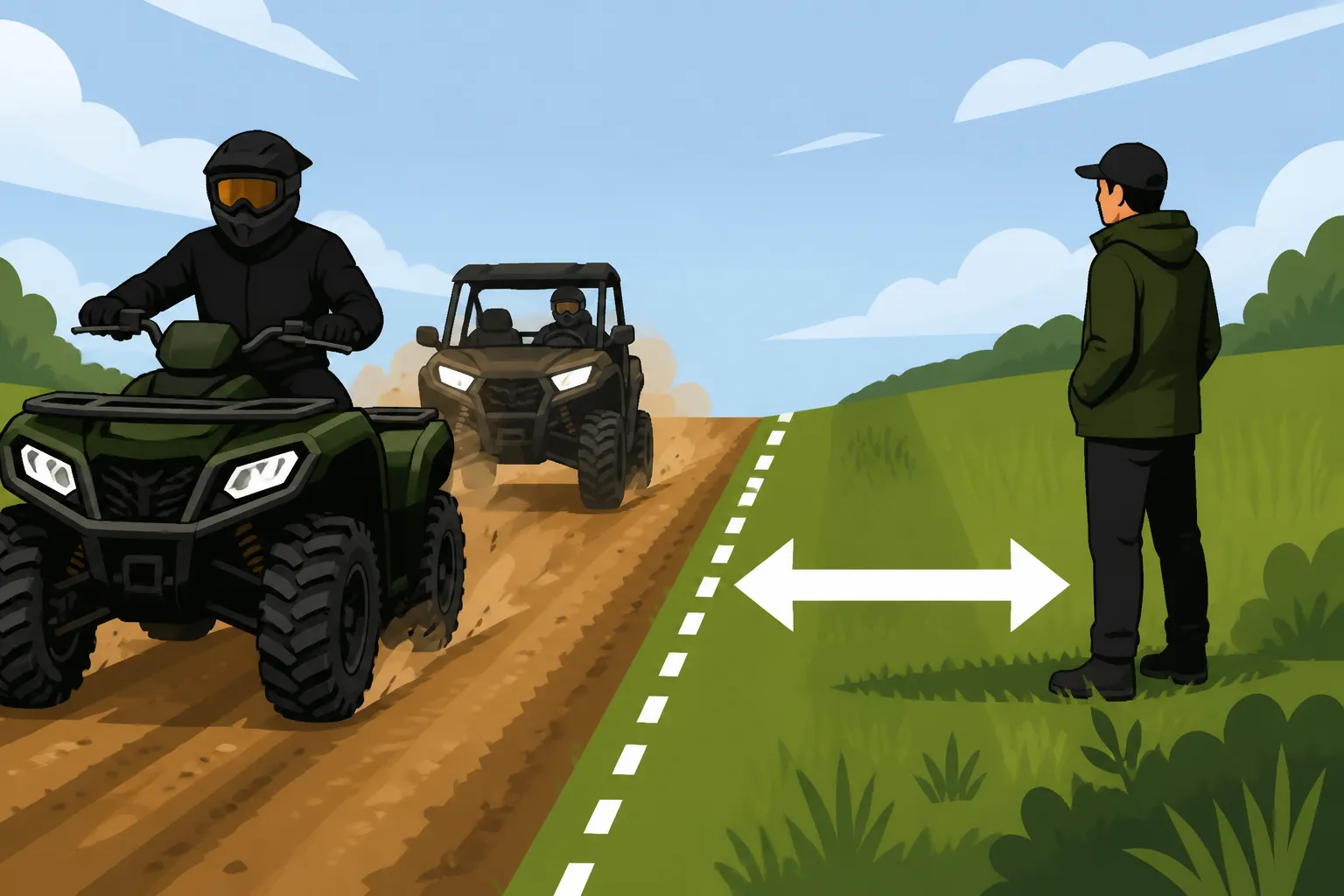
The "2 metres from the travelled portion" rule is one of the most fundamental and often misunderstood aspects of ATV and UTV operation near public roads in Saskatchewan. It dictates the minimum distance your off-road vehicle must maintain from the part of the highway where cars and trucks typically drive. This isn't just a suggestion; it's a legal requirement designed to enhance safety for both ATV riders and motorists. Violating this rule can lead to significant fines and unnecessary hassle, so it's vital to understand what it means and how to apply it.
The Legal Wording: Deconstructing the "Travelled Portion"
When the law talks about the "travelled portion" of a highway, it's not just referring to the paved or graveled surface where vehicles primarily drive. This term actually encompasses a much broader area. Imagine the full width of the road allowance that vehicles could reasonably use, including the main lanes, shoulders, and sometimes even adjacent turn lanes or merge areas. It's the part of the highway that has been prepared for, and is ordinarily used by, vehicular traffic. This means that simply being off the asphalt might not be enough if you're still within that broader definition of the travelled portion. For instance, riding on a freshly graded gravel shoulder, even if no cars are currently there, could still be considered too close if it's considered part of where vehicles typically travel. Understanding this broader interpretation is key to avoiding accidental infractions. The legislation is quite specific that [The Travelled Portion of a Highway Is Off Limits] to ATVs.
The intent behind this definition is clear: create a safety buffer. By requiring ATVs to maintain a minimum distance, the law aims to reduce the risk of collisions between fast-moving road vehicles and slower, often less visible, off-road machines. It also helps to prevent ATVs from kicking up debris into traffic or creating unexpected hazards for drivers. Think of it as a clear boundary line that, when crossed, immediately puts you in a legally precarious and potentially dangerous situation. It's really about giving everyone enough space to operate safely, acknowledging the distinct characteristics of road-going vehicles and off-road machines.
Practical Application: Where Can You Actually Ride?
So, if the travelled portion is so broad, where exactly can you ride? The rule generally means you need to be in the ditch, far enough away from the shoulder that you're outside that two-metre buffer zone. This often means riding further down into the ditch, where the terrain changes, or even on the very edge of private property if you have permission and are still respecting the two-metre rule from the highway. For many, this translates to keeping your wheels firmly in the grassy, unmaintained areas alongside the road, rather than on any part that looks like it's designed for vehicle movement.
The challenge here is that ditches aren't always consistent. Some ditches are wide, flat, and easy to navigate, while others are steep, narrow, or filled with obstacles like culverts, fences, or thick brush. This can make maintaining that two-metre distance tricky, especially in areas with limited space. This is where a little common sense and caution come in. If the ditch is too narrow or too dangerous to comfortably maintain the two-metre separation, then that route might not be a legal or safe option for your ATV. It’s better to find an alternative path or trailer your machine than to risk a ticket or, worse, an accident. Ultimately, the goal is to ride in a way that truly keeps you [Staying 2 Metres Off the Travelled Portion].
Safety Implications of Ditch Riding
Riding in the ditch might be a legal necessity for ATVs and UTVs near roads, but it comes with its own set of unique safety challenges. Ditches are not designed as recreational trails. They are often uneven, filled with hidden hazards, and present different risks than dedicated off-road paths. Understanding these challenges and preparing for them is crucial for a safe and enjoyable ride, even when you're just trying to get from point A to point B.
Visibility and Hazards: What Riders Need to Watch For
When you're riding in a ditch, your visibility to other vehicles, especially those on the main highway, can be severely limited. Ditches often have varying depths, tall grasses, brush, or even small hills that can obscure your presence from drivers. Conversely, your view of oncoming traffic or unexpected obstacles in the ditch can also be reduced. This lack of clear lines of sight significantly increases the risk of a mishap. You might not see a culvert until you're right on top of it, or a driver might not spot your machine until it's too late if you suddenly need to maneuver closer to the shoulder.
Beyond visibility, ditches are veritable obstacle courses. You might encounter:
- Hidden Rocks and Bumps: Erosion and maintenance can expose rocks or create unexpected divots.
- Culverts and Drainage Pipes: These can create significant drops or abrupt changes in terrain.
- Fences and Posts: Old fence lines or survey markers can be camouflaged by vegetation.
- Debris: Farmers might have discarded machinery parts, or general trash could be present.
- Soft Spots and Mud: Especially after rain, ditches can become boggy and trap your machine.
Riding in a ditch requires constant vigilance and a slower speed than you might use on a trail. It's not the place for high-speed thrills, but rather careful navigation. Always be scanning the terrain ahead and anticipating potential hazards, and remember that [Saskatchewan Ditch Riding and the 2-Metre Rule] is about safety first.
Equipment for Safer Ditch Travel: Lights, Flags, and More
To mitigate the risks associated with ditch riding, equipping your ATV or UTV appropriately is paramount. Enhanced visibility is your best defense against accidents involving road traffic. This includes:
- High-Visibility Flags: Mounting a tall, brightly colored flag on your machine can make a huge difference, especially in deeper ditches or areas with tall vegetation. This allows drivers on the highway to see your presence even if your machine itself is obscured.
- Upgraded Lighting: While your machine likely has headlights and taillights, consider adding auxiliary LED light bars or brighter aftermarket bulbs, especially if you anticipate riding at dawn, dusk, or night. Remember, [Saskatchewan Lighting Rules at Night] are important. Brands like SuperATV offer a wide range of robust LED lighting solutions designed for off-road use, which can significantly improve your machine's visibility in low-light conditions or dusty environments.
- Mirrors: Ensure your UTV has functional side mirrors, and consider adding a rearview mirror to your ATV. Being able to see what's behind you, especially if you're close to a highway, is invaluable.
- Skid Plates and A-Arm Guards: Given the unpredictable nature of ditch terrain, robust underbody protection is a wise investment. Skid plates protect your frame, engine, and other vital components from impacts with hidden rocks, stumps, or other debris. SuperATV provides durable skid plate options that can withstand the rigors of ditch riding.
- Tires: Good all-terrain tires with adequate tread are essential for traction on varying ditch surfaces, from grass to mud to loose gravel.
- Winch: Getting stuck in a muddy ditch is a real possibility. A reliable winch can be a lifesaver, allowing you to self-recover or assist a fellow rider.
Beyond equipment, don't forget personal protective gear. Always wear an approved helmet, and ensure you have proper eye protection, like goggles or a face shield. [Saskatchewan Helmet and Eye Protection Rules] are strictly enforced, and they're there for your protection, especially when riding anywhere near public roads where unexpected hazards or dust can arise.
Exceptions and Nuances to the Rule
While the "2 metres from the travelled portion" rule is quite strict, there are specific situations and local regulations that introduce nuances or even provide brief exemptions. It’s important not to assume these exceptions apply broadly; they are generally for very specific circumstances and often come with their own set of requirements. Knowing these specific rules helps you navigate the landscape of Saskatchewan ATV regulations more effectively.
Crossing a Highway: Brief Exemptions for Necessary Travel
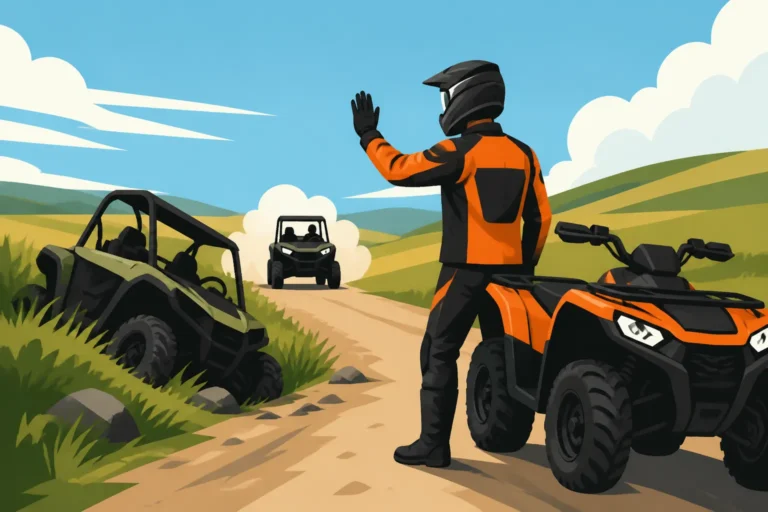
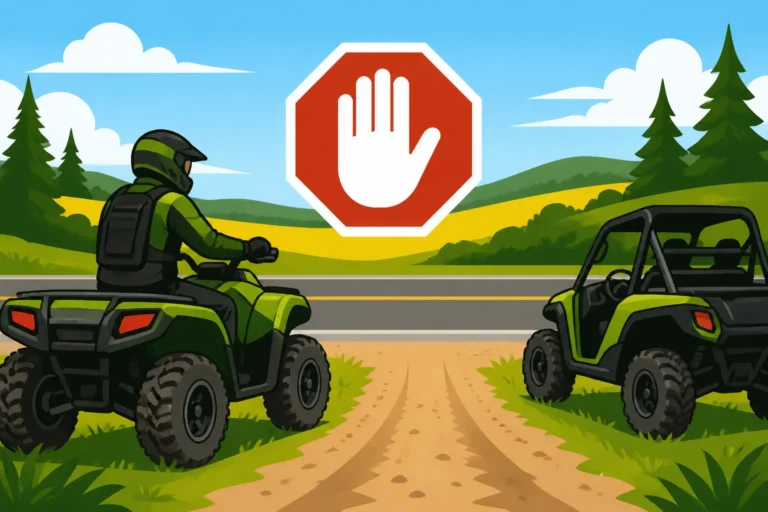
There are times when avoiding the travelled portion of a highway is simply impossible, primarily when you need to cross it to get to the other side. The law acknowledges this necessity but sets very clear stipulations for how such crossings must be executed. This isn't a free pass to drive on the road; it's a narrowly defined exception for a momentary action.
- Shortest Route Possible: You must cross the highway by the most direct and shortest route possible. This means no joyriding down the middle of the road to find a better crossing point; you go straight across, perpendicular to the flow of traffic. [Saskatchewan Crossings by the Shortest Route] explicitly states this.
- Come to a Full Stop: Before entering the travelled portion to cross, you must bring your ATV or UTV to a complete stop. This allows you to check for traffic in both directions, ensuring it's safe to proceed.
- Yield to All Traffic: You must yield the right-of-way to all vehicles on the highway. They have priority. Do not proceed until you can do so safely without interfering with their movement.
- Passengers Must Dismount: If you have passengers on your ATV or UTV, they must dismount before you cross the highway and walk across separately. This is a critical safety measure to reduce potential harm in case of a collision. [Saskatchewan Crossings Require Passengers to Dismount] emphasizes this point.
- No Bridges or Weirs: Generally, ATVs and UTVs are prohibited from operating on bridges, bridge decks, or weirs, even for crossing purposes, unless specifically signed otherwise. These structures are often considered part of the "travelled portion" and present unique structural and safety challenges for off-road vehicles.
These exceptions are not an invitation to treat the highway as an extension of a trail. They are brief, highly regulated maneuvers that demand the utmost caution and adherence to all traffic laws.
Municipal Bylaws: Local Rules That Can Override Provincial Guidance
While the provincial All Terrain Vehicles Act sets the general framework for ATV and UTV operation, municipalities in Saskatchewan have the authority to enact their own bylaws that can either restrict or, in some cases, permit certain types of operation on roads within their jurisdiction. This creates a patchwork of rules across the province, meaning what's legal in one rural municipality might be strictly prohibited in the next.
- Permitted Road Riding: Some rural municipalities (RMs) or villages may pass bylaws that specifically designate certain municipal roads or streets as open for ATV or UTV use, often with conditions such as speed limits, hours of operation, or requiring a special permit or plate. These are typically lower-speed, less-travelled roads.
- Prohibited Areas: Conversely, a municipality might have bylaws that expressly prohibit ATV or UTV use on any municipal road, ditch, or even specific public spaces like parks or school grounds.
- Permits and Plates: Where municipal road riding is allowed, you might need to obtain a local permit or even a municipal plate. These often come with a fee and a validity period, and ensure the municipality knows who is operating on their roads. An example is the [Saskatchewan Municipal Plate Costs] that some local jurisdictions implement.
- Signs: Municipalities that have enacted bylaws allowing or prohibiting ATV use are generally required to post appropriate signage to inform riders. These signs clearly indicate where riding is permitted or forbidden.
Before planning a ride that involves any municipal roads or ditches, it is absolutely essential to check with the specific municipality's office for their local bylaws. Never assume that just because you saw someone riding an ATV on a street in one town, you can do the same in another. Ignorance of a local bylaw is not a valid defense. [Saskatchewan Municipal Bylaws on Roads] can greatly impact your riding experience, so it's always best to be informed.
Enforcement and Penalties
Adhering to the "2 metres from the travelled portion" rule, along with all other ATV and UTV regulations, isn't just about safety; it's also about avoiding fines and legal consequences. Peace officers in Saskatchewan are authorized to enforce the All Terrain Vehicles Act, and they take these rules seriously, especially those pertaining to highway safety. Understanding what officers look for and the potential penalties can help riders stay compliant and out of trouble.
What a Peace Officer Looks For: Common Infractions
When a peace officer encounters an ATV or UTV near a highway, they're typically assessing several key factors related to the "2 metres" rule and broader operational requirements. They are trained to quickly identify common infractions and ensure that riders are operating safely and legally.
- Proximity to the Road: The most obvious check is whether your machine is indeed maintaining the required two-metre distance from the travelled portion. If you're riding on the shoulder, too close to the edge of the pavement, or even in a part of the ditch that's considered too shallow, you're likely to draw attention.
- Operational Demeanor: Officers also observe how you're riding. Are you speeding in the ditch? Are you riding erratically? Are you attempting to pass vehicles on the highway? These behaviors suggest a disregard for safety and the spirit of the law, even if you're technically two metres away.
- Crossing Procedures: If an officer observes you crossing a highway, they'll be looking to see if you came to a full stop, yielded to traffic, and had any passengers dismount. Failing any of these steps is a clear violation.
- Visibility and Safety Gear: Officers also check for proper lighting, especially if it's nearing dusk or dark, and ensure riders are wearing approved helmets and eye protection. While not directly related to the "2 metres" rule, these are fundamental safety requirements that often go hand-in-hand with lawful operation near roads. For example, [What an Officer Can Ask to See on a Grid Road] includes proof of insurance and proper safety gear.
- Local Bylaw Compliance: If you're operating within a municipality with its own bylaws, an officer might also check for a municipal permit or plate, if required.
Peace officers are ultimately concerned with public safety. They understand that ATVs are an important part of rural life and recreation in Saskatchewan, but they also have a duty to ensure these machines are operated responsibly and in a manner that doesn't endanger other road users.
Fines and Your Riding Privileges: The Cost of Non-Compliance
Violating the All Terrain Vehicles Act can lead to more than just a stern warning. The Act includes provisions for significant fines, and repeated or serious infractions can have further consequences.
- Monetary Fines: For offenses under the All Terrain Vehicles Act, fines can be substantial. The Act states that any person who contravenes a provision of the Act is guilty of an offense and is liable to a fine capped at $1,000. For instance, [Saskatchewan Fines Capped at $1,000] illustrates the potential financial hit. Riding too close to the travelled portion, failing to stop before crossing, or having an underage rider without proper supervision can all result in these kinds of penalties.
- Owner Liability: It's important to remember that not only the operator but also the owner of the ATV or UTV can be held liable for offenses, especially if they knowingly permitted an unlicensed or unqualified person to operate the machine, or if they failed to ensure the machine was properly equipped.
- Disqualified Drivers: If you are disqualified from holding a driver's licence under the Traffic Safety Act, operating an ATV is also prohibited, and the penalties for doing so are severe.
- Impoundment: In serious cases, or for repeated offenses, a peace officer may have the authority to seize and impound your ATV or UTV. Getting your machine back from impoundment involves significant fees and administrative hurdles, making it a costly and inconvenient process.
- Insurance Impact: A citation for unsafe or illegal operation could also impact your ATV insurance rates or even lead to difficulties in obtaining coverage in the future. While [Saskatchewan Insurance Requirements for Riders] are mandatory, a claim or ticket can make it more expensive.
The financial and logistical costs of non-compliance far outweigh the minor inconvenience of adhering to the rules. It's always a better choice to understand and follow the regulations, ensuring your ride stays fun and worry-free.
Beyond the Ditch: Other Road-Related Rules
While staying 2 metres from the travelled portion is a cornerstone of safe and legal ATV operation near highways in Saskatchewan, it's just one piece of a larger regulatory puzzle. To truly ensure you're riding responsibly, it's crucial to understand the broader context of road-related rules that apply to ATVs and UTVs. These regulations cover everything from age limits and licensing to equipment requirements and specific rules for certain types of roads.
Saskatchewan ATV Road Rules Explained
The All Terrain Vehicles Act and its associated regulations lay out a comprehensive set of rules governing how these machines can interact with public roads and highways. These aren't just suggestions; they are laws designed to protect riders, passengers, and other road users.
- Driver's Licence Required: Generally, anyone operating an ATV or UTV on land other than their own private property must hold a valid driver's licence. There are specific exceptions for youth under supervision or those who have completed an approved safety course, but for most adult riders, a licence is non-negotiable. [Do You Need a Licence for an ATV in Saskatchewan?] clarifies this.
- Age Requirements: There's a strict age floor for ATV operation. Riders must generally be 16 years of age or older to operate an ATV without direct supervision on public land or near roads. Exceptions exist for supervised riders aged 12-15, often requiring a safety course or a supervisor with a long-held licence. [Saskatchewan ATV Age Requirements] details these rules.
- Helmet and Eye Protection: As mentioned earlier, wearing an approved helmet and appropriate eye protection (goggles or a face shield) is mandatory for all riders and passengers. This rule applies anytime the machine is in operation, not just near roads.
- Insurance: All ATVs and UTVs operated anywhere off private land must carry a minimum amount of liability insurance. This protects you in case of an accident where you are deemed at fault. Peace officers can and will ask for proof of insurance. [Saskatchewan ATV Insurance Requirements] emphasizes its importance.
- Lighting Requirements: If you're operating an ATV after sunset or before sunrise, or at any time when visibility is poor, your machine must have functional headlights and taillights. These lights must be on and visible.
- Speed Limits: When operating in ditches or on designated municipal roads, ATVs and UTVs are typically subject to specific speed limits, often lower than the posted highway limit. For ditches adjacent to highways, a maximum speed of 80 km/h is specified in the Act.
- Passengers: Passengers are only permitted on ATVs or UTVs that are specifically designed by the manufacturer to carry more than one person and are equipped with a designated passenger seat and handholds. Carrying a passenger on a single-rider ATV is illegal and extremely dangerous.
Adhering to these rules is fundamental to being a responsible ATV rider in Saskatchewan. They form the backbone of safe operation and are regularly enforced by authorities.
Different Road Types: Grid Roads, Trails, and Town Streets
The specific rules for ATV operation can also vary significantly depending on the type of road or land you're on. What's permissible on a remote grid road might be strictly forbidden on a main highway or within a town.
- Highways and Primary Grid Roads: On these major thoroughfares, the "2 metres from the travelled portion" rule is paramount. Your ATV should be confined to the ditch, and only for the purposes of travel or crossing as explicitly permitted. Long-distance travel on highway shoulders is generally not allowed.
- Secondary Grid Roads and Undeveloped Roads: Many rural areas have extensive networks of gravel grid roads. While ATVs are often used on these, it's critical to know the local bylaws. Some RMs may allow ATVs to operate on these roads, but others may not. Always check. Even where permitted, caution is key. These roads are often shared with heavy farm equipment and other vehicles, and visibility can be poor due to dust or hills. Riders should still maintain a safe distance from the travelled portion of the road if possible, and always yield to larger vehicles. [Saskatchewan Rules for Riding a Grid Road] provides more detail.
- Designated Trails: Where actual ATV trails exist, such as those maintained by clubs or within certain provincial parks, the rules shift. These trails are specifically designed for off-road use, and while general safety rules (helmets, insurance) still apply, the constraints of road-side operation typically do not. However, even on trails, some areas might intersect with roads, requiring you to momentarily comply with road rules. [Saskatchewan ATV Trails: Crown Land and Ditches] offers more insights into trail riding.
- Town and Village Streets: Operating ATVs or UTVs on paved town or village streets is almost universally prohibited unless a specific municipal bylaw allows it. These bylaws are rare for main streets and usually pertain to very low-traffic residential areas or specific travel corridors for local residents. Never assume you can ride your ATV on urban streets without verifying local bylaws first. [Saskatchewan Rules for Riding a Town Street] are very restrictive.
Navigating these different environments successfully requires proactive research and a commitment to safe practices. Don't rely on assumptions; always confirm the specific rules for the area you intend to ride. When in doubt, it’s always safest to trailer your machine to a designated riding area rather than risking a fine or, worse, an accident on an unfamiliar road.
| Rule Category | Applies To | Key Action/Requirement | Common Exception/Nuance |
|---|---|---|---|
| Ditch Riding | Highways, Primary Grid Roads | Stay 2 metres from travelled portion, in ditch. | Municipal bylaws may permit road riding on specific streets. |
| Highway Crossing | Any Public Highway | Shortest route, full stop, yield to traffic, passengers dismount. | No crossing on bridges or weirs generally. |
| Municipal Roads | Streets, Secondary Grid Roads | Check local bylaws; may require permits/plates or be prohibited. | Some RMs allow operation on specific designated roads. |
| Equipment & Safety | All Operations (on/near public land/roads) | Helmet, eye protection, insurance, proper lighting (night). | N/A – these are generally universal requirements. |
| Driver Requirements | All Operations (on/near public land/roads) | Valid driver's licence (adults), age limits, supervision. | Youth 12-15 with supervisor/safety course. |
| Passenger Rules | All Operations (on/near public land/roads) | Only on machines designed for multiple riders. | Passengers must dismount for highway crossings. |
Disclaimer
This article is for general informational purposes only and does not constitute professional advice. Laws, prices and regulations vary by location and change over time. Consult a qualified professional for guidance on your specific situation.