Saskatchewan Ticket Costs for Riders
It's an unfortunate truth that hitting the trails or heading out to the back forty on your ATV or UTV in Saskatchewan can sometimes lead to an unexpected run-in with the law. The rules for operating these machines, especially on public lands or near roadways, can feel like a tangled web of provincial acts and local bylaws, often leaving riders scratching their heads. This guide is here to untangle that web, breaking down the common types of tickets you might encounter as a rider in Saskatchewan, giving you a realistic understanding of what they could cost, and most importantly, offering practical advice on how to steer clear of them entirely.
Understanding the Landscape of ATV/UTV Offences in Saskatchewan
Riding an ATV or UTV in Saskatchewan offers incredible freedom and access to some stunning landscapes, but that freedom comes with a responsibility to understand the rules. Unlike some provinces, Saskatchewan doesn't have a provincial registration system for ATVs and UTVs, which can sometimes lull riders into a false sense of security regarding regulations. However, make no mistake: there are stringent rules in place, and peace officers are well-versed in enforcing them.
The All Terrain Vehicles Act Runs 36 Sections
At the heart of ATV and UTV regulation in Saskatchewan is The All Terrain Vehicles Act. This comprehensive piece of legislation is designed not to track ownership or generate revenue through registration, but primarily to ensure the safe operation of these machines. It covers a wide range of topics, from who can operate a machine and under what conditions, to equipment requirements and limitations on where you can ride. Many riders assume that because there's no provincial plate, there are no rules. This couldn't be further from the truth. The Act explicitly defines what an all-terrain vehicle is, sets out age restrictions, dictates helmet and eye protection requirements, and outlines rules for operating on various types of land, including near highways and on Crown land.
For instance, the Act meticulously details how a young rider, even a child, can operate a machine, specifying a [Saskatchewan's 365-Day Supervisor Rule] for those between 12 and 15 years old, or the requirement for a safety course certificate. Failing to adhere to these foundational rules is a common way riders, or their parents/supervisors, find themselves facing a ticket. It's not about being registered; it's about operating safely and legally, and the Act provides a clear framework for that. Every rider should be familiar with [Saskatchewan's All Terrain Vehicles Act] to avoid unnecessary penalties.
Where Municipal Bylaws Fit In
While the provincial All Terrain Vehicles Act sets the baseline for safe operation, the regulatory picture gets even more nuanced when you factor in local municipal bylaws. Many communities across Saskatchewan, particularly rural municipalities and resort villages, have enacted their own specific rules governing ATV and UTV use within their boundaries. These bylaws often address concerns unique to local areas, such as noise complaints, road use restrictions, or specific trail access.
Consider, for example, a popular resort area like Candle Lake or the District of Lakeland. These areas often experience a high volume of recreational ATV traffic, leading local councils to implement specific bylaws regarding where and when ATVs can be operated, speed limits on certain roads, or even requiring municipal permits or plates. What might be perfectly legal on a grid road in one RM could land you a hefty fine just a few kilometres away in a different jurisdiction. This patchwork of rules means riders need to be diligent about checking local regulations before unloading their machine, especially when visiting an unfamiliar area. Ignoring a local bylaw, even if you were unaware of it, is still a violation and can result in significant tickets, sometimes even more substantial than those under the provincial Act, because they are tailored to specific local conditions and issues. [Saskatchewan Municipal Plate Schemes] are a good indicator that local rules are likely in effect.
Common Infractions and Their Potential Financial Impact
Let's get down to the nitty-gritty: what kinds of tickets are riders actually getting, and what's the financial fallout? While I can't provide exact dollar figures (these can change and vary by jurisdiction), I can describe the shape of the costs and give you a solid idea of the financial hit you might be looking at. Generally, fines under the All Terrain Vehicles Act are capped at a specific amount, often in the hundreds or even up to a thousand dollars for more serious offences, not including additional court costs.
Age, Supervision, and Helmet Violations
One of the most frequently enforced areas, and for good reason, revolves around rider age, supervision, and safety gear. The Act is quite specific here, aiming to protect riders, especially youth.
- Age Restrictions: Saskatchewan has clear [Saskatchewan ATV Age Requirements]. Generally, you need to be at least 16 years old to operate an ATV or UTV unsupervised. There are exceptions for riders between 12 and 15 years old, but they must either be supervised by an adult (who has held a driver's licence for at least 365 days) or possess an approved ATV safety course certificate. Operating a machine while underage and unsupervised, or allowing an underage person to do so, can lead to substantial fines for both the rider and the owner/supervisor. These tickets can be in the hundreds of dollars, sometimes escalating if multiple factors are involved (e.g., underage, no helmet, on prohibited land).
- Supervisor Rule: The adult supervisor isn't just a passenger; they are legally considered the operator when supervising a youth. This means if a 14-year-old rider under supervision commits an infraction, the supervisor can also be held liable and ticketed. Imagine a scenario where a supervised youth is operating an ATV in a prohibited area; both the youth (if they meet the age of responsibility) and the supervisor could face fines. It's a significant responsibility, and the financial penalties reflect that, potentially doubling the impact.
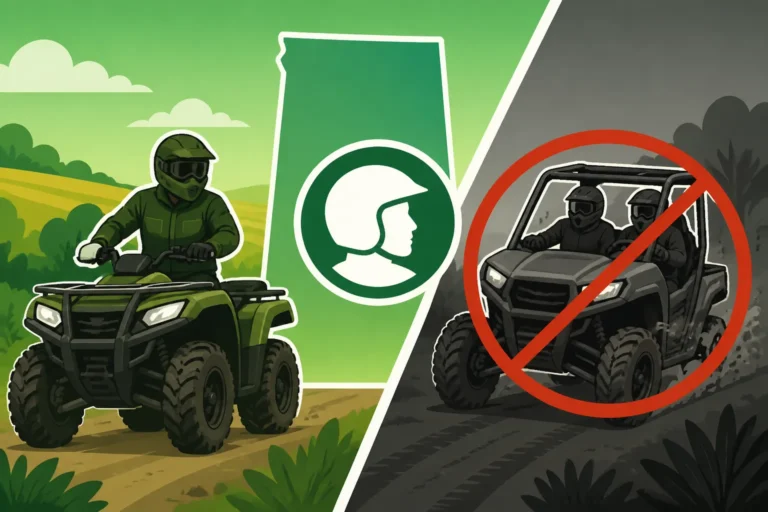
- Helmet and Eye Protection: This is non-negotiable for safety, and enforcement is strict. [Saskatchewan Helmet and Eye Protection Rules] mandate that all operators and passengers must wear an approved helmet, securely fastened, and appropriate eye protection. Riding without a proper helmet (not a bicycle helmet, for instance) or without goggles or a shatterproof shield can easily result in a ticket in the mid-hundreds of dollars. Officers will check for the CSA, DOT, or ECE compliance labels inside your helmet. Trying to get by with just sunglasses, especially if they're not shatterproof, is a common mistake that can lead to a fine.
Insurance and Documentation Issues
While Saskatchewan doesn't have a provincial ATV registration, it absolutely requires insurance. This is a critical point that many new or visiting riders miss.
- Mandatory Insurance: Every ATV or UTV operated in Saskatchewan must have a minimum amount of third-party liability insurance coverage, typically set at $200,000. This is not optional. If a peace officer asks for proof of insurance and you cannot provide it, you are looking at a ticket that is generally quite substantial, often several hundred dollars, or even more. This isn't just about covering potential accidents; it's a legal requirement for operation. Your [Saskatchewan ATV Insurance Requirements] are a cornerstone of responsible riding, and officers often ask to see this first.
- Proof of Ownership: While you won't get a "no registration" ticket, not being able to prove ownership can create a lot of headaches, especially if your machine is seized or involved in an incident. [How to Prove You Own an ATV in Saskatchewan] often comes down to a clear bill of sale. While not a direct ticketing offence, if a machine is stopped by law enforcement and there are questions about its provenance, lacking proper paperwork like a [Saskatchewan Bills of Sale Do the Work] can lead to further investigation, delays, and potential impoundment until ownership is verified. This might not be a "ticket" in the traditional sense, but it can certainly lead to significant costs and frustration.
Road Use and Operation Offences
This category often catches riders by surprise because the rules for using ATVs and UTVs near or on public roads are very specific and restrictive. It's not like driving a car.
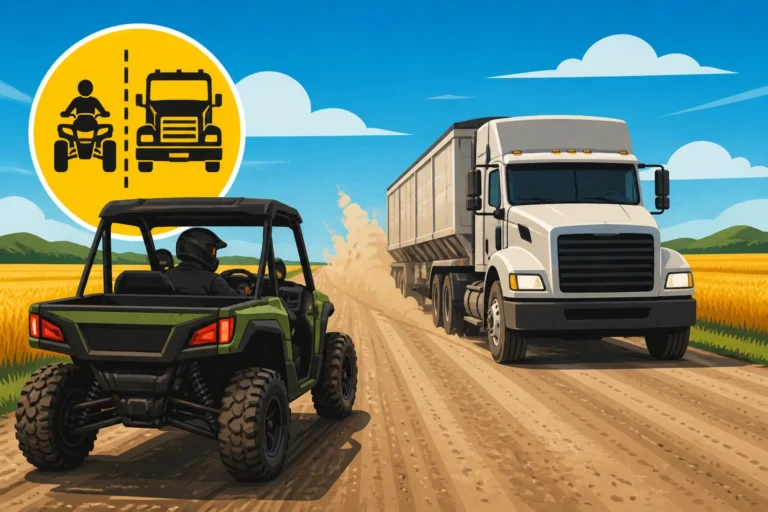
- Illegal Road Use: Generally speaking, ATVs and UTVs are not permitted on provincial highways, roads, or streets, with very limited exceptions. The major exception is [Saskatchewan Ditch Riding and the 2-Metre Rule], where you can typically ride in the ditch of a public road, but you must remain at least two metres from the travelled portion. Even then, there are specific rules about direction of travel at night, speed, and crossing highways. Getting caught riding directly on the paved or gravel surface of a highway, or in areas where ditch riding is prohibited by municipal bylaw, will almost certainly result in a ticket that can run into several hundred dollars. Simple tasks like [Saskatchewan Crossings Require Passengers to Dismount] can be easily overlooked, leading to an avoidable fine.
- Speeding/Reckless Operation: Even in areas where you are permitted to ride, such as ditches or designated trails, speed limits apply. The provincial Act sets a maximum speed of [Saskatchewan's 80 km/h Speed Limit] when riding in a ditch. Exceeding this, or operating your machine in a manner deemed reckless or dangerous to others, can result in tickets akin to traffic violations. These fines are often significant and increase with the severity of the offence. Additionally, local bylaws can impose even lower speed limits on trails or specific municipal roads where ATVs are allowed, further complicating matters for the unaware rider.
- Lighting and Equipment: Operating after dark comes with its own set of rules. [Saskatchewan Lighting Rules at Night] require your ATV or UTV to have at least one headlamp and one tail lamp that are clearly visible from specific distances. Riding at night without proper, functional lighting is a ticketable offence, again often in the hundreds of dollars. Beyond lighting, officers may check for other safety equipment or modifications that might not comply with provincial or federal standards. For instance, ensuring your machine has an approved spark arrestor is crucial, especially during dry conditions. Companies like SuperATV offer a robust selection of aftermarket lighting kits, mirrors, and safety flags that not only enhance your riding experience but also help ensure you meet legal requirements for visibility and safety, potentially saving you from a ticket.
Beyond the Immediate Ticket: Cumulative Costs and Consequences
While the immediate fine for a ticket can be a sting, the financial and personal repercussions often extend far beyond that initial penalty. Understanding these cumulative costs is crucial for appreciating the full impact of a violation.
Court Costs and Increased Insurance Premiums
Receiving a ticket isn't always the end of the story. Many riders choose to dispute tickets in court, believing they have a valid defence or that the officer made a mistake.
- Court Costs: While you have every right to contest a ticket, doing so isn't without its own financial implications. Even if you're successful in having a ticket dismissed, there can be [Saskatchewan Court Costs for a Citation] associated with the process, such as filing fees or even the cost of a lawyer if you choose to hire one. If you are found guilty, the court costs are almost always added on top of your fine, increasing the total amount you owe. These costs vary but can add dozens or even hundreds of dollars to the final bill. It's a consideration many don't factor in until they're deep into the legal process.
- Insurance Impact: One of the most significant long-term financial consequences of a conviction can be its effect on your insurance premiums. While minor infractions might not always trigger an immediate spike, repeat offences or serious violations (like impaired operation or severe reckless driving) are very likely to be flagged by insurance providers. This can lead to increased [Saskatchewan ATV Insurance Costs] when you go to renew your policy. In some extreme cases, repeated serious violations could even make it difficult to find insurance coverage at all, leaving you unable to legally operate your machine. Given that insurance is mandatory, this can put a real damper on your riding plans.
Vehicle Seizure and Impoundment
For serious or repeat violations, peace officers have the authority to seize and impound your ATV or UTV. This is perhaps one of the most frustrating and expensive consequences a rider can face.
- Seizure and Impoundment: If you're caught operating a machine while disqualified, without insurance, or in an extremely reckless manner, an officer can order your ATV or UTV to be towed and impounded. This is not a common occurrence for minor infractions but is a real possibility for flagrant disregard of the rules or severe safety violations. The costs associated with [Saskatchewan Seizure and Impoundment Rules] can quickly become astronomical. You'll be responsible for the towing fees, which can vary depending on distance and time of day, as well as daily storage fees at the impound lot. These fees accumulate rapidly, often turning a ticket that might have been a few hundred dollars into a multi-thousand-dollar ordeal within just a few weeks.
- Release Process: Getting your machine back isn't always straightforward either. You'll typically need to pay all outstanding fines and impoundment fees before the machine is released. This can put a significant financial strain on riders, sometimes even leading to the forfeiture of the machine if the owner cannot afford the accumulated costs. Understanding the [Saskatchewan Release of a Seized Machine] process is important, but preventing seizure in the first place is always the better option.
Wildfire-Related Fines
Saskatchewan experiences significant wildfire risk, and operating ATVs and UTVs irresponsibly during dry periods can have devastating consequences, both environmentally and financially for the rider.
- Severe Penalties: The penalties for wildfire-related offences are often far more severe than those under the All Terrain Vehicles Act. Operating a machine without a proper spark arrestor, riding in areas under a fire ban, or failing to check for and clear combustible debris from your machine can lead to monumental fines under [Saskatchewan Wildfire Act Duties for Riders]. These fines are not typically in the hundreds but can easily climb into the thousands of dollars, reflecting the severe potential damage caused by wildfires. It's not just a fine; it's a legal responsibility to prevent fires.
- Prevention is Key: Riders must be extra vigilant during wildfire season (typically April to October). This means inspecting your machine regularly to ensure no dry grass or other combustible material is accumulating near hot engine parts or the exhaust. Ensuring your spark arrestor is functional and approved is also critical. Many riders invest in high-quality spark arrestors, and some even carry small fire extinguishers. Companies like SuperATV offer heavy-duty skid plates and exhaust guards that can help prevent grass and debris from making contact with hot engine components, adding an extra layer of protection against accidental fires and helping you comply with regulations. Checking for [Saskatchewan Fire Bans That Close Riding] before heading out is a non-negotiable step to avoid these significant penalties.
Here’s a quick overview of some common infractions and the general scale of their potential costs:
| Infraction Category | Example Violation | Potential Financial Impact (Excluding Court Costs) |
|---|---|---|
| Age & Supervision | Underage operator without supervision | Moderate to High (hundreds of dollars) |
| Unlicensed supervisor (less than 365 days) | Moderate (hundreds of dollars) | |
| Safety Equipment | No approved helmet | Moderate (hundreds of dollars) |
| No proper eye protection | Moderate (hundreds of dollars) | |
| Insurance & Documentation | No valid third-party liability insurance | High (many hundreds of dollars) |
| Road & Trail Operation | Riding on a prohibited highway/road | High (hundreds of dollars, potential impoundment) |
| Exceeding speed limit (e.g., 80 km/h in ditch) | Moderate to High (hundreds of dollars) | |
| Reckless operation | High (many hundreds of dollars, potential impoundment) | |
| Operating after dark without proper lighting | Moderate (hundreds of dollars) | |
| Wildfire Related | Operating without a spark arrestor during fire season | Very High (thousands of dollars, potential impoundment) |
| Riding in an area under a fire ban | Very High (thousands of dollars, potential impoundment) |
Navigating the rules for ATV and UTV riding in Saskatchewan requires diligence and a proactive approach. Understanding the provincial All Terrain Vehicles Act, being aware of local municipal bylaws, and ensuring you meet all safety and insurance requirements are your best defences against receiving a costly ticket. Safe riding is not just about personal well-being; it's about staying within the legal boundaries and preserving your hard-earned money.
Disclaimer
This article is for general informational purposes only and does not constitute professional advice. Laws, prices and regulations vary by location and change over time. Consult a qualified professional for guidance on your specific situation.