Saskatchewan Rules for a 16-Year-Old Rider
It's no secret that figuring out the rules for riding ATVs and UTVs in Saskatchewan can feel like navigating a maze, especially when it comes to younger riders. Parents often find themselves scratching their heads, wondering exactly what their 16-year-old needs to do to legally hit the trails or cruise the ditches. This guide is here to clear up that confusion, providing a comprehensive look at the specific regulations and requirements for a 16-year-old operator in our beautiful prairie province.
The Baseline: No One Under 16 Operates an ATV Unsupervised on Public Land
Let's start with the fundamental principle that guides most of the regulations surrounding younger ATV and UTV riders in Saskatchewan. There's a common misconception that once a child hits a certain age, they're free to hop on any machine and take off. While turning 16 certainly opens up more possibilities, the All Terrain Vehicles Act sets a clear baseline that shapes everything else.
Saskatchewan's Primary Age Restriction
At its core, Saskatchewan's All Terrain Vehicles Act aims to ensure safety for everyone. This is why it generally states that [Saskatchewan Bans Riders Under 16] from operating an ATV on public land. This isn't just about keeping kids off roads; it applies to ditches, Crown land, and designated trails too. The province recognized early on that operating these powerful machines requires a certain level of maturity, judgment, and physical capability that typically develops with age. It’s a protection measure, designed to prevent accidents and ensure that riders have the necessary skills before venturing into areas where they might encounter other traffic or challenging terrain.
Think of it this way: the province is essentially saying, "We want to ensure operators are ready for the responsibility that comes with these machines." For many families, this rule means careful planning around when and where their children can ride. It means that while a 14-year-old might be a whiz on their dirt bike in the back forty, the rules shift dramatically once they want to ride a quad down a grid road to a friend's place.
The Driver's Licence Connection for 16-Year-Olds
Now, here's where turning 16 really starts to matter, but it's not a magic bullet. While the general ban lifts at 16, the ability to ride an ATV on public roads and ditches in Saskatchewan is directly tied to holding a valid driver's licence. The Act states unequivocally that [Saskatchewan Requires a Driver's Licence] for anyone operating an ATV on a highway, which includes the ditches and shoulders where much of our riding happens.
So, if your 16-year-old has just passed their Class 7 learner's test, that's a huge step! It means they're on their way to meeting this requirement. However, a learner's licence comes with its own set of restrictions, particularly regarding supervision. We'll delve into that next, but the key takeaway here is that simply being 16 isn't enough to ride freely on public pathways. They need to be licensed to operate a motor vehicle, which an ATV is classified as when it's on public land. This ensures a basic level of road awareness and understanding of traffic laws, which are crucial for safe operation.
The Critical 365-Day Supervisor Rule for Young Riders (Including Some 16-Year-Olds)
This is perhaps the most nuanced part of Saskatchewan's ATV rules, and it's where many 16-year-old riders (and their parents) get tripped up. While turning 16 generally lifts the "underage" ban, the requirement for supervision can still apply, particularly for those new to driving.
When Supervision Is Still Required After Age 16
The All Terrain Vehicles Act has a specific clause known as [Saskatchewan's 365-Day Supervisor Rule]. This rule states that a person operating an ATV on a highway (again, including ditches and shoulders) who has held a driver's licence for less than 365 days must be supervised by a person who holds a valid driver's licence and has held it for at least 365 days.
What does this mean for your 16-year-old? If they've just obtained their Class 7 learner's licence, or even a full Class 5 if they got it right at 16, they still fall under this 365-day rule for a full year. This is a critical distinction! It means that for their first year of being a licensed driver (of any class), they need an experienced supervisor present when they're operating an ATV on any public highway or ditch. This supervisor must be at least 18 years old and hold a valid, non-learner's driver's licence that they've had for a full year.
This rule is designed to provide an extra layer of safety during a rider's most inexperienced phase. It acknowledges that while a 16-year-old might have the basic skills to operate a vehicle, real-world experience, judgment, and hazard perception take time to develop. Having a seasoned rider nearby to offer guidance and immediate assistance is invaluable. This might mean parents riding their own ATV alongside, or even a responsible older sibling or friend who meets the supervisor criteria. It's not just about watching them; it's about actively mentoring them in safe riding practices.
How a Safety Course Can Help for Younger Riders (And Its Relevance at 16)
While not a direct substitute for the 365-day supervisor rule for a 16-year-old with a new driver's licence, understanding [How a Safety Course Replaces a Supervisor] for younger riders (12 to 15 years old) provides important context and highlights the value of formal training. For those aged 12 to 15, completing an administrator-approved ATV safety course can allow them to operate an ATV on a highway without direct supervision, provided they carry proof of course completion.
For a 16-year-old, especially one navigating their first year of driving, taking an ATV safety course is highly recommended, even if it doesn't waive the 365-day supervisor requirement for public land. These courses teach critical skills like proper riding techniques, hazard avoidance, environmental awareness, and maintenance. Many clubs and organizations offer these programs, focusing on practical skills that go far beyond what's learned in a typical driver's education course. Even experienced riders often pick up valuable tips, and for a new 16-year-old rider, it can build confidence and instill excellent safety habits from the start. It can also be beneficial when looking at aftermarket accessories, as understanding machine dynamics can help a rider choose the right SuperATV suspension upgrade or protective gear for their skill level.
Where a 16-Year-Old Can Ride and What They Need
So, your 16-year-old has their licence (or is working towards it) and understands the supervision requirements. Now, let's talk about where they can actually ride in Saskatchewan and what essential items they need to have with them.
Riding on Public Roads and Ditches
For many riders in Saskatchewan, especially in rural areas, accessing trails or simply getting from one property to another involves riding along roads or in the ditches. As established, a 16-year-old must hold a valid driver's licence to do this, and if they're still within their first 365 days of being licensed, they'll need that qualified supervisor.
When riding in ditches, remember the [Saskatchewan Ditch Riding and the 2-Metre Rule]. This means staying at least two metres from the travelled portion of the highway. It's a safety buffer to keep riders away from fast-moving traffic. You also need to be aware of speed limits; [Saskatchewan's 80 km/h Speed Limit] applies to ATVs on municipal roads, but it's often prudent to ride slower, especially in ditches.
Crucially, always check [Saskatchewan Municipal Bylaws on Roads] before riding. While provincial rules allow ditch riding under certain conditions, many cities, towns, and even rural municipalities have specific bylaws that prohibit or restrict ATV use on roads, in ditches, or within certain areas. What's legal in one RM might be illegal just a few kilometres away. These bylaws are often posted or available on municipal websites, and ignorance of them is no excuse for a ticket.
Private Land and Designated Trails
Away from the public highway system, the rules can change significantly. [Saskatchewan Private Land Exemptions] mean that the All Terrain Vehicles Act generally doesn't apply to ATV operation on land owned or occupied by the operator, their family, or with permission. This is often where younger riders (including those under 16) first gain experience. For a 16-year-old, this means they can likely ride on family land or a friend's farm without needing a driver's licence or supervision, as long as they have permission and are riding responsibly.
However, once you venture onto designated trail systems, such as those found in [Moose Mountain Provincial Park ATV Trails], you'll encounter specific rules. Even if the provincial Act doesn't require a licence on these trails, park regulations or club rules might. Some parks require permits, and almost all will have specific routes you must stick to. These trails are often maintained by local clubs or park staff, and adherence to their guidelines helps preserve the trails for everyone. While a municipal plate isn't required provincially, some communities that operate their own trails may require a local permit for use.
Essential Gear and Insurance
Regardless of age or location, certain items are non-negotiable for safe and legal ATV operation in Saskatchewan.
First up, safety gear. [Saskatchewan Helmet and Eye Protection Rules] are mandatory for all ATV operators and passengers. This means a helmet specifically designed for ATV use, with a chin strap securely fastened, and appropriate eye protection like goggles or a face shield. Forget the old construction helmet; it needs to be an approved ATV helmet. Brands like SuperATV offer a wide range of helmets and goggles that meet safety standards, designed to withstand the rigours of off-road riding while keeping you comfortable. Don't cheap out on this – your head is worth protecting.
Second, insurance is a must. [Saskatchewan Minimum Insurance Requirement] dictates that every ATV operated on a highway (public land) must be covered by at least $200,000 in third-party liability insurance. This is incredibly important for protecting you financially in case of an accident where you cause injury or damage to another person or their property. Even if your 16-year-old is the safest rider out there, accidents happen, and having adequate coverage is crucial. This often means buying a standalone ATV policy from a broker.
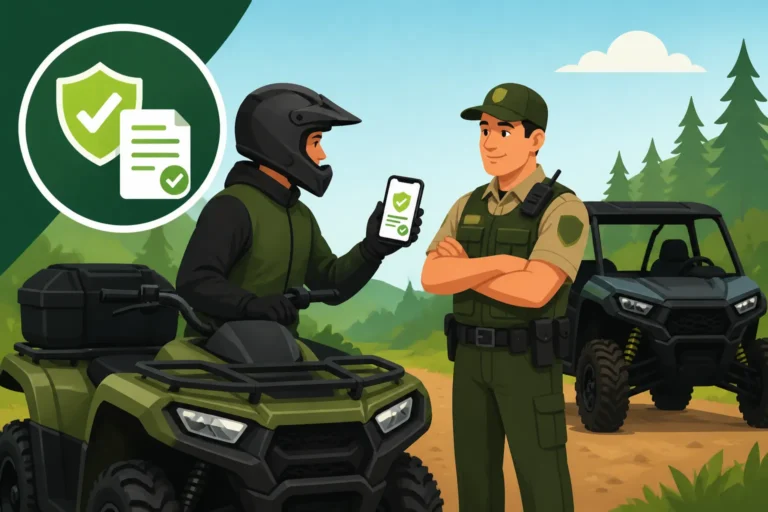
Finally, you must be able to produce proof of this insurance if requested by a peace officer. [Proof Carried on the Machine] is not just a good idea; it's required. Keep a copy of your insurance card or policy in a waterproof bag on the machine. It saves a lot of hassle and potential fines if you're stopped.
Navigating the Nuances: Passengers, Permits, and Responsibilities
Beyond the basic age and equipment rules, there are other crucial details that 16-year-old riders and their families need to understand to ensure safe and compliant riding in Saskatchewan. These cover everything from who can ride with you to environmental awareness.
Carrying Passengers Safely
It's a common scenario: a 16-year-old wants to take a friend for a ride. However, [Saskatchewan Passengers Only on Designed Machines] is a strict rule that many young riders overlook. Your ATV or UTV must be specifically designed by the manufacturer to carry a passenger for one to be legally allowed. This means it needs a designated seat, footrests, and handholds for the passenger. A single-rider quad is never designed to carry two people, even if it seems like there's enough room.
Riding double on a single-rider machine is incredibly dangerous. It throws off the machine's balance, makes steering and braking more difficult, and significantly increases the risk of a rollover or ejection. For a 16-year-old, who might still be developing their own riding skills, adding the complexity and danger of an unauthorized passenger is a recipe for disaster. The fines for this infraction can be substantial, and more importantly, the risk of serious injury is high. So, if your 16-year-old's machine is a single-rider model, they need to ride solo. If they have a two-up model, the passenger also needs to abide by helmet and eye protection rules.
Understanding Local Bylaws and Wildfire Restrictions
We've touched on this already, but it bears repeating: local rules can significantly impact where and how a 16-year-old can ride. [Saskatchewan Municipalities With ATV Bylaws] are becoming more common as communities grapple with noise, safety, and environmental concerns. It's not enough to know the provincial Act; you must check the specific bylaws for the city, town, or rural municipality you plan to ride in. Some communities have completely prohibited ATV use on any public land within their boundaries, while others have designated specific routes or limited hours of operation. A quick call to the municipal office or a check of their website before you haul your machine is always a good idea.
Beyond local bylaws, environmental conditions can impose temporary, but critical, restrictions. [Saskatchewan Wildfire Season Rules for Riders] are a prime example. During periods of high fire risk, the province or local authorities can issue fire bans or even close Crown land to all ATV use. Operating a machine in these conditions can lead to hefty fines and, more importantly, contribute to devastating wildfires. Spark arrestors on your exhaust are mandatory, and checking for combustible debris in your machine before and during a ride is a legal duty. Teaching a 16-year-old to be aware of fire bans and to ride responsibly in dry conditions instills crucial environmental stewardship. It's a habit that every rider, regardless of age, should adopt.
Legal Consequences and Owner Liability
Lastly, it's vital for both the 16-year-old rider and their parents or the machine's owner to understand the potential legal repercussions of non-compliance. [Saskatchewan Fines Capped at $1,000] are possible for a range of infractions under the All Terrain Vehicles Act, from operating without proper safety gear to riding in prohibited areas. These fines can quickly add up and create a significant financial burden.
Even more significantly, [Saskatchewan Owner Liability Rules] place a heavy responsibility on the owner of the ATV. If the owner permits an underage or otherwise unqualified individual to operate their machine, or if they allow someone to ride without proper insurance or safety gear, they can be held liable for any damages or injuries that result from an accident. This means that if your 16-year-old causes an accident while riding illegally, you, as the owner, could face a lawsuit for significant damages. It’s a powerful incentive to ensure your young rider understands and adheres to all the rules. It's about protecting them, your family, and your assets.
By understanding and adhering to these rules, your 16-year-old can enjoy the thrill of ATV riding in Saskatchewan safely and legally. It takes a bit of homework, but the peace of mind and the joy of responsible riding are well worth it.
| Requirement/Condition for 16-Year-Old Rider | Public Roads/Ditches (Off-Road Portion) | Private Land (With Permission) | Designated Trail (e.g., Provincial Park) |
|---|---|---|---|
| Minimum Age | 16 years old | Any age (owner's discretion) | Usually 16 (check specific rules) |
| Driver's Licence | Mandatory (Class 7 learner's or higher) | Not required | Not required (check park/club rules) |
| 365-Day Supervisor Rule | Required if licence held < 365 days | Not required | Not required (check park/club rules) |
| Approved Safety Course | Recommended (not mandatory at 16) | Recommended | Recommended (can replace supervisor for 12-15 y.o. for some uses) |
| Mandatory Helmet & Eye Protection | Yes | Highly Recommended (often required by owner/family) | Yes |
| Minimum Liability Insurance | Mandatory ($200,000) | Recommended | Usually Mandatory (check park/club rules) |
| Proof of Insurance Carried | Yes | Not required | Yes (if insurance mandatory) |
| Machine Designed for Passengers | If carrying a passenger | If carrying a passenger | If carrying a passenger |
| Local Bylaws Check | Essential | Not applicable | Check park/club rules, access to trail |
| Wildfire Restrictions Check | Essential | Highly Recommended | Essential |
Disclaimer
This article is for general informational purposes only and does not constitute professional advice. Laws, prices and regulations vary by location and change over time. Consult a qualified professional for guidance on your specific situation.