Saskatchewan Insurance Shown to a Park Officer
Imagine you're finally out there, machine humming, sun shining, ready to explore the incredible landscapes of a Saskatchewan Provincial Park. You've packed your gear, fuelled up, and maybe even added some rugged SuperATV accessories to your rig for the tough trails. But then, a park officer asks to see your proof of insurance, and suddenly, that wave of excitement turns into a knot of anxiety. This guide is here to walk you through exactly why and how you need to prove your ATV or UTV is insured when riding on designated trails in Saskatchewan's parks, helping you avoid those stressful moments and keep your adventure rolling.
Why Proof of Insurance Matters in Saskatchewan Parks
It can be a common misconception that because ATVs and UTVs aren't provincially registered in Saskatchewan, there are fewer rules to follow. While it's true that we don't have the same registration system as some other provinces, that absolutely does not mean you're free from all regulations – especially when it comes to insurance, and especially when you're venturing onto public lands like our beautiful provincial parks.
It's Not Just a Suggestion, It's the Law
The province's All Terrain Vehicles Act is very clear: if you're operating your ATV or UTV on land other than your own private property, you are required to carry a minimum amount of third-party liability insurance. This isn't just a friendly suggestion; it's a legal obligation that applies to everyone, whether you're a seasoned local or a visitor from out of province. Our provincial parks, with their designated trails and shared spaces, definitely fall under the umbrella of "land other than your own private property." Thinking that because there's no plate or sticker required means no other rules apply can lead to a quick end to your day out. The fact is, the absence of a provincial registration system puts an even greater emphasis on the individual rider to ensure they are properly insured.
Many riders, especially those new to the province or new to the sport, are genuinely surprised by this. They often hear about how [Saskatchewan Does Not Register ATVs] and assume that means a free-for-all when it comes to paperwork. However, the Act was put in place to ensure a baseline of safety and responsibility for all riders. When you're out enjoying the wild beauty of places like Moose Mountain Provincial Park or Narrow Hills, you're sharing those spaces, and the law aims to protect everyone involved, including yourself. A park officer is simply upholding that law to keep our shared outdoor spaces safe and enjoyable.
Protecting Yourself and Others
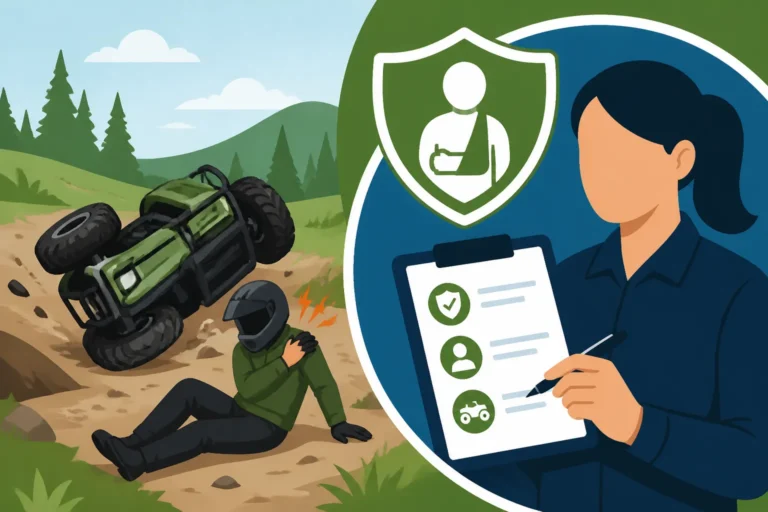
Beyond the legal requirement, having adequate ATV insurance is simply a smart move for your own peace of mind and financial security. Accidents, unfortunately, can and do happen. Even the most careful and experienced rider can encounter an unexpected obstacle, a sudden change in terrain, or an unforeseen mechanical issue that leads to an incident. If that incident involves damage to park property, injury to another person, or damage to another vehicle, the costs can escalate quickly.
Without third-party liability insurance, you would be personally responsible for all those expenses. Imagine a scenario where you accidentally veer off a designated trail, damage a culvert, or collide with another park user. A simple mistake could lead to tens or even hundreds of thousands of dollars in medical bills or repair costs. This isn't just about covering your machine; it's about protecting your entire financial future. When you're insured, you have a critical safety net that allows you to enjoy your ride without the constant worry of potential financial ruin hanging over your head. It’s a small investment for substantial protection.
The Park's Perspective
From a park officer's point of view, verifying insurance is a crucial part of maintaining safety and order within our provincial parks. These officers are responsible for ensuring that all users adhere to park regulations, which include adhering to provincial laws like the All Terrain Vehicles Act. When they ask to see your insurance, they're not trying to be difficult; they're performing their duties to ensure a safe environment for everyone enjoying the park. This helps protect the park's infrastructure, its natural environment, and all its visitors.
Parks are public spaces, often managed with limited resources, and any incident involving an uninsured ATV can become a significant liability and administrative burden for them. By checking for valid insurance, officers help mitigate these risks. It's also a way to ensure that only responsible riders are using the designated trails, contributing to a more pleasant experience for everyone. They want you to have fun, but they also need to know that if something goes wrong, the proper protections are in place. This helps them manage incidents effectively and ensures that park operations can continue smoothly for future enjoyment.
What Kind of Insurance Do You Need for Park Riding?
Understanding the different types of insurance available for your ATV or UTV is key to making sure you're properly covered. It's not just about having any insurance; it's about having the right kind and adequate limits to protect you, your machine, and others.
The Bare Minimum: Third-Party Liability
As mentioned, Saskatchewan law mandates a minimum amount of third-party liability insurance when operating an ATV or UTV on public land, including provincial parks. This is typically set at $200,000. What does "third-party liability" actually mean? Simply put, it covers damages or injuries you might cause to another person or their property while operating your machine. It does not cover damage to your own ATV or UTV.
Think of it this way: if you're riding through Moose Mountain Provincial Park and, despite your best efforts, you accidentally cause an accident that injures another rider or damages their side-by-side, your third-party liability insurance would step in to cover those costs (up to your policy limit). It's the most fundamental level of protection required because it addresses your responsibility to others. Without this, you're personally on the hook for any claims against you. This is why [Saskatchewan Insurance Requirements for Riders] is a critical piece of knowledge for anyone hitting the trails.
Beyond the Minimum: Comprehensive and Collision
While third-party liability covers the other guy, many riders choose to invest in additional coverage for their own machine. This usually comes in two main forms:
- Collision Coverage: This pays for damages to your ATV or UTV resulting from a collision with another object or vehicle, or from rolling over. Given the rugged nature of some Saskatchewan trails, a rollover or a collision with a tree is a real possibility. If you've invested in a brand-new side-by-side or a well-equipped quad, like one tricked out with SuperATV suspension upgrades, this coverage can be invaluable to protect that investment.
- Comprehensive Coverage: This protects your machine from damages not caused by a collision. This can include theft, fire, vandalism, falling objects, or even encounters with wildlife. Theft, unfortunately, is a concern for ATV owners, and a fire could start from a mechanical issue or even a nearby wildfire, especially during our dry seasons.
Deciding whether to add these coverages often comes down to the value of your machine, your risk tolerance, and your budget. For many, the peace of mind knowing that their pride and joy is protected from a variety of mishaps is well worth the extra cost. It's also worth noting that if you're financing your ATV or UTV, your lender will almost certainly require you to carry comprehensive and collision coverage until the loan is paid off. You can learn more about specific costs in [Saskatchewan ATV Insurance Costs].
How to Get Your ATV Insured
Getting your ATV or UTV insured in Saskatchewan is relatively straightforward, even without a provincial registration system. Most major insurance providers in the province offer policies tailored for off-road vehicles. You generally have a couple of options:
- Adding to an existing home or auto policy: Some insurers will allow you to add your ATV as an endorsement or rider to an existing policy. This can sometimes be a convenient and cost-effective option, especially if you have a good relationship with your current broker. However, it's crucial to confirm that the coverage extends to public land use, including provincial parks, as some home policies might have restrictions.
- Standalone ATV/UTV policy: Many riders opt for a dedicated ATV insurance policy. These policies are specifically designed for off-road vehicles and often offer more comprehensive coverage options, including liability, collision, comprehensive, and even specific coverage for aftermarket accessories or riding gear. Working with an insurance broker who specializes in recreational vehicles can be incredibly helpful here, as they can shop around for the best rates and ensure you have the right coverage for your specific needs. They understand the nuances of things like [Saskatchewan Insurance Through a Broker].
When you're obtaining your insurance, be prepared to provide details about your machine (make, model, VIN/serial number), how you use it (recreational, farm use, etc.), and where it will primarily be stored. Don't be shy about asking questions to ensure you fully understand your policy and what it covers, especially regarding riding in provincial parks and on Crown land.
How to Provide Proof to a Park Officer
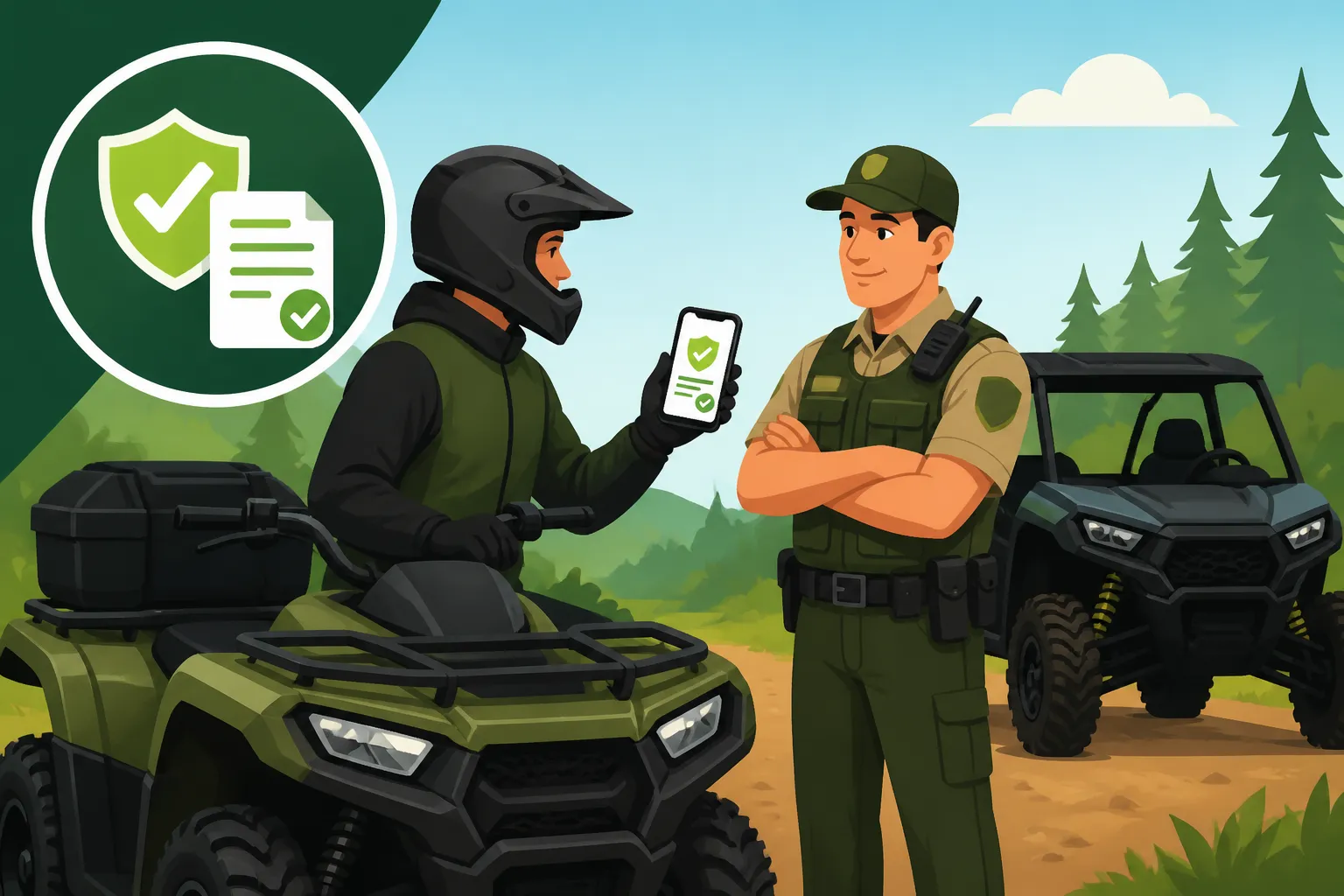
Having insurance is one thing, but being able to quickly and clearly demonstrate that you have it when asked is another. A park officer isn't going to take your word for it, nor should they. You need tangible proof that can be easily verified.
Physical Proof You Can Carry
The most common and universally accepted form of insurance proof is a physical document. This typically includes your insurance card (often referred to as a "pink slip" in Canada, even if it's not actually pink anymore!), your policy declaration page, or a copy of your full policy. Here’s what to consider:
- Insurance Card: This small card usually contains the most critical information: your name, policy number, vehicle description (make, model, VIN), coverage effective dates, and the name of your insurance provider. It's designed to be portable and is generally what officers expect to see first. Keep it laminated or in a waterproof pouch to protect it from the elements, as it's likely to get wet or dirty out on the trails.
- Policy Declaration Page: This is a more detailed document that outlines all the specifics of your coverage, including your liability limits, deductibles, and any additional coverages you've purchased. While a bit bulkier than a card, it provides a comprehensive overview that leaves no room for doubt. Carrying a copy, perhaps folded in a zip-lock bag, is a good backup.
- Full Policy Documents: While not practical to carry the entire policy booklet, having a printed copy of the key pages—especially the liability section and declarations—can be helpful in rare circumstances where an officer needs more detail.
No matter which physical proof you choose, ensure it's up-to-date and clearly legible. An expired card or a water-damaged document that's impossible to read won't cut it. You want to make the officer's job as easy as possible. This is part of [Carrying Papers on a Grid Road] and similar public access areas.
Digital Proof and Its Limitations
With the rise of smartphones, many provinces now accept digital proof of insurance displayed on a mobile device. While this can be convenient, it comes with some important caveats when you're out in a provincial park:
- Reliable Cell Service: Many of Saskatchewan's beautiful provincial parks, especially those in more remote areas like parts of Narrow Hills Provincial Park, have spotty or non-existent cell service. If you can't load your digital insurance card, it's effectively useless.
- Battery Life: A dead phone battery means no proof. You're out riding all day, possibly using your phone for navigation or photos, and battery drain is a real concern.
- Screen Damage/Visibility: A cracked screen or glare from the sun can make your digital card difficult to read, frustrating both you and the officer.
Given these limitations, it's always, always recommended to have a physical backup, even if your insurance provider offers a digital option. Think of digital proof as a convenience when it works, but not a replacement for a solid, waterproofed physical copy when you're deep in the bush. You don't want your adventure cut short because technology decided to take a break.
What an Officer Looks For
When a park officer examines your proof of insurance, they're typically looking for several key pieces of information to confirm that you are legally covered. Understanding what they're checking for can help you quickly present the right information:
- Your Name: They'll verify that the name on the insurance document matches your identification (driver's license).
- Policy Number: This unique identifier confirms the policy's existence.
- Vehicle Description: The make, model, and especially the Vehicle Identification Number (VIN) or serial number on your insurance must match your ATV or UTV. This ensures the policy is specifically for the machine you are operating.
- Effective Dates: The officer will check that your policy is current and has not expired. Both the start and end dates of the coverage will be reviewed.
- Coverage Limits: They'll confirm that you meet or exceed the minimum $200,000 third-party liability requirement mandated by the All Terrain Vehicles Act.
- Insurance Provider: The name of the insurance company will be noted.
Being prepared with this information readily available will make the interaction quick and smooth, allowing you to get back to enjoying the trails. If you've got your documents neatly organized and perhaps even a copy of your [Saskatchewan Park Use Acknowledgement Forms] for certain parks, you'll sail through any checks.
Consequences of Not Having or Showing Proof
It's one thing to know the rules, and another to understand the repercussions if you don't follow them. Operating an ATV or UTV in a Saskatchewan Provincial Park without valid insurance, or being unable to produce proof when asked, can lead to some significant and unpleasant consequences.
Fines and Penalties
The most immediate consequence of operating an ATV without the required insurance is a fine. Under Saskatchewan's All Terrain Vehicles Act, individuals found operating a machine without the minimum liability coverage can face substantial penalties. These fines are designed to deter uninsured operation and reinforce the importance of responsible riding. They aren't trivial fees; they can quickly turn a fun day out into a very expensive lesson, costing you hundreds of dollars.
Beyond the initial fine, there can be other administrative fees and surcharges, making the total cost even higher. It's a penalty that far outweighs the annual cost of an insurance policy. Furthermore, if you're involved in an accident while uninsured, the legal ramifications can escalate, potentially leading to court appearances and even higher judgments against you if you're found liable for damages or injuries. This makes the point that [Saskatchewan Fines Capped at $1,000] for general infractions can become much higher when specific insurance offences are considered within a broader legal context.
Machine Seizure and Impoundment
Perhaps one of the most severe and disruptive consequences for uninsured operation is the potential for your ATV or UTV to be seized and impounded by authorities, including park officers. If you cannot produce valid proof of insurance, the officer has the authority to remove your machine from the park and have it transported to an impound lot. This isn't just an inconvenience; it can be a major headache and a significant financial burden.
Getting your machine back from impoundment involves paying not only the initial fine but also towing fees, daily storage fees at the impound lot, and any administrative release fees. These costs can quickly add up, often exceeding the cost of the original fine and sometimes even approaching the value of older machines. Plus, you'll need to arrange for transportation to retrieve your ATV, which might involve a long drive and finding a suitable vehicle and trailer. The rules around this are serious, as detailed in [Saskatchewan Seizure and Impoundment Rules]. It's a situation no rider ever wants to find themselves in.
Exclusion from Park Areas
Even if your machine isn't immediately seized, an officer can certainly deny you access to park trails or require you to immediately remove your ATV from the park if you cannot provide proof of insurance. This means your riding day is effectively over before it even really began. You'll be asked to load up your machine and leave, likely with a ticket in hand. This also extends to other specific park rules, for example, [Saskatchewan Free Permits at Moose Mountain] might require proof of insurance as part of their terms for trail use.
This can be incredibly frustrating, especially if you've driven a long distance to reach the park, planned a day with friends or family, and have been looking forward to hitting the trails. The disappointment of being turned away, knowing it could have been easily avoided with a valid insurance card, can really sour the entire experience. Park officers are not being arbitrary; they are enforcing a fundamental safety and liability requirement. To avoid this kind of instant disappointment, always double-check your documents before heading out.
Here's a quick summary of the key insurance requirements for ATV/UTV riding in Saskatchewan parks:
| Aspect | Requirement | Notes |
|---|---|---|
| Legal Obligation | Required by The All Terrain Vehicles Act | Applies on all public lands, including provincial parks. |
| Minimum Coverage | $200,000 Third-Party Liability | Covers damages/injuries you cause to others or their property. Does NOT cover your own machine. |
| Additional Coverage | Comprehensive & Collision (Recommended) | Covers damage to your own ATV (theft, fire, rollover, collision). Often required by lenders. |
| Proof Required | Valid insurance card, policy declaration, or digital | Must be current, legible, and for the specific machine you are operating. |
| Best Practice for Proof | Physical copy in waterproof pouch + digital backup | Physical avoids cell service/battery issues; digital offers convenience. |
| Consequences of Non-Compliance | Fines, machine seizure/impoundment, exclusion from park | Significant financial penalties and disruption to your riding plans. Avoid at all costs. |
Disclaimer
This article is for general informational purposes only and does not constitute professional advice. Laws, prices and regulations vary by location and change over time. Consult a qualified professional for guidance on your specific situation.