Why Crown Land Orders Stop at a Frozen Lake
It can feel incredibly confusing when you're trying to figure out where you can legally and safely ride your ATV or UTV in Saskatchewan, especially when the landscape changes so drastically with the seasons. Just when you think you've got a handle on Crown land rules, winter arrives, and suddenly those wide-open frozen lakes and rivers seem like fair game, even when the dry land beside them is under strict prohibition. This guide is here to unravel that mystery, explaining why provincial Crown land orders often don't apply to frozen water bodies and what that means for your winter riding adventures.
Understanding Crown Land Restrictions for ATVs in Saskatchewan
Before we dive into the icy exception, let's ground ourselves in the general principles of Crown land access for ATVs and UTVs in Saskatchewan. It's a topic that brings a lot of frustration, as rules can seem arbitrary or overly complex.
The General Rule: Why Crown Land is Often Restricted
For many riders, the idea of vast, open Crown land conjures images of unrestricted freedom. However, the reality on the ground is often far different. Much of Saskatchewan's Crown land is managed for a variety of purposes: timber production, wildlife habitat, ecological preservation, and even grazing leases for ranchers. To protect these resources, prevent environmental damage, and ensure public safety, provincial ministries or specific administrators often issue orders under regulations like the [Saskatchewan Crown Land Prohibition Regulations]. These orders can restrict or entirely prohibit the use of off-road vehicles like ATVs and UTVs in designated areas.
The rationale behind these restrictions is usually multi-faceted. On dry land, ATVs can cause significant soil erosion, damage sensitive vegetation, disrupt wildlife, and contribute to the spread of invasive species. These machines, while incredibly useful for work and recreation, can leave a lasting footprint. So, when you see a sign or read an order prohibiting ATV use on a particular piece of Crown land, it's typically aimed at safeguarding these vulnerable ecosystems or managing the land for its intended purpose. It's not about making things difficult for riders; it's about balancing access with responsibility and conservation.
Types of Crown Land and Varying Rules
Adding another layer of complexity is the sheer diversity of Crown land types across Saskatchewan, and each can come with its own set of regulations. For instance, the rules for riding on a remote forest management area might differ dramatically from those governing a provincial park or an ecological reserve. What's allowed on a grazing lease, where a rancher might have specific agreements for land use, will certainly be different from an area designated for sensitive plant life.
Provincial parks, for example, often have highly restrictive rules, generally limiting ATV use to designated trails only, if at all, to protect their natural integrity and visitor experience. You can find more specific details on this in [Saskatchewan Provincial Park Machine Rules]. On the other hand, a grazing lease might require you to obtain explicit permission from the leaseholder before you can cross their land, even if it's technically Crown land. This is covered in more detail when discussing [Saskatchewan Grazing Lease Permission]. It's a patchwork quilt of regulations, and understanding what kind of Crown land you're on is the first crucial step to knowing if you're riding legally. Many riders get caught out simply because they assume all Crown land operates under the same universal policy, which is rarely the case.
The Unique Nature of Frozen Lakes and Rivers
Here's where the plot thickens and the distinction that often puzzles riders comes into play. When those vast expanses of water freeze solid, the rules, quite literally, shift.
The Legal Distinction: Water vs. Land
The core reason why Crown land orders often don't apply to frozen lakes and rivers comes down to a fundamental legal distinction: they're not classified as "land" in the same way as dry ground. When a lake or river freezes over, the surface effectively becomes a temporary extension of usable space, often referred to as a "frozen water body" or "ice surface" under various acts and regulations. The [Saskatchewan Winter Water Body Exception] is a critical piece of legislation that specifically addresses this.
Think of it this way: the primary environmental concerns that lead to ATV prohibitions on dry land – soil erosion, vegetation damage, habitat disruption – are largely mitigated when you're riding on a thick layer of ice and snow. You're not tearing up topsoil or crushing plants; you're on a temporary, ephemeral surface. The legal framework recognizes this difference, providing an exception for these frozen surfaces. This doesn't mean it's a free-for-all, but it does mean that the specific prohibitions applied to the land immediately surrounding the water body often do not extend onto its frozen surface. This distinction is vital for those who rely on frozen waterways for access, recreation, and even traditional activities in the colder months.
Why the Exception Exists: Practicality and Historical Use
The rationale for this winter exception is deeply rooted in both practicality and historical use in a province like Saskatchewan. For generations, frozen lakes and rivers have served as vital transportation corridors, especially in the province's northern regions where road infrastructure can be sparse. Ice roads connect remote communities, trappers use frozen waterways to access their lines, and ice fishing is a deeply ingrained part of winter culture.
Imagine trying to navigate vast snow-covered landscapes in winter without the ability to cross frozen bodies of water. It would severely restrict access for hunting, fishing, trapping, and even emergency services. The rules reflect this long-standing tradition of winter travel and recreation. While an ATV might tear up a sensitive marsh in the summer, navigating a frozen lake in January is a very different proposition. The ground (or rather, the water) is simply too hard for a machine to do the same kind of damage. This isn't to say there are no impacts, but they are generally understood to be different and less severe than those on unfrozen land.
Important Considerations and Responsibilities on Frozen Water
Just because you can ride on a frozen lake doesn't mean you can throw caution to the wind. There are still immense responsibilities and safety considerations that every rider must heed.
Safety First: Beyond the Legal Aspect
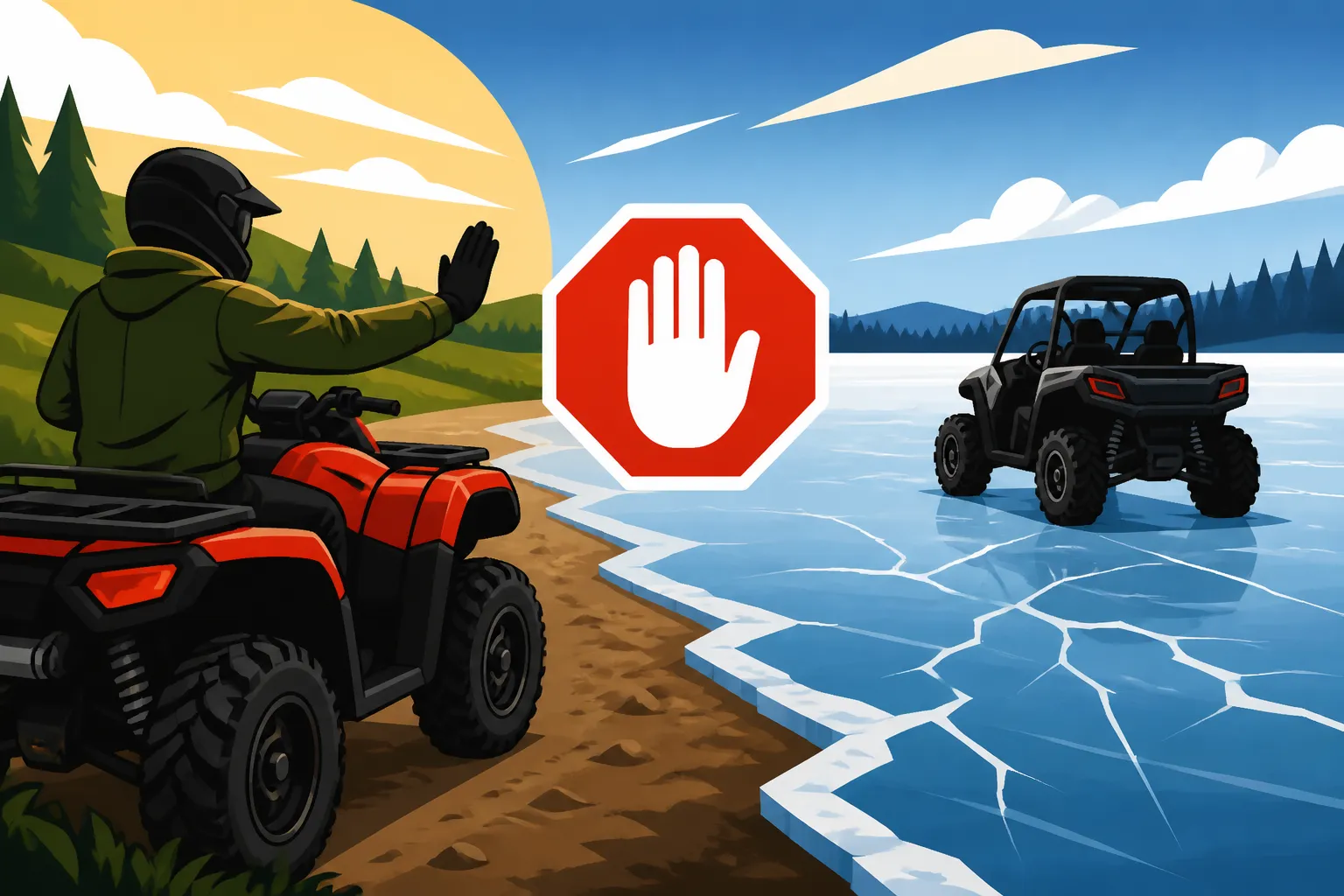
The biggest misconception about the frozen water body exception is that it somehow implies safety. It absolutely does not. While legally permissible, riding on frozen lakes and rivers is inherently risky, and it demands the utmost respect for nature's power. Ice thickness, open water cracks, currents beneath the ice, recent snowfalls obscuring hazards, and pressure ridges are all potential killers. A legal green light from provincial regulations means nothing if the ice isn't safe.
Every winter, we hear heartbreaking stories of riders, snowmobilers, and even vehicles breaking through the ice. Always check ice conditions, tell someone where you're going, and consider riding with a buddy. Equip your machine with essentials like ice picks (worn on your body, not in a cargo box), a throw rope, and a survival kit. Even the most robust UTVs, perhaps outfitted with heavy-duty accessories from SuperATV, are no match for weak ice. Safety should always be your number one priority, far above any legal permission.
Environmental Stewardship on Frozen Surfaces
While the risk of soil erosion and vegetation damage is minimal on a frozen lake, environmental stewardship remains crucial. Oil and fuel spills, even small ones, can have detrimental effects on the water quality when the ice melts. Litter and garbage left on the ice will eventually sink or wash up on shorelines, polluting the environment. Noise pollution from machines can also disturb wildlife that might be overwintering nearby.
Responsible riders ensure their machines are well-maintained to prevent leaks and spills. They carry out everything they bring in, leaving no trace. Furthermore, even if you're riding on ice, consider the impact on any aquatic life below or the sensitive shorelines you might access. Adhering to guidelines like [Saskatchewan Spark Arrestor Guidance] for your exhaust system isn't just about fire prevention on dry land; it’s about overall environmental responsibility wherever you ride. The goal is to enjoy these incredible winter landscapes without compromising their health for future generations.
Local Bylaws and Other Restrictions
Here's another important caveat that can catch riders off guard: while provincial Crown land orders might step back from frozen water bodies, local authorities, such as rural municipalities or villages, can still have their own bylaws in place. A specific lake or river might fall within the municipal boundaries of a town, and that town's council might have enacted bylaws restricting or prohibiting ATV access on specific parts of the frozen water, perhaps near residential areas, public access points, or ecologically sensitive zones.
This means you can't just assume that because it's frozen, it's open season everywhere. It's critical to check with the local rural municipality or village office before heading out, especially if you're in a developed recreational area. The list of [Saskatchewan Municipalities With ATV Bylaws] is a good starting point for your research. For example, a popular resort village might have specific speed limits or restricted zones on the ice for safety, even if the provincial government allows general access. Always verify local rules in addition to provincial ones.
Here's a quick comparison of rules you might encounter:
| Aspect | Typical Dry Crown Land Rules | Typical Frozen Water Body Rules |
|---|---|---|
| Provincial Orders | Often include specific prohibitions or restricted access zones for ATVs. | Generally do not apply to the frozen surface, allowing more access. |
| Environmental Impact | High risk of soil erosion, vegetation damage, habitat disruption. | Low risk of direct surface damage; focus shifts to spills, noise. |
| Local Bylaws | Can further restrict or open areas; vary by municipality. | Can still restrict access, speed, or zones; vary by municipality. |
| Safety Concerns | Collisions, terrain hazards, wilderness navigation. | Ice thickness, open water, hypothermia, getting stranded. |
| Insurance | Required for liability. [Saskatchewan Insurance Requirements for Riders] apply. | Still required for liability. |
| Spark Arrestor | Generally required (fire prevention). | Still recommended (environmental responsibility, fire hazard if dry nearby). |
| Permits | May be required for specific parks/areas. | Typically not required for just the frozen surface, but check local rules. |
Navigating the Rules: What Every Rider Needs to Know
Understanding the nuances of Crown land and frozen water bodies is paramount for any responsible ATV or UTV owner in Saskatchewan. Don't let the complexity deter you; empower yourself with knowledge.
Confirming Current Conditions and Regulations
The biggest takeaway here is the importance of doing your homework before you load up your machine and head out. Regulations, particularly those related to environmental conditions like fire bans, can change quickly. What was open last week might be closed today due to extreme fire risk, even if you're just looking to access a frozen lake. Checking [Saskatchewan Fire Ban Lookups] is just one example of the dynamic information you need to stay on top of.
Always consult the official sources for the area you plan to ride. This might mean checking the website for Saskatchewan's Ministry of Environment, contacting a local park office, or calling the rural municipality where the water body is located. Don't rely solely on word-of-mouth or outdated information. By taking a few moments to confirm current rules and conditions, you not only ensure you're riding legally but also avoid potential fines and contribute to the overall safety and sustainability of our shared outdoor spaces. It's part of being a good steward of the land and respecting [Saskatchewan Crown Land Access Rules].
Essential Gear for Winter Riding on Ice
When venturing onto frozen water bodies, your gear list needs to be far more extensive than a typical summer ride. Beyond your standard helmet and protective clothing, specialized winter and ice safety gear is non-negotiable.
First and foremost, invest in proper ice safety equipment: ice picks that you can easily access on your person, a robust throw rope, and a well-stocked survival kit that includes warmth, fire-starting tools, and communication devices. Consider specialized ice-riding tires or even tracks if you plan on significant winter use, as traction on glare ice or deep snow can be challenging. A reliable winch, perhaps a heavy-duty model from SuperATV, can be a lifesaver if you get stuck in deep snow, slush, or need to pull someone else to safety.
Warm, layered clothing is essential to prevent hypothermia, as even a minor breakdown or getting stuck can expose you to extreme cold. Good quality gloves, boots, and a full-face helmet designed for cold weather are crucial. Visibility is also key: ensure your machine's lighting is functioning perfectly, and consider adding extra reflective tape or an orange flag, especially during low light or whiteout conditions. These preparations aren't just recommendations; they can genuinely be the difference between a great day out and a dire emergency.
The Role of Insurance and Personal Liability
Even though frozen lakes might offer a reprieve from some Crown land restrictions, one responsibility remains constant: insurance. The [Saskatchewan Insurance Requirements for Riders] do not magically disappear when you're on ice. You are still legally required to carry appropriate liability insurance for your ATV or UTV. This coverage is absolutely critical, as accidents can and do happen on frozen surfaces, just as they do on dry land.
Imagine a scenario where you're riding on a frozen lake, and due to unforeseen ice conditions, you break through, causing damage to someone else's property (perhaps a permanent ice fishing shack) or, worse, causing injury to another person. Without adequate insurance, you could be facing substantial personal liability. While the Act might grant you access, it doesn't absolve you of the consequences of your actions or unforeseen events. Always have proof of your insurance coverage readily available, as an officer may still ask to see it, especially in a provincial park or other regulated area. Knowing you're covered provides peace of mind, allowing you to focus on the joy of riding, rather than worrying about potential financial ruin. Carrying [Saskatchewan Insurance Proof on the Trail] is just smart riding.
Disclaimer
This article is for general informational purposes only and does not constitute professional advice. Laws, prices and regulations vary by location and change over time. Consult a qualified professional for guidance on your specific situation.