Saskatchewan Rules for Crossing a Highway
It can feel incredibly confusing and, let's be honest, a little nerve-wracking trying to figure out the exact rules for crossing a highway with your ATV or UTV here in Saskatchewan. You're out enjoying the trails or heading to a work site, hit a paved road, and suddenly you're wondering if you're doing everything by the book. This guide is here to walk you through the precise regulations for highway crossings, ensuring you stay safe and avoid any unnecessary fines.
Why Crossing a Highway Feels Complicated in Saskatchewan
Let's face it, navigating the rules for off-road vehicles on or near public roads in Saskatchewan can feel like trying to solve a puzzle with half the pieces missing. One minute you're zipping across open fields or cruising down a grid road, and the next you're faced with the daunting prospect of a provincial highway. It’s not just about common sense; there are specific legal requirements that many riders aren't aware of, or perhaps they've heard conflicting information. The fear of doing something wrong, getting a ticket, or worse, causing an accident, is a legitimate concern for many of us.
Part of the confusion stems from the very nature of Saskatchewan's landscape and the diverse ways people use their ATVs and UTVs. For some, it's about connecting sections of a trail system, while for others, it's a necessary part of getting from one section of their farm or lease land to another. Highways aren't designed with ATVs in mind, and the speed and volume of traffic present a stark contrast to the quiet gravel roads or bush trails we usually ride. Without clear, accessible information, it's easy to second-guess yourself, leading to hesitation that can be dangerous in itself. We want to enjoy our machines, not constantly worry about the letter of the law.
Adding to this complexity is the provincial approach to ATV regulation. Unlike snowmobiles, which have a provincial registration system, ATVs in Saskatchewan do not have a province-wide registration or plate system. This can sometimes lead to a perception that the rules are less stringent, or perhaps less clearly defined, which isn't the case when it comes to road safety. The provincial government, through [Saskatchewan's All Terrain Vehicles Act], has laid out specific guidelines to protect both ATV operators and other road users. Understanding these nuances is key to safe and legal operation.
The Letter of the Law: What the Act Says About Highway Crossings
When it comes to highway crossings, Saskatchewan's All Terrain Vehicles Act is quite explicit. It's not a suggestion; these are mandatory requirements designed for your safety and the safety of others. Many riders might know some of these rules instinctively, but understanding the precise wording and intent behind each one is vital. Ignoring these can lead to serious consequences, from fines to accidents.
The Act really focuses on minimizing the time an ATV or UTV spends on the paved portion of a highway, and it mandates specific actions to ensure maximum awareness and caution during these brief, but high-risk, moments. Think of it as a series of checks and balances that you, as the operator, are legally bound to perform every single time you encounter a highway you need to cross.
Coming to a Full Stop Before You Cross
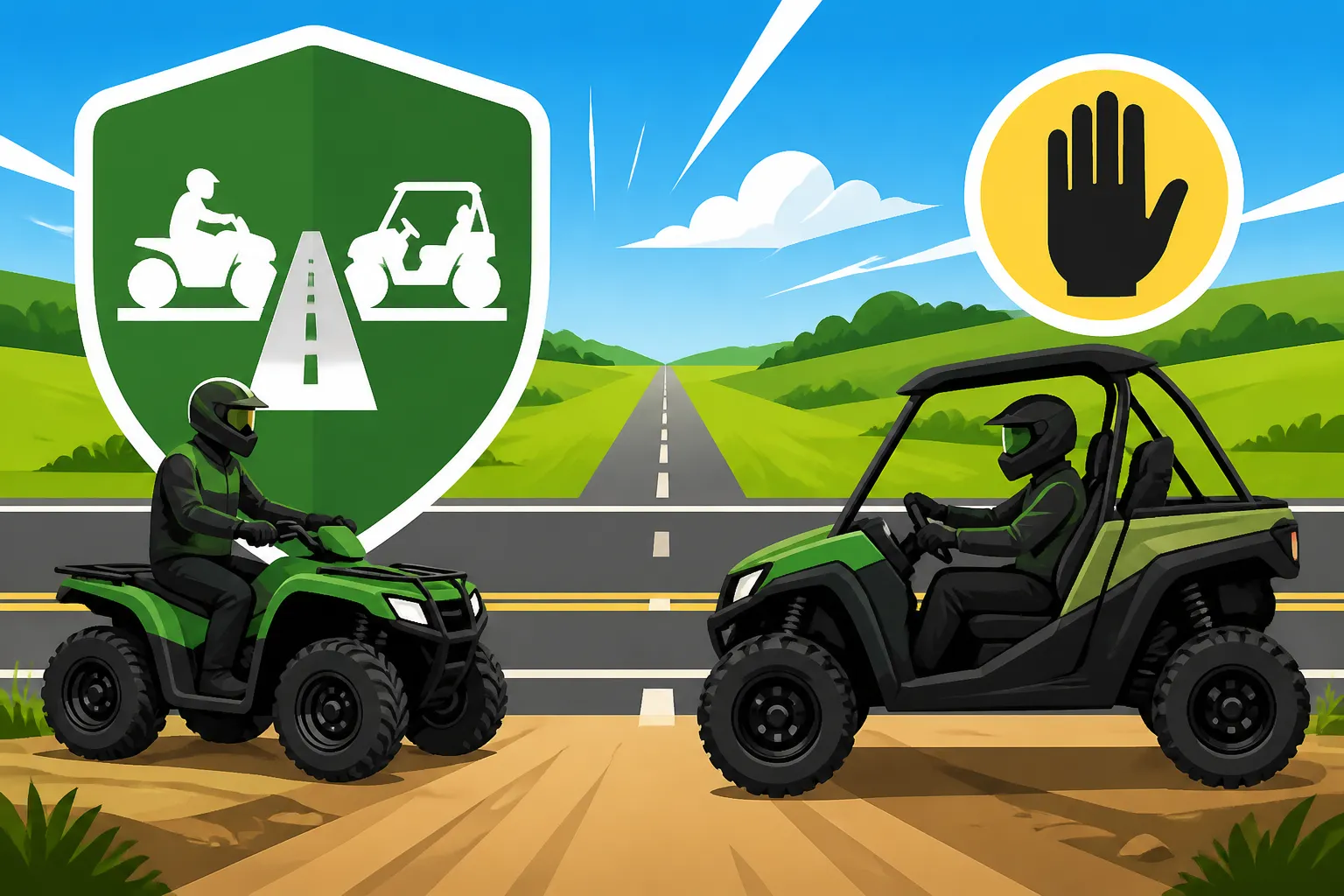
This isn't just a courtesy; it's a legal requirement. Section 23(1)(a) of the Act states that an operator must bring the all terrain vehicle to a full stop immediately before entering a provincial highway. This means your machine should be stationary, completely halted, before any part of it encroaches onto the highway's travelled surface. This full stop allows you, the operator, precious moments to thoroughly scan both directions for oncoming traffic, assess speeds, and calculate if there's a safe window to proceed.
Picture this: you're approaching a busy highway from a gravel access road. The dust might be flying, and you're keen to get across. But rushing this step is where accidents happen. By coming to a complete stop, you are creating a deliberate pause. It’s your chance to take a deep breath, listen, and truly look. Are there any hidden vehicles? Are there semi-trucks approaching at high speed that might not see you? This full stop is your first line of defence, ensuring you don't roll onto the highway without a clear path. It also gives you a moment to mentally prepare for the swift action needed to get across safely.
Everyone Off the Machine to Cross
This rule, found in Section 23(1)(b) of the Act, might surprise some, but it’s unequivocally clear: "the operator and any passenger on the all terrain vehicle shall dismount from the all terrain vehicle and walk it across the provincial highway." This is one of the most critical and often misunderstood regulations. It doesn't matter if you're on a single-rider quad or a large side-by-side with multiple passengers; everyone, including the driver, must get off the machine and push or walk it across.
This rule emphasizes the vulnerability of ATVs and UTVs on high-speed roadways. When you're sitting on your machine, your field of vision might be slightly restricted, and you're not as agile as you are on foot. By dismounting, you're not only more visible, but you're also in a better position to react quickly to unexpected traffic. Imagine pushing your quad across – you have a full, unobstructed view of the road and can quickly pull it back if a vehicle suddenly appears. This also minimizes the risk of someone accidentally hitting the throttle or making an erratic maneuver while crossing, which could be catastrophic on a busy highway. It transforms the act of crossing from a vehicle maneuver into a pedestrian one, putting safety first.
Crossing a Highway by the Shortest Route
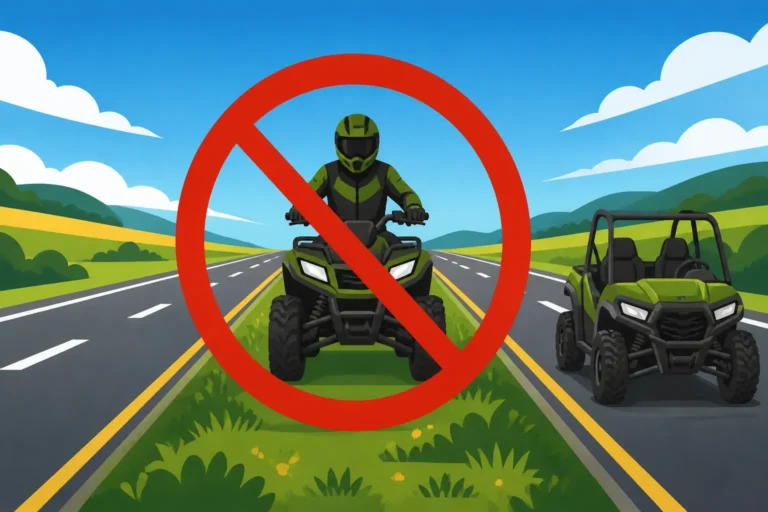
The final major piece of the puzzle, laid out in Section 23(1)(c), is that the all terrain vehicle must be moved "across the provincial highway by the shortest route and in a safe manner." This isn't an invitation to ride parallel to the highway for a better crossing point; it means you should aim for a direct, perpendicular crossing. The goal here is to minimize the amount of time and distance your ATV or UTV spends on the actual paved surface of the highway, reducing your exposure to fast-moving traffic.
Consider the geometry: a direct, 90-degree crossing ensures your machine is in the lanes of traffic for the absolute least amount of time possible. If you were to angle your crossing, you'd be travelling a longer distance within the active traffic lanes, increasing the risk window. This rule works hand-in-hand with the dismounting requirement, as walking the machine across typically encourages a more controlled and direct path. It's all about efficiency of movement – getting from one side to the other with minimal fuss and maximum caution. This rule extends beyond just crossing, for example, if you're using a ditch, the [Saskatchewan Ditch Riding and the 2-Metre Rule] also applies, emphasizing caution near the travelled portion of the highway.
Here's a quick summary of these essential rules:
| Rule Category | Requirement | Why It's Crucial |
|---|---|---|
| Full Stop | Bring the ATV/UTV to a complete halt immediately before entering the highway. | Allows for thorough scanning of traffic, prevents rolling into traffic, provides a moment to assess the situation. |
| Dismount & Walk | Operator and all passengers must get off the machine and walk/push it across the highway. | Increases visibility, enhances operator agility and reaction time, reduces risk of accidental throttle/steering input. |
| Shortest Route | Cross the highway directly, by the most perpendicular path possible. | Minimizes time and distance spent on the travelled portion of the highway, reducing exposure to high-speed traffic. |
Practical Tips for a Safe and Legal Crossing
Knowing the rules is one thing, but actually implementing them safely and efficiently on the ground is another. It requires preparation, focus, and a good dose of caution. There are practical steps you can take to make every highway crossing as safe and stress-free as possible, ensuring you adhere to [Saskatchewan ATV Road Rules Explained] in every detail.
Pre-Ride Checks for Visibility
Before you even leave your yard or staging area, make sure your ATV or UTV is as visible as possible. This is paramount, especially if you anticipate highway crossings. Check all your lights – headlights, taillights, and any auxiliary lighting. Ensure they are clean and functional. For enhanced safety, consider upgrading to brighter LED lights. Products like the robust LED light bars and cubes from SuperATV can dramatically improve your visibility to oncoming traffic, even in daylight hours. Reflective tape on your machine, helmet, and riding gear can also make a significant difference.
Beyond your machine, think about your own attire. Brightly coloured helmets and jackets stand out more than muted tones. While [Saskatchewan Helmet and Eye Protection Rules] primarily focus on protection, choosing high-visibility gear also contributes to safety during crossings. The more easily other motorists can spot you, the better their chances of reacting appropriately. This preparation is critical because once you're at the edge of the highway, your focus needs to be entirely on traffic, not on wondering if your taillight is working.
Choosing Your Crossing Point Wisely
Not all crossing points are created equal. If you have the option, choose a location with excellent sightlines in both directions. Avoid blind hills, sharp curves, or areas where obstructions like dense trees or large signs might obscure your view or the view of oncoming drivers. If you're on a trail system, the designated crossing points are usually the safest. However, if you're forging your own path, try to identify sections of the highway that are relatively straight and flat for a good distance.
Sometimes you're forced to cross where you are. In those cases, you need to be extra vigilant. Even if a spot seems less than ideal, you still must follow the "full stop, dismount, and shortest route" rules without compromise. Think about where vehicles might be merging or turning, as these areas can add another layer of complexity. The more open the area, the better your chances of seeing and being seen, reducing the potential for a dangerous encounter. Remember, just because you can see doesn't mean you will be seen.
Signaling Your Intent Clearly
While the Act doesn't explicitly require hand signals for ATV operators during a highway crossing, it's always a good practice to be as clear as possible with your intentions. If you're riding with a group, communicate your plan to cross before you even approach the highway. When you're dismounted and preparing to walk your machine across, maintain eye contact with any approaching drivers if possible, and even a simple wave can help acknowledge their presence and your intent.
Furthermore, ensure your machine is in good working order for the crossing. This means your brakes are responsive and your steering is precise. Robust suspension and steering components, perhaps upgraded with reliable parts from SuperATV, can ensure your machine handles predictably as you guide it across the pavement. This isn't just about the initial acceleration, but also about being able to stop or adjust quickly if an unexpected situation arises. Carrying [Saskatchewan Insurance Proof on the Trail] is also a good habit, not directly for crossing, but for any interaction with authorities that might occur.
What Happens If You Get It Wrong: Consequences and Prevention
Ignoring the rules for crossing a highway in Saskatchewan isn't just a minor infraction; it can lead to serious consequences, both legal and physical. The provincial government takes road safety very seriously, and the penalties for non-compliance are designed to deter dangerous behaviour.
Legal Penalties and Fines
If a peace officer observes you crossing a highway without adhering to the requirements of the All Terrain Vehicles Act, you can expect to receive a fine. While specific amounts can change, these are not minor tickets. They are meant to act as a significant deterrent. Beyond the immediate financial hit, repeated offences or particularly egregious violations could lead to more severe penalties. Officers also have the authority to conduct [Saskatchewan Equipment Checks by Officers] and issue further tickets if your machine is not up to par.
Consider the hassle alone: receiving a ticket, potentially having to appear in court, and the stress of dealing with legal proceedings. It's a significant disruption to your life, all for the sake of trying to save a few seconds during a crossing. Adhering to the "full stop, dismount, shortest route" rules is a small price to pay for peace of mind and staying on the right side of the law. This is why understanding the [Saskatchewan Fines Capped at $1,000] is so important – violations can be costly.
Risk of Accidents and Injury
Far more critical than any fine is the elevated risk of an accident when highway crossing rules are ignored. Highways are high-speed environments where large vehicles travel quickly. An ATV or UTV, even a side-by-side, is small and less visible compared to cars and trucks. If you roll onto a highway without stopping, or ride across instead of walking, you drastically reduce your reaction time and the reaction time of other drivers. The outcome of a collision between a highway vehicle and an ATV is almost always devastating for the ATV operator and passengers.
These aren't just theoretical risks; they are real dangers that have led to serious injuries and fatalities. The rules are in place not to inconvenience you, but to save lives. Think about the potential for catastrophic injuries, the long-term impacts on your health, and the emotional toll on your family. No shortcut or perceived time-saving measure is worth that risk. When you're out riding, whether it's on [Saskatchewan Crown Land Riding Explained] or just navigating local access points, personal safety has to be your absolute top priority.
How to Prevent Mistakes
The best way to avoid these consequences is simple: understand the rules, internalize them, and follow them every single time. Make it a habit. Practise safe crossings even on less busy roads so that when you encounter a major highway, the procedure is second nature. If you're unsure about a rule, err on the side of caution. Slow down, stop, look, and dismount.
Educate any passengers or fellow riders in your group about these rules, especially if they are less experienced. Leading by example is powerful. Ensure your machine is always well-maintained, with functioning brakes and lights. Installing bright, reliable lighting from a reputable brand like SuperATV can further enhance your visibility. Also, never ride impaired, and always be aware of your surroundings. By integrating these practices into your riding routine, you can significantly reduce the risk of both legal trouble and accidents, ensuring your time on the trails and roads of Saskatchewan remains enjoyable and safe.
Disclaimer
This article is for general informational purposes only and does not constitute professional advice. Laws, prices and regulations vary by location and change over time. Consult a qualified professional for guidance on your specific situation.