Saskatchewan Eye Protection Requirements
Riding an ATV or UTV in Saskatchewan brings a unique blend of exhilaration and necessity – the necessity of staying safe and legal. One of the most common oversights, or frankly, frustrations, for riders is understanding the specific rules around eye protection. It’s not just about comfort; it's a critical safety measure and a legal requirement. This guide will meticulously break down Saskatchewan's eye protection requirements for ATV and UTV operators and passengers, ensuring you know exactly what gear you need before you hit the trails or grid roads.
The Legal Mandate for Eye Protection
It’s easy to think that if you’re out in the wide-open spaces of Saskatchewan, safety gear is just a suggestion. But when it comes to ATVs and UTVs, the province’s All Terrain Vehicles Act is quite clear: eye protection isn't optional, it's mandatory. This isn't just a recommendation from a safety council; it's enshrined in law to protect riders from common hazards like flying debris, dust, insects, and even sun glare that can drastically impair vision.
The Core Requirement in the Act
The All Terrain Vehicles Act of Saskatchewan, a piece of legislation many riders might not even know exists, explicitly addresses the need for protective headwear and eye protection. It's designed to minimize injury in the event of an accident or from the everyday hazards of off-road riding. Specifically, the Act states that an operator, and any passenger, must wear eye protection that meets certain standards. This isn't just about throwing on any old pair of sunglasses; there's a specific expectation for the type of protection needed. Without this clear mandate, riders would be far more susceptible to eye injuries, which can be debilitating and easily preventable. This is a foundational rule, much like understanding [Saskatchewan's All Terrain Vehicles Act] itself, that every rider should commit to memory.
When you're out on the trails, especially in dry conditions or when kicking up dust, your eyes are incredibly vulnerable. A small pebble, a low-hanging branch, or a persistent swarm of mosquitoes can quickly turn a fun ride into a painful emergency. The Act, in its wisdom, aims to mitigate these everyday risks by making eye protection a non-negotiable part of your riding ensemble. It’s a simple piece of gear that has an outsized impact on your safety and ability to react to changing conditions.
Who Needs to Wear Eye Protection
The requirement for eye protection extends to everyone on the ATV or UTV. This means both the operator and any passengers. It's not just the person at the controls who needs to see clearly and be protected; a passenger is equally exposed to the same environmental hazards. Imagine you're riding with a child on a machine designed for two, and they get a bug in their eye, causing them to flinch or grab at the operator. This could easily lead to a loss of control. This is why rules like [Saskatchewan Rules for a Child Passenger] often include these universal safety equipment mandates.
Furthermore, these rules apply regardless of age. While there are specific age requirements for operating ATVs, the eye protection rule is blanket coverage for all occupants. Whether you're a seasoned adult operator or a young passenger enjoying a supervised ride, your eyes need to be covered. There's no exception based on how fast you're going or how short the distance you're travelling might be. If you're on the machine and it's in operation, you need appropriate eye protection.
Specific Exceptions to the Rule
While the general rule is clear, there are some specific scenarios where eye protection, or certain aspects of it, might be treated differently. However, these are quite limited and don't negate the overall spirit of the law. One important distinction relates to a machine's built-in features. For example, if your UTV has a full windshield that provides adequate protection from projectiles and debris, the operator and passengers may not need to wear additional goggles or a face shield, provided the windshield meets certain safety standards. This is where modern UTVs, particularly those with a full cab enclosure, sometimes offer a different dynamic than an open-air ATV.
However, even with a windshield, many experienced riders still opt for additional eye protection, especially if the windshield is open or not fully enclosing. Windshields can get dirty, scratched, or fogged, and having a backup like a good pair of riding glasses or goggles can be a lifesaver. The crucial element is always ensuring unimpeded vision and protection from hazards. Always check the specific wording of the Act or consult local authorities if you have a unique setup, but err on the side of caution. Remember, common sense and safety often go hand-in-hand with legal compliance.
Accepted Types of Eye Protection
So, what exactly counts as "eye protection" under Saskatchewan law? It's more specific than you might think. The Act isn't just looking for anything that covers your eyes; it's looking for gear that provides genuine protection against impacts, wind, and debris. This means your everyday sunglasses likely won't cut it, especially if they aren't shatterproof.
Goggles Designed for Off-Road Use
When most people think of ATV eye protection, they picture a good pair of goggles. And for good reason – purpose-built off-road goggles are often the gold standard. They offer a secure fit, wrap around your face to prevent dust and debris from entering from the sides, and are designed to integrate seamlessly with an off-road helmet. These goggles typically feature shatterproof lenses, robust frames, and adjustable straps for a snug, comfortable fit.
The key here is "designed for off-road use." This implies a certain level of durability and impact resistance. Cheap plastic lenses found in novelty glasses won't offer the necessary protection if you hit a low-hanging branch or a rock gets kicked up by a tire. Quality goggles from brands known for powersports accessories, like those from SuperATV, often feature advanced lens technologies, anti-fog coatings, and ample ventilation, all of which contribute to both safety and rider comfort. When selecting goggles, make sure they fit snugly against your face, don't obstruct your peripheral vision, and can withstand the rigours of the trail.
Visors and Face Shields
Many off-road helmets come equipped with a integrated face shield or visor, and these can absolutely qualify as adequate eye protection under the Act. A full face shield offers comprehensive protection for your entire face, not just your eyes, which is an added bonus. However, just like goggles, these shields must be made from shatterproof material to be effective. They also need to be kept clean and free from scratches that could impair vision.
When using a helmet with a face shield, ensure it can be securely fastened in the down position while riding. A shield that flaps open with every bump won't provide consistent protection. Some riders prefer open-face helmets with separate goggles, while others appreciate the convenience and coverage of a full-face helmet with an integrated shield. Both are generally acceptable, provided they meet the basic safety criteria for impact resistance and clear vision. Riders should also be aware of rules like [Saskatchewan Helmet and Eye Protection Rules] which often specify how these two pieces of equipment work together.
Shatterproof Lenses Explained
This is a critical aspect of the eye protection requirement. Regardless of whether you choose goggles, a face shield, or even riding glasses, the lenses must be shatterproof. What does "shatterproof" mean in this context? It means the material is designed to resist breaking into sharp fragments upon impact. Instead, it might crack, deform, or even pop out of the frame, but it won't create dangerous shards that could injure your eye. Polycarbonate is a common material used for shatterproof lenses due to its excellent impact resistance.
Why is this so important? Imagine taking a direct hit from a stone at speed with a pair of regular glasses. The lens could easily shatter, with fragments causing severe damage to your eye. Shatterproof lenses prevent this catastrophic failure, offering a vital layer of protection. This is explicitly covered in the guideline [Goggles or a Shatterproof Shield]. Always check the manufacturer's specifications for your eye protection to ensure the lenses are indeed shatterproof. Don't compromise on this feature; your eyesight is too valuable.
Situational Considerations for Eye Protection
While the core requirement for eye protection remains constant, the specific conditions you're riding in can influence your choice of gear and what you need to consider for optimal safety and visibility. Saskatchewan’s diverse terrain and changing seasons mean riders encounter a variety of environments.
Day vs. Night Riding
Riding during the day typically means dealing with sun glare, especially when the sun is low on the horizon. For this, tinted lenses can be incredibly helpful, reducing eye strain and improving visibility. However, tinted lenses become a hazard when riding after dark. The Act recognizes this, and guidelines like [Saskatchewan Tinted Eyewear at Night] emphasize the danger of reduced visibility. When riding in low-light conditions or after sunset, you must switch to clear lenses.
Many goggles and helmets offer interchangeable lenses, making the transition from day to night riding straightforward. If you plan to ride into the evening or embark on a predawn adventure, always carry clear lenses with you or ensure your primary eye protection is clear. Being caught out after dark with dark-tinted lenses can not only be illegal but significantly impair your ability to see obstacles, other riders, or wildlife, making it a serious safety risk.
Weather Conditions and Visibility
Saskatchewan weather can be unpredictable. Dust, mud, rain, snow, and even heavy fog can drastically reduce visibility and make eye protection even more critical. In dusty conditions, a tightly sealed pair of goggles is invaluable to prevent particles from getting into your eyes. For mud, tear-offs or roll-offs on your goggle lenses can help maintain a clear field of vision. When riding in rain or snow, anti-fog coatings or dual-pane lenses are essential to prevent condensation buildup that can blind you.
It's also worth considering how different types of eye protection perform in extreme temperatures. In bitter cold, an integrated face shield on a full-face helmet might offer more warmth than goggles, but it could also fog up more easily. In very hot weather, good ventilation in your goggles is key to prevent sweating and discomfort. Adapting your eye protection to the specific weather conditions is a smart practice for safety and enjoyment.
Riding with Passengers
As mentioned earlier, the requirement for eye protection applies to all occupants, including passengers. This is particularly important when riding with children, as their eyes are just as susceptible to injury. Ensure any passenger, regardless of age, has properly fitted, shatterproof eye protection. A helmet visor might fit an adult perfectly but could be too large or ill-fitting for a child, requiring dedicated child-sized goggles.
When riding with a passenger, especially on an ATV where they might be seated behind you, consider how the dust and debris you kick up might affect them. Even with your own vision clear, your passenger could be struggling. Make sure their eye protection is secure and offers complete coverage. Communication is key; regularly check in with your passenger to ensure they are comfortable and their vision isn't being compromised. This shared responsibility for safety is fundamental, mirroring the broad safety principles found in [Saskatchewan Rules for a 12-Year-Old Rider] and similar youth operation rules.
Enforcement and Penalties
Ignoring the eye protection requirements in Saskatchewan isn't just a lapse in judgment; it's a violation of the All Terrain Vehicles Act, and it comes with real consequences. Peace officers, including RCMP and local bylaw enforcement, are empowered to enforce these regulations.
What an Officer Looks For
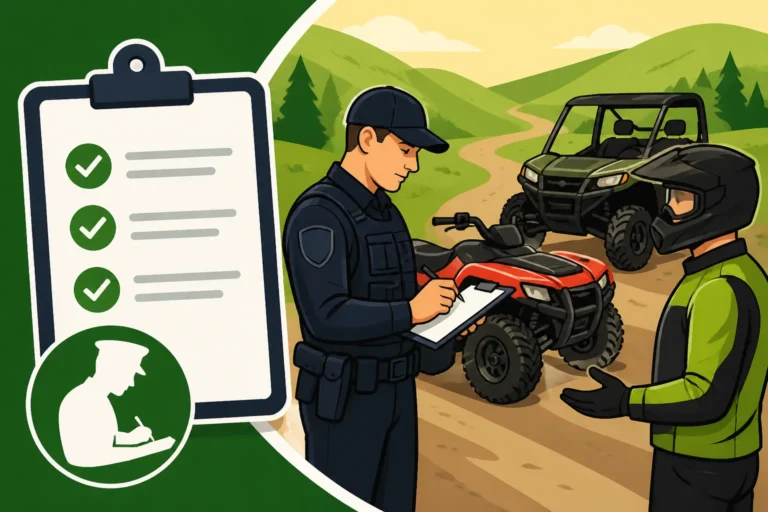
When a peace officer encounters ATV or UTV riders, especially during roadside checks or in designated riding areas, they will conduct equipment checks. This includes verifying that operators and passengers are wearing approved helmets and appropriate eye protection. They'll look for evidence of shatterproof lenses and a secure fit. Simply having a pair of sunglasses perched on your nose might not satisfy the requirement if they aren't shatterproof or don't offer sufficient coverage.
Officers are looking for compliance with the spirit and letter of the law. They want to see gear that genuinely protects. If your eye protection is scratched to the point of impairing your vision, or if you're wearing tinted lenses after dark, that could also raise concerns. They might also ask for proof of insurance, a critical element of responsible riding, which is discussed in [Saskatchewan Insurance Proof on the Trail]. The goal is to ensure public safety, and eye protection is a visible and easily verifiable component of that.
Fines for Non-Compliance
Operating an ATV or UTV without the legally required eye protection can result in a fine. The specific amount can vary, but these are not minor infractions. The All Terrain Vehicles Act outlines penalties for various offenses, and failure to comply with safety equipment mandates falls under this umbrella. While specific figures can fluctuate and should always be checked with current provincial guidelines, be prepared for a significant hit to your wallet. You can learn more about general enforcement in [Saskatchewan Fines Capped at $1,000] and specific financial consequences in [Saskatchewan Ticket Costs for Riders].
Beyond the monetary fine, there's the inconvenience and potential for further enforcement action. Repeated offenses could lead to more severe penalties. It's simply not worth the risk, both to your finances and, more importantly, to your eyesight. A fine is a harsh reminder, but an eye injury is a permanent one.
Owner Liability Implications
Another crucial aspect of non-compliance is the potential for owner liability. If you own an ATV or UTV and allow someone to operate it without proper eye protection, and that person subsequently suffers an eye injury, you could be held liable. The Act includes provisions that can hold the owner responsible for infractions committed by an operator, especially if the owner knowingly permitted an unsafe situation. This is a principle that extends to other areas of the Act, as detailed in [Saskatchewan Owner Liability Rules].
This means if you lend your machine to a friend or family member, it’s your responsibility to ensure they understand and comply with all safety requirements, including wearing appropriate eye protection. A casual ride with borrowed gear could turn into a legal nightmare if an accident occurs and safety equipment standards weren't met. It underscores the importance of not just protecting yourself, but also ensuring everyone who uses your machine is equipped correctly.
Choosing the Right Eye Protection
With the legal requirements clear, the next step is choosing eye protection that not only complies with the law but also provides maximum comfort, durability, and performance for your riding style. This isn't just about avoiding a ticket; it's about investing in your long-term safety and enjoyment of the sport.
Factors Beyond Legality
While legality is the baseline, there are many other factors to consider when selecting eye protection. Ventilation is crucial, especially in warmer weather or during strenuous riding, to prevent fogging and discomfort. Look for goggles or shields with good airflow, perhaps even anti-fog coatings or fans. Durability is also paramount. Your eye protection will face dust, mud, branches, and impacts, so it needs to be built to last. Brands like SuperATV often offer accessories and gear built for rugged off-road conditions, which is exactly what you need.
Field of vision is another important consideration. Your goggles or shield should not restrict your peripheral vision, as this can be a serious safety hazard. A wide field of view allows you to see approaching hazards from the sides. UV protection in the lenses is also a smart choice, even on cloudy days, to protect your eyes from harmful rays over long rides. Consider your primary riding environments – do you mostly ride in dense bush, open fields, or a mix of both? Your environment can help guide your choice.
Comfort and Fit
Ill-fitting eye protection is not only uncomfortable but can also compromise safety. Goggles should fit snugly against your face, without pinching or leaving large gaps where dust and debris can enter. The strap should be adjustable to fit securely around your helmet (or head, if wearing an open-face helmet without goggles). If you wear prescription glasses, look for "OTG" (Over The Glasses) goggles that are specifically designed to accommodate them comfortably.
A poorly fitting helmet visor or face shield can rattle, obstruct vision, or fog up easily. Ensure your helmet fits correctly and the shield operates smoothly and locks securely. If you find your current eye protection is causing discomfort, excessive pressure points, or constantly slipping, it's time to invest in a better pair. Many riders find that trying on different styles and brands, perhaps at a local powersports dealer, is the best way to ensure a perfect fit.
Maintenance and Care
Even the best eye protection won't perform optimally if it's not well-maintained. Lenses should be regularly cleaned with appropriate cleaners and soft cloths to avoid scratches, which can impair vision and reduce the effectiveness of anti-fog coatings. Store your goggles or helmet in a protective bag when not in use to prevent scratching. If your lenses become severely scratched or damaged, replace them immediately. A compromised lens is a compromised safety feature.
Regularly check straps for wear and tear, and ensure they still provide a secure fit. If you use tear-offs, make sure you have a fresh supply. For UTVs with windshields, keep them clean and consider protective coatings or films to reduce scratching. Proactive maintenance extends the life of your gear and, more importantly, ensures it provides the protection you rely on every time you ride.
Beyond the Basic Requirements: Best Practices
Meeting the legal requirements for eye protection is the minimum. For truly safe and enjoyable riding, embracing best practices that go beyond the basic mandates is highly recommended. Think of it as investing in your riding experience.
Tinted vs. Clear Lenses
As discussed, clear lenses are a must for night riding. For daytime riding, the choice between clear and tinted lenses depends on conditions. On bright, sunny days, a medium to dark tint can reduce glare and eye strain, enhancing comfort and visibility. However, on overcast days, in dense bush, or when moving in and out of shadows, a clear or lightly tinted lens might offer better contrast and perception. Some riders opt for photochromic lenses that automatically adjust their tint based on light conditions, offering a versatile "set it and forget it" option.
A smart best practice is to always carry both clear and tinted lenses (or goggles) with you, especially if you anticipate riding through various light conditions or from day into night. Swapping lenses is usually a quick process, and having the right lens for the right condition vastly improves your vision and safety.
| Eye Protection Type | Pros | Cons | Best Use Case | Legal Status in SK |
|---|---|---|---|---|
| Off-Road Goggles | Excellent seal, wide view, impact resist. | Can fog, some don't fit over glasses. | ATV/UTV, dusty trails, variable light. | Legal (Shatterproof) |
| Helmet Face Shield | Full face coverage, convenient. | Can fog, scratches impair view, not always sealed. | UTVs with cab, road riding sections, general use. | Legal (Shatterproof) |
| Riding Glasses | Lightweight, good ventilation. | Less sealing, limited side protection. | Casual rides, light dust, with UTV windshields. | Legal (Shatterproof) |
| Snowmobile Goggles | Excellent anti-fog, warmth. | Can be bulky, less ventilation for warm weather. | Winter riding, extreme cold. | Legal (Shatterproof) |
| UV-Protective Lenses | Protects eyes from sun damage. | Can be tinted (issue at night). | Sunny daytime riding. | Legal |
Anti-Fog and Ventilation Features
Fogging lenses are a common and incredibly frustrating issue for riders. It's not just an annoyance; it's a serious safety hazard that can momentarily blind you. Many modern goggles and face shields come with advanced anti-fog coatings or dual-pane lenses, similar to a double-glazed window, that create an insulating air pocket to prevent condensation.
Beyond coatings, good ventilation is key. Look for goggles with ample vents that allow air to circulate without letting in dust. Some high-end goggles even feature small, battery-powered fans to actively clear moisture. If your current gear fogs up frequently, it’s worth upgrading to a model with these features. Maintaining clear vision is paramount for reacting to terrain, avoiding obstacles, and safely navigating the trails. This is where investing in quality gear, perhaps from a reputable brand that offers solutions like SuperATV for your specific machine, really pays off.
Integrating Eye Protection with Helmets
Your helmet and eye protection should work together as a cohesive system. If you use goggles, ensure they fit well within the helmet's eye port without creating pressure points or obstructing your vision. The goggle strap should sit securely on the helmet, often in a designated groove, to prevent it from slipping. Many helmets also have a retention clip for goggle straps.
For helmets with integrated face shields, ensure the shield retracts smoothly and locks securely in both the open and closed positions. Make sure the helmet itself is a proper fit, as an ill-fitting helmet can make any eye protection feel uncomfortable or ineffective. Remember, a comprehensive approach to head and eye safety is always the best strategy for a secure and enjoyable ride in Saskatchewan. Following guidelines like [Saskatchewan Helmet Standards Accepted] will ensure you have a compatible and safe setup.
Disclaimer
This article is for general informational purposes only and does not constitute professional advice. Laws, prices and regulations vary by location and change over time. Consult a qualified professional for guidance on your specific situation.