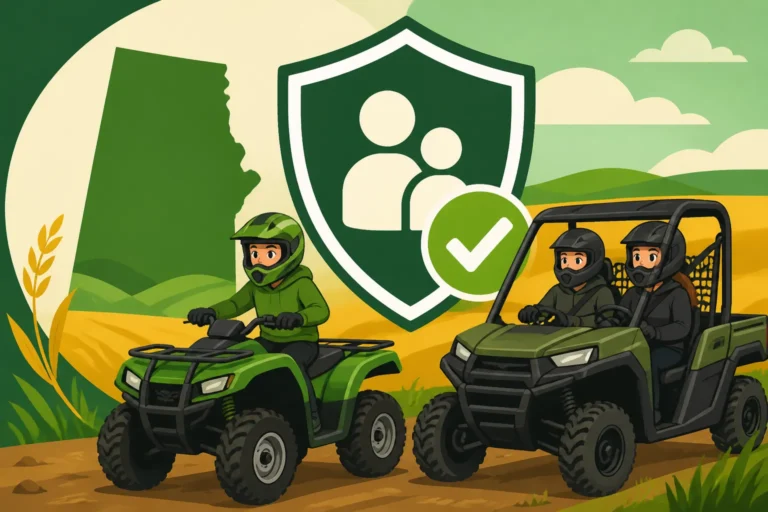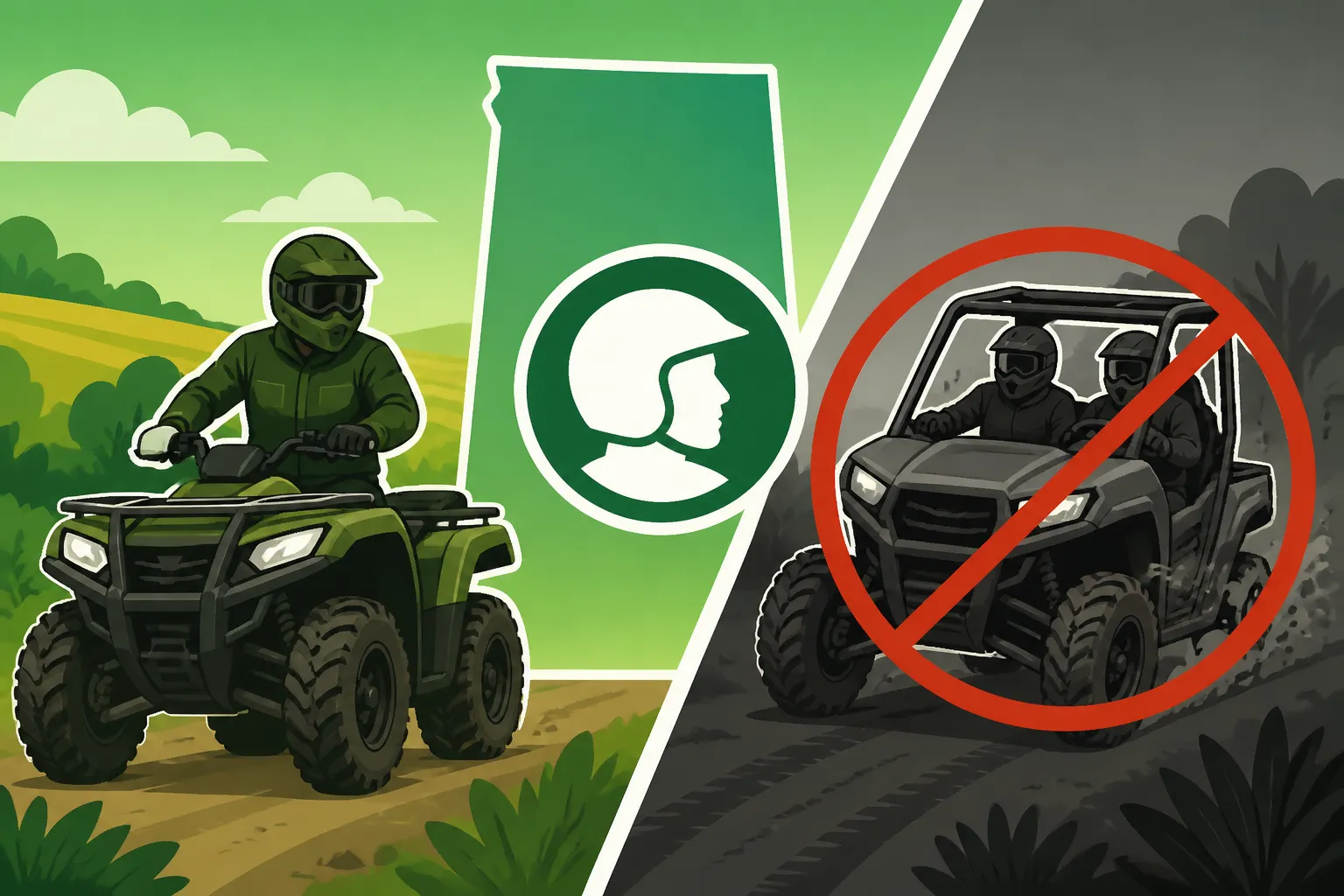
Saskatchewan Passengers Only on Designed Machines
It's a common sight on the Prairies: a solo rider on an ATV, heading out for work or play, but sometimes you'll spot an extra person perched precariously behind the operator. This often leads to confusion and frustration for riders who just want to bring a friend or family member along for the ride, only to find themselves potentially breaking the law or putting someone at risk. Navigating the rules around carrying passengers on ATVs and UTVs in Saskatchewan can feel like deciphering a cryptic puzzle, especially when you consider different machine types and riding scenarios. This guide aims to demystify these regulations, helping you understand precisely when and how you can legally and safely carry passengers on your off-road machine in Saskatchewan.
Understanding Saskatchewan's ATV Passenger Rules
Riding an ATV or UTV in Saskatchewan offers unparalleled freedom, but that freedom comes with a clear set of responsibilities, especially when it comes to carrying passengers. The rules aren't just arbitrary; they're in place to protect everyone on board. It's not uncommon for riders, particularly those new to the province or new to the sport, to assume that if there's space, it's okay to bring someone along. However, Saskatchewan law is quite specific, and overlooking these details can lead to serious consequences.
The Core Principle: Designed for One or More
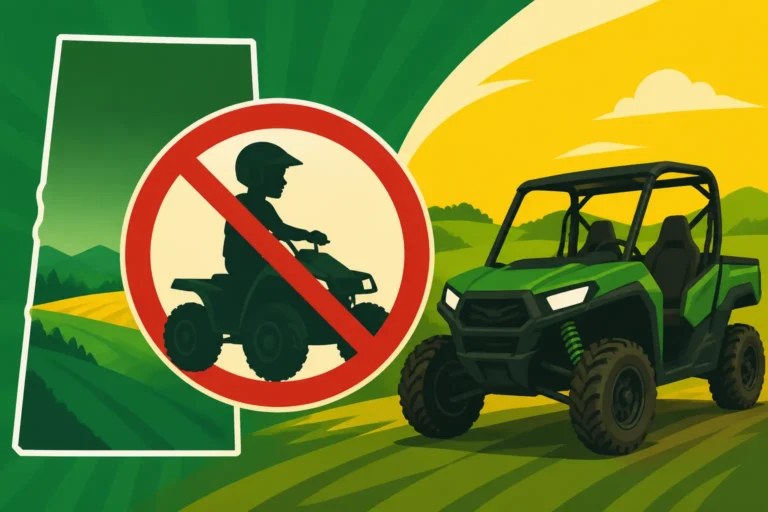
At the heart of Saskatchewan's ATV passenger rules is a straightforward concept: you can only carry a passenger if the machine was designed by the manufacturer to carry more than one person. This isn't about how comfortable it looks, or if you can technically squeeze another body on. It's about the machine's original engineering, its frame, its seating, and its stability. Think about a typical sport ATV; it's almost universally designed for a single operator. Trying to add a passenger to such a machine fundamentally alters its balance and handling characteristics, making it much more dangerous.
This principle extends to utility ATVs as well. Many utility quads might have a long seat, tempting riders to believe it's meant for two. However, unless the manufacturer explicitly states it's a two-up model, complete with a dedicated passenger seat, handholds, and footrests, it's considered a single-rider machine. Ignoring this core principle is one of the most common mistakes riders make, often out of a genuine lack of awareness rather than defiance. Understanding this fundamental aspect of the [Saskatchewan's All Terrain Vehicles Act] is your first step toward compliance.
Why the "Designed Machine" Rule Exists
The "designed machine" rule isn't some bureaucratic hurdle placed to annoy riders; it's a critical safety measure born from decades of accident data and engineering realities. A single-rider ATV is designed to be balanced by the shifting weight of one operator. When a second person is added, especially if they are sitting behind the operator without proper support, the centre of gravity changes drastically. This can make the ATV much harder to control, particularly during turns, on uneven terrain, or when braking suddenly. The risk of rollover increases exponentially.
Furthermore, ATVs designed for single riders often lack critical safety features for passengers. There are no dedicated handholds for the passenger to brace themselves, no proper footrests to keep their feet from dragging or getting caught, and the suspension might not be built to handle the extra weight. In the event of an accident, a passenger on an undesigned machine is far more vulnerable to severe injury, as they lack the protection and secure positioning that a purpose-built passenger seat would provide. This rule is about mitigating inherent dangers and ensuring that both the operator and any passengers have the best possible chance of a safe ride.
Common Misconceptions About Carrying Passengers
Despite the clear regulations, several misconceptions persist among the riding community. One prevalent myth is that if you're just riding on private land, these rules don't apply. While private land offers more leeway in some areas, the fundamental safety principles of machine design remain. An undesigned machine is still dangerous with a passenger, regardless of where you're riding. Another common misconception is that if you're riding slowly, or "just down the road," it's fine. Speed might affect the severity of an accident, but even at low speeds, a loss of control can lead to injury.
Some riders also believe that adding an aftermarket seat or footpegs transforms a single-rider ATV into a passenger-ready machine. While aftermarket parts can enhance comfort or utility, they typically do not change the fundamental design classification of the ATV as determined by the manufacturer. These modifications rarely address the crucial aspects of frame strength, suspension capacity, or overall stability required for safe two-up operation. When considering modifications, remember that the spirit of the law focuses on original design integrity. If you're unsure, always err on the side of caution and consult your machine's manual or a reputable dealer.
What Constitutes a "Designed Machine" for Passengers?
Understanding the term "designed machine" is paramount when discussing ATV and UTV passenger rules. It's not a vague concept; it refers to specific features and manufacturer intentions that differentiate a safe, multi-person vehicle from a dangerous, single-person one. When a peace officer or park ranger assesses your machine, they'll be looking for these key indicators, not just your interpretation of what feels okay.
Factory-Built Passenger Seating vs. Aftermarket Additions
A machine truly "designed" for passengers will have dedicated, factory-built seating for them. This means a seat that is separate from or clearly delineated from the operator's seat, often slightly raised or extended, and specifically engineered for a passenger. These seats typically come with integrated handholds for the passenger to grip firmly and dedicated footrests or footwells that keep their feet securely within the machine's footprint, preventing them from being dragged or striking obstacles.
Aftermarket additions, while sometimes well-intentioned for comfort, generally do not meet the legal definition of a "designed" passenger setup. For example, simply adding a storage box with a padded top to the rear rack of a single-rider ATV doesn't make it a two-up machine. The frame, suspension, and braking system of a single-rider ATV are not designed to safely accommodate the weight distribution and dynamic forces of two people. Even if you install a very robust aftermarket seat, it doesn't magically alter the vehicle's original engineering specifications. While companies like SuperATV offer fantastic accessories for UTVs that enhance utility and safety (such as robust windshields, roofs, or upgraded harnesses), these are typically for machines already designed for multiple occupants, not to convert a single-rider ATV into a multi-rider one. Always refer back to the manufacturer's original design and specifications.
The Importance of Manufacturer Specifications
The manufacturer's specifications are your ultimate guide. When you purchase an ATV or UTV, the owner's manual will clearly state the machine's intended seating capacity. This information is usually found in the safety section, specifications, or warnings. Machines specifically designed for two riders, often referred to as "2-up" ATVs or "tandem" ATVs, will prominently feature this in their marketing, model name, and documentation. They are built on a longer wheelbase, have stronger frames, and feature suspensions tuned for the added weight.
For UTVs (Utility Terrain Vehicles), also known as side-by-sides, the multi-passenger design is much more common. Most UTVs are built with two or more factory seats, seatbelts, and roll-over protection structures (ROPS). In these cases, the manufacturer specifications explicitly indicate the number of occupants the vehicle can safely carry. It's crucial to consult these documents, especially if you're buying a used machine and aren't sure of its history or original design. Don't rely on assumptions; the official word from the manufacturer is what counts both for safety and legal compliance.
How Side-by-Sides (UTVs) Differ for Passengers
Side-by-sides (UTVs) operate under the same general passenger rules as ATVs in Saskatchewan but their design naturally makes them more suitable for multiple occupants. Unlike ATVs where two-up models are a specific variant, many UTVs are inherently designed for two, four, or even six passengers. These machines feature bench seats or bucket seats, often with full seatbelts, and a protective cage (ROPS) that provides a significant safety advantage in the event of a rollover.
When riding a UTV, ensuring all passengers are properly seated, buckled in, and within the protective confines of the vehicle is key. The presence of a steering wheel and automotive-style controls also makes the UTV driving experience more familiar to many, but the off-road terrain demands vigilance. While UTVs generally offer a safer platform for carrying passengers, [Saskatchewan Rules for a Side-by-Side Driver] still require attention to detail, adherence to capacity limits, and proper use of all safety features provided by the manufacturer. You should always ensure that any UTV accessories, such as additional seating or harnesses, are installed correctly and do not compromise the original safety features or design intent of the vehicle.
The Risks and Liabilities of Unauthorized Passengers
Carrying an unauthorized passenger isn't just a minor infraction; it opens up a Pandora's box of risks, both personal and legal. Many riders underestimate the potential fallout, thinking "it won't happen to me." However, in the unpredictable environment of off-road riding, overlooking these rules can have devastating and long-lasting consequences for everyone involved.
Safety Hazards for Riders and Passengers
The most immediate and severe consequence of carrying an unauthorized passenger is the increased risk of an accident and injury. A single-rider ATV simply isn't engineered to handle the additional weight and shifting dynamics of a second person. This dramatically compromises the machine's stability, steering, and braking capabilities. Imagine trying to make an emergency turn or stop quickly with an extra 100-200 pounds of unstable weight behind you – it becomes significantly more difficult, if not impossible, to maintain control.
For the operator, this means a higher chance of losing control, leading to rollovers, collisions, or being thrown from the machine. For the unauthorized passenger, the risks are even greater. Without proper handholds, footrests, or a dedicated seat, they are highly susceptible to being ejected from the ATV, hitting obstacles, or being crushed by the machine in a rollover. These types of accidents frequently result in severe injuries, including broken bones, head trauma, and spinal injuries. Even at low speeds, the forces involved in an ATV accident can be immense. Everyone riding an ATV, whether operator or passenger, should always wear appropriate [Saskatchewan Helmet and Eye Protection Rules] and sturdy protective clothing to minimize injury.
Insurance Implications and Coverage Gaps
This is where the financial and legal ramifications can truly hit home. If an accident occurs while you are carrying an unauthorized passenger, your insurance policy may not cover the damages or injuries. Most ATV insurance policies are written with the assumption that the machine is being operated according to its manufacturer's specifications and all applicable laws. Deliberately overriding the manufacturer's intended passenger capacity is often considered a breach of policy conditions.
This means that if your unauthorized passenger is injured, or if you cause damage to property or another vehicle, your insurance company could deny coverage. This leaves you, the operator and owner, personally liable for potentially astronomical medical bills, rehabilitation costs, lost wages, and property damage. A serious injury could easily lead to a lawsuit that could financially cripple you for years. It's a risk that far outweighs the convenience of giving someone an impromptu ride. Always ensure you meet [Saskatchewan Insurance Requirements for Riders] to avoid such catastrophic financial exposure. This also applies if an officer asks for [Saskatchewan Insurance Shown to a Park Officer] during a trail check.
Legal Ramifications and Fines for Non-Compliance
Beyond the civil liability, there are direct legal penalties under [Saskatchewan's All Terrain Vehicles Act]. Operating an ATV with an unauthorized passenger is a traffic offense. If caught by a peace officer, you could face fines. While specific fine amounts can vary, the Act sets maximum penalties, with [Saskatchewan Fines Capped at $1,000] for many offenses. A ticket might seem minor compared to the potential for injury, but it also goes on your driving record and can impact your insurance premiums.
Furthermore, in serious accident scenarios, especially if injuries are sustained, the operator could face more severe charges, particularly if negligence can be proven. This is where [Saskatchewan Owner Liability Rules] become critical. The owner of the machine can be held liable for offenses committed by the operator, even if they weren't present. For the owner, this reverse onus can create significant legal challenges. The legal system in Saskatchewan takes the safe operation of ATVs seriously, and ignoring passenger rules is a clear violation of that commitment to public safety.
Exceptions and Specific Scenarios for Passenger Transport
While the general rule is strict, like many regulations, there are nuances and specific situations that might seem to present exceptions or justifiable reasons for carrying an extra person. It's crucial to understand these carefully, as misinterpreting them can still lead to fines or, worse, accidents.
Work-Related vs. Recreational Riding
One area where the lines can sometimes blur is between recreational riding and machines used strictly for work purposes, particularly in agricultural or industrial settings. For instance, a farmer might use a utility ATV to check fences or move equipment, and occasionally a farmhand or a child learning the ropes might ride along, sitting on the rack or in a makeshift spot. However, the "designed machine" rule still applies here. The Act makes no specific exemption for work use when it comes to passenger capacity. An ATV, regardless of whether it's used for pleasure or profit, must still be operated according to its design specifications regarding passengers.
What often happens in these scenarios is that UTVs become the preferred choice for work applications specifically because they are designed for multiple occupants. A UTV can comfortably and safely transport a driver and several passengers, along with tools and materials, making it ideal for large properties, construction sites, or ranching operations. For any machine, work-related or not, if it's not designed for two-up riding, carrying a passenger is a risk that could lead to legal and insurance issues, even on private land.
Situations Where Carrying an Extra Person Might Seem Necessary (and why it's usually not allowed)
We've all been there: you're out on the trails, and a friend's machine breaks down, or someone needs a lift back to camp. In these moments, it might seem "necessary" to carry an extra person on your single-rider ATV. While the desire to help is commendable, the law doesn't make exceptions for convenience or perceived necessity in these situations. The inherent dangers of carrying an unauthorized passenger remain, regardless of the circumstances that led to it.
Consider the alternatives: if a machine breaks down, the safest option is to walk out, call for a pick-up (perhaps with a UTV or another two-up machine), or tow the disabled ATV with the operator of the broken-down machine walking alongside or riding on another designed two-up machine. While it might be inconvenient, prioritizing safety and legal compliance over a quick fix is always the better choice. Taking an illegal passenger in an emergency only compounds the problem by introducing additional risk. This strict approach is consistent with other safety rules, such as those governing [Saskatchewan Rules of Operation on a Trail].
The Role of Municipal Bylaws and Specific Exemptions
While the provincial All Terrain Vehicles Act sets the overarching framework for passenger rules, municipalities in Saskatchewan do have the authority to enact their own bylaws. These local regulations primarily focus on where ATVs can and cannot be operated, such as specific roads or within town limits. However, it's highly unlikely that a municipal bylaw would override the provincial rule regarding a machine's passenger capacity. Municipalities typically cannot grant permission to operate a machine in a manner that is unsafe or contrary to provincial design specifications.
For instance, a village might have a bylaw that allows ATVs on certain streets, but this doesn't mean you can carry an unauthorized passenger on a single-rider ATV on that street. The provincial "designed machine" rule is fundamental to safety and largely remains consistent across jurisdictions. Riders should always check [Saskatchewan Municipal Bylaws on Roads] for local rules concerning routes and times of operation, but they should assume provincial passenger capacity rules are in full effect. Some municipalities, like the District of Lakeland or Candle Lake, have their own permit schemes, but these permits pertain to where you can ride, not how many people you can carry on a machine not designed for it.
Ensuring Compliance and Safe Riding Practices
Compliance with passenger rules isn't just about avoiding tickets; it's about fostering a culture of safety and responsibility within the ATV and UTV community. By understanding and adhering to these guidelines, you not only protect yourself but also your friends, family, and fellow riders. Safe riding practices extend beyond just passenger capacity and encompass a broader approach to operating your machine responsibly.
Pre-Ride Checks and Machine Familiarity
Before every ride, especially when carrying passengers on a designed multi-occupant machine, a thorough pre-ride check is essential. This includes inspecting tires for proper pressure and damage, checking fluid levels (oil, coolant, brake fluid), testing brakes, and ensuring all lights are operational. Crucially, when passengers are involved, ensure all passenger specific safety features are in perfect working order. This means checking seatbelts, grab handles, and footrests for integrity and proper function. If anything feels loose, worn, or broken, it needs to be addressed before you head out.
Furthermore, familiarize yourself with your machine's handling characteristics, especially with the added weight of passengers. A fully loaded UTV will behave differently than a solo ATV. Practice gentle acceleration, smooth braking, and controlled turns in a safe, open area before tackling challenging trails. Understanding your machine's limits and how it responds to different inputs with passengers onboard is key to preventing accidents. This diligence is part of overall [Saskatchewan Rules of Operation on a Trail] that all riders should embody.
Proper Gear and Training for All Occupants
Beyond the machine itself, the safety of all occupants hinges on proper personal protective equipment (PPE) and, ideally, some form of training. Every single person on an ATV or UTV, whether operator or passenger, must wear a compliant helmet and eye protection. [Saskatchewan Helmet and Eye Protection Rules] are clear on this, specifying approved helmet standards and requirements for goggles or a shatterproof face shield. Long pants, long-sleeved shirts, sturdy over-the-ankle boots, and gloves are also highly recommended to protect against scrapes, impacts, and environmental elements.
While there's no mandatory provincial training course for adult ATV operators in Saskatchewan (unlike snowmobiles), taking an ATV safety course is always a good idea, particularly if you're new to the sport or planning to carry passengers regularly. These courses teach critical riding techniques, hazard awareness, and safe operating procedures. For younger riders, especially [Saskatchewan Rules for a Child Passenger], specific age and supervision requirements apply, and a recognized safety course can often satisfy some of those conditions. Ensuring everyone on your machine, including your passengers, understands basic safety protocols and how to react in an emergency is a vital part of responsible riding.
Advocating for Safer Passenger Options
As responsible riders, we also have a role in advocating for safer riding environments and promoting best practices. This includes encouraging fellow riders to adhere to passenger rules, speaking up when you see unsafe behavior, and supporting initiatives that promote ATV safety education. If there's a need for more multi-passenger off-road vehicles for specific purposes, such as organized tours or specific agricultural tasks, that demand can influence manufacturers and rental fleets to provide more appropriate, purpose-built solutions.
Companies like SuperATV provide a wide range of aftermarket parts that can enhance the safety and utility of already designed multi-passenger UTVs, from stronger roofs and doors to advanced lighting and winches. By investing in these types of quality accessories and encouraging their use, we contribute to a safer overall riding experience. Ultimately, the goal is to enjoy the incredible Saskatchewan outdoors responsibly, ensuring that every ride is as safe as it is thrilling for everyone involved. If you want to ride with others, consider investing in a machine specifically designed for that purpose, like a multi-passenger UTV, rather than risking an unsafe and illegal ride on a single-seater.
Table: ATV vs. UTV Passenger Considerations
To help clarify the differences, here's a quick comparison of general passenger considerations for typical ATVs and UTVs in Saskatchewan. Remember, specific models and manufacturer specifications always take precedence.
| Feature / Consideration | Typical Single-Rider ATV | Typical Two-Up ATV | Typical Multi-Passenger UTV (Side-by-Side) |
|---|---|---|---|
| Designed Passenger Capacity | 1 (operator only) | 2 (operator + 1 passenger) | 2-6+ (operator + multiple passengers) |
| Seating Design | Single saddle seat | Extended saddle seat, often stepped/raised | Bench or bucket seats |
| Passenger Handholds | None (unless aftermarket) | Factory-installed grab handles | Integrated grab handles |
| Passenger Footrests | None (unless aftermarket) | Dedicated footpegs | Dedicated floorboards/footwells |
| Seatbelts/Harnesses | None | None | Factory-installed seatbelts (often 3-point or 4-point harnesses) |
| Rollover Protection | None | None | Factory-installed Roll-Over Protection Structure (ROPS) |
| Stability with Passengers | Very low (unsafe) | Good (designed for it) | Excellent (designed for it) |
| Legal to Carry Passenger in SK (if designed) | No | Yes | Yes |
| Common Use | Recreational, light utility | Recreational, some utility | Heavy utility, recreational, family touring |
Disclaimer
This article is for general informational purposes only and does not constitute professional advice. Laws, prices and regulations vary by location and change over time. Consult a qualified professional for guidance on your specific situation.